
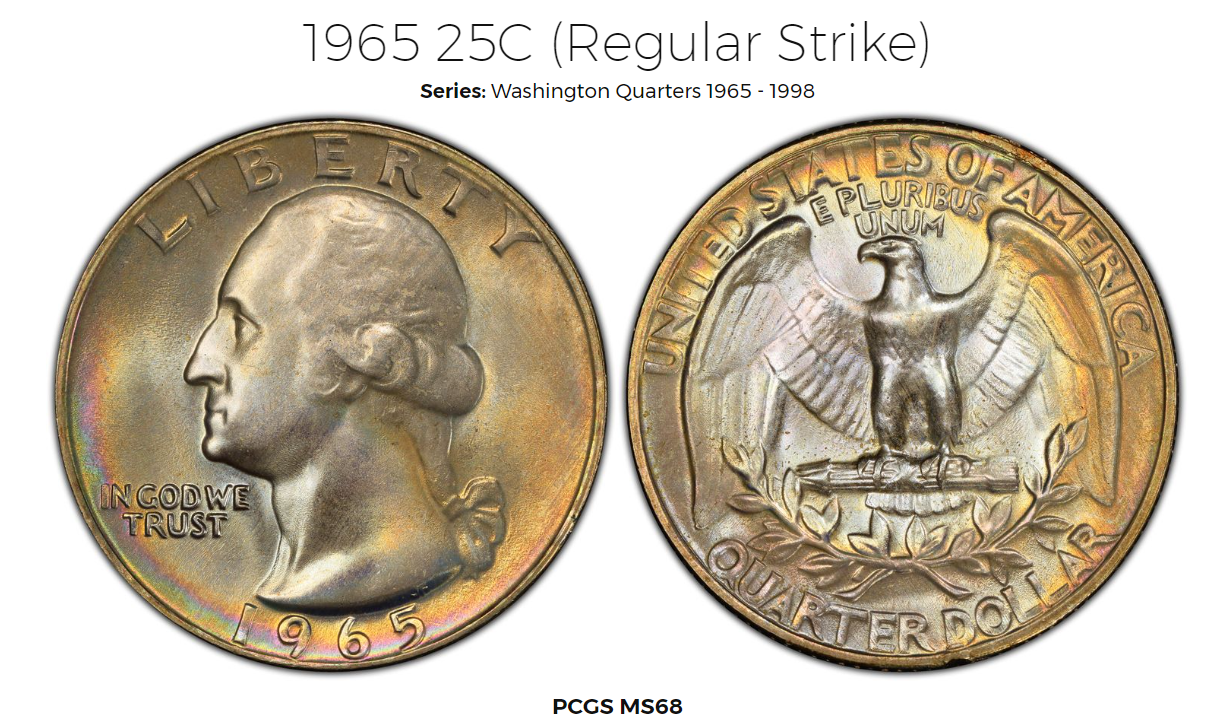
Quick answer: A normal 1965 Washington quarter is a common copper-nickel clad coin with a 25-cent face value. Collector premiums depend on condition, a verified variety or mint error, and whether it is a Special Mint Set issue. The date alone does not make a quarter rare, silver or a dependable investment.
Which 1965 quarter do you have?
Identify the issue before comparing prices. An ordinary circulated quarter, a high-grade regular strike, an SMS coin and an authenticated silver-planchet error belong in different comparisons.
| Type | What to check | Value comparison |
|---|---|---|
| Ordinary circulated clad | Wear, contact marks and normal copper-nickel construction | 25-cent face value; compare actual sales before expecting a collector premium |
| Uncirculated regular strike | Original surfaces, strike and independently assessed grade | Compare the same grade and holder; exceptional auction coins are not typical pocket change |
| Special Mint Set (SMS) | Special-strike attribution and original set context | Use SMS comparisons rather than ordinary business-strike or Proof prices |
| Possible silver-planchet error | Unusual edge and weight, followed by professional composition and authenticity review | Use authenticated examples of the same error; appearance alone does not establish a premium |
No mint mark is normal for a 1965 quarter
The Mint suspended mint marks during this period. A missing letter on a 1965 quarter is not a missing-mint-mark error, and it does not establish which facility made your coin. PCGS CoinFacts explains the mint-mark suspension and distinguishes regular strikes from Special Mint Set coins.
The Mint offered Special Mint Sets in 1965, 1966 and 1967 instead of its regular annual Proof and Uncirculated sets. A bright surface alone does not prove SMS attribution. Compare the separate PCGS SMS reference and seek an experienced opinion when that distinction affects a purchase.
Is a 1965 quarter silver?
Standard 1965 quarters contain no silver. Their outer layers are a copper-nickel alloy bonded to a copper core, and the reference weight is 5.67 grams. Do not confuse the outer-layer alloy with the composition of the entire coin.
Genuine 1965 quarters struck on earlier 90% silver planchets do exist. NGC documents certified transitional errors. They are a separate authentication question, not a reason to price every 1965 quarter as silver.
- Read the date. Confirm 1965 on the obverse and photograph both sides without altering the surfaces.
- Inspect the edge. A visible copper-colored core supports normal clad construction. Color alone cannot authenticate a silver error; plating and alterations can mislead.
- Record the weight. Use a reliable scale. A result that differs from the clad reference warrants further investigation; wear, scale error and alterations must be considered.
- Get a qualified review. Preserve an unusual coin uncleaned. A recognized grading service can assess composition and authenticity before you describe or buy it as a rare error.
Compare value without relying on a headline price
For a potential premium coin, match the date, issue, certified grade, variety or error attribution, and surface condition to recent completed sales. Record the sale date and whether the reported amount includes buyer fees. An asking price is not a completed sale, and a price-guide estimate is not a cash offer.
Do not apply one price range to every off-center strike, doubled die or other error. Damage and machine doubling are not interchangeable with a verified mint-made feature. Start with the CoinHub error-or-damage checklist; it organizes observations and does not authenticate a coin.
Sort silver separately and keep a reusable list
If your collection also includes ordinary 1964-and-earlier Washington quarters, read our 1964 versus 1965 silver guide. Use the CoinHub silver melt calculator for its supported silver types: choose by photo, enter quantities and export an Excel-compatible list. Upload that saved list into the same calculator later to restore quantities and recalculate with current inputs.
Keep normal 1965 clad quarters out of the 90% silver row. Melt value measures metal content; it does not value an authenticated transitional error, certify a coin or guarantee a selling price. The exported file does not update its own prices.
Before storing or selling
Keep coins in suitable coin-safe holders in a dry, stable environment, handle them by the edges and avoid cleaning. Preserve set packaging and certification information. When selling a potentially valuable example, obtain clear offers and compare the amount you would receive after fees and shipping.
A common date's historical interest does not guarantee appreciation. Keep collecting enjoyment, metal content, collector demand and selling costs separate when deciding what to keep.
Updated September 29, 2026: Earlier blanket error-price ranges and investment claims have been replaced with issue-specific comparisons and primary references.