
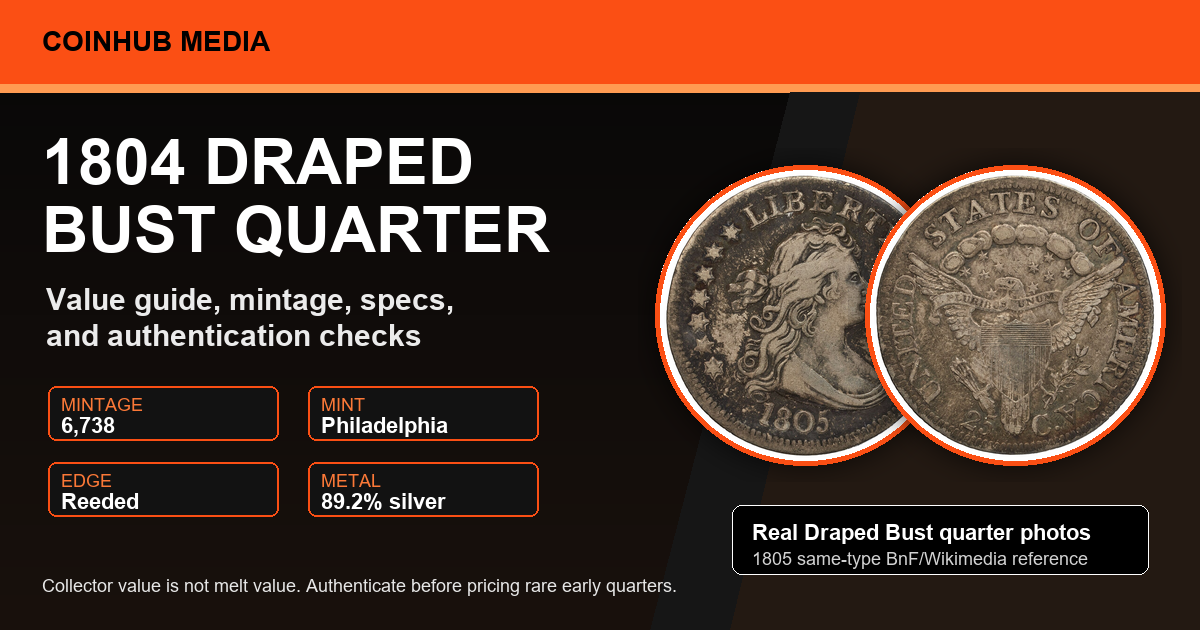
1804 Draped Bust Quarter Value: A Rare Early U.S. Quarter
The 1804 quarter is not a normal old silver quarter. It is the second year of regular U.S. quarter coinage and part of the Draped Bust, Heraldic Eagle reverse type. Because so few were made and so few survive in collectible condition, value depends much more on authenticity, originality, and grade than on silver melt value.
What Is an 1804 Draped Bust Quarter Worth?
Exact value changes with market conditions, certification, and eye appeal. Public PCGS and NGC data show that the issue is valuable across the grading scale, but the jump from a damaged or very worn coin to a problem-free certified example can be dramatic.
| Coin situation | What it usually means | Value context |
|---|---|---|
| Heavily worn but genuine | Date and major design still identifiable, but details are weak. | Still a serious early-quarter find. Certification can matter before selling because counterfeits and altered coins exist. |
| Problem coin | Cleaned, holed, scratched, bent, plugged, or damaged. | Often worth less than a straight-graded coin, but the rarity can still leave meaningful collector value. |
| Problem-free circulated coin | Original surfaces, no major damage, and enough detail for a normal grade. | The strongest collector demand is usually here because most buyers want authentic early type coins with honest wear. |
| About Uncirculated or Mint State | Very little wear or no wear, strong eye appeal, and original surfaces. | Exceptional rarity. PCGS lists very small survival estimates in Mint State, so auction history becomes important. |
How To Identify the 1804 Quarter
Start with the date at the bottom of the obverse. The obverse shows Liberty with thirteen stars, and the reverse shows the Heraldic Eagle with the denomination 25 C. below. PCGS notes two known varieties for the date, so specialist attribution can matter after authenticity is established.
Why Authentication Matters
For a coin this valuable, a raw 1804 quarter should not be treated like an ordinary antique coin. Counterfeits, altered dates, harshly cleaned coins, and damaged pieces can all change the value conversation. PCGS or NGC certification is strongly recommended before paying a major price or accepting a quick offer.
Do not clean the coin to make the date easier to see. Cleaning can leave hairlines, unnatural color, or polished surfaces that lower value. If the coin is already in an old holder, keep the holder and any paperwork with it until a specialist reviews the piece.
Why the 1804 Quarter Is Historically Important
U.S. quarter production began with the scarce 1796 issue, then paused before the Heraldic Eagle reverse type appeared in 1804. That makes the 1804 quarter an early federal silver coin, a low-mintage type coin, and a key piece for collectors who build early quarter or early U.S. type sets.
The coin also sits in a period when U.S. Mint production was still developing. Small mintages, die varieties, uneven striking, and survival problems are part of the reason early quarters are studied closely today.
Before You Sell an 1804 Quarter
First, protect the coin from additional handling. Then document both sides with clear photos, note the weight and diameter if you can do that safely, and compare the coin with certified examples. For a rare early quarter, the right path is usually authentication before a final price conversation.
If you are sorting a broader collection, compare this guide with CoinHub's coin grading services guide, silver melt calculator, and where to sell coins guide. The silver content is only a small part of the story; the collector premium is what makes this coin important.
Sources Checked
Research for this guide used PCGS CoinFacts for 1804 quarter specifications, mintage, rarity notes, and auction context; NGC Coin Explorer for the coin's specifications, ASW, and public price-guide context; Bing search results for competitor intent; and Wikimedia Commons/Bibliotheque nationale de France public-domain same-type 1805 Draped Bust quarter photos for the article graphic.