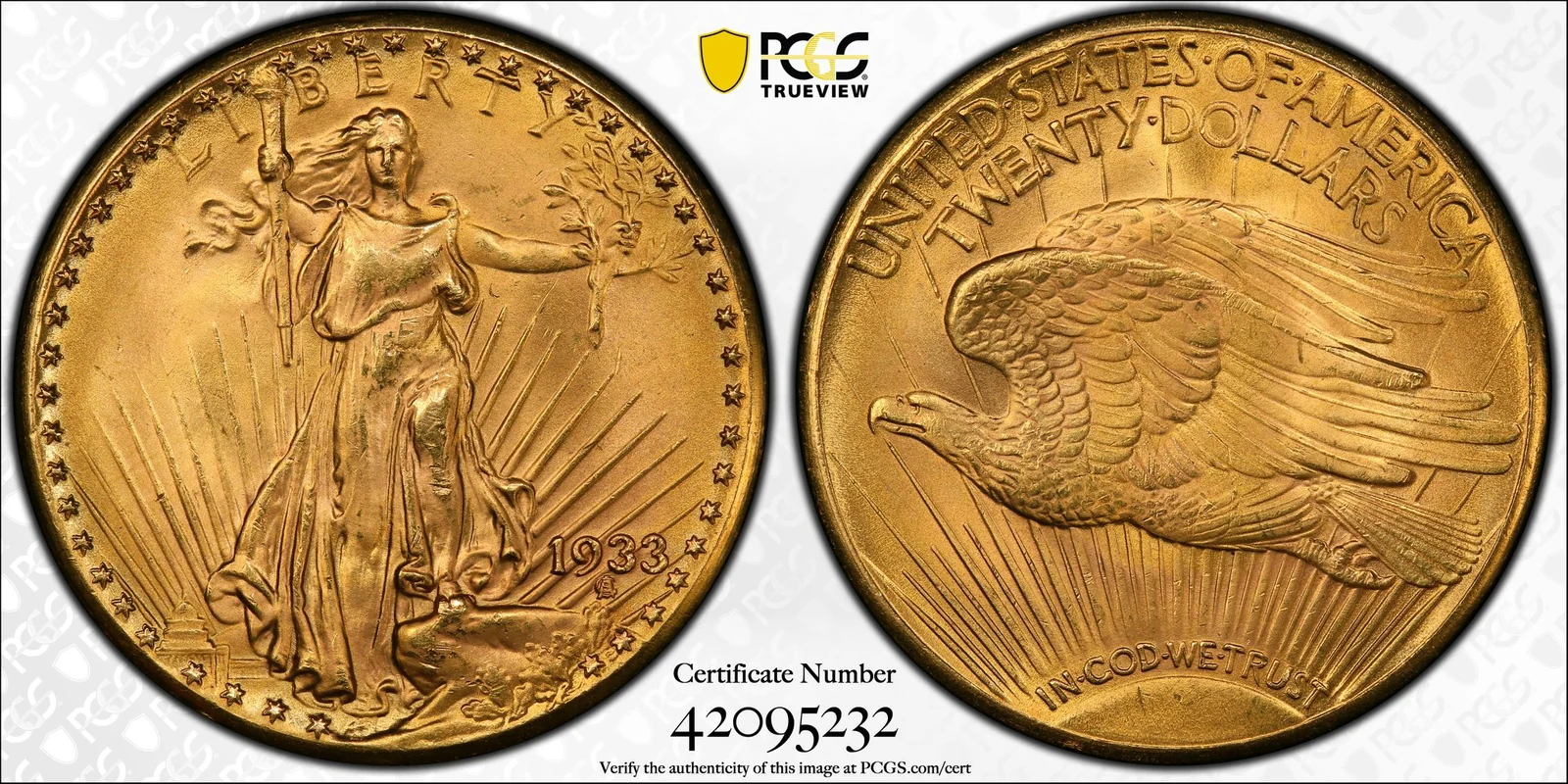
The PCGS MS65 Farouk-Weitzman specimen featured in the 2021 sale. Photo: PCGS TrueView
1933 Saint-Gaudens Double Eagle
The Farouk-Weitzman coin brought the highest public auction price in this selection. Its exceptional legal history makes it the sole 1933 double eagle authorized for private ownership.
What makes this one different
The 1933 date is crucial. Other Saint-Gaudens double eagles share the design, but not this coin's rarity, provenance or ownership history.
The Brand-Carter-Cardinal-Morelan PCGS SP66 specimen; photographed after the 2013 auction. Photo: PCGS TrueView
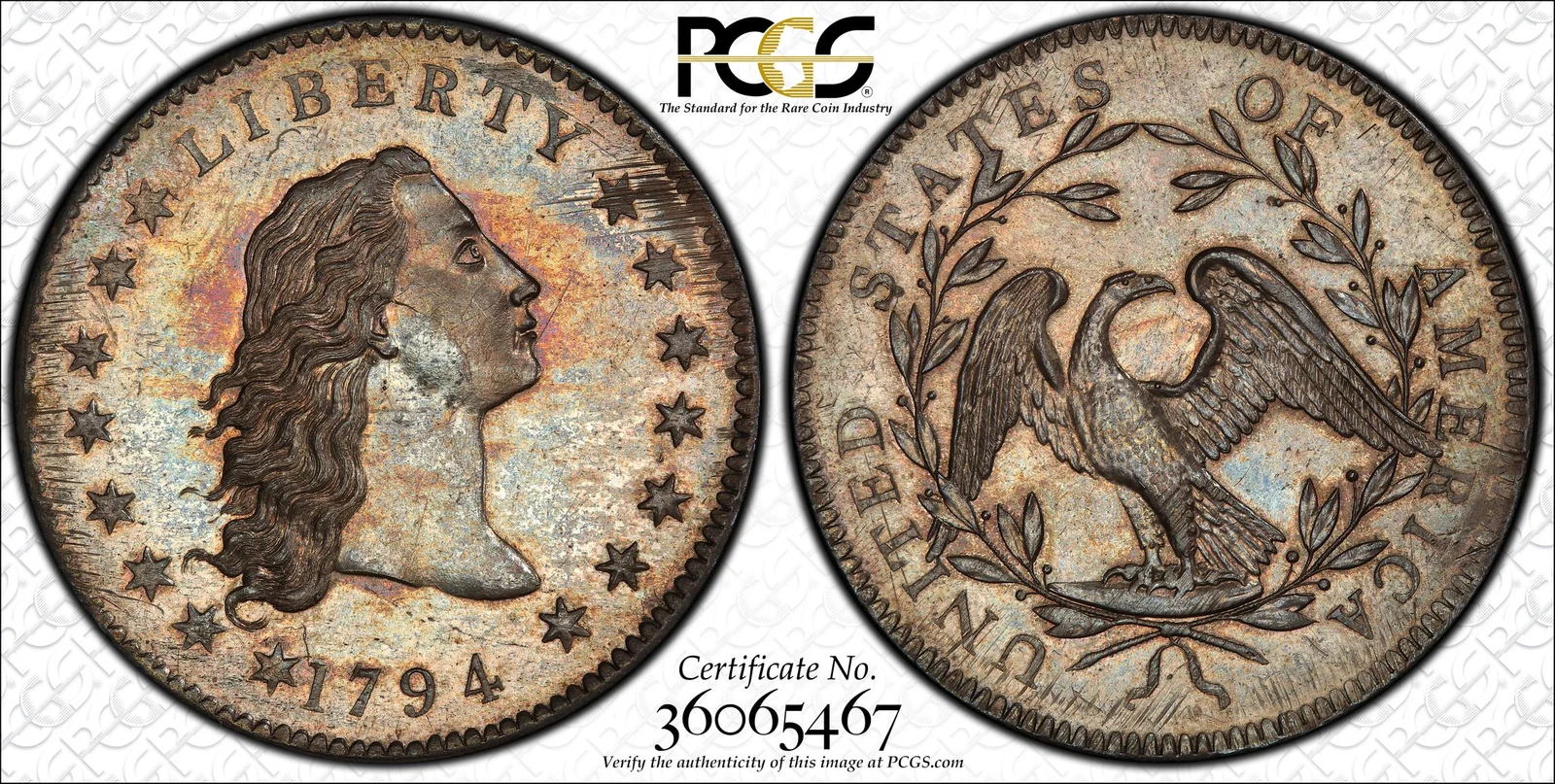
1794 Flowing Hair Dollar, Silver Plug
A remarkably preserved survivor from America's first silver-dollar year, this specimen crossed the ten-million-dollar auction threshold in 2013. The silver plug is part of its distinctive preparation.
What makes this one different
The featured coin is the exceptional SP66 silver-plug specimen, not a typical circulated 1794 dollar. Its status as the very first dollar struck is not proven.
The same specimen was reported sold privately for $12 million in 2022. That private transaction is not used in this auction ranking.
031787 Brasher Doubloon, EB on WingEarly American gold doubloonNotable auction sale$9,360,000NGC MS65 Star; CAC
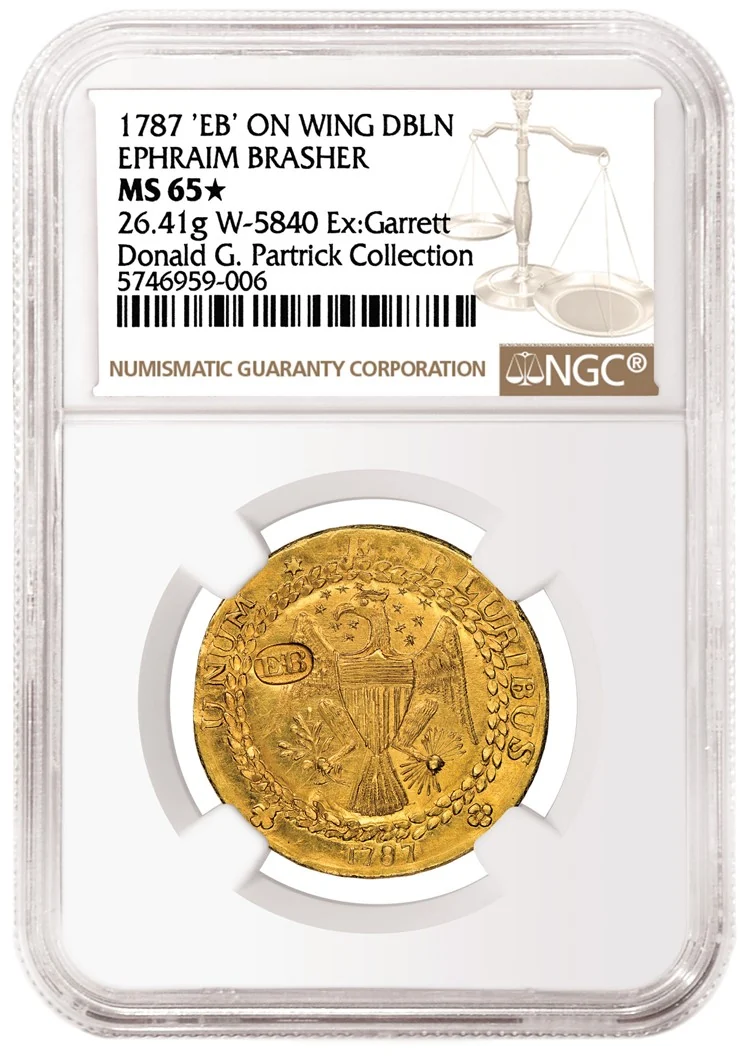
NGC photograph of the Partrick specimen featured in the 2021 sale. Photo: NGC
1787 Brasher Doubloon, EB on Wing
New York goldsmith Ephraim Brasher made these coins before the U.S. Mint existed. The Partrick example is a landmark of early American gold collecting, not a federal Mint issue.
What makes this one different
This New York-style variety places Brasher's EB punch on the eagle's wing. It must not be confused with the distinct EB-on-breast variety or modern replicas.
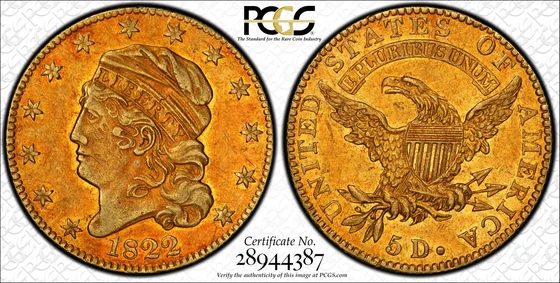
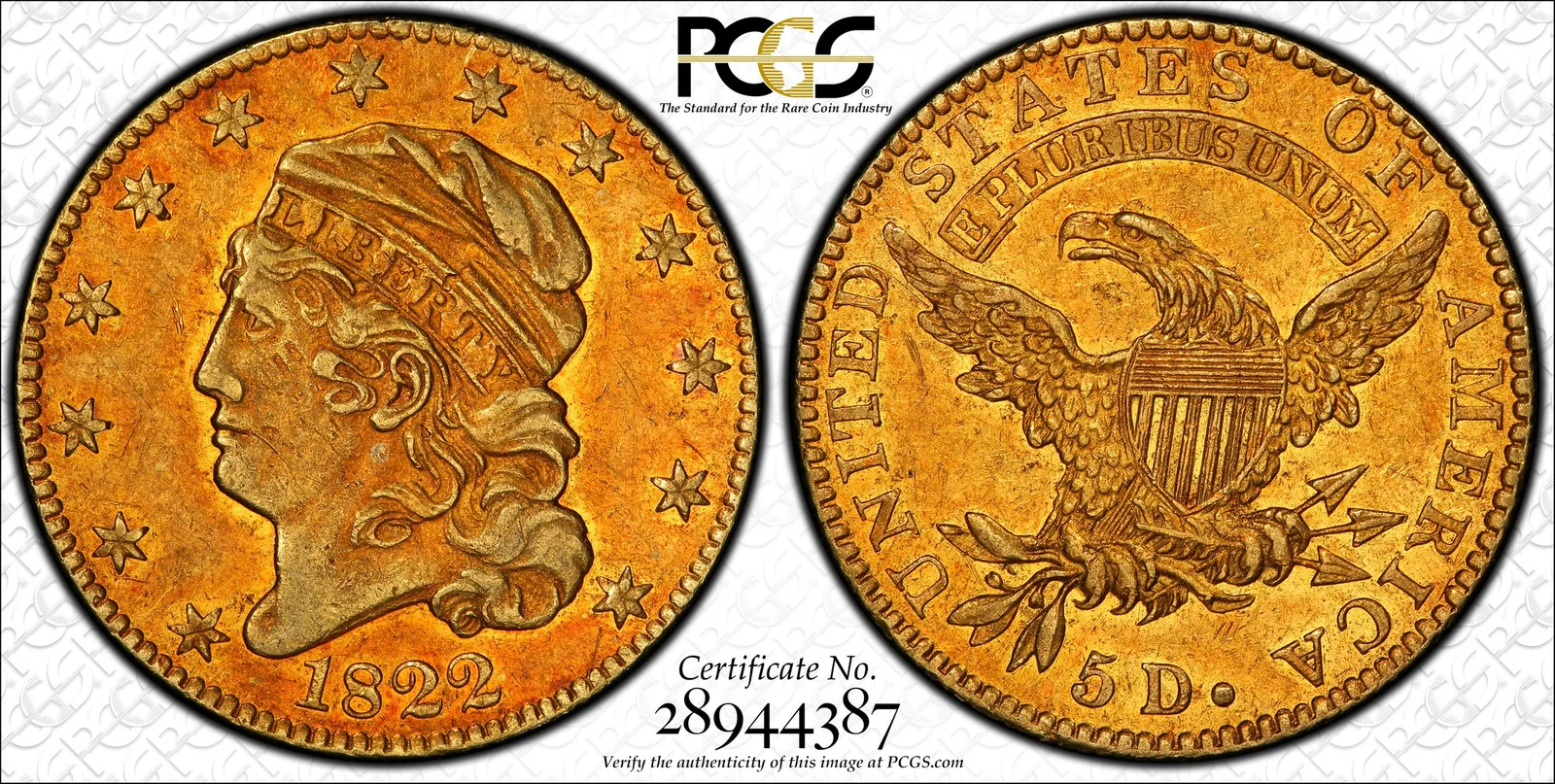
Only three 1822 half eagles are known, and two belong to the Smithsonian. This is the lone example available for private ownership, making a date alone an extraordinary collecting challenge.
What makes this one different
Identify the 1822 date and $5 denomination. Age, a gold color or a similar Capped Bust portrait does not establish this exceptionally rare issue.
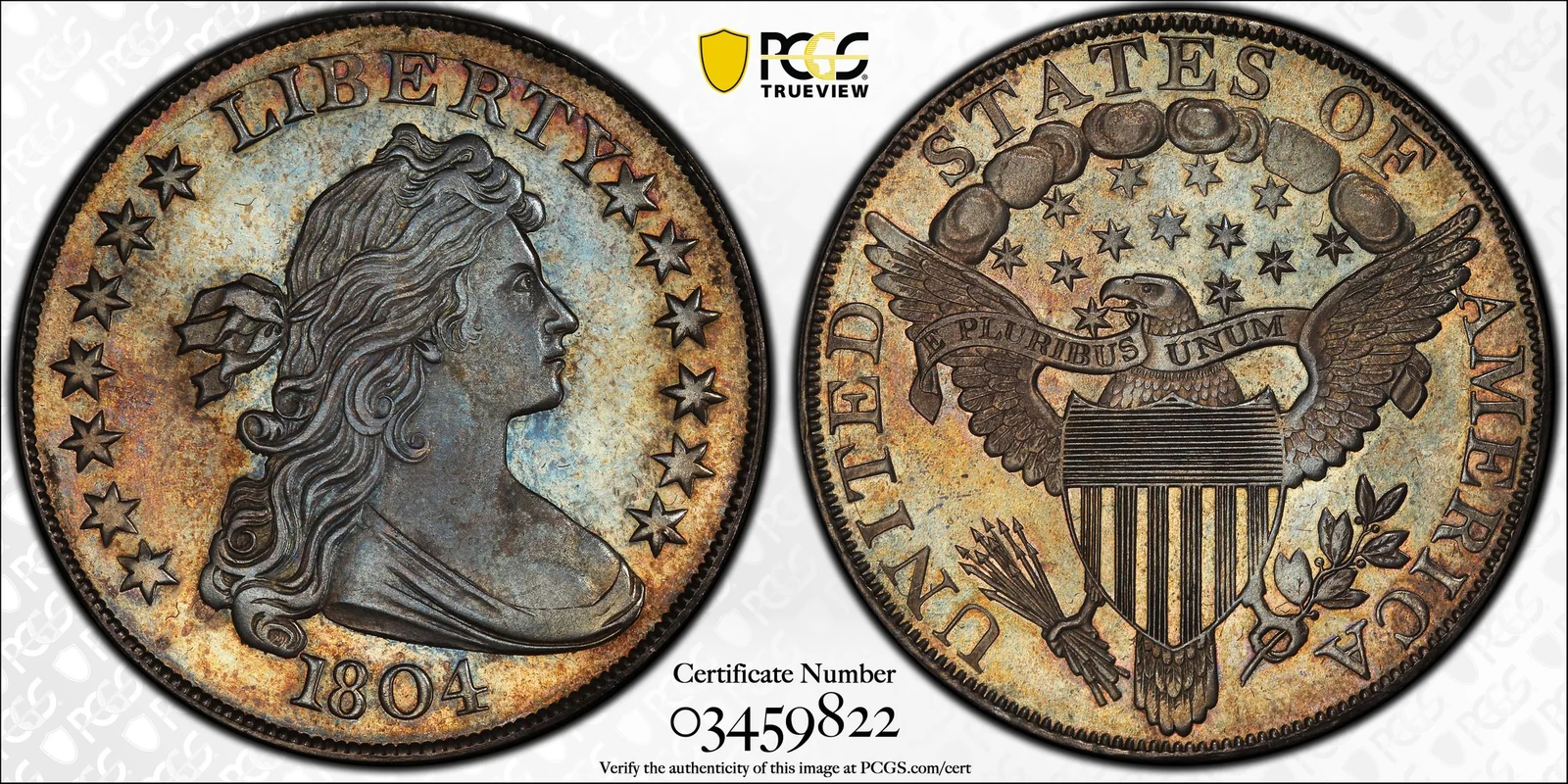
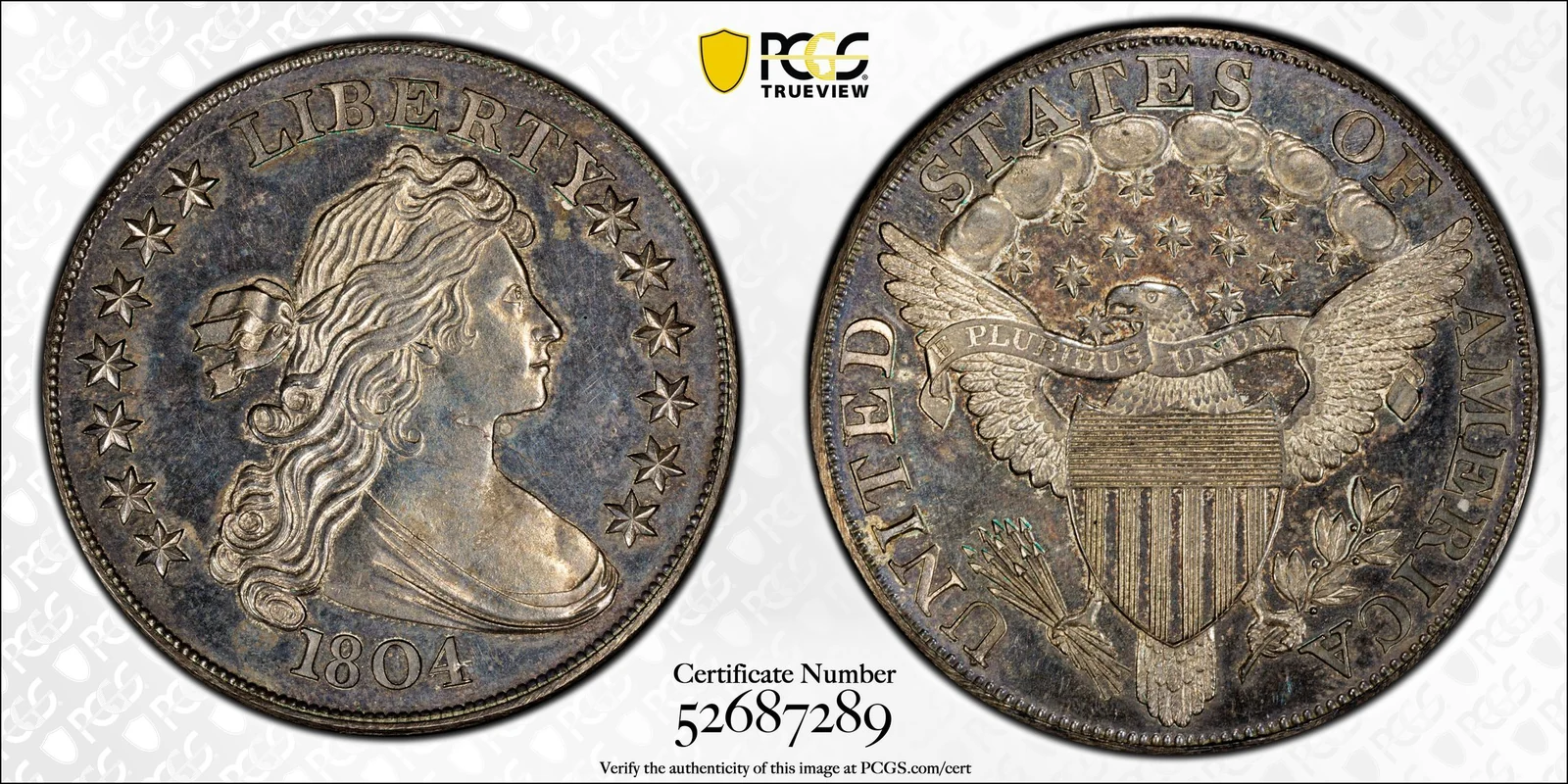
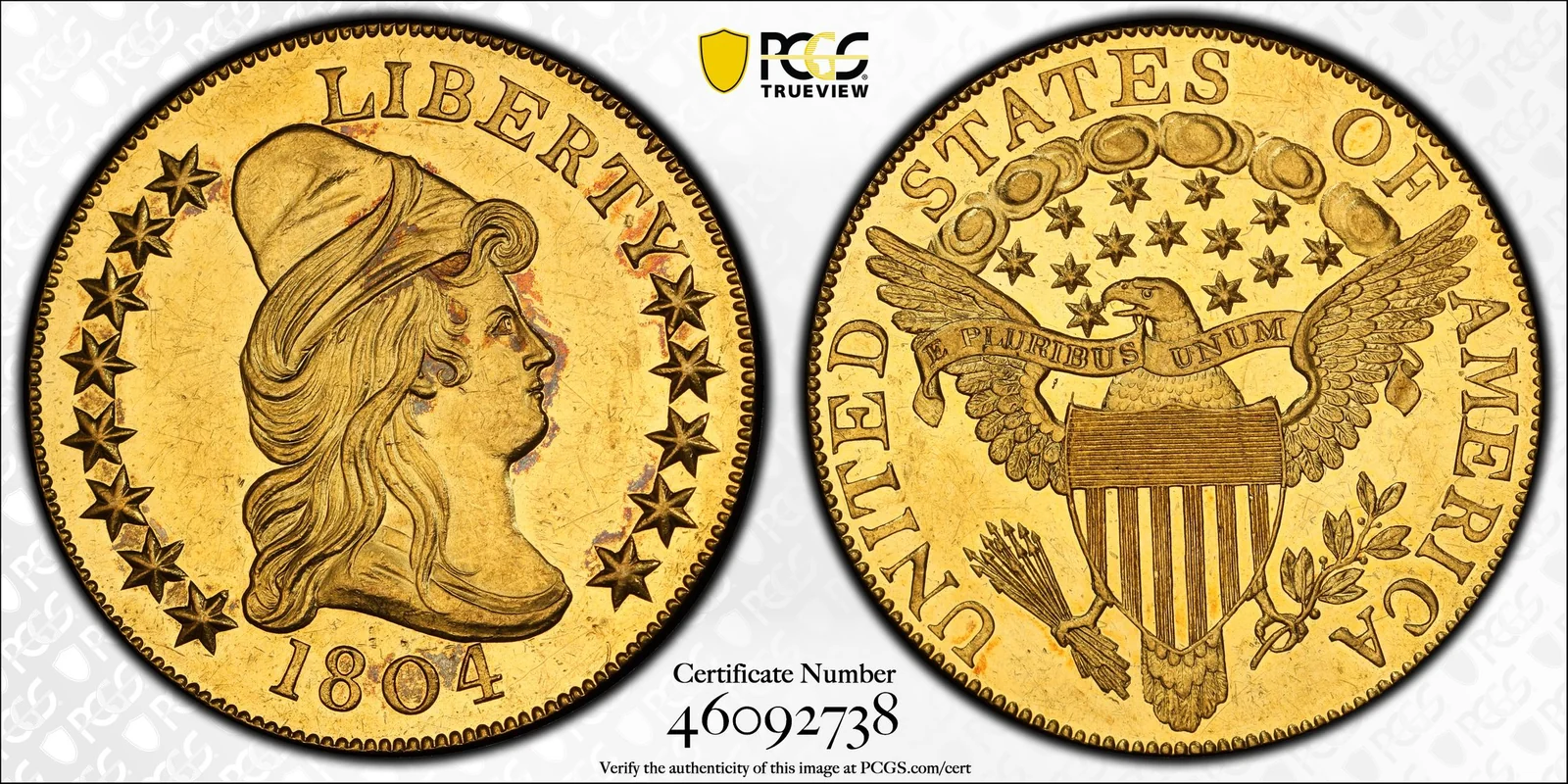
The PCGS PR68 Sultan of Muscat-Childs-Pogue specimen featured in the 2021 sale. Photo: PCGS TrueView
1804 Draped Bust Dollar, Class I
The finest-known Class I example belongs to a small group made for diplomatic presentation sets in the 1830s. The date reads 1804, but the coin was struck decades later.
What makes this one different
Class I dollars are separate from Class II and Class III restrikes. Copies are common; a matching date or design is not authentication.
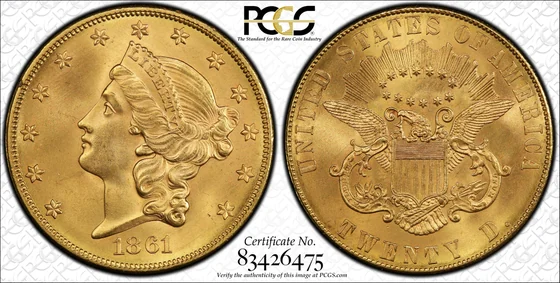
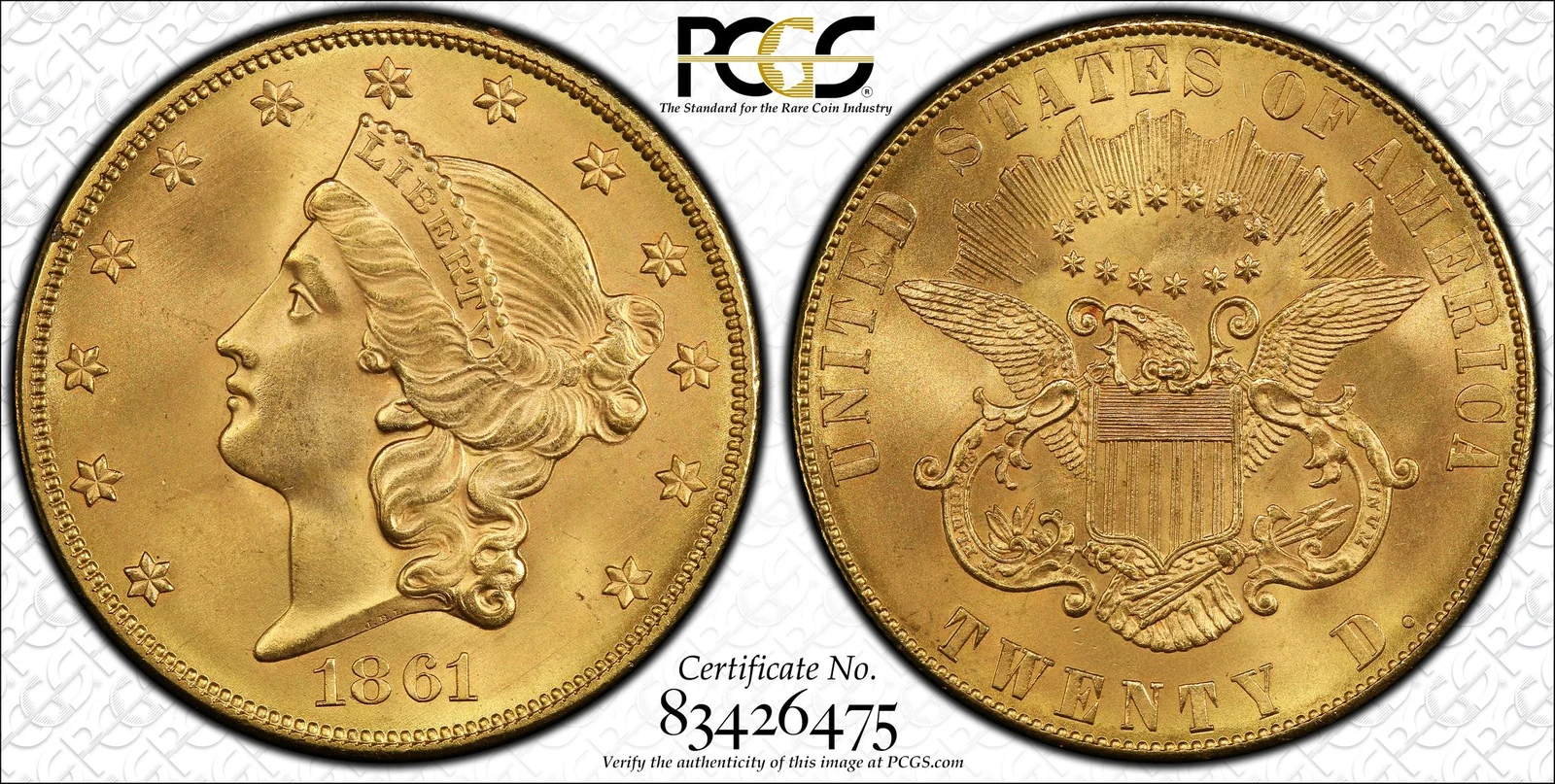
PCGS MS67 reference photograph of the finest-known Philadelphia Paquet reverse double eagle. Photo: PCGS TrueView
1861 Double Eagle, Paquet Reverse
An experimental reverse by Anthony Paquet created one of the great gold rarities. Only two Philadelphia examples are known; the Norweb specimen is the finer survivor.
What makes this one different
Look for the Paquet reverse's tall lettering and correct Philadelphia variety. The more available 1861-S Paquet and ordinary 1861 reverse are different issues.
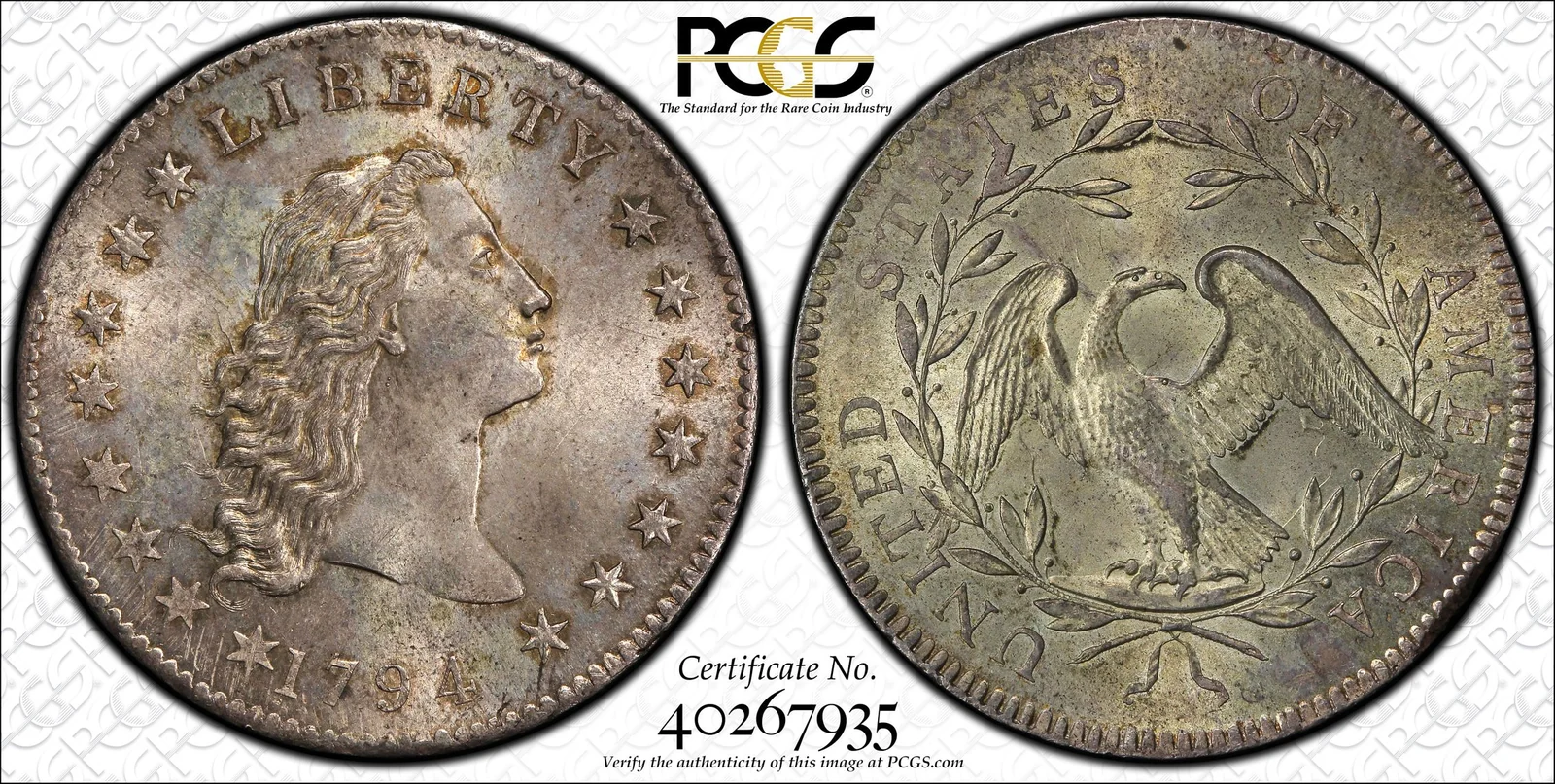
PCGS MS66+ Lord St. Oswald specimen; the certificate's sale history links the $6.6 million August 2021 benchmark. Exact sale coin. Photo: PCGS TrueView
1794 Flowing Hair Dollar, Regular Strike
The first federal silver-dollar date is especially prized in exceptional preservation. This regular-strike benchmark is separate from the silver-plug specimen-strike record.
What makes this one different
A 1794 date does not establish the grade or special-strike status. Check the complete attribution and surfaces before comparing auction prices.
The PR65 James A. Stack specimen sold in December 2025, not the PR58 specimen sold in January 2026. Photo: PCGS TrueView
1804 Draped Bust Dollar, Class III
A previously unrecorded Class III dollar emerged in the James A. Stack collection and sold for $6 million in December 2025. Another specimen sold the following month, illustrating why grade and identity matter.
What makes this one different
Class III is a later restrike with a lettered edge. Its market is separate from Class I, even though both display the 1804 date.
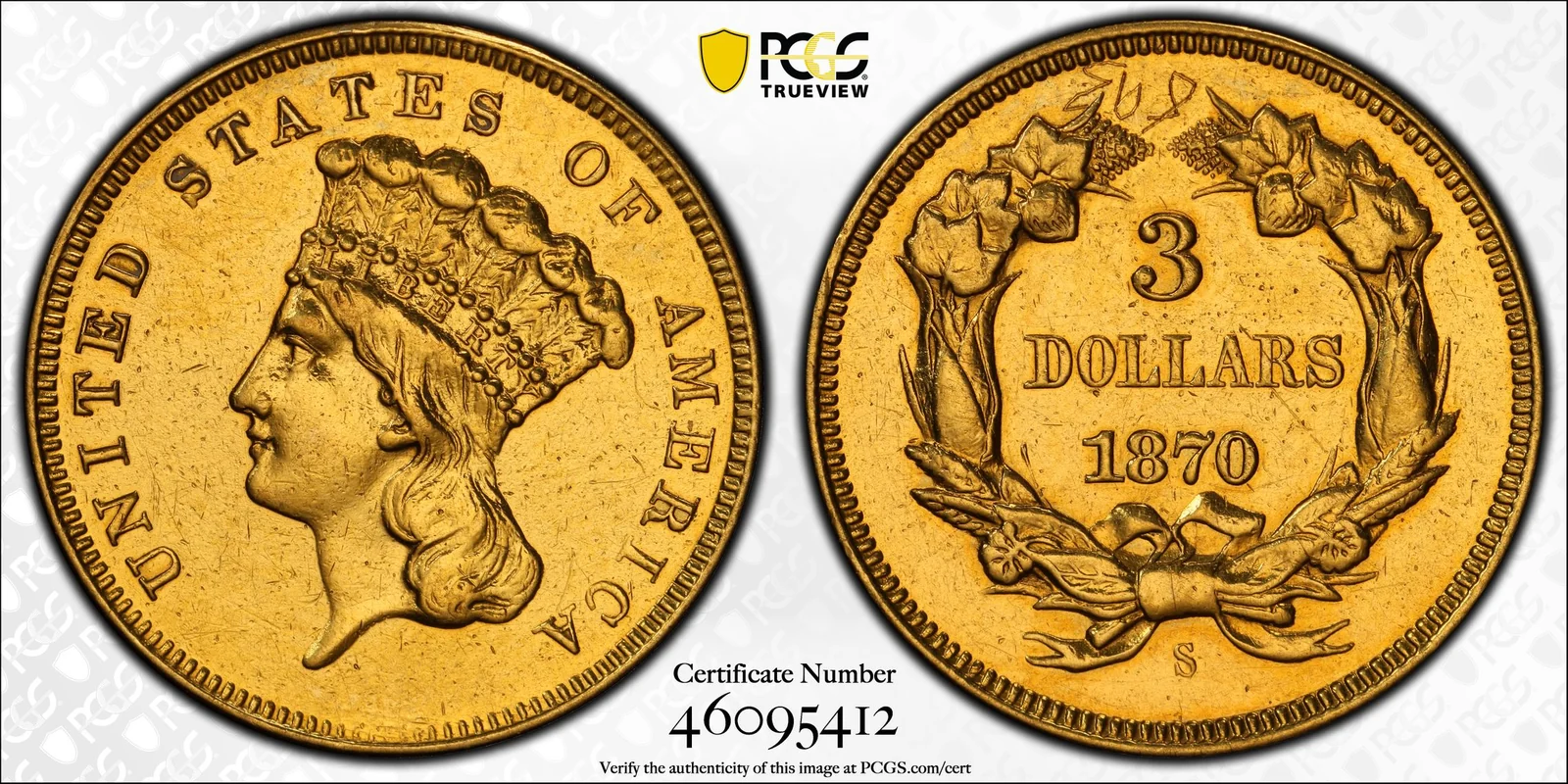
Exact Bass benchmark coin. The current certificate says AU50, while the 2023 auction catalog and PCGS auction record say SP50; the benchmark retains the sale classification. Photo: PCGS TrueView
1870-S Three-Dollar Gold Piece
The 1870-S three-dollar piece is represented by the exceptional specimen sold from the Bass collection in 2023. Its rarity outweighs its substantial surface impairments.
What makes this one different
The benchmark coin has a documented history of graffiti, jewelry use and cleaning. Its special status is not a grade comparison for an ordinary three-dollar coin.
The 2023 auction and PCGS Auction Prices list SP50; the current PCGS certificate 46095412 displays AU50. The same certificate links to the $5,520,000 sale, so the benchmark preserves the auction classification. The coin's engraving and historical surface impairments are material.
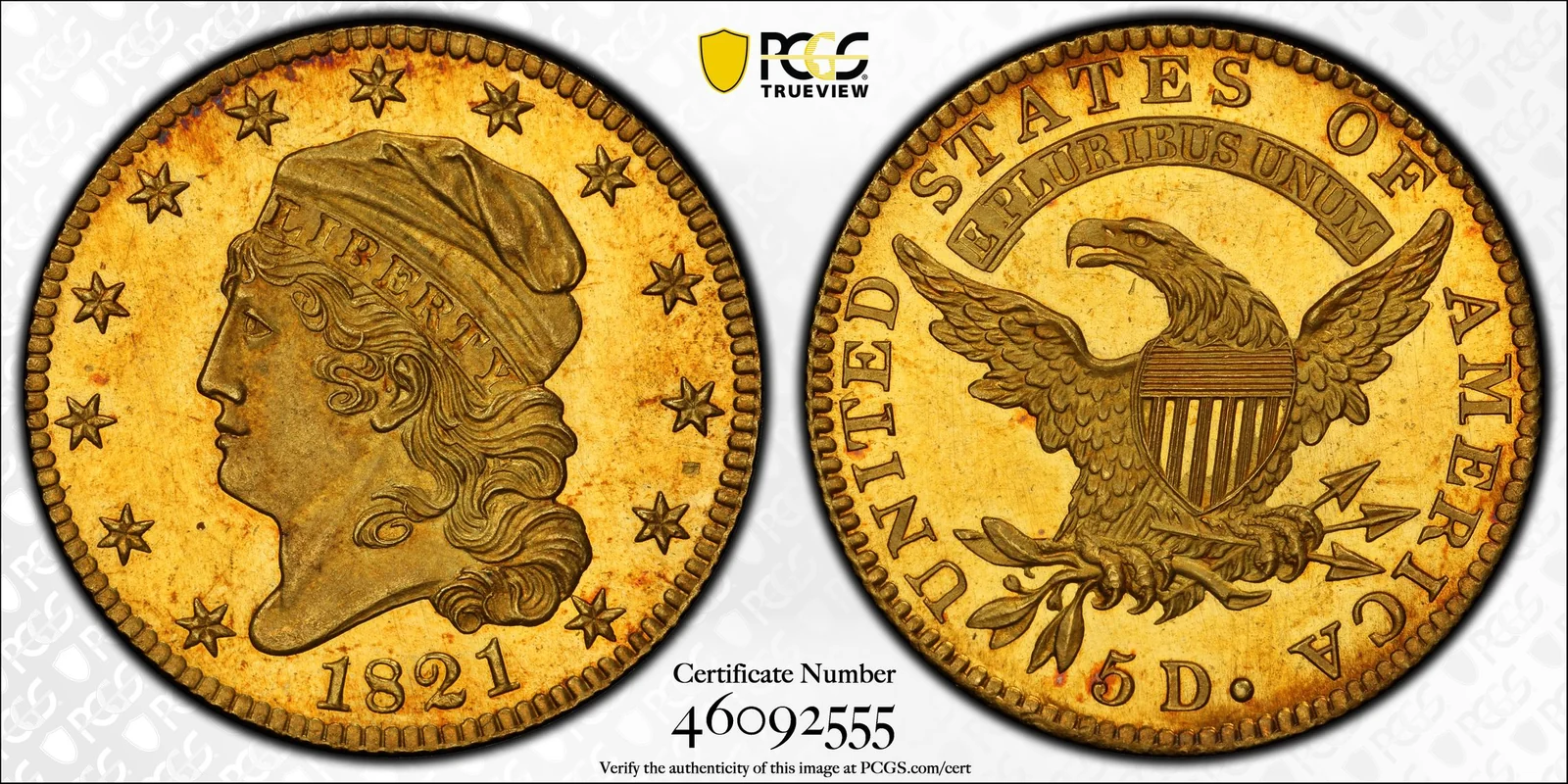
PCGS PR65CAM Bass specimen. This certificate is linked by Heritage's 2022 benchmark lot 11052; exact sale coin. Photo: PCGS TrueView
1821 Capped Bust Half Eagle, Proof
An early proof half eagle is a special-manufacture rarity rather than simply a high-grade circulation coin. The selected auction records a certified Cameo example.
What makes this one different
Proof attribution requires examination of dies and surfaces. Bright fields on a regular half eagle do not establish proof manufacture.
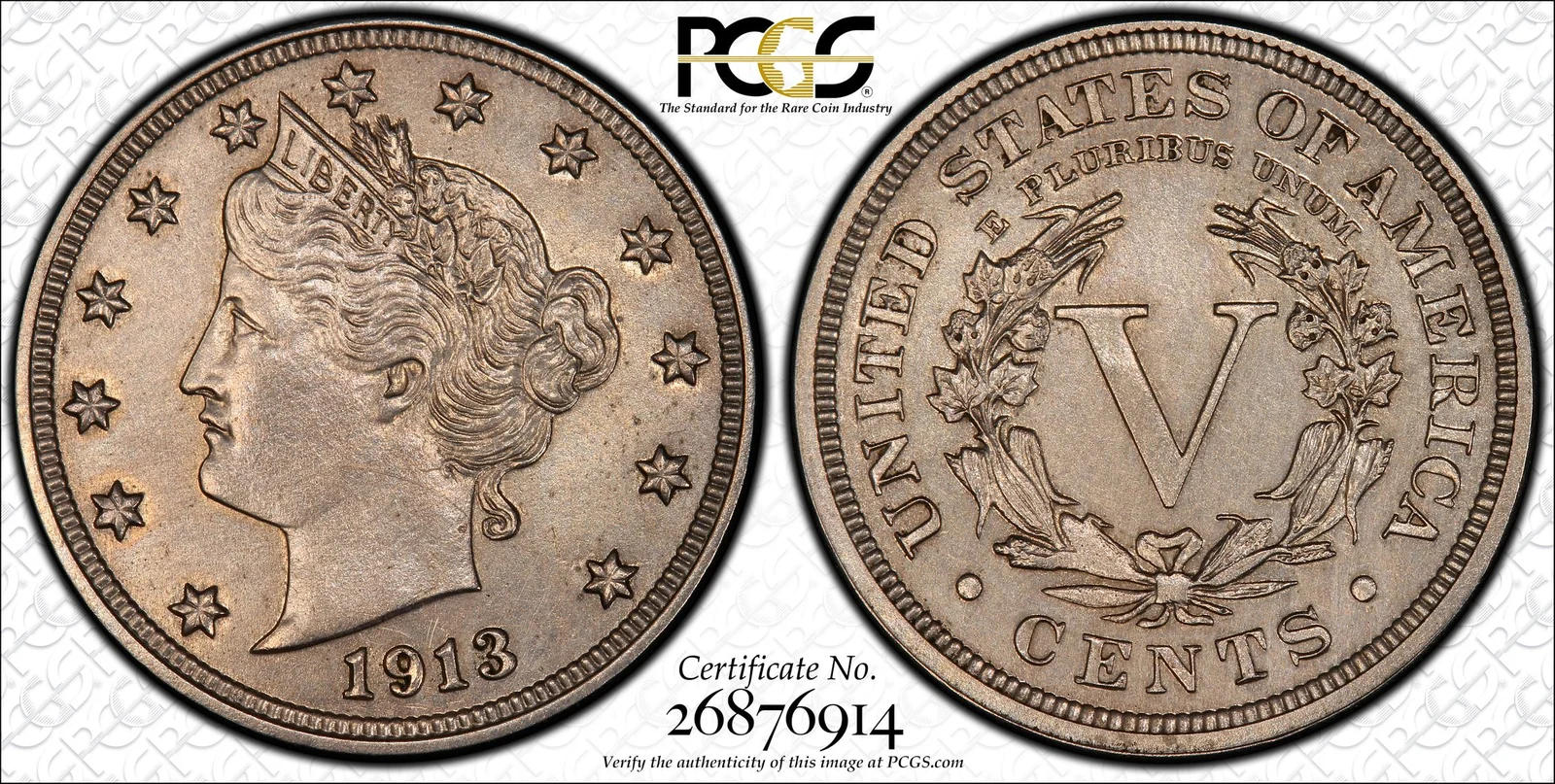
121913 Philadelphia Liberty Head nickel (Proof)5 centsNotable auction sale$4,560,000PCGS PR66, CAC
Representative same-issue PCGS PR63 photograph, certificate 26876914. NOT the Eliasberg PR66 specimen sold in the listed 2018 auction. Photo: PCGS CoinFacts / TrueView
1913 Philadelphia Liberty Head nickel (Proof)
Only five recognized 1913 Liberty Head nickels are known. The Eliasberg specimen's auction is a major public benchmark, separate from subsequent private transactions involving this issue.
What makes this one different
This issue has the Liberty portrait and Roman numeral V reverse, not the ordinary 1913 Buffalo design. A date match or altered coin cannot establish membership in the five-specimen roster.
Eliasberg specimen, PCGS certificate 02823063 at this auction. The representative PR63 photo is not this sold specimen.
PCGS APR includes buyer's premium. Stack's Bowers' own retrospective confirms the actual sale day, August 15, rather than the August 22 date shown in the CoinFacts header.
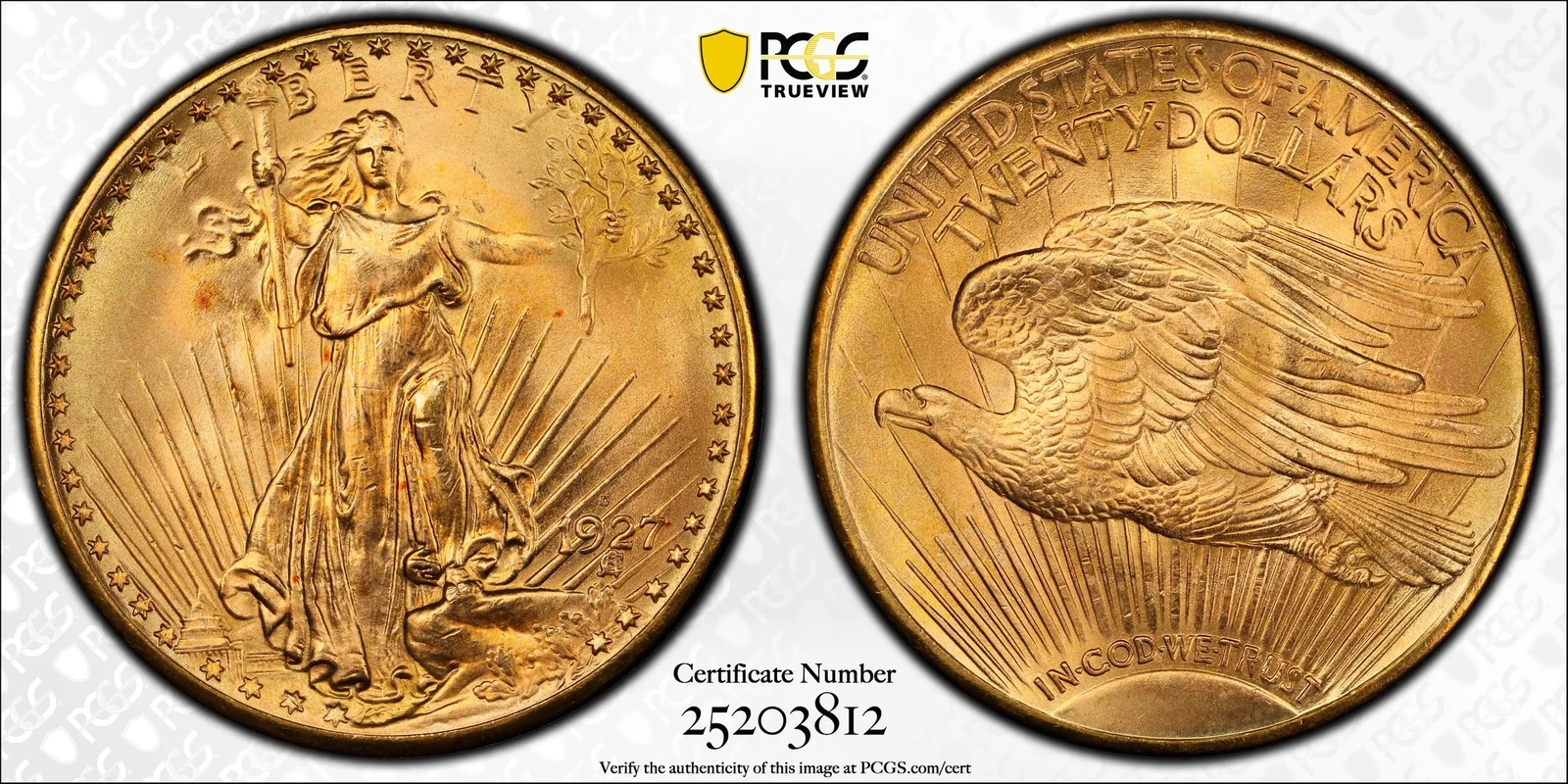
PCGS MS66 reference example. The pictured specimen is not asserted to be either auction lot listed here. Photo: PCGS TrueView
1927-D Saint-Gaudens Double Eagle
The Denver-mint 1927 double eagle is a major regular-issue gold rarity. Two public results are shown so a newer sale does not erase the higher, differently graded benchmark.
What makes this one different
The D mint mark distinguishes this issue from a Philadelphia 1927 double eagle. Authentication is essential because adding or altering a mint mark can imitate a rarity.
PCGS PR69 Bass specimen with inverted edge letters; the certificate's sale history identifies the $4.32 million August 2023 benchmark. Exact sale coin. Photo: PCGS TrueView
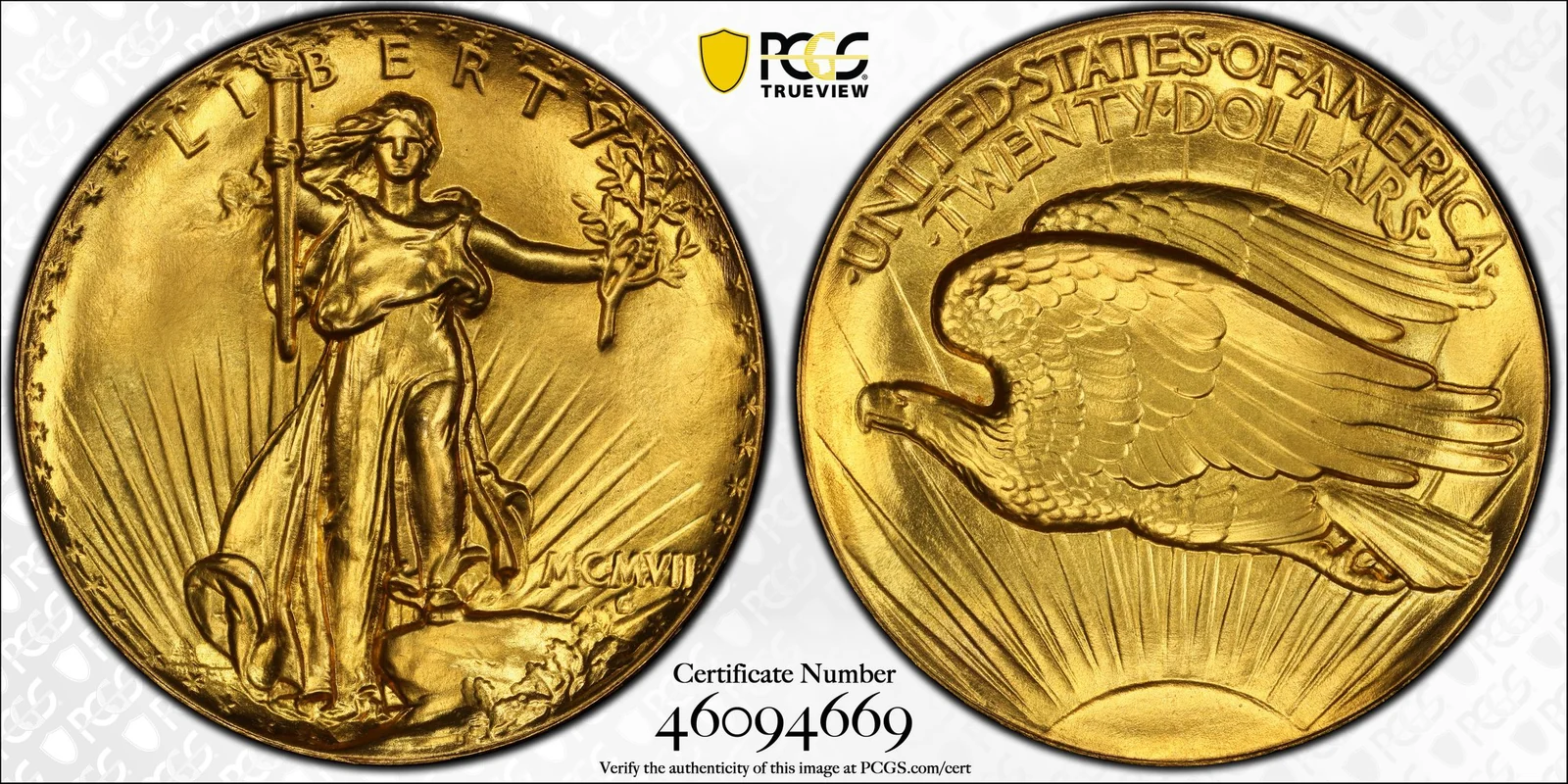
1907 Ultra High Relief Double Eagle, Inverted Edge Letters
The edge-lettering orientation identifies a distinct Ultra High Relief variety. It is separate from normal lettering and the earlier sans-serif edge experiment.
What makes this one different
Inspect the edge as well as both faces. Do not confuse Ultra High Relief with the more available 1907 High Relief or 2009 modern issue.
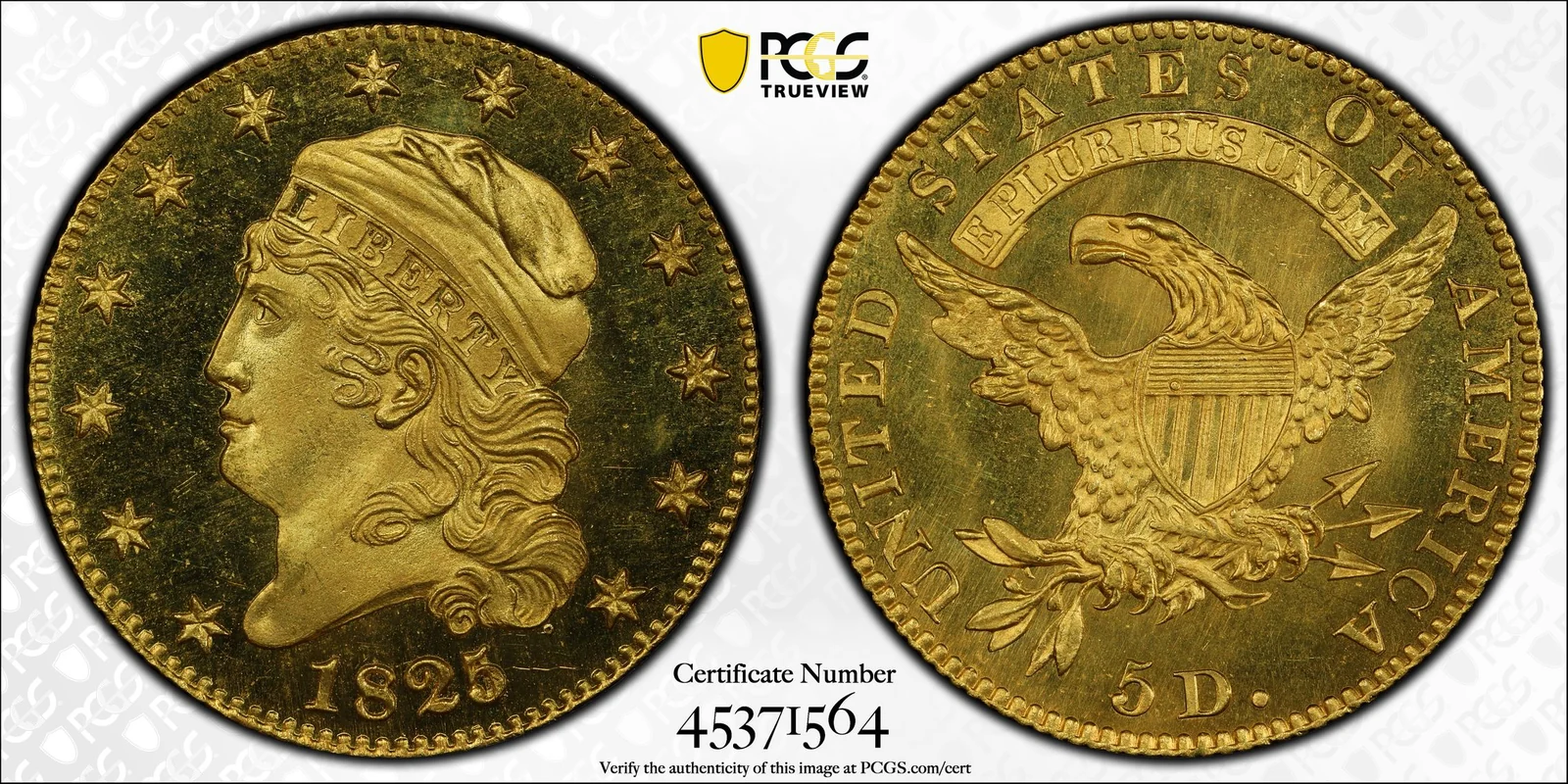
PCGS PR67CAM 1825/4/1 proof. This certificate is linked by the benchmark Stack's Bowers auction lot; exact sale coin. Photo: PCGS TrueView
1825/4/1 Capped Bust Half Eagle, Proof
This early proof combines an attributed overdate with special manufacture. The multi-million-dollar result concerns the proof issue, not every 1825 half eagle.
What makes this one different
Verify the overdate and proof die pairing under magnification. The underlying date digits alone do not establish proof status.
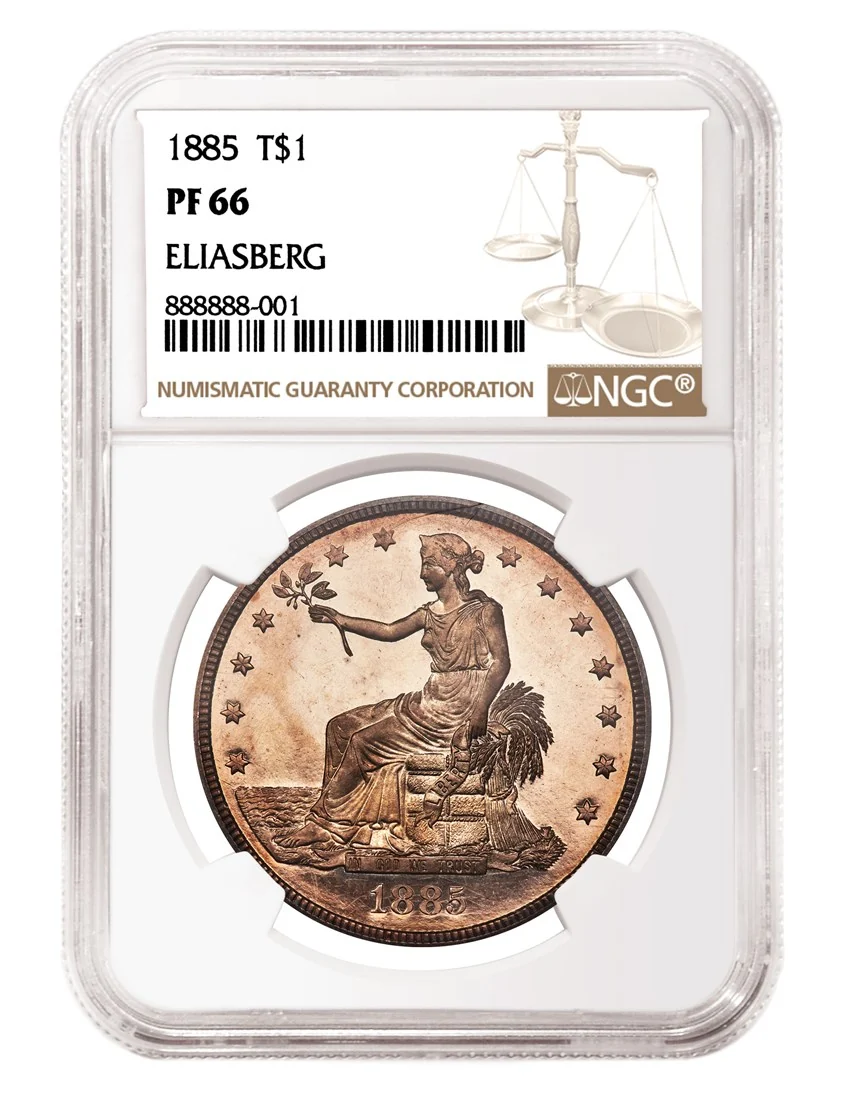
NGC obverse photograph of the Eliasberg PF66 specimen sold in 2019, not the 2021 Cameo example. Photo: NGC
1885 Trade Dollar
Just five 1885 Trade dollars are known. This proof-only date closes the series with extreme rarity, far removed from the more familiar circulation-strike Trade dollars of the 1870s.
What makes this one different
The 1885 date and genuine proof manufacture are essential. The two results concern different specimens, grades and finish designations, not a fall in one coin's price.
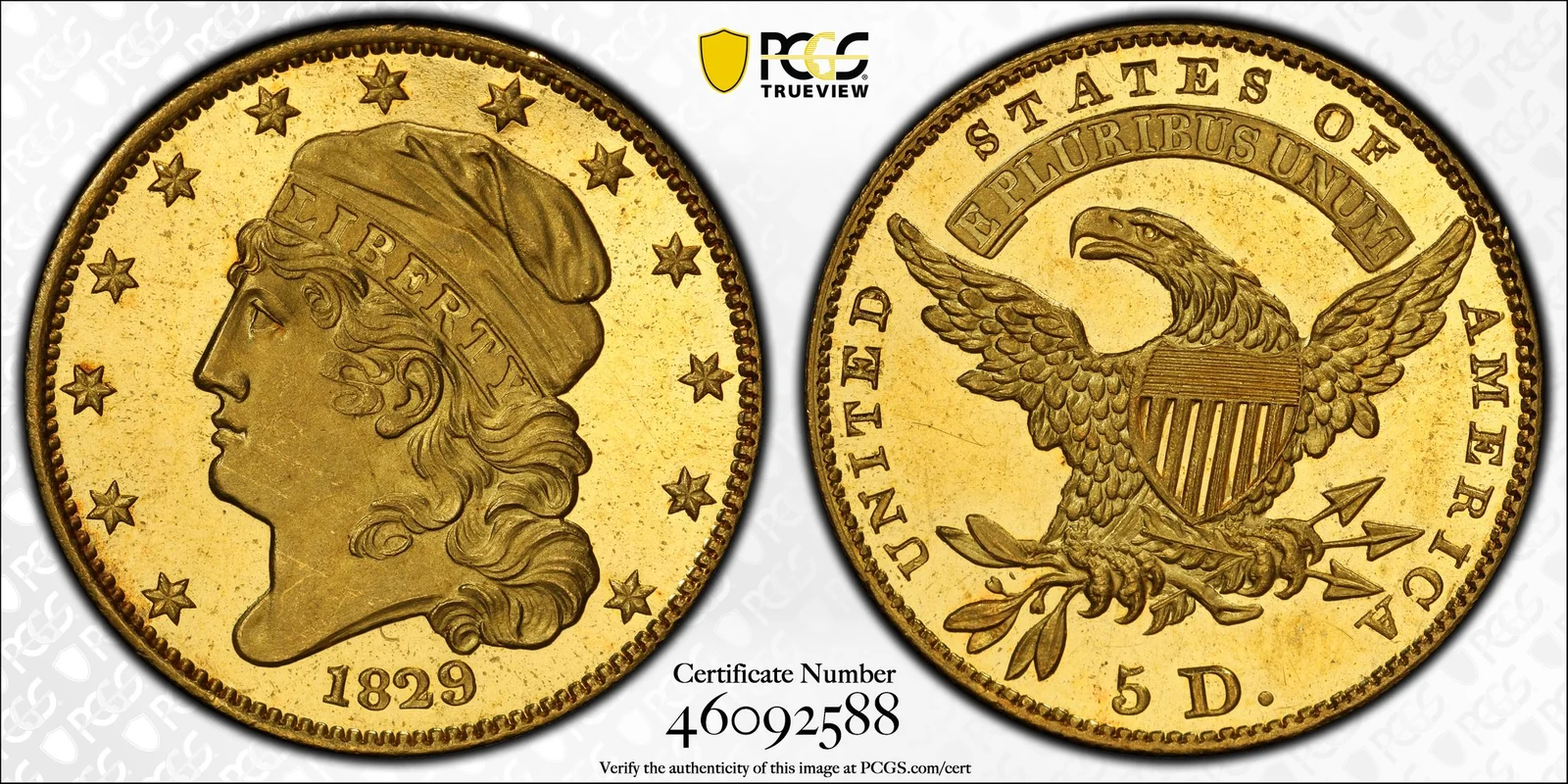
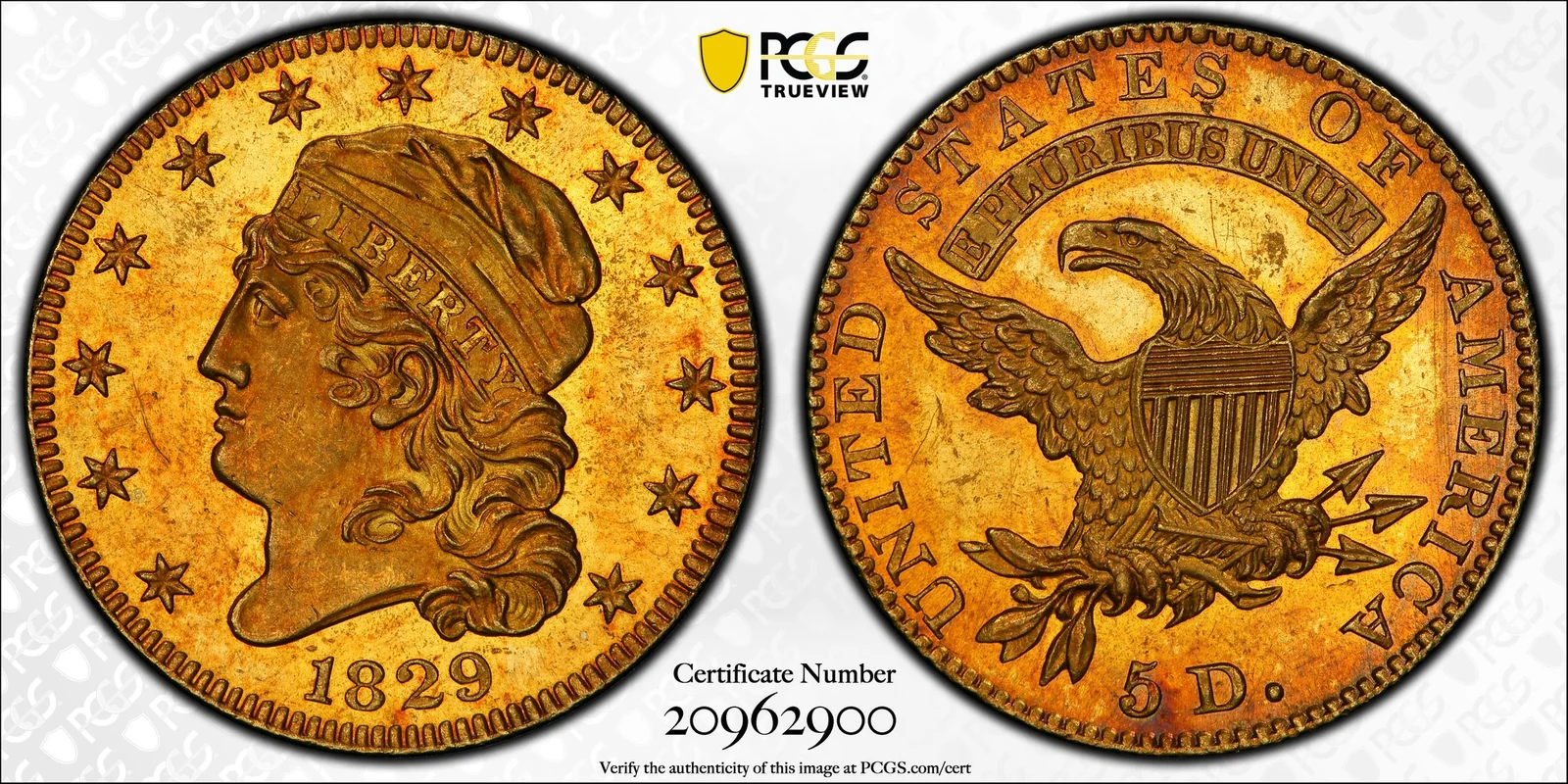
Representative same-issue PCGS PR66+CAM specimen, certificate 46092588; not asserted to be the benchmark auction coin. Photo: PCGS TrueView
1829 Small Size Capped Bust Half Eagle, Proof
The 1829 Small Size proof belongs to the revised, smaller-format half eagle design. It is genuinely distinct from the Large Size proof of the same year.
What makes this one different
Confirm the smaller-format type and proof attribution together. Size and date should be checked against a certified reference.
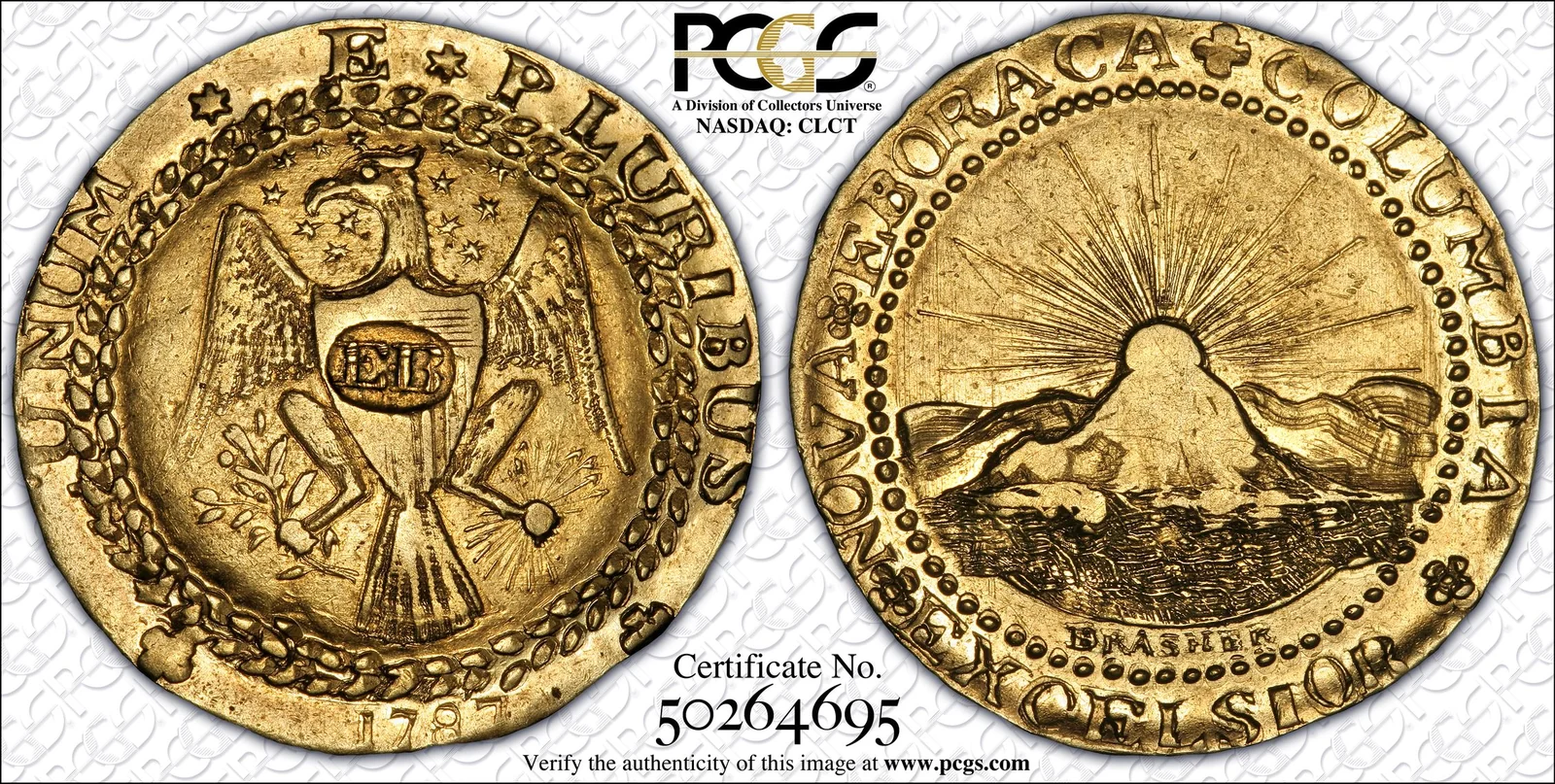
221787 Brasher Doubloon, EB on BreastEarly American gold doubloonNotable auction sale$2,990,000NGC XF45
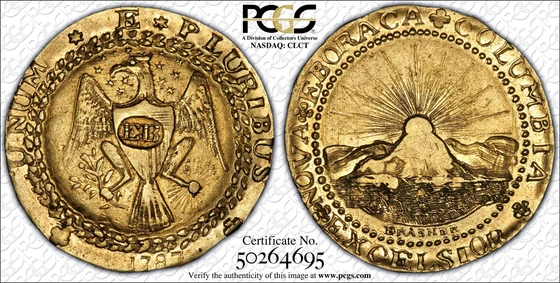
Representative same-issue PCGS AU50 specimen, certificate 50264695; not asserted to be the benchmark auction coin. Photo: PCGS TrueView
1787 Brasher Doubloon, EB on Breast
Brasher's EB punch on the eagle's breast separates this New York-style issue from the wing-punch variety. The benchmark is its documented 2005 public auction sale.
What makes this one different
Locate the EB punch and confirm the specimen's established identity. Later private-sale reports are not included in this auction benchmark.
Later private transactions are excluded. The benchmark retains the NGC XF45 grade reported for the public 2005 auction, not a later PCGS grade.
Representative same-issue specimen, PCGS certificate 28585697; NOT identified as the listed auction specimen. Grade and color may differ from the benchmark. Photo: PCGS TrueView
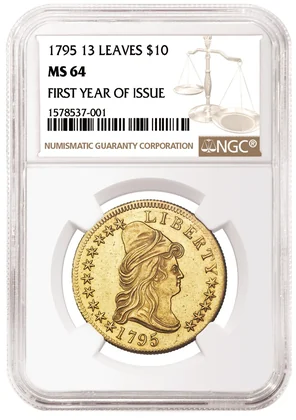
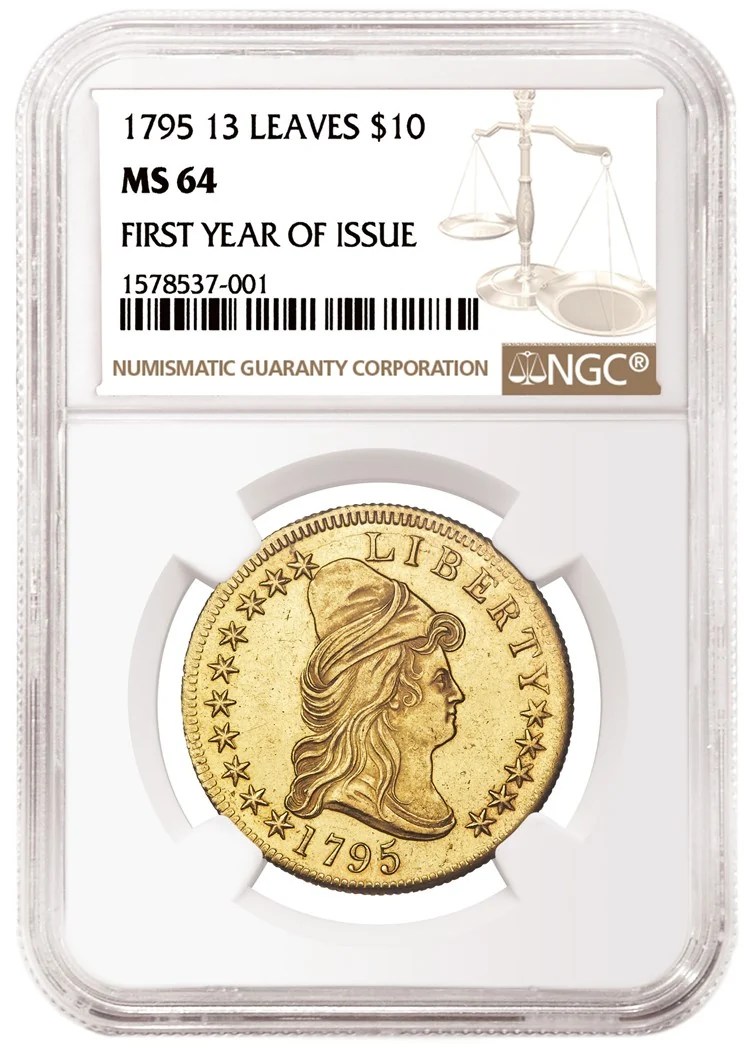
Representative same-issue NGC MS64 specimen; not asserted to be the PCGS MS66+ 2015 benchmark coin. Photo: NGC
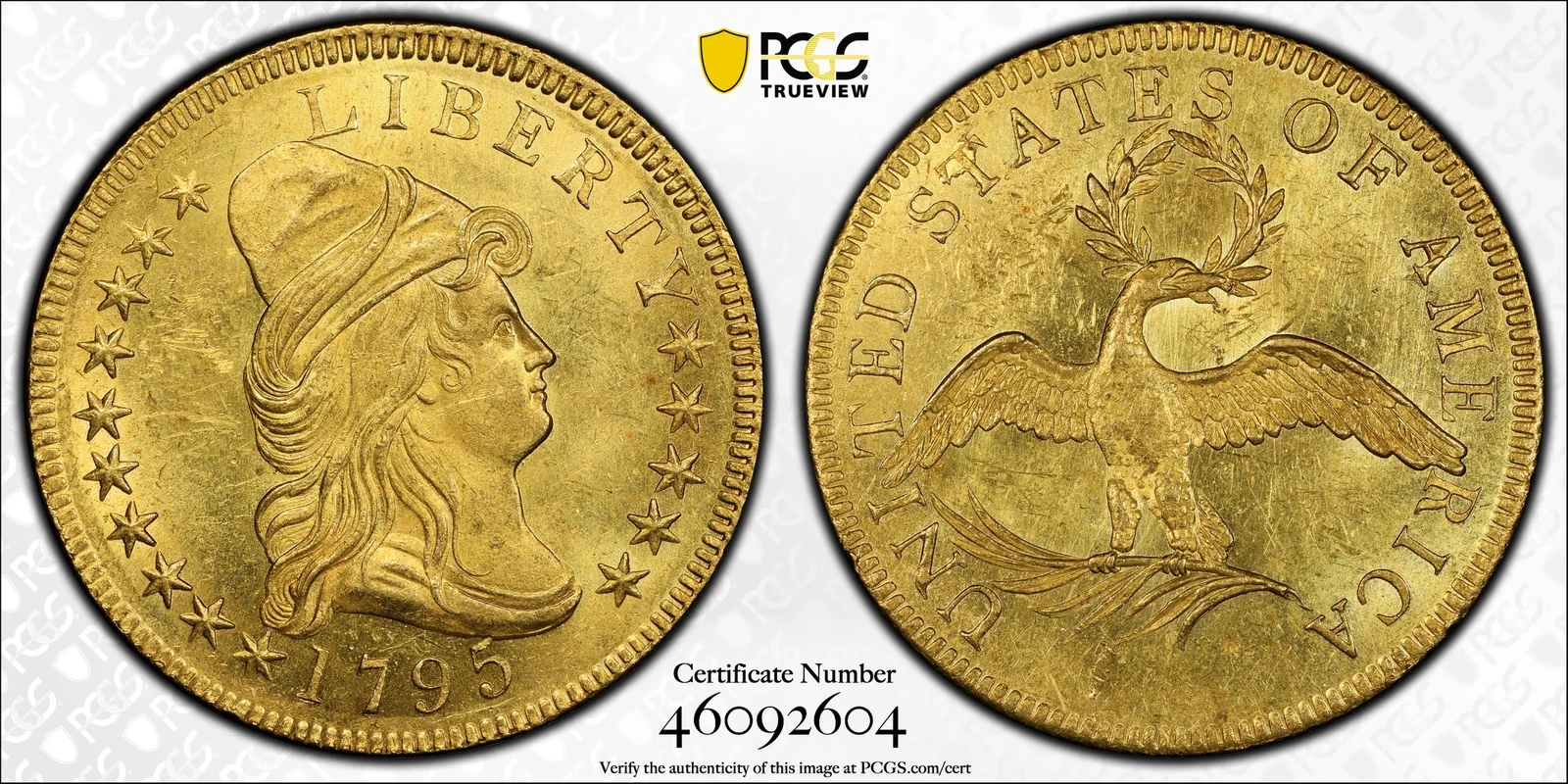
1795 Capped Bust Eagle, Thirteen Leaves
The first-year eagle appears in distinct reverse-leaf varieties. This benchmark concerns the Thirteen Leaves issue in exceptional Mint State condition.
What makes this one different
Attribute the leaves with a verified reverse reference. A Nine Leaves coin or a lower-grade Thirteen Leaves example requires its own comparison.
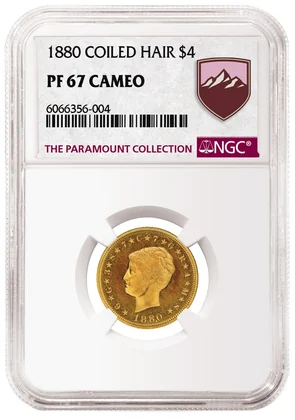
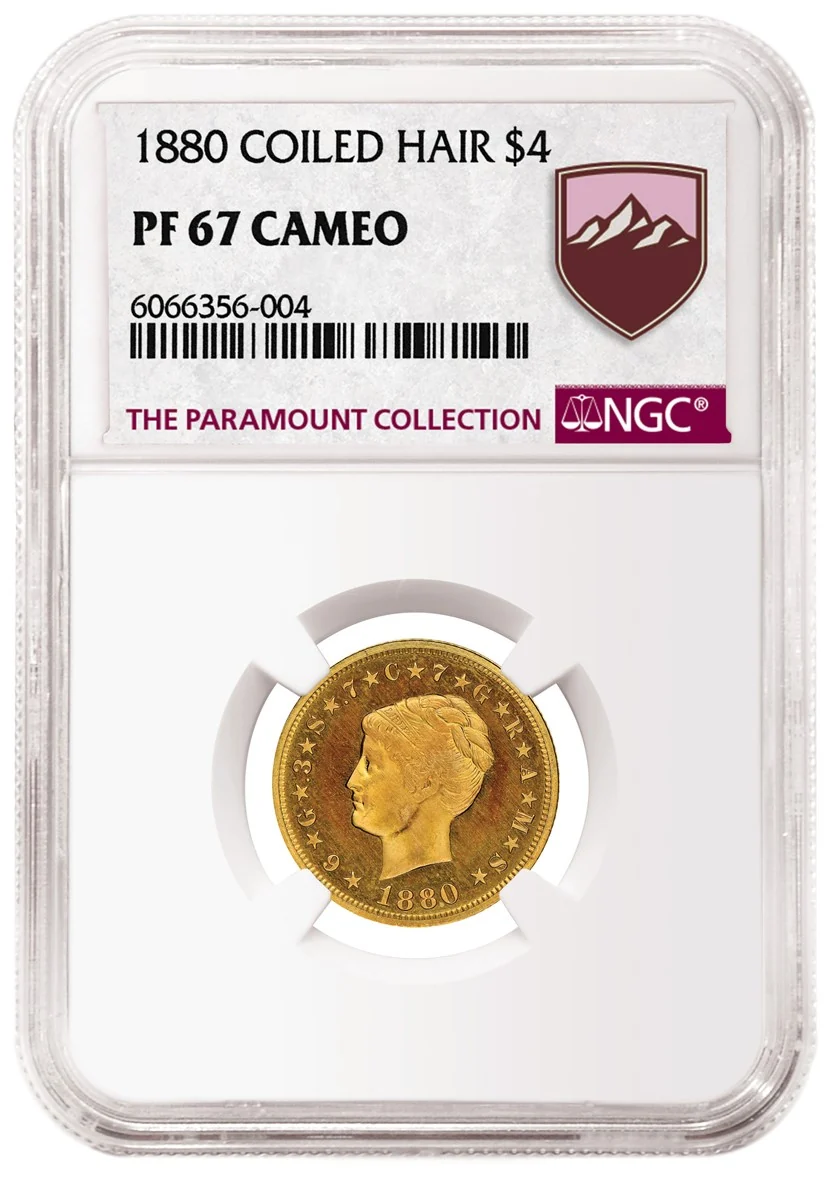
Representative same-issue NGC PF67 Cameo Paramount specimen sold in 2021; not asserted to be the 2013 benchmark coin. Photo: NGC
1880 Coiled Hair Stella
The four-dollar Stella was an experimental denomination, not a regular circulation issue. The Coiled Hair design is distinct from the Flowing Hair pattern.
What makes this one different
Confirm the 1880 date, Coiled Hair portrait and genuine pattern manufacture. Color or a four-dollar inscription does not authenticate a Stella.
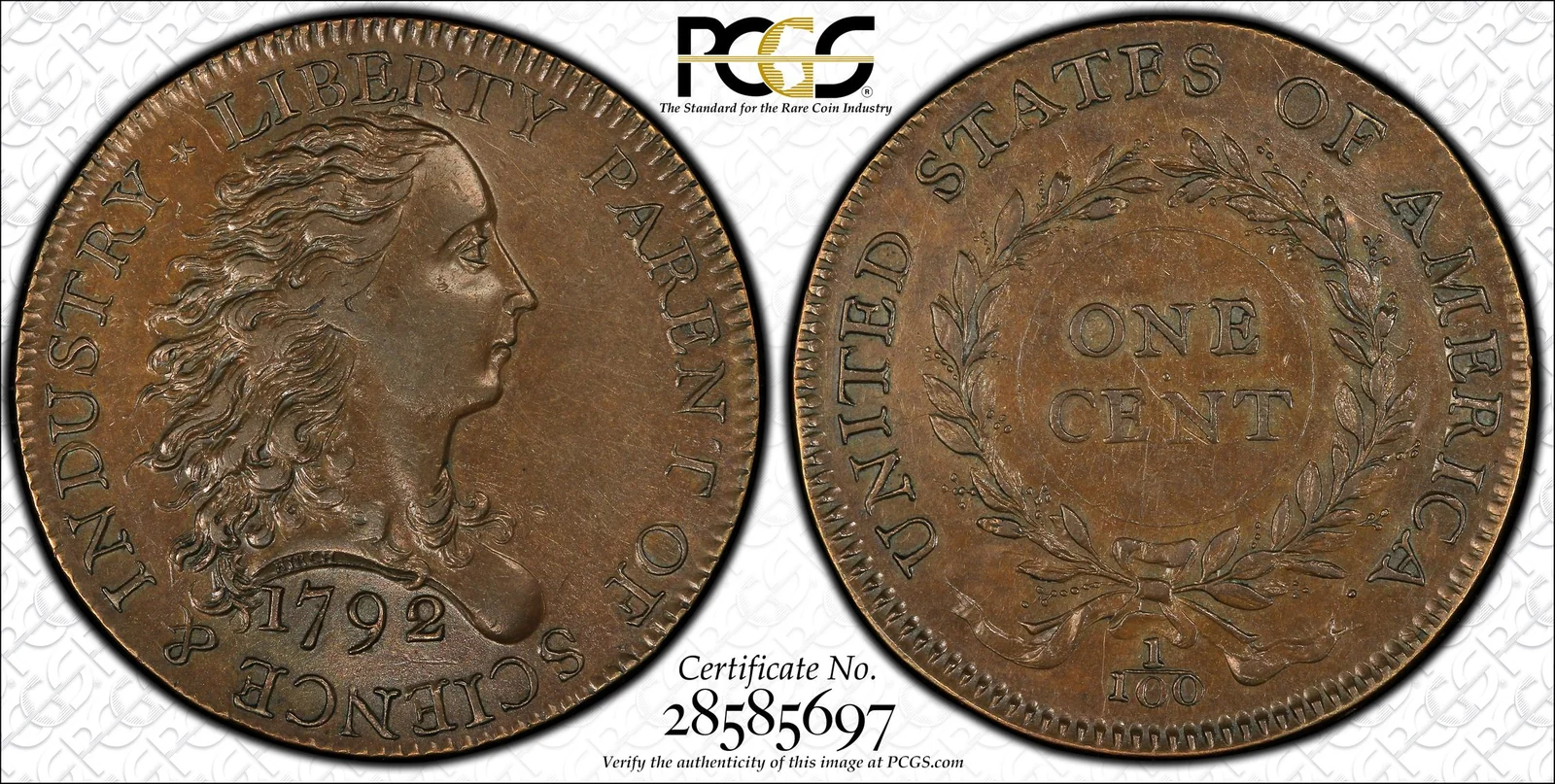
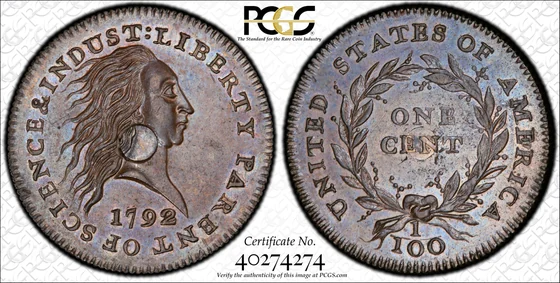
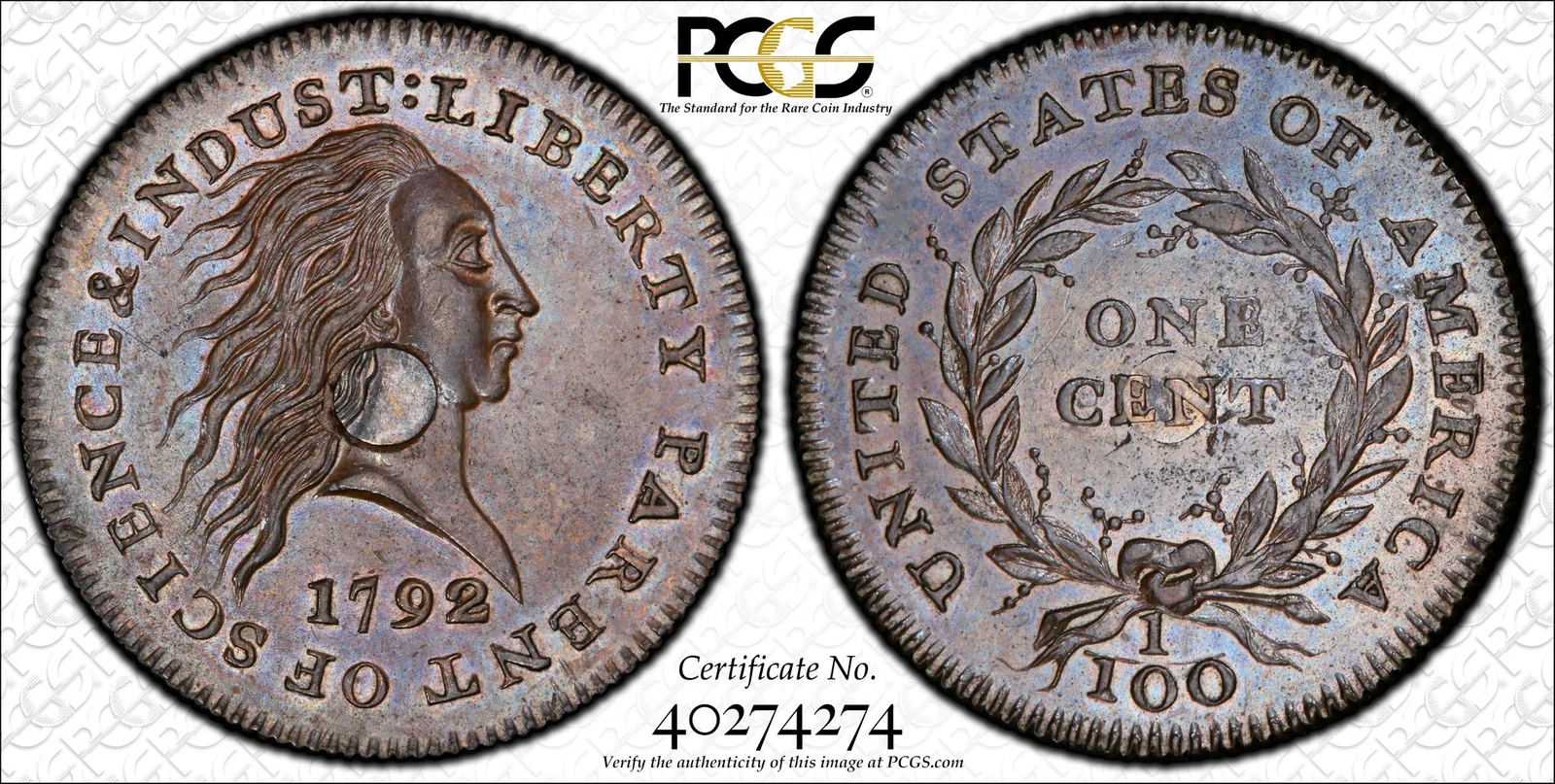
PCGS certificate 40274274, matched to the benchmark auction lot by its certificate number. The gallery was explicitly labeled TrueView. Photo: PCGS TrueView
1792 Silver Center cent pattern (Judd-1)
The silver plug in a copper body was an early experiment in giving a small one-cent coin its intended metal value.
What makes this one different
The plug, dies and construction must all be authenticated. A silver-colored insert in a replica is not evidence of an original pattern.
281854-S Liberty Head Half Eagle$5 gold; San FranciscoNotable auction sale$2,400,000PCGS XF45
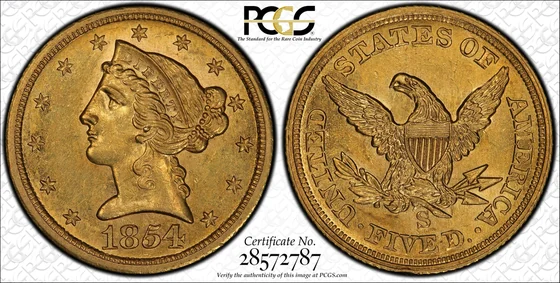
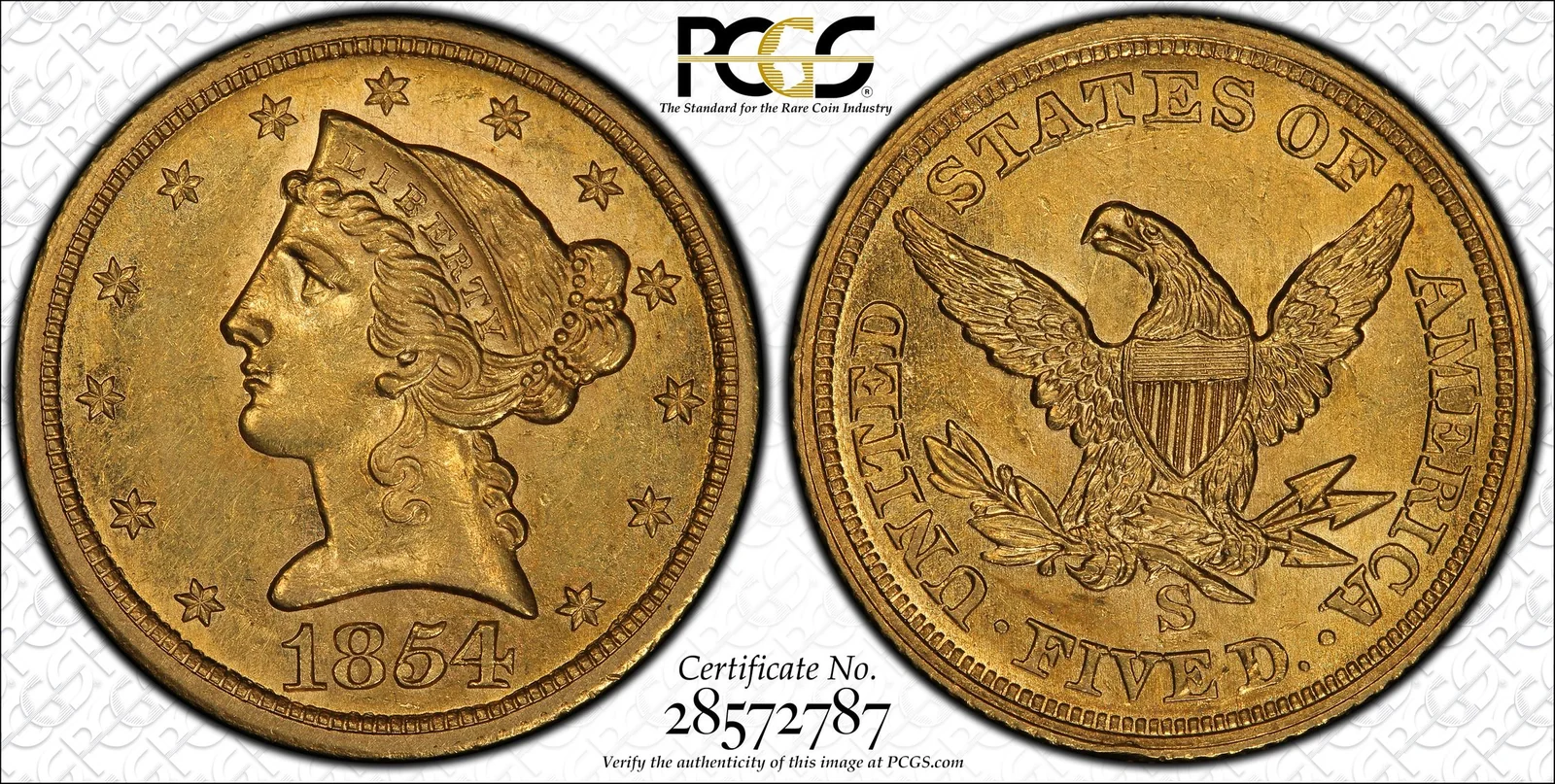
Representative same-issue PCGS AU58+ specimen, certificate 28572787; not asserted to be the benchmark auction coin. Photo: PCGS TrueView
1854-S Liberty Head Half Eagle
The first San Francisco half-eagle date is an exceptional rarity. This benchmark concerns a certified circulated survivor rather than a Mint State coin.
What makes this one different
Authenticate the S mint mark and known specimen identity. A worn genuine example can be extremely valuable, but an added mint mark is not.
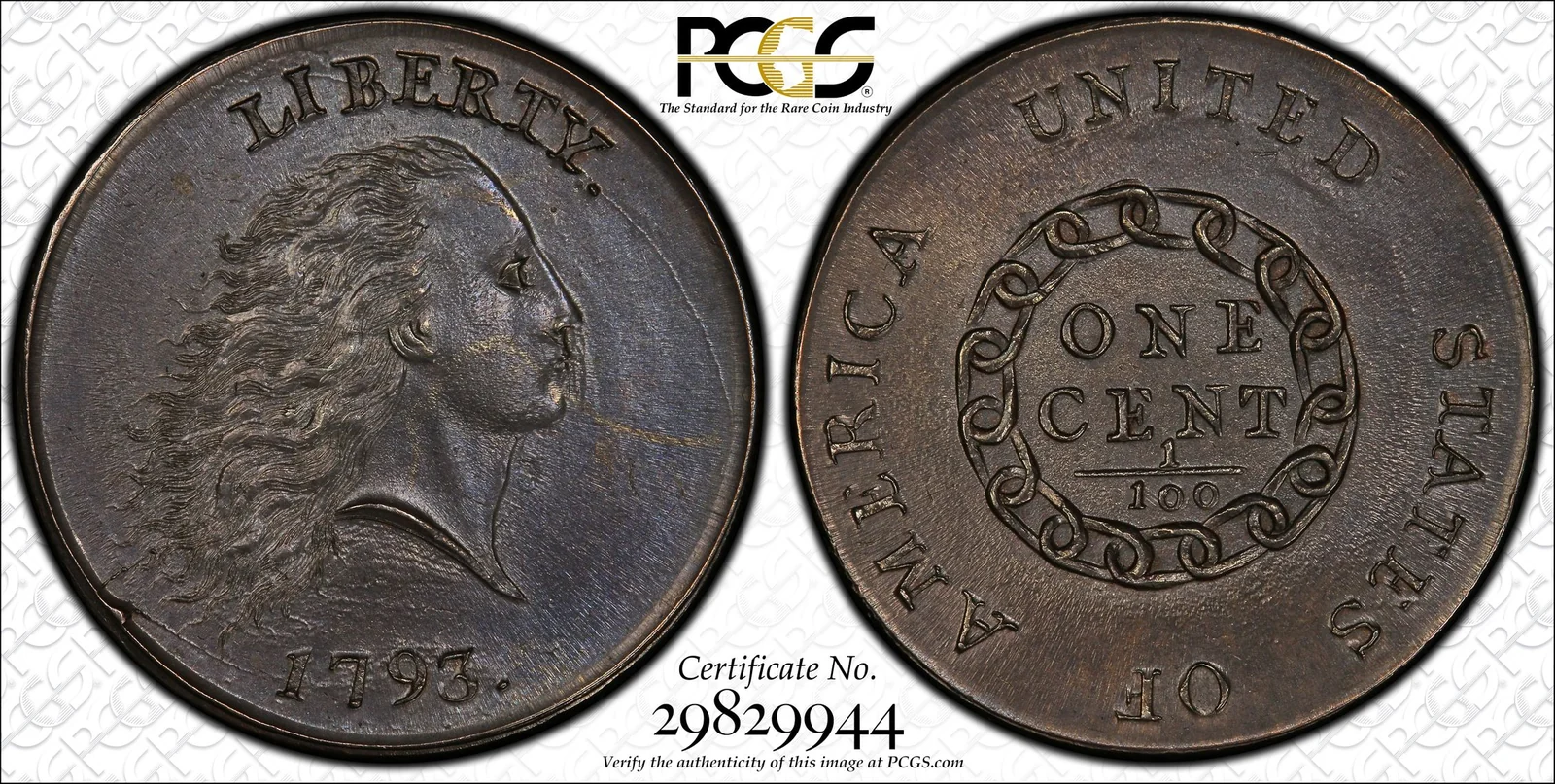
301793 Philadelphia Chain cent, AMERICA with Periods (S-4)1 centNotable auction sale$2,350,000Newer sale: $85,400 (Jan 8, 2026)PCGS MS66BN, CAC
PCGS service photograph of certificate 29829944, identified in CoinFacts as the MS66BN Parmelee-Naftzger benchmark specimen. NOT the newer XF45 Ellsworth specimen. Photo: PCGS CoinFacts / TrueView
1793 Philadelphia Chain cent, AMERICA with Periods (S-4)
The Chain cent belongs to the first regular-issue United States cents. This benchmark concerns an exceptionally preserved S-4 example with AMERICA spelled out on the reverse.
What makes this one different
S-4 has periods after LIBERTY and the date, plus a chain reverse. Other 1793 cent designs, different Chain varieties, and heavily worn examples are not equivalent to the MS66BN specimen.
Parmelee-Naftzger specimen, PCGS certificate 29829944. This is not the circulated Ellsworth specimen in the newer sale.
Reported auction realization including buyer's premium; corroborated by NGC Auction Central, whose stated convention is hammer plus auction-house commission.
Heritage Auctions, FUN Special Sessions: Ellsworth & Jacobson, auction 1389, lot 2004
Specimen / lot
COL Steven K. Ellsworth Collection, PCGS certificate 44238817; different, circulated S-4 specimen, not the MS66BN benchmark. Selected newer comparison, not the latest known appearance of the issue.
PCGS APR includes buyer's premium. Heritage's public lot gives January 8 as the sold date and states a 22% buyer's premium.
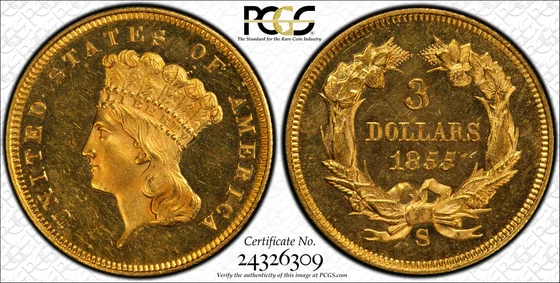
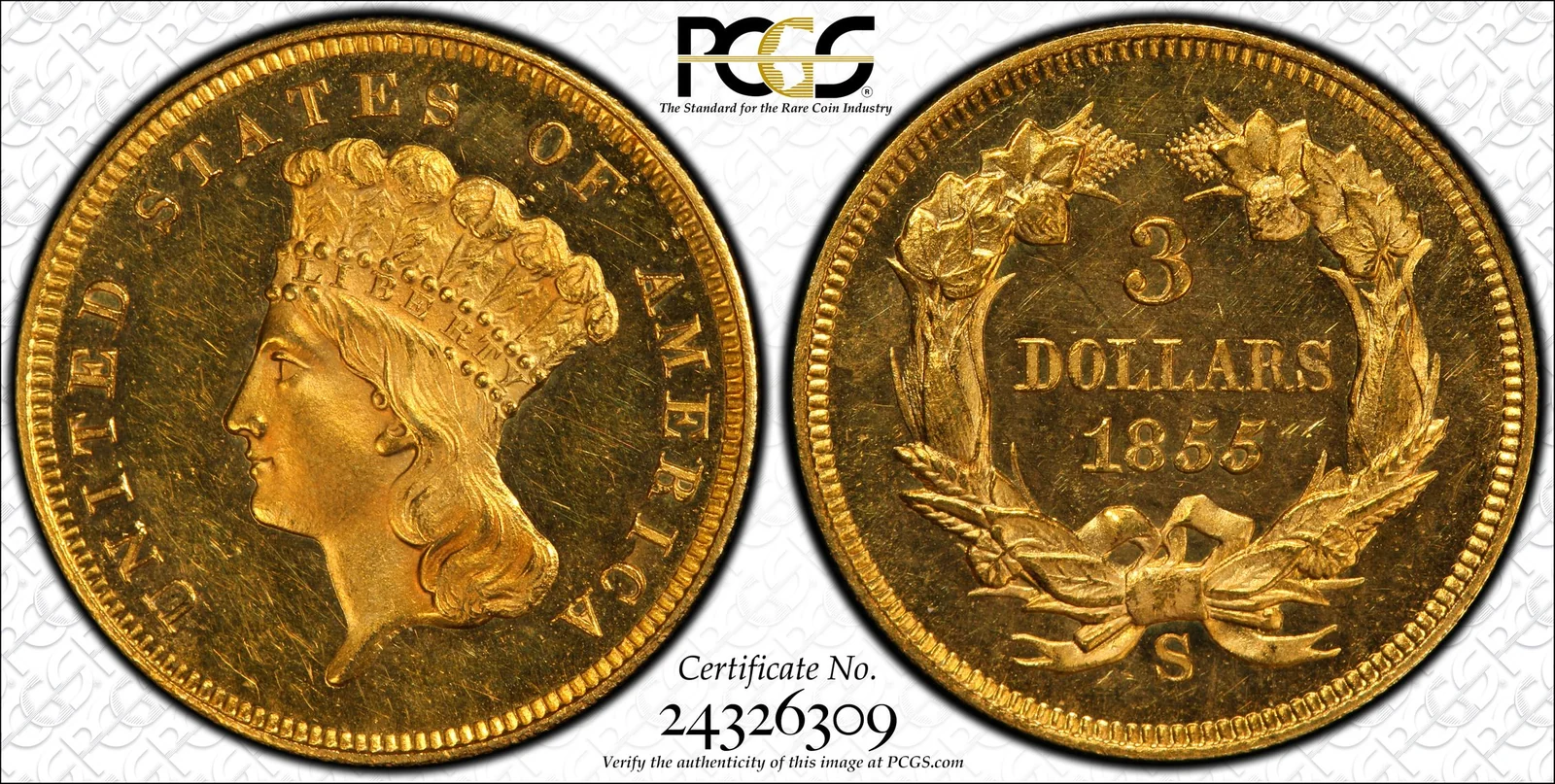
Representative same-issue PCGS PR64CAM specimen, certificate 24326309; not asserted to be the benchmark auction coin. Photo: PCGS TrueView
1855-S Three-Dollar Gold Piece, Branch-Mint Proof
This San Francisco special strike is represented once, consolidating overlapping proof listings. The selected benchmark is the higher verified February 2023 sale.
What makes this one different
The S mint mark is not enough to establish proof status. Do not count Cameo or different grading-service descriptions as additional issues.
Heritage Auctions, 2025 FUN, auction 1380, lot 4307
Specimen / lot
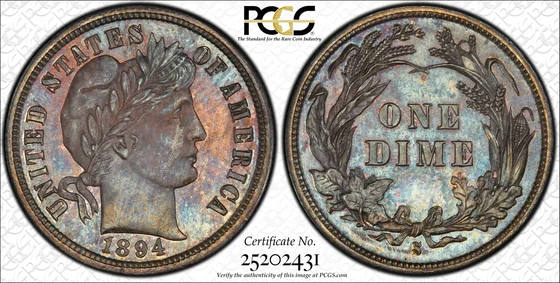
The SAME Clapp-Eliasberg-Richmond coin, PCGS cert 25202431; offered from the Bruce S. Sherman Collection, Part I. This is a resale, not a second specimen.
Published sold total including the lot's 20% buyer's premium.
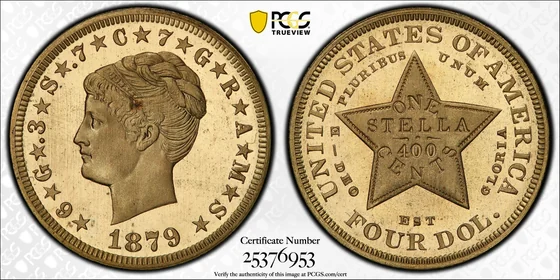
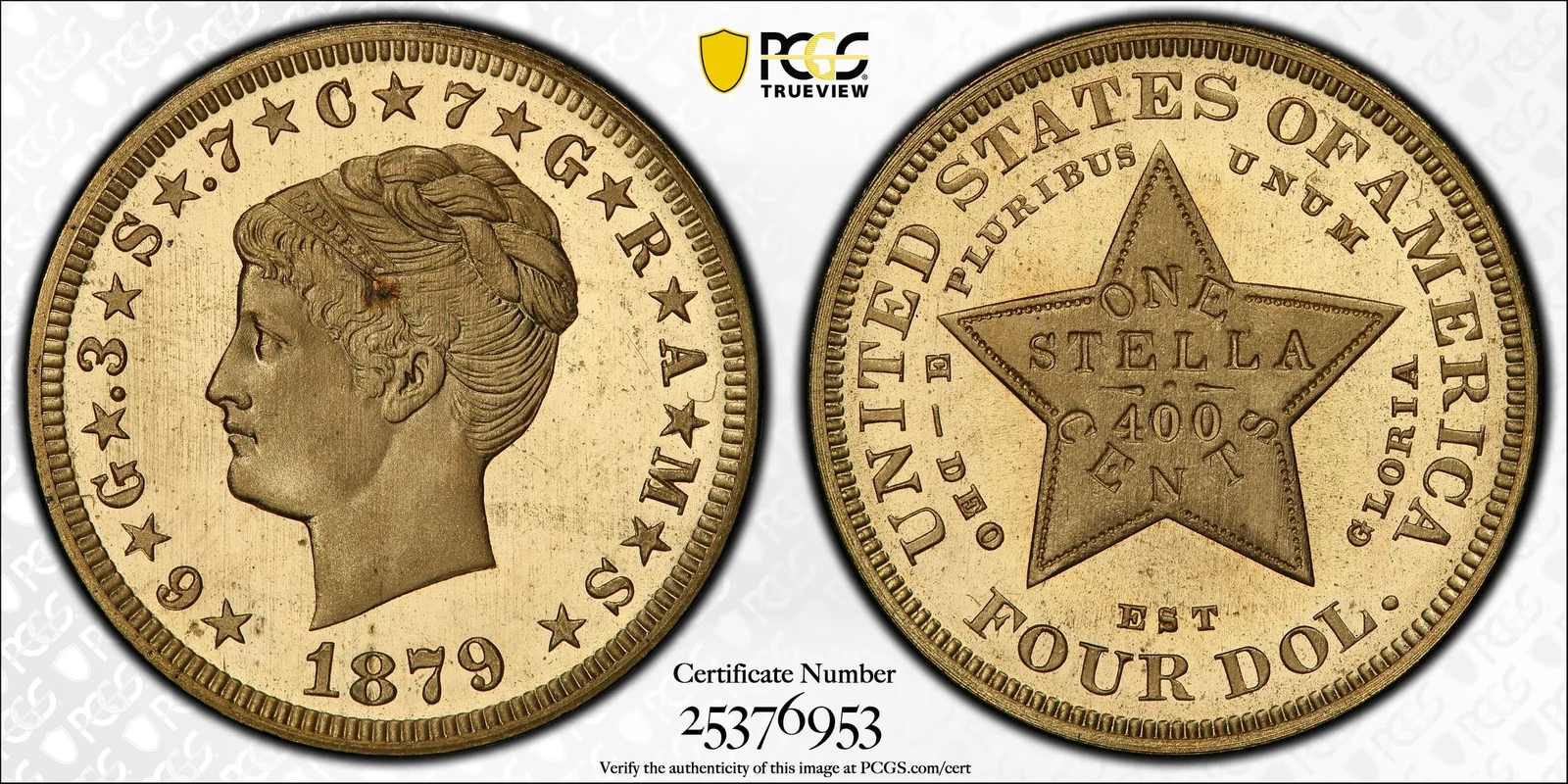
Representative same-issue PCGS PR66CAM specimen, certificate 25376953; not asserted to be the benchmark auction coin. Photo: PCGS TrueView
1879 Coiled Hair Stella
The 1879 Coiled Hair Stella is distinct from the Flowing Hair design and from the 1880 Coiled Hair issue. A verified 2026 auction result updates the older index figure.
What makes this one different
Verify both date and portrait design. Cameo suffixes describe the specimen's surfaces, not another Stella variety.
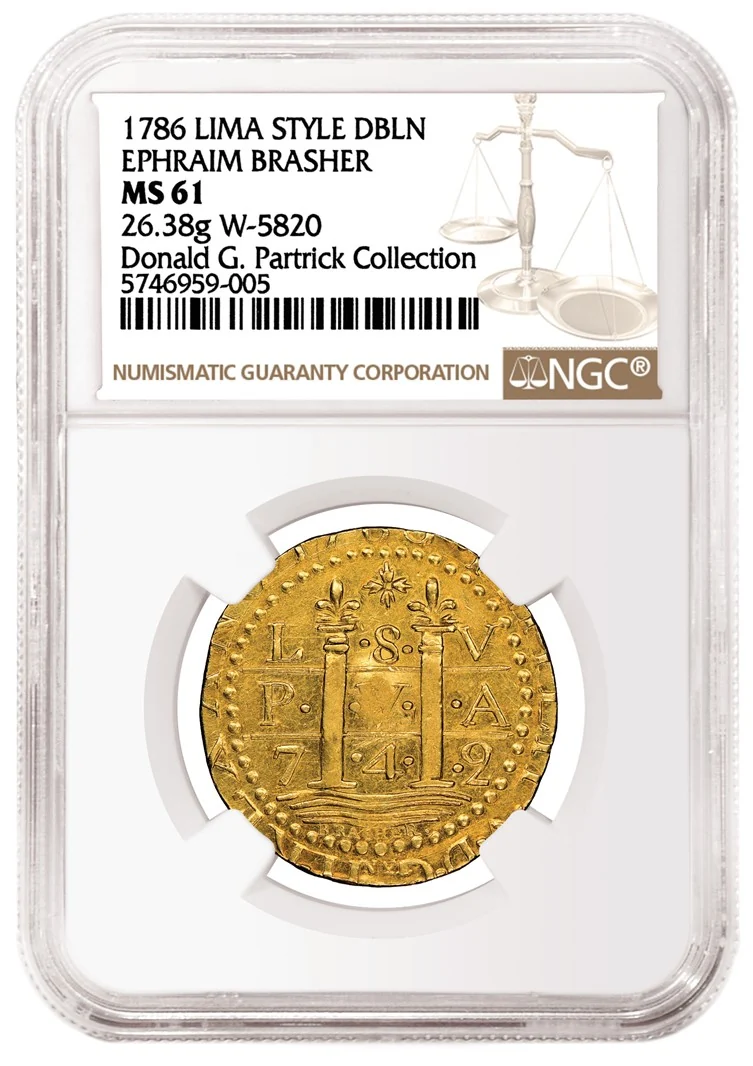
361786 Brasher Doubloon, Lima StyleEarly American gold doubloon; Lima-style designNotable auction sale$2,100,000NGC MS61
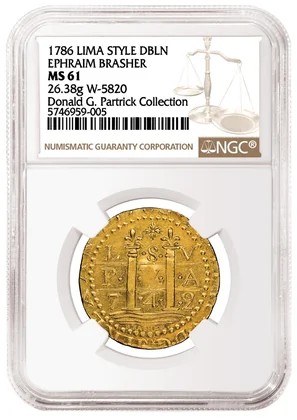
NGC obverse photograph of the Partrick MS61 specimen sold for $2.1 million in January 2021; exact benchmark coin. Photo: NGC
1786 Brasher Doubloon, Lima Style
This Brasher-made early American coin borrows a Lima-style design but is not an unrelated foreign-minted coin. The benchmark is the Partrick specimen's 2021 auction sale.
What makes this one different
Specialist attribution must establish Brasher manufacture, not merely a resemblance to Spanish colonial gold. Keep it distinct from the 1787 New York-style varieties.
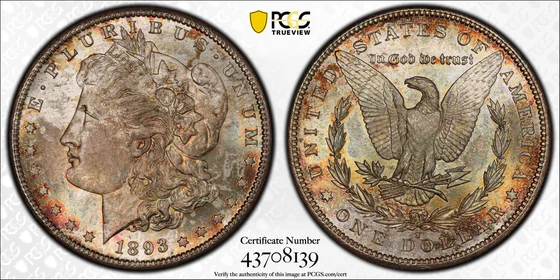
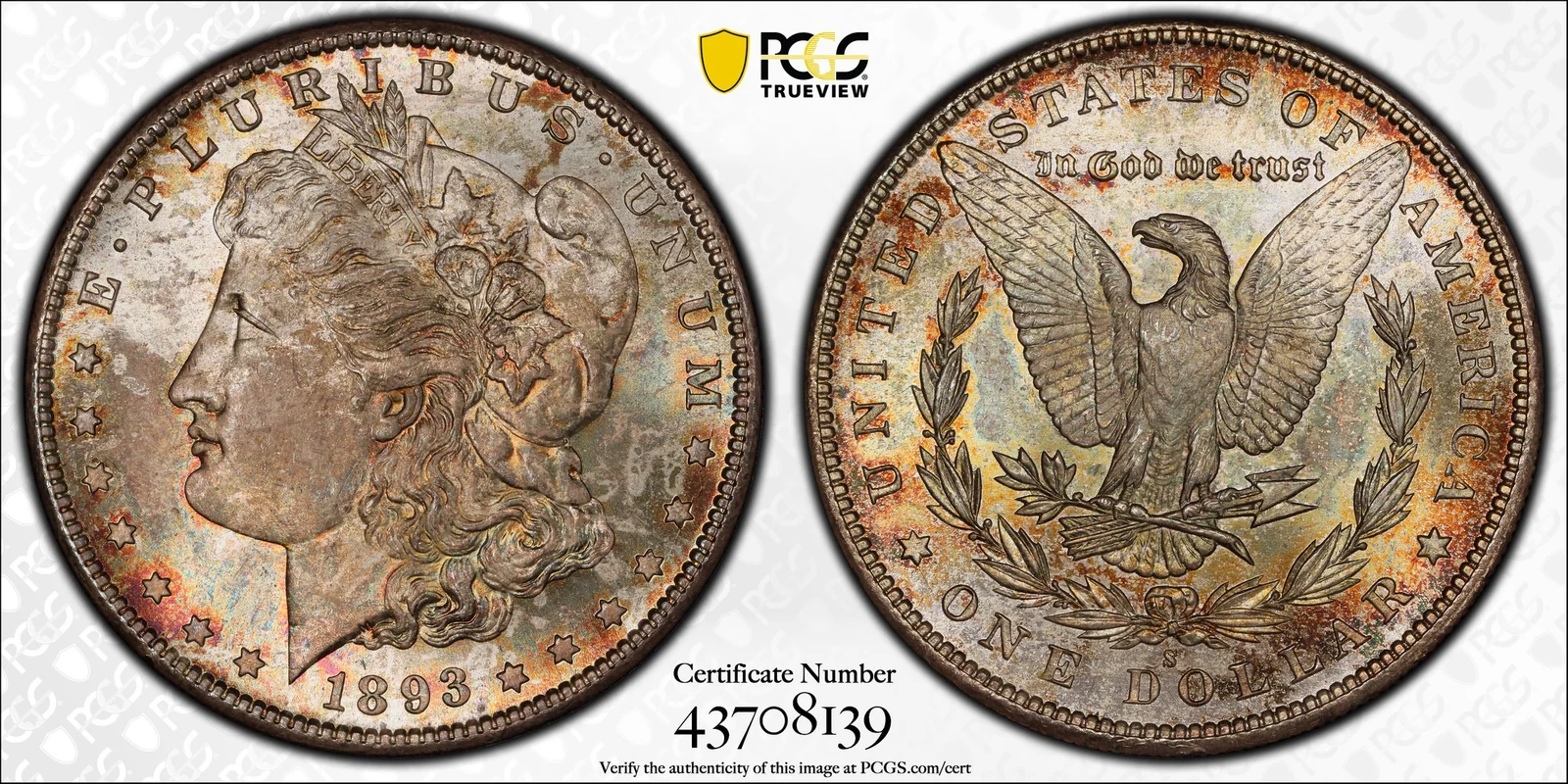
371893-S Morgan Dollar$1 silver; San FranciscoNotable auction sale$2,086,875Newer sale: $1,181,250 (Aug 9, 2026)PCGS MS67; CAC
PCGS MS67 reference photograph, not the MS65 Clapp-Eliasberg specimen sold in 2026. Photo: PCGS TrueView
1893-S Morgan Dollar
A famous Morgan dollar key date becomes an entirely different rarity in superb mint condition. The 2026 Gem sale is newer, but the finer Vermeule specimen's 2021 total remains higher.
What makes this one different
Check the S mint mark below the reverse wreath and authenticate the date and mint mark. A worn genuine 1893-S is not valued like an MS65 or MS67 specimen.
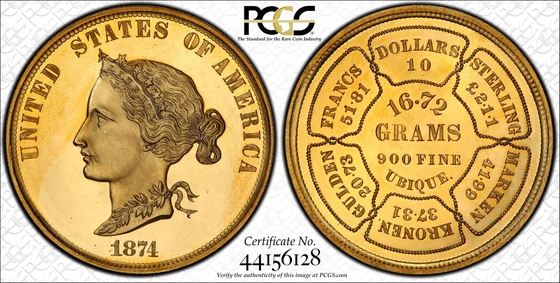
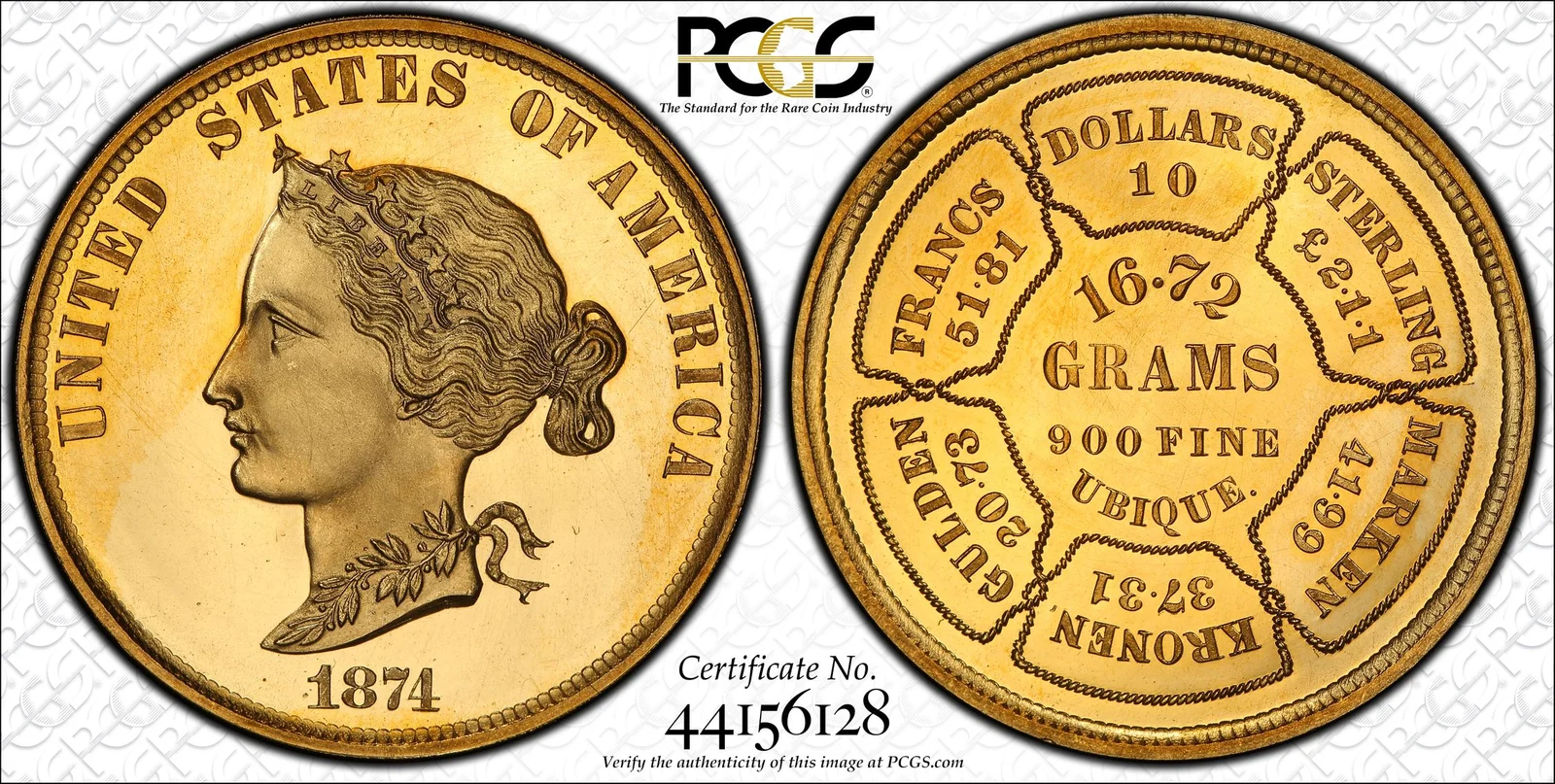
Representative same-issue PCGS PR65+CAM specimen, certificate 44156128; not asserted to be the benchmark auction coin. Photo: PCGS TrueView
1874 Bickford Eagle Pattern, Judd-1373
The Bickford ten-dollar proposal is a gold pattern with a distinctive international-value concept. Judd-1373 is separate from related patterns struck in other metals.
What makes this one different
Verify the Judd number and gold composition. A similar design in copper or with gilding is not this issue.
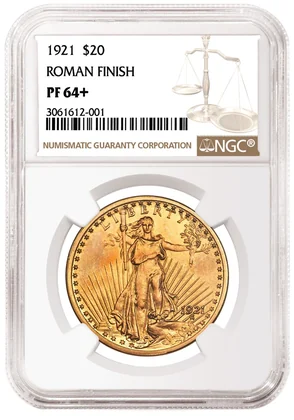
This special proof is separate from regular 1921 double eagles. The benchmark is the NGC PF64+ example reported sold in August 2021.
What makes this one different
Proof status depends on documented manufacture and specialist examination. A reflective or unusually colored 1921 coin is not automatically a Roman-finish proof.
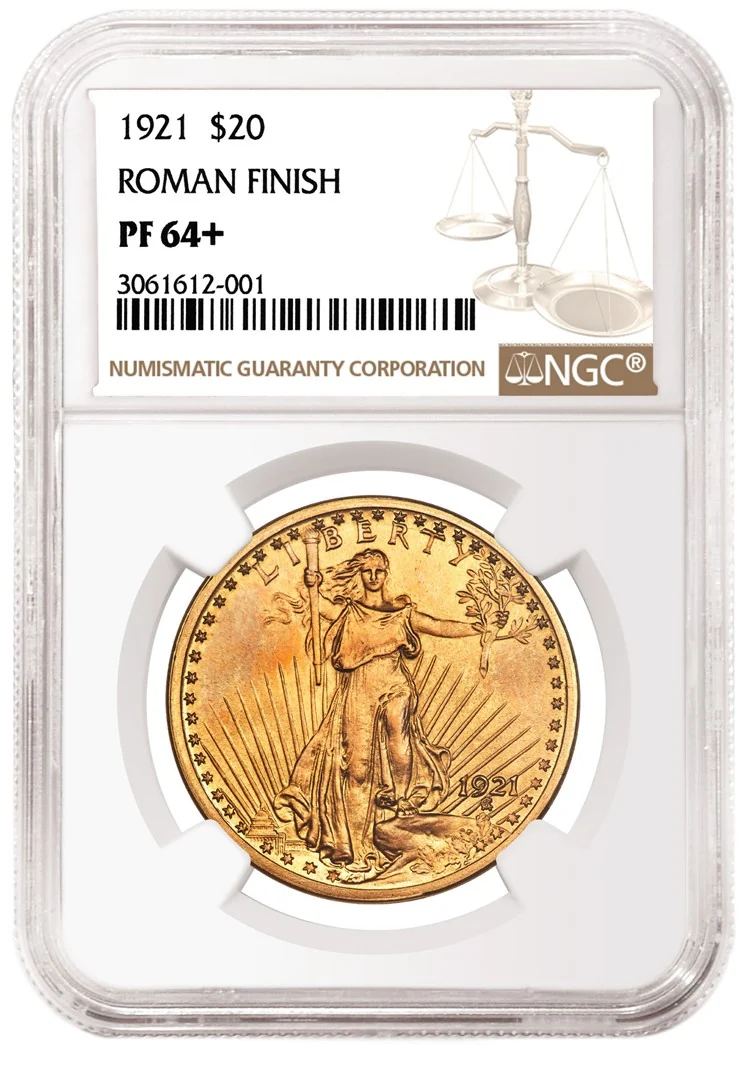
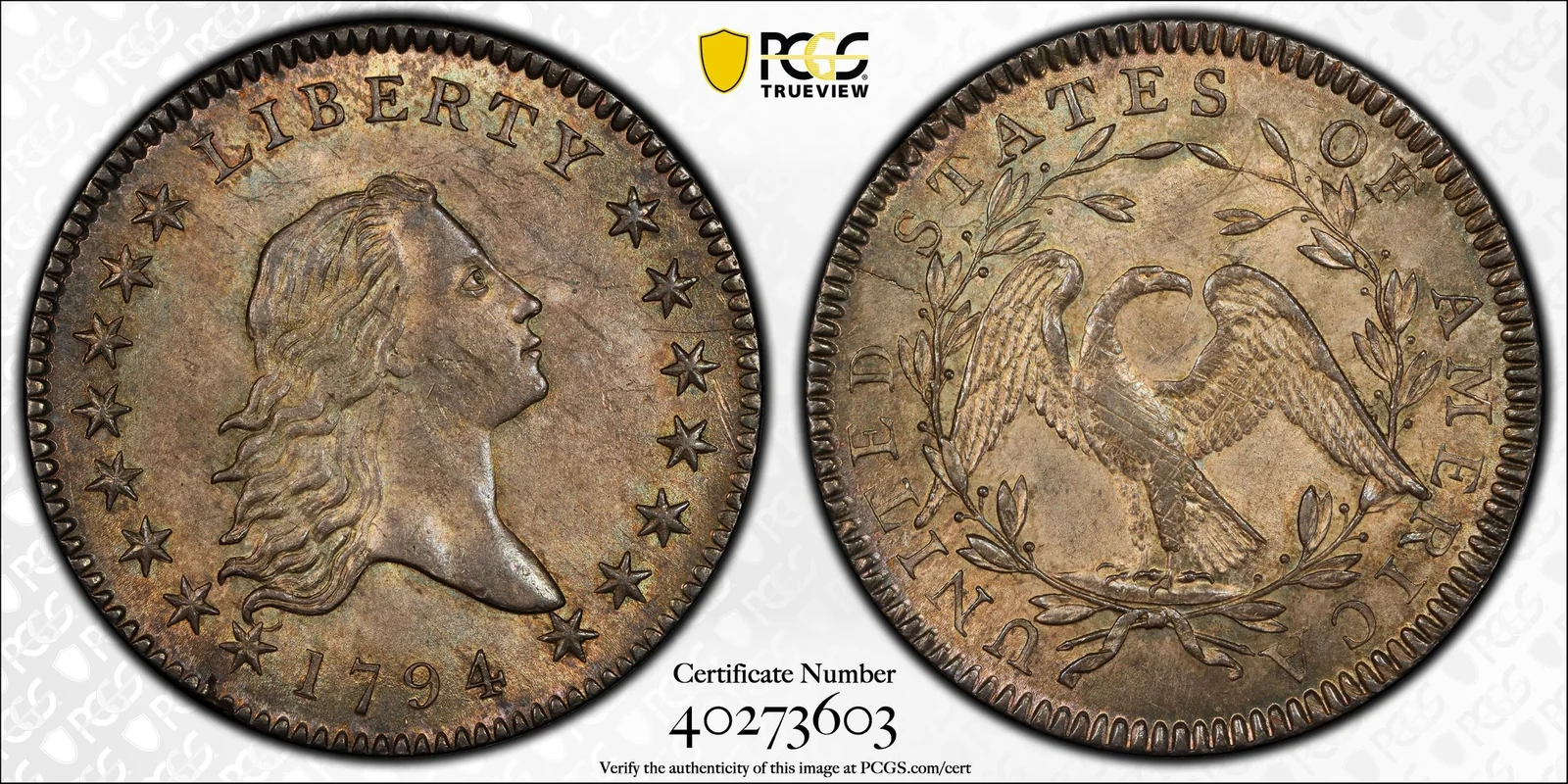
Exact benchmark specimen; the O-101a certificate's sales history links the $1,800,000 Heritage lot 3698. Photo: PCGS TrueView
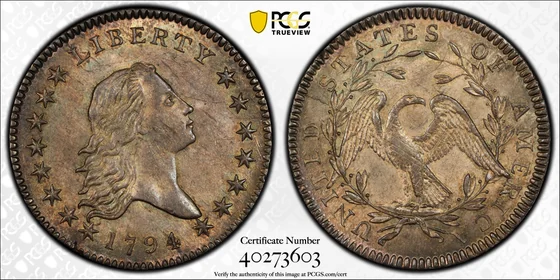
1794 Flowing Hair Half Dollar
This first-design federal half dollar is represented by an exceptional surviving specimen. The cited PCGS MS64+; CAC sale illustrates the premium for the documented coin, not a general value for all examples.
What makes this one different
Identify the Flowing Hair portrait and matching reverse die details. Wear, repairs and cleaning can greatly change an early half's market.
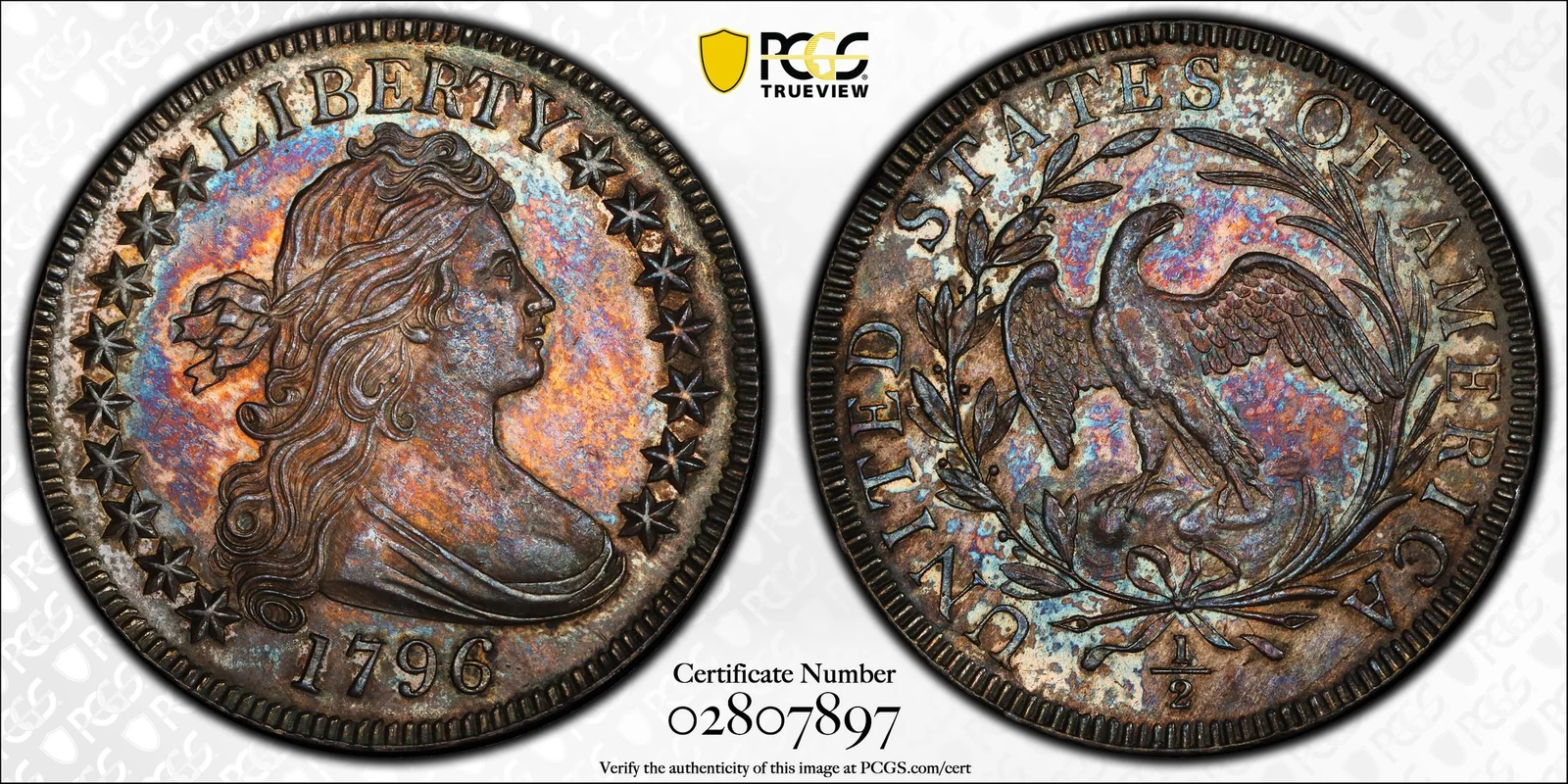
1796 Philadelphia Draped Bust half dollar (16 Stars)
The sixteen-star 1796 half belongs to the scarce two-year Draped Bust, Small Eagle type. This entry deliberately separates it from the fifteen-star variety of the same date.
What makes this one different
Count sixteen obverse stars and authenticate the date and Small Eagle reverse. Fifteen-star 1796 halves are a separate variety; later heraldic-eagle halves do not share this type's rarity.
Stack's Bowers Galleries, Summer 2026 Global Showcase Rarities Night, lot 2086
Specimen / lot
Green-Newman specimen, Overton-102, 16 Stars. DIFFERENT coin and lower grade than the MS66 O'Neal benchmark. Not the 15-star half offered in adjacent lot 2085.
NGC explicitly states that reported prices realized include buyer's premium. Auctioneer's release corroborates MS63, CAC and CMQ-X.
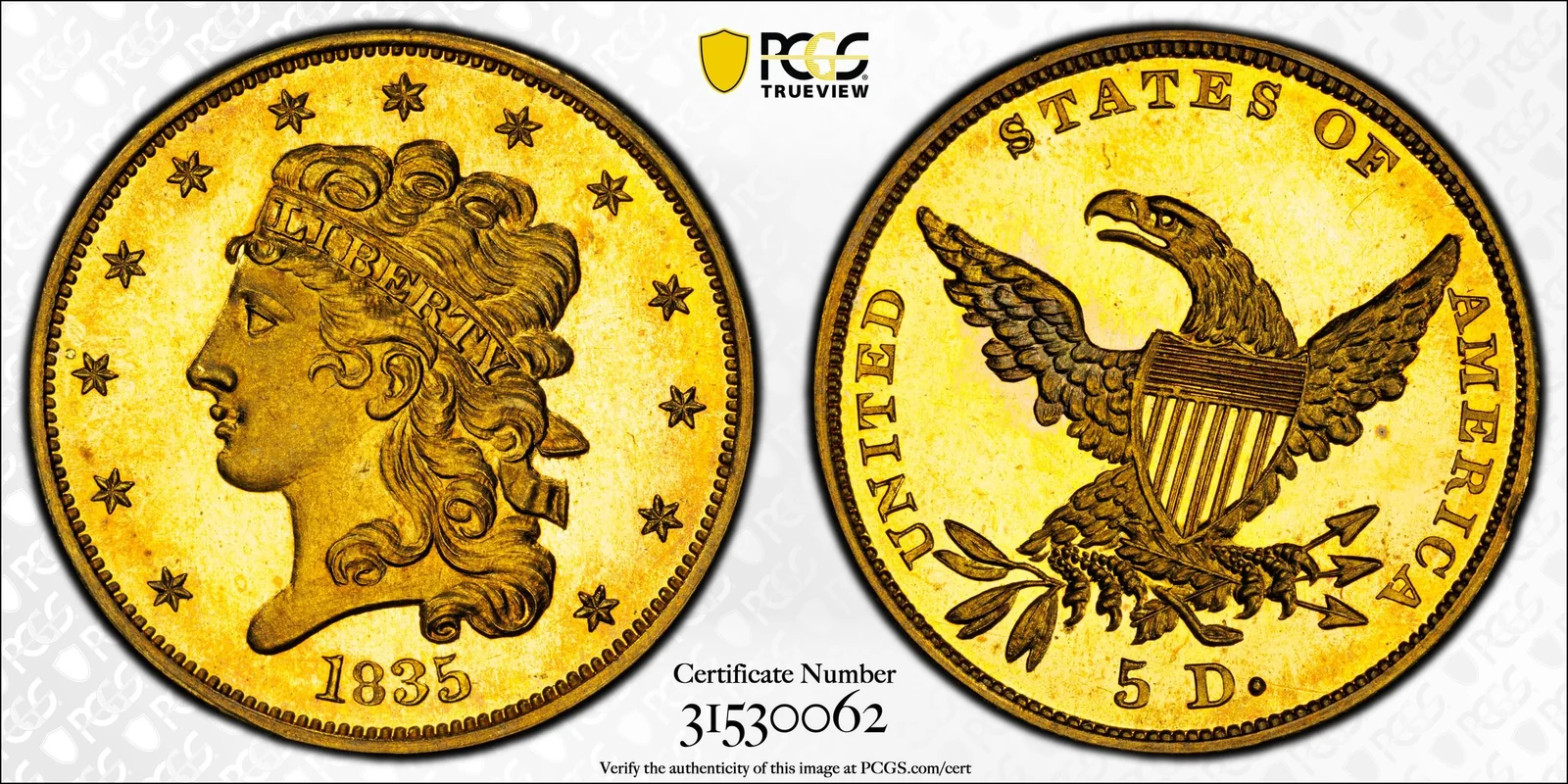
Representative same-issue PCGS PR67+DCAM specimen, certificate 31530062; not asserted to be the benchmark auction coin. Photo: PCGS TrueView
1835 Classic Head Half Eagle, Proof
Early Classic Head gold proofs form a specialized collecting group. This high-grade proof sale is not a guide value for the circulation-strike 1835 half eagle.
What makes this one different
Confirm the $5 denomination and proof attribution. The smaller Classic Head quarter eagle is a separate coin despite a related design.
43Photo not reproduced1861 Liberty Head Double Eagle, Proof$20 gold; proof; standard reverseNotable auction sale$1,800,000PCGS PR66DCAM
Open the source record ↗A verified photograph is not reproduced here. The linked source documents this coin and its sale.
1861 Liberty Head Double Eagle, Proof
This standard-reverse proof is distinct from the Philadelphia Paquet reverse rarity. The benchmark concerns special manufacture and high-grade preservation.
What makes this one different
Verify the regular reverse and proof status. A Paquet reverse, a San Francisco coin and a Philadelphia business strike are separate issues.
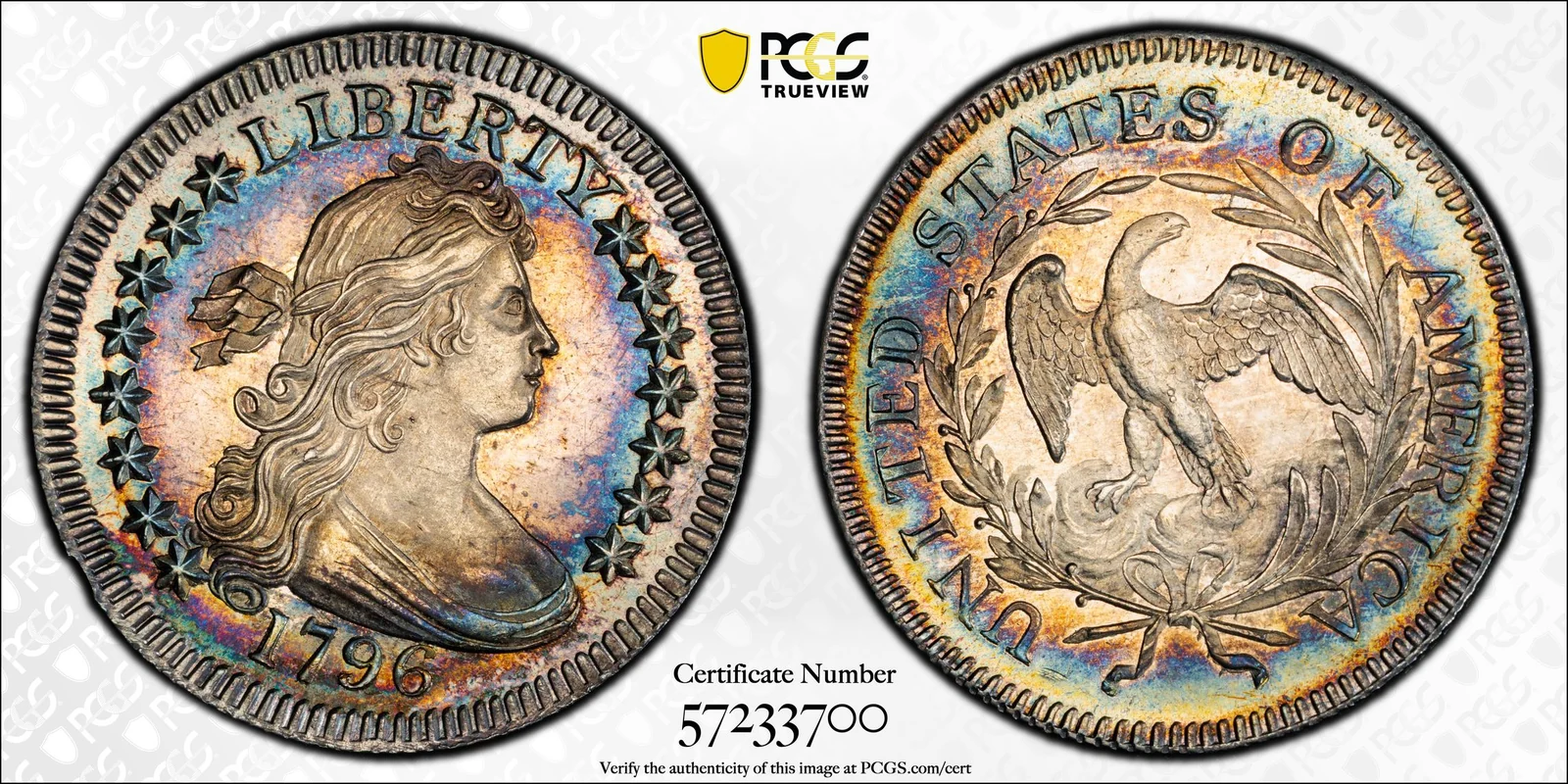
Representative same-issue MS67 Browning-2 quarter, Green-Newman pedigree, cert 57233700. NOT either cited sold specimen; benchmark and recent prices concern MS66 and MS62 coins respectively. Photo: PCGS TrueView / Professional Coin Grading Service
1796 Philadelphia Draped Bust quarter (Small Eagle)
The first United States quarter has a recorded mintage of 6,146. Its Draped Bust obverse and Small Eagle reverse form a one-year quarter-dollar type.
What makes this one different
Confirm the 1796 date and Small Eagle reverse on an authentic quarter. Later Draped Bust quarters use a different reverse; a heavily worn 1796 is not equivalent to the MS66 benchmark.
Stack's Bowers Galleries, Summer 2026 Global Showcase Rarities Night, lot 2062
Specimen / lot
Browning-2 quarter in an NGC MS62 holder, lot 2062. DIFFERENT specimen from the MS66 Foxfire-Simpson benchmark; the NGC article also reports this quarter result.
NGC explicitly states that its reported prices realized include buyer's premium. Grade, Gold CAC and CMQ-X are corroborated by the auctioneer's results release.
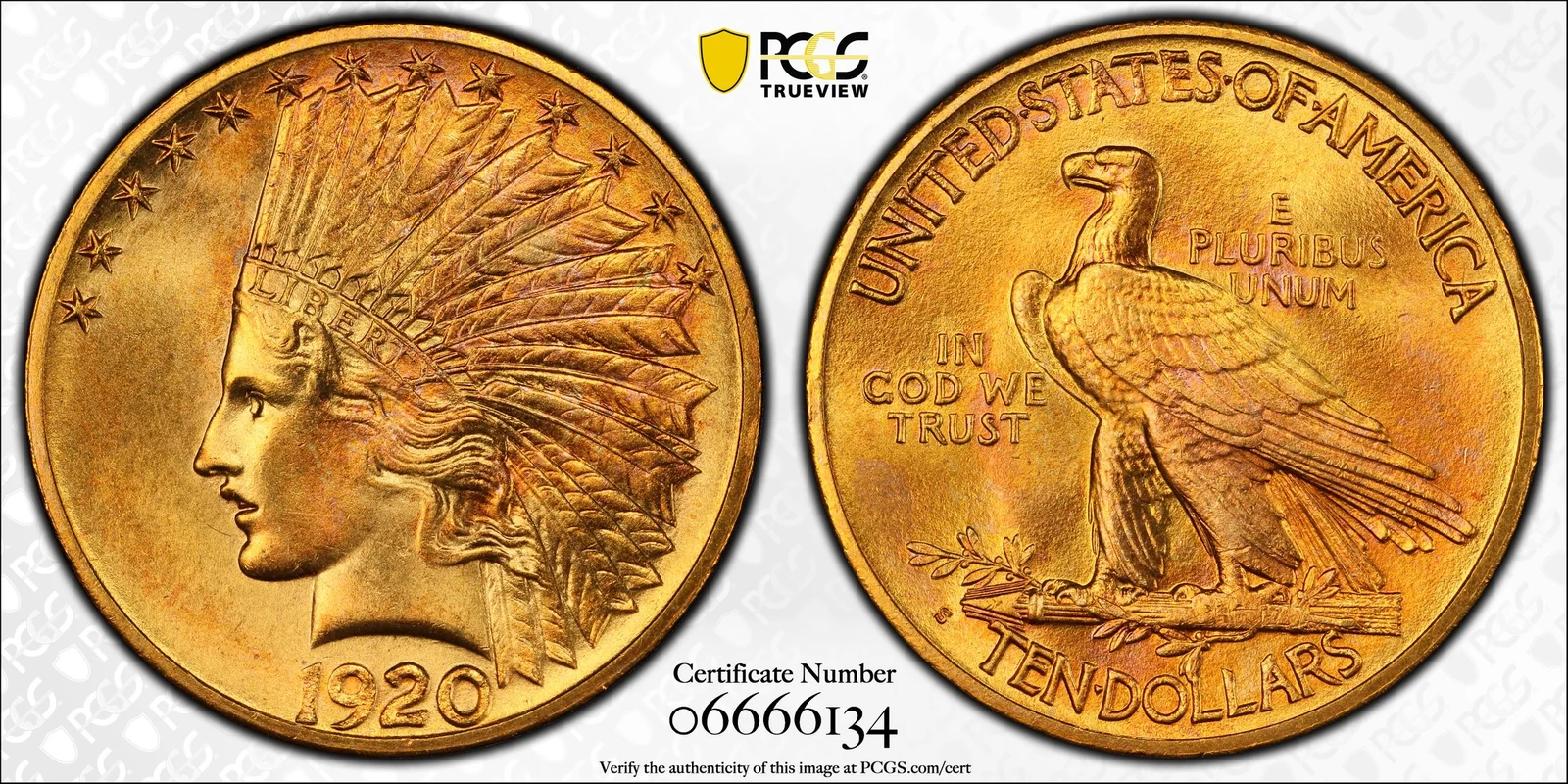
471920-S Indian Head Eagle$10 gold; San FranciscoNotable auction sale$1,725,000PCGS MS67
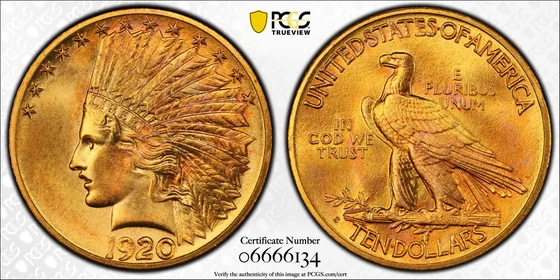
Representative same-issue PCGS MS67+ specimen, certificate 06666134; not asserted to be the benchmark auction coin. Photo: PCGS TrueView
1920-S Indian Head Eagle
The benchmark documents a particularly high-grade survivor of this San Francisco eagle date. It is an auction result for one specimen, not a general date value.
What makes this one different
Check the S mint mark and independent grading. Surface disturbance or light wear can substantially change the comparison.
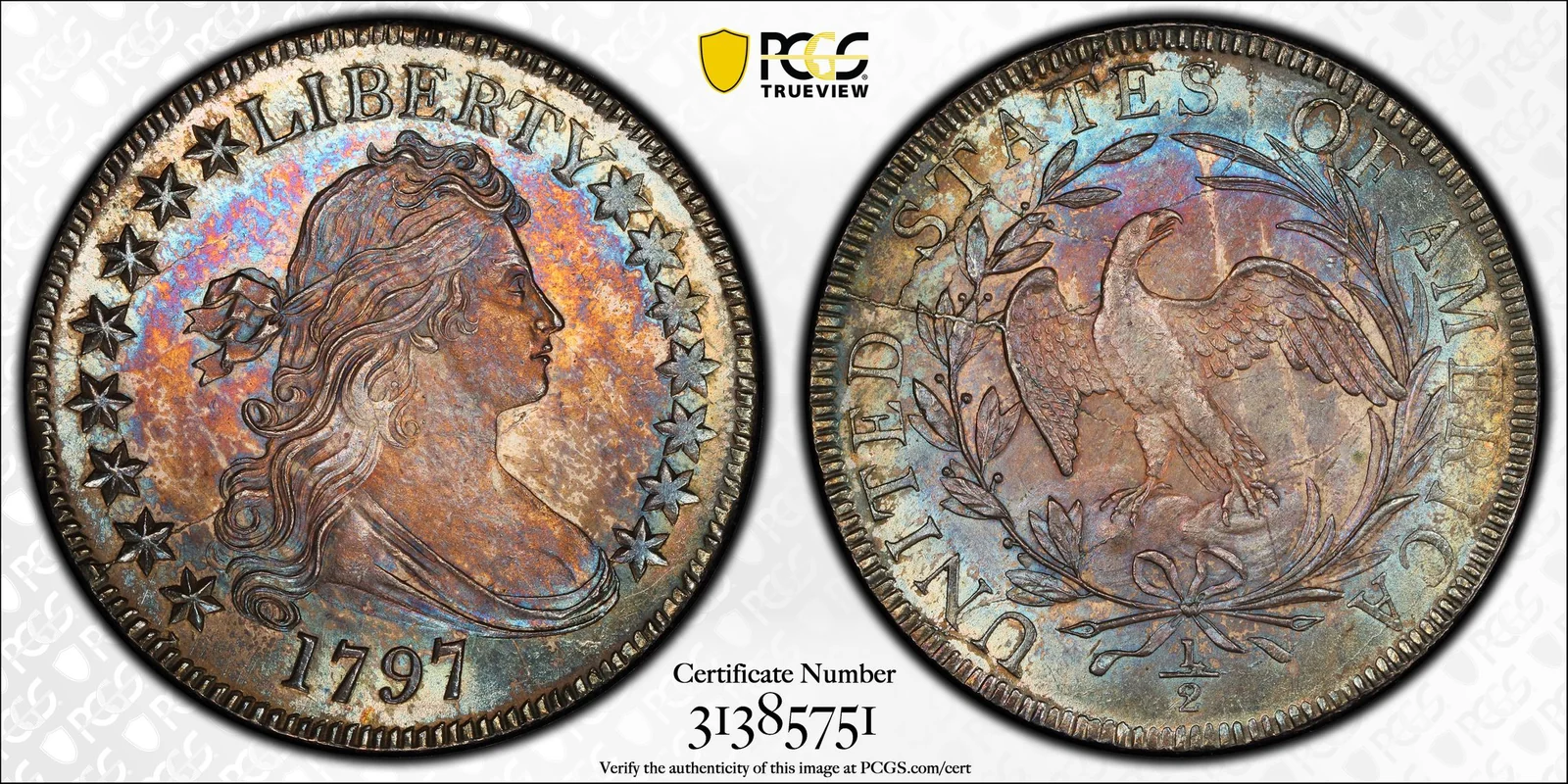
1797 Philadelphia Draped Bust half dollar (Small Eagle)
The Small Eagle half-dollar design appears only on coins dated 1796 and 1797. High-grade survivors are exceptionally scarce, making the finest specimens major early-silver auction offerings.
What makes this one different
Authenticate the 1797 date and Small Eagle reverse. Later Draped Bust halves with a heraldic eagle are a different type; ordinary circulated examples cannot be valued from the MS66 benchmark.
Auctioneer's published realized total, corroborated by PCGS. PCGS reports a 20% buyer's premium for this March 25 sale; the individual half-dollar lot's hammer/premium breakdown was not separately retrieved.
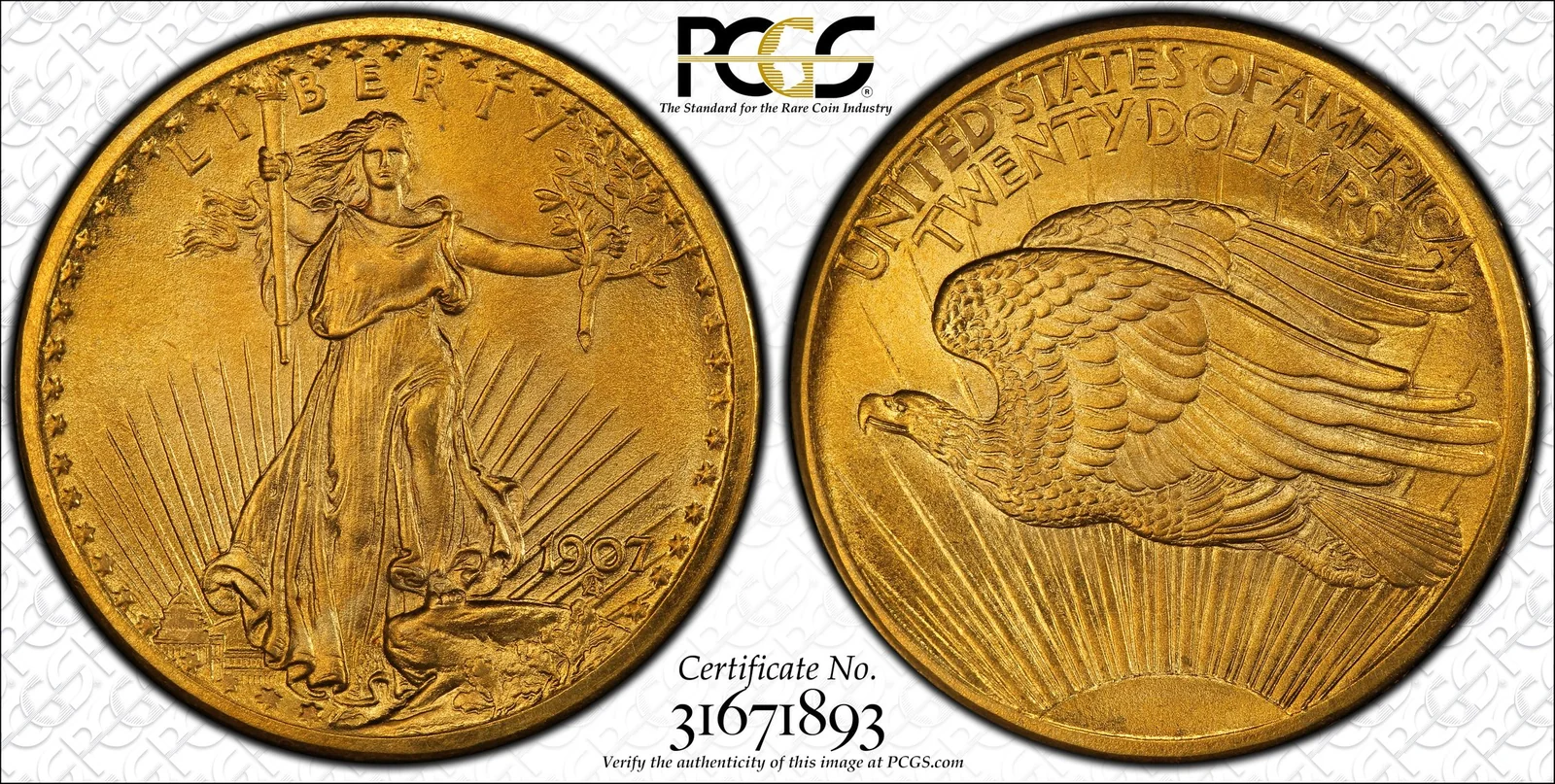
Representative same-issue PCGS PR68 specimen, certificate 31671893; not asserted to be the benchmark auction coin. Photo: PCGS TrueView
1907 Saint-Gaudens Double Eagle, Small Edge Letters Proof
This Arabic-date, low-relief proof is distinct from the Roman-numeral Ultra High Relief experiments. Its small edge letters and special manufacture define the issue.
What makes this one different
Inspect the date style, relief and edge lettering, then verify proof status. Do not substitute an ordinary low-relief 1907 circulation strike.
Compare the same date, mint mark, variety, strike and grade before comparing prices. A spectacular auction result is evidence of one transaction, not an appraisal or a promise.
How this list is put together
Seven denomination lists contain 50 distinct coin issues each, for 350 researched entries. The overall top 50 is drawn from that collection. Lists are ordered by the highest documented sale included for each entry, not a current price estimate. This is a curated selection of notable U.S. and early American auctions, not an exhaustive census of every transaction or a live auction feed. Distinct dates, mint marks, varieties and strike types can appear separately; different grades of the same issue do not fill extra places. Museum-only coins, unsold bids, estimates and private transactions are excluded from the ranking.
Each sale links to its auctioneer or a grading-service record, with the grade reported at that sale. Newer documented sales appear separately when verified; they can involve another specimen or grade and do not show a like-for-like price change. Sorting by newest uses the newest sale included in each entry, not a claim that every auction has been searched.
Buyer-premium treatment is stated with each result. Historical dollars are not adjusted for inflation; taxes and shipping are not assumed included. Sources can report an auction's closing date instead of the individual session date. We use the session date where established and otherwise show the verified month.
Why isn't the unique 1849 double eagle ranked?
A museum rarity can attract large estimates without a comparable public sale. This resource ranks documented auction transactions, so it does not turn an estimate for a Smithsonian-held coin into a sold price.
Is my coin worth the price shown?
Not necessarily. The precise variety, authenticity, surfaces, grade and provenance matter. Many similar-looking coins are common. Do not clean a possible rarity; compare its details and get an independent authentication or appraisal before treating a headline result as your coin's value.
Photographs & corrections
These are real coin photographs, credited to their sources in every entry. The caption identifies the exact sold specimen where established; otherwise it identifies a reference example. No AI-generated coin details are used. CoinHub's editorial selections and descriptions are independent of the grading services and auction houses.
Have a newer public sale or a correction? Send CoinHub the auction link and lot number. The checked date changes only after editorial review, not automatically when the calendar changes.

 1933 Saint-Gaudens Double Eagle$20 gold
Notable auction sale$18,872,250
PCGS MS65
1933 Saint-Gaudens Double Eagle$20 gold
Notable auction sale$18,872,250
PCGS MS65
 1794 Flowing Hair Dollar, Silver Plug$1 silver; specimen strike
Notable auction sale$10,016,875
PCGS SP66; CAC
1794 Flowing Hair Dollar, Silver Plug$1 silver; specimen strike
Notable auction sale$10,016,875
PCGS SP66; CAC
 1787 Brasher Doubloon, EB on WingEarly American gold doubloon
Notable auction sale$9,360,000
NGC MS65 Star; CAC
1787 Brasher Doubloon, EB on WingEarly American gold doubloon
Notable auction sale$9,360,000
NGC MS65 Star; CAC
 1822 Capped Bust Half Eagle$5 gold
Notable auction sale$8,400,000
PCGS AU50
1822 Capped Bust Half Eagle$5 gold
Notable auction sale$8,400,000
PCGS AU50
 1804 Draped Bust Dollar, Class I$1 silver; proof
Notable auction sale$7,680,000
PCGS PR68
1804 Draped Bust Dollar, Class I$1 silver; proof
Notable auction sale$7,680,000
PCGS PR68
 1861 Double Eagle, Paquet Reverse$20 gold; Philadelphia
Notable auction sale$7,200,000
PCGS MS67; CAC
1861 Double Eagle, Paquet Reverse$20 gold; Philadelphia
Notable auction sale$7,200,000
PCGS MS67; CAC
 1794 Flowing Hair Dollar, Regular Strike$1 silver
Notable auction sale$6,600,000
PCGS MS66+
1794 Flowing Hair Dollar, Regular Strike$1 silver
Notable auction sale$6,600,000
PCGS MS66+
 1804 Draped Bust Dollar, Class III$1 silver; proof restrike
Notable auction sale$6,000,000Newer sale: $3,538,000 (Jan 14, 2026)
PCGS PR65; CAC; CMQ
1804 Draped Bust Dollar, Class III$1 silver; proof restrike
Notable auction sale$6,000,000Newer sale: $3,538,000 (Jan 14, 2026)
PCGS PR65; CAC; CMQ
 1870-S Three-Dollar Gold Piece$3 gold; San Francisco; specimen strike
Notable auction sale$5,520,000
PCGS SP50
1870-S Three-Dollar Gold Piece$3 gold; San Francisco; specimen strike
Notable auction sale$5,520,000
PCGS SP50
 1804 Plain 4 Eagle, Proof$10 gold; proof
Notable auction sale$5,280,000
PCGS PR65+DCAM
1804 Plain 4 Eagle, Proof$10 gold; proof
Notable auction sale$5,280,000
PCGS PR65+DCAM
 1821 Capped Bust Half Eagle, Proof$5 gold; proof
Notable auction sale$4,620,000
PCGS PR65CAM; CAC
1821 Capped Bust Half Eagle, Proof$5 gold; proof
Notable auction sale$4,620,000
PCGS PR65CAM; CAC
 1913 Philadelphia Liberty Head nickel (Proof)5 cents
Notable auction sale$4,560,000
PCGS PR66, CAC
1913 Philadelphia Liberty Head nickel (Proof)5 cents
Notable auction sale$4,560,000
PCGS PR66, CAC
 1927-D Saint-Gaudens Double Eagle$20 gold; Denver
Notable auction sale$4,440,000Newer sale: $3,840,000 (Jan 2025)
PCGS MS66
1927-D Saint-Gaudens Double Eagle$20 gold; Denver
Notable auction sale$4,440,000Newer sale: $3,840,000 (Jan 2025)
PCGS MS66
 1907 Ultra High Relief Double Eagle, Inverted Edge Letters$20 gold; proof; inverted 1907-style edge
Notable auction sale$4,320,000
PCGS PR69
1907 Ultra High Relief Double Eagle, Inverted Edge Letters$20 gold; proof; inverted 1907-style edge
Notable auction sale$4,320,000
PCGS PR69
 1825/4/1 Capped Bust Half Eagle, Proof$5 gold; proof overdate
Notable auction sale$4,080,000
PCGS PR67CAM
1825/4/1 Capped Bust Half Eagle, Proof$5 gold; proof overdate
Notable auction sale$4,080,000
PCGS PR67CAM
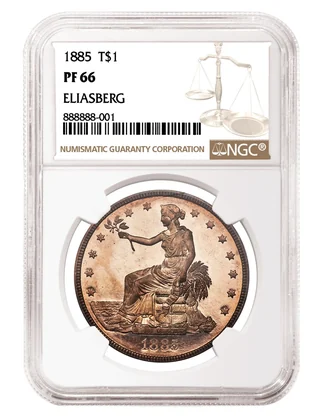 1885 Trade Dollar$1 silver; proof
Notable auction sale$3,960,000Newer sale: $2,100,000 (Jan 2021)
NGC PF66
1885 Trade Dollar$1 silver; proof
Notable auction sale$3,960,000Newer sale: $2,100,000 (Jan 2021)
NGC PF66
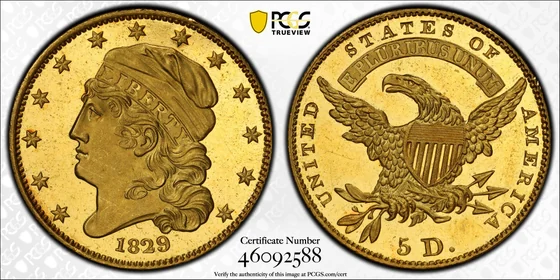 1829 Small Size Capped Bust Half Eagle, Proof$5 gold; proof; small-size type
Notable auction sale$3,840,000
PCGS PR66+CAM
1829 Small Size Capped Bust Half Eagle, Proof$5 gold; proof; small-size type
Notable auction sale$3,840,000
PCGS PR66+CAM
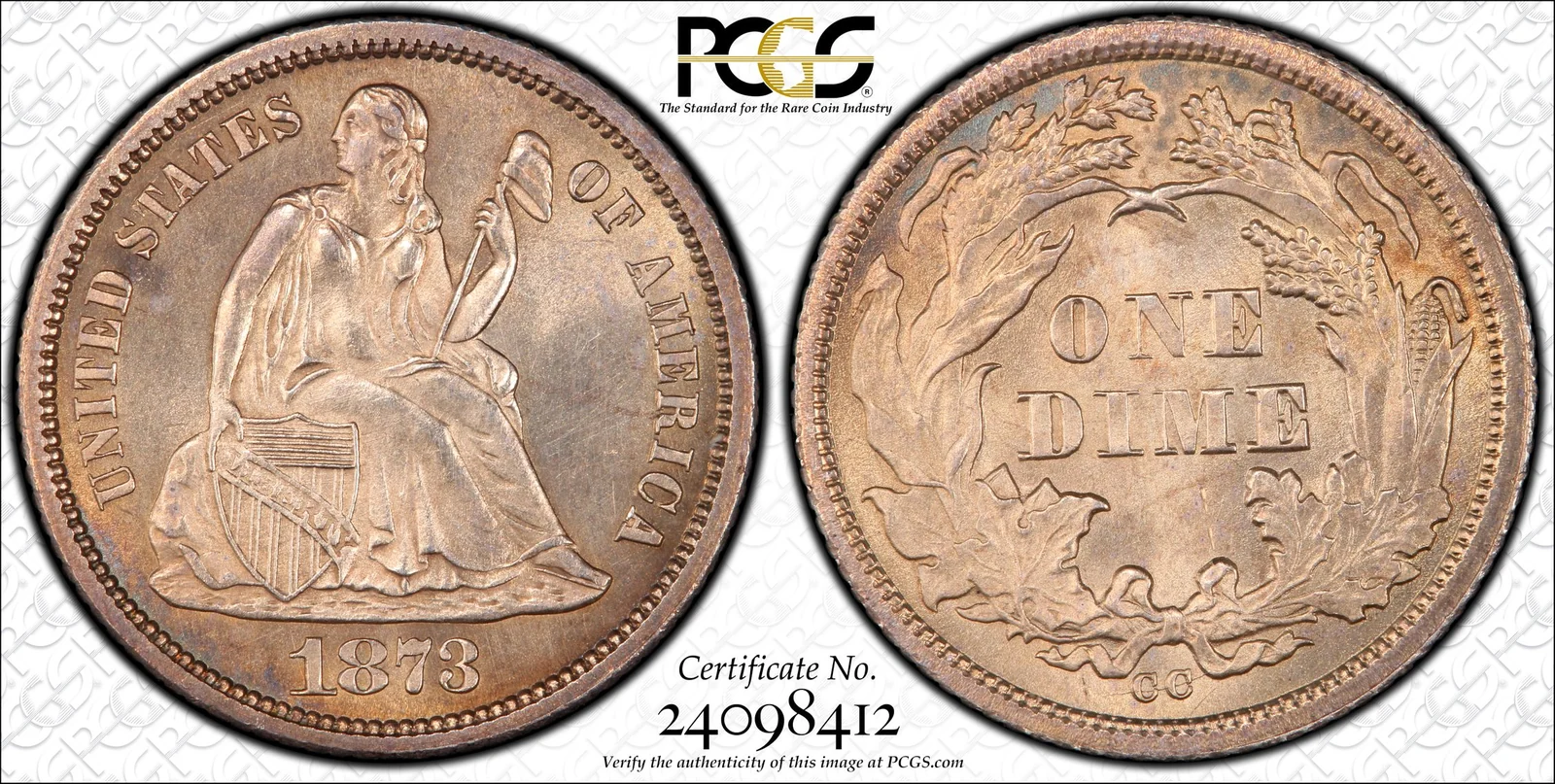
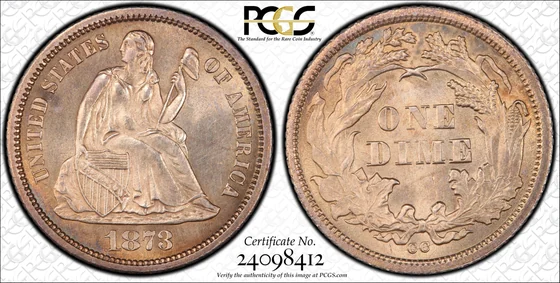 1873-CC No Arrows Liberty Seated dime10 cents
Notable auction sale$3,600,000
PCGS MS65
1873-CC No Arrows Liberty Seated dime10 cents
Notable auction sale$3,600,000
PCGS MS65
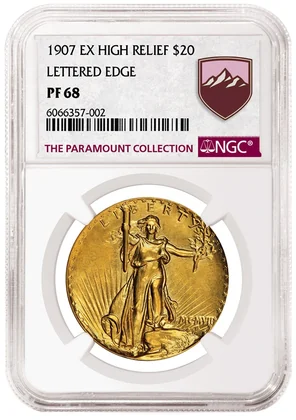 1907 Ultra High Relief Double Eagle, Normal Edge Letters$20 gold; proof; normal 1907-style edge
Notable auction sale$3,600,000
NGC PF68
1907 Ultra High Relief Double Eagle, Normal Edge Letters$20 gold; proof; normal 1907-style edge
Notable auction sale$3,600,000
NGC PF68
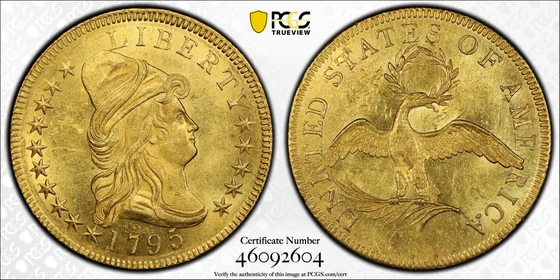 1795 Capped Bust Eagle, Nine Leaves$10 gold
Notable auction sale$3,360,000
PCGS MS63+
1795 Capped Bust Eagle, Nine Leaves$10 gold
Notable auction sale$3,360,000
PCGS MS63+
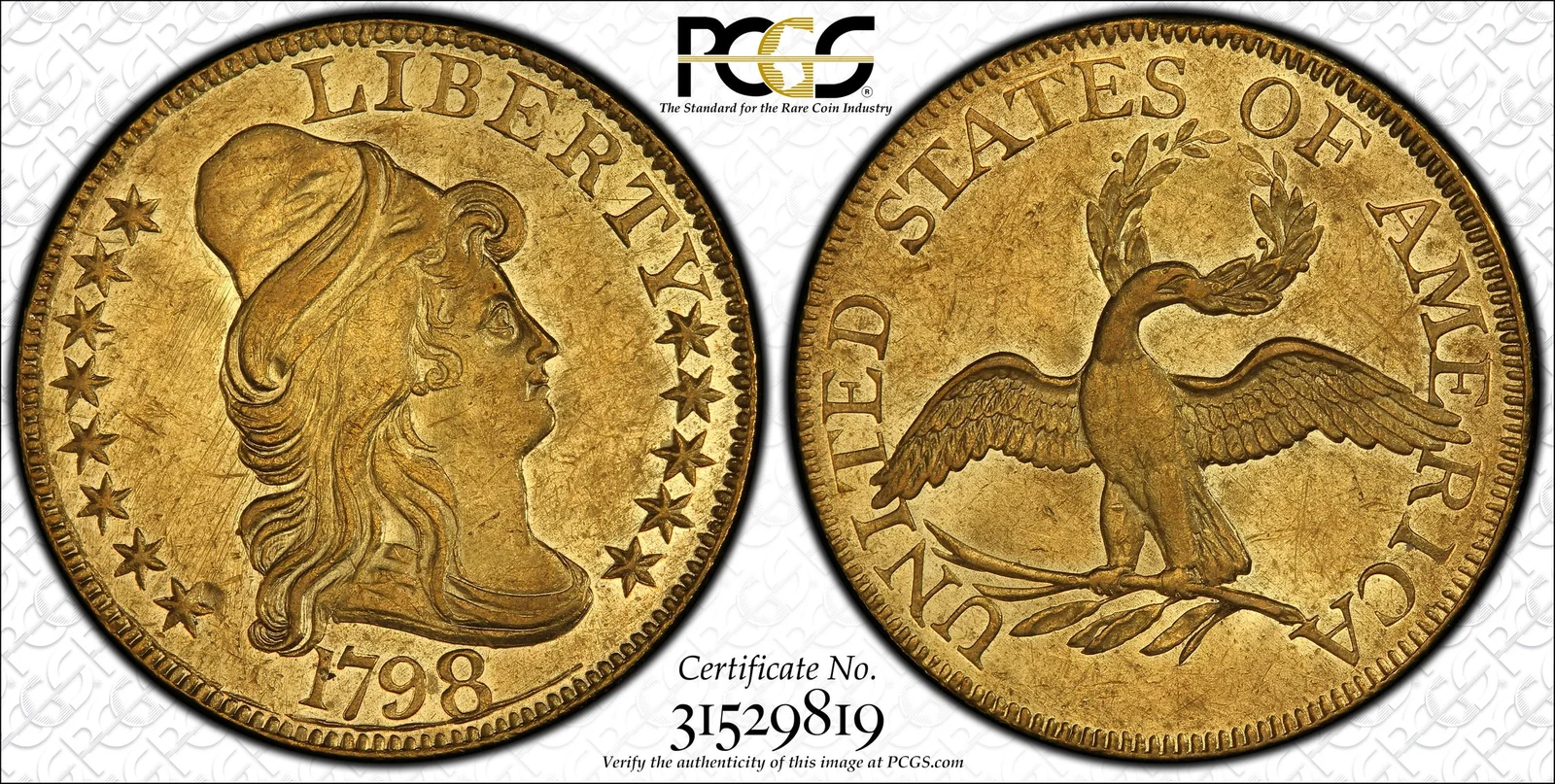
 1798 Capped Bust Half Eagle, Small Eagle$5 gold
Notable auction sale$3,000,000
PCGS AU55
1798 Capped Bust Half Eagle, Small Eagle$5 gold
Notable auction sale$3,000,000
PCGS AU55
 1787 Brasher Doubloon, EB on BreastEarly American gold doubloon
Notable auction sale$2,990,000
NGC XF45
1787 Brasher Doubloon, EB on BreastEarly American gold doubloon
Notable auction sale$2,990,000
NGC XF45
 1829 Large Size Capped Bust Half Eagle, Proof$5 gold; proof; large-size type
Notable auction sale$2,880,000
PCGS PR66+
1829 Large Size Capped Bust Half Eagle, Proof$5 gold; proof; large-size type
Notable auction sale$2,880,000
PCGS PR66+
 1792 Birch cent pattern, Two-Star Lettered Edge (Judd-4)1 cent
Notable auction sale$2,585,000
NGC MS65*RB, CAC
1792 Birch cent pattern, Two-Star Lettered Edge (Judd-4)1 cent
Notable auction sale$2,585,000
NGC MS65*RB, CAC
 1795 Capped Bust Eagle, Thirteen Leaves$10 gold
Notable auction sale$2,585,000Newer sale: $516,000 (Aug 18, 2021)
PCGS MS66+
1795 Capped Bust Eagle, Thirteen Leaves$10 gold
Notable auction sale$2,585,000Newer sale: $516,000 (Aug 18, 2021)
PCGS MS66+
 1880 Coiled Hair Stella$4 gold pattern; proof
Notable auction sale$2,570,000Newer sale: $1,860,000 (Feb 24, 2021)
NGC PR67
1880 Coiled Hair Stella$4 gold pattern; proof
Notable auction sale$2,570,000Newer sale: $1,860,000 (Feb 24, 2021)
NGC PR67
 1792 Silver Center cent pattern (Judd-1)1 cent
Notable auction sale$2,520,000
PCGS SP67BN, CAC
1792 Silver Center cent pattern (Judd-1)1 cent
Notable auction sale$2,520,000
PCGS SP67BN, CAC
 1854-S Liberty Head Half Eagle$5 gold; San Francisco
Notable auction sale$2,400,000
PCGS XF45
1854-S Liberty Head Half Eagle$5 gold; San Francisco
Notable auction sale$2,400,000
PCGS XF45
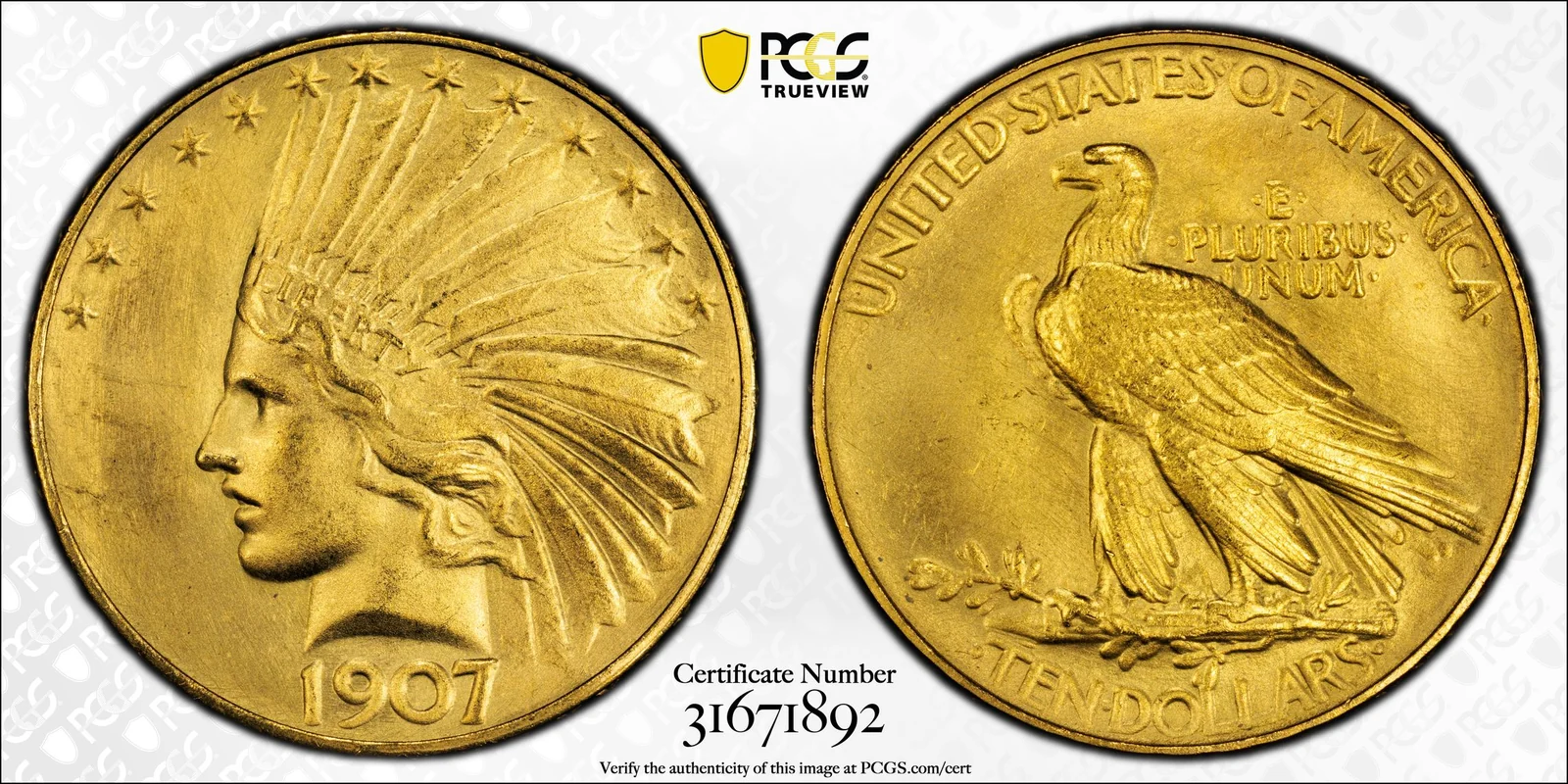
 1907 Indian Head Eagle, Rolled Edge Proof$10 gold; proof
Notable auction sale$2,400,000
PCGS PR67
1907 Indian Head Eagle, Rolled Edge Proof$10 gold; proof
Notable auction sale$2,400,000
PCGS PR67
 1793 Philadelphia Chain cent, AMERICA with Periods (S-4)1 cent
Notable auction sale$2,350,000Newer sale: $85,400 (Jan 8, 2026)
PCGS MS66BN, CAC
1793 Philadelphia Chain cent, AMERICA with Periods (S-4)1 cent
Notable auction sale$2,350,000Newer sale: $85,400 (Jan 8, 2026)
PCGS MS66BN, CAC
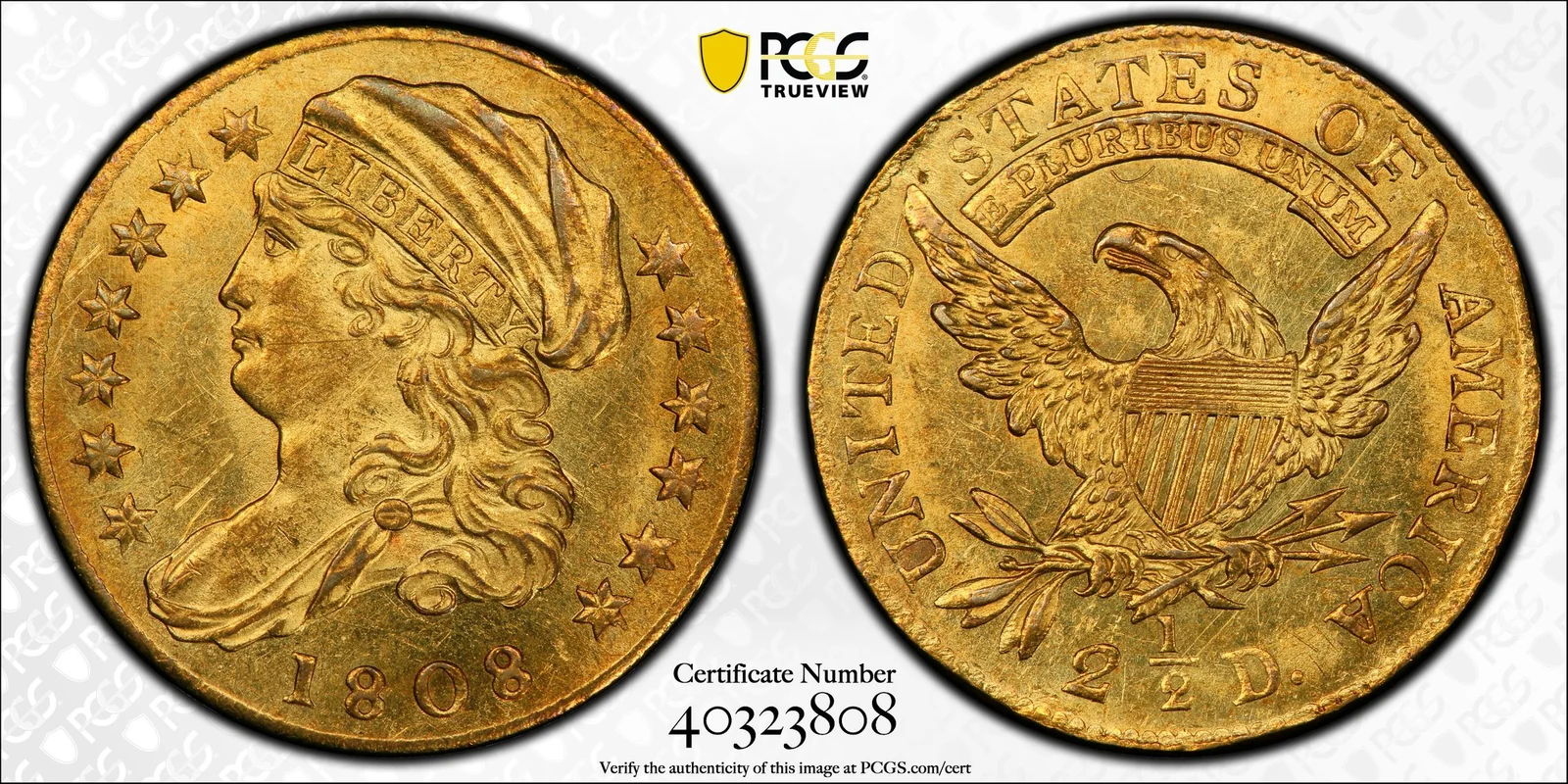
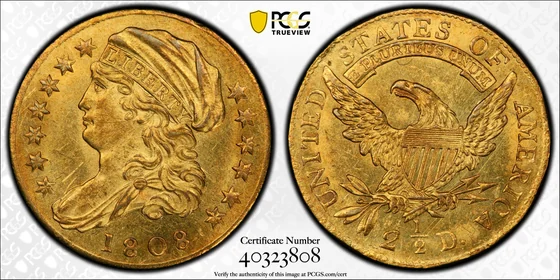 1808 Capped Bust Quarter Eagle$2.50 gold
Notable auction sale$2,350,000
PCGS MS65
1808 Capped Bust Quarter Eagle$2.50 gold
Notable auction sale$2,350,000
PCGS MS65
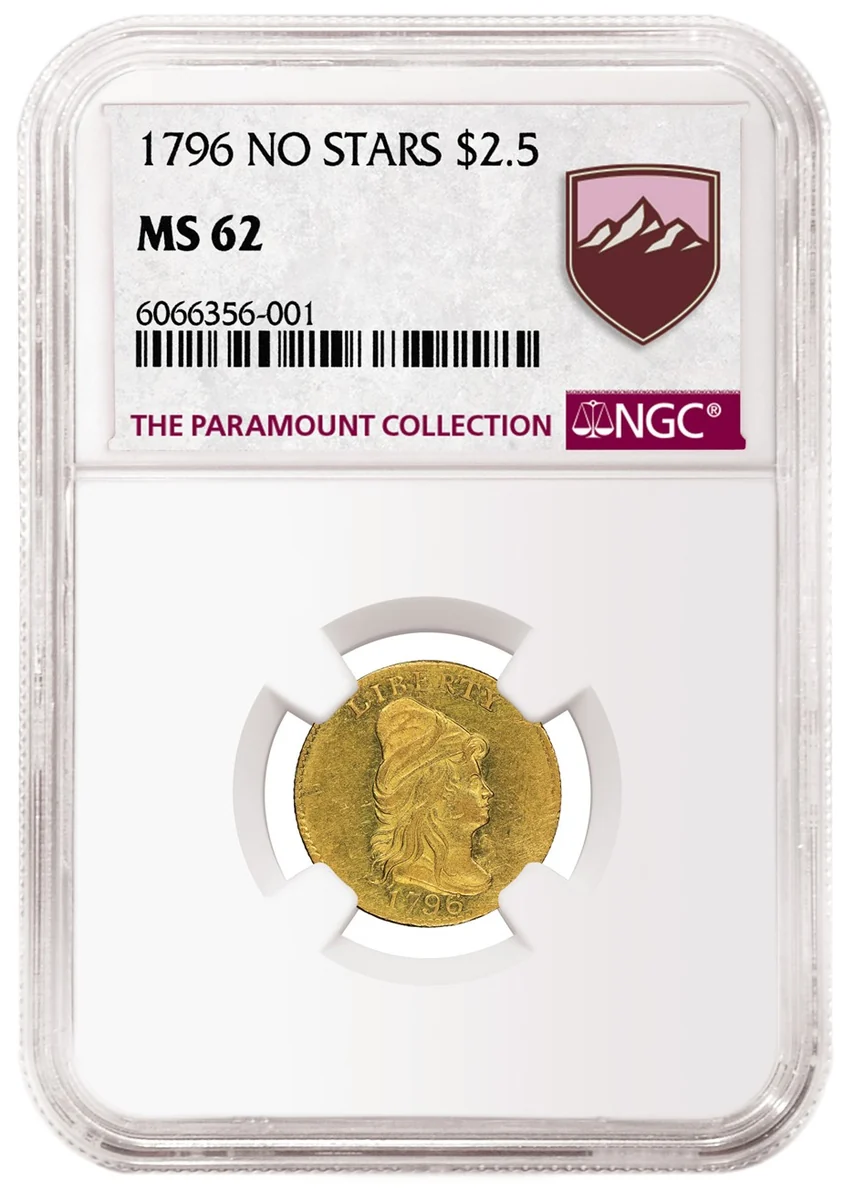
 1796 Capped Bust Quarter Eagle, No Stars$2.50 gold
Notable auction sale$2,160,000
PCGS MS62+
1796 Capped Bust Quarter Eagle, No Stars$2.50 gold
Notable auction sale$2,160,000
PCGS MS62+
 1855-S Three-Dollar Gold Piece, Branch-Mint Proof$3 gold; branch-mint proof
Notable auction sale$2,160,000
PCGS PR64CAM
1855-S Three-Dollar Gold Piece, Branch-Mint Proof$3 gold; branch-mint proof
Notable auction sale$2,160,000
PCGS PR64CAM
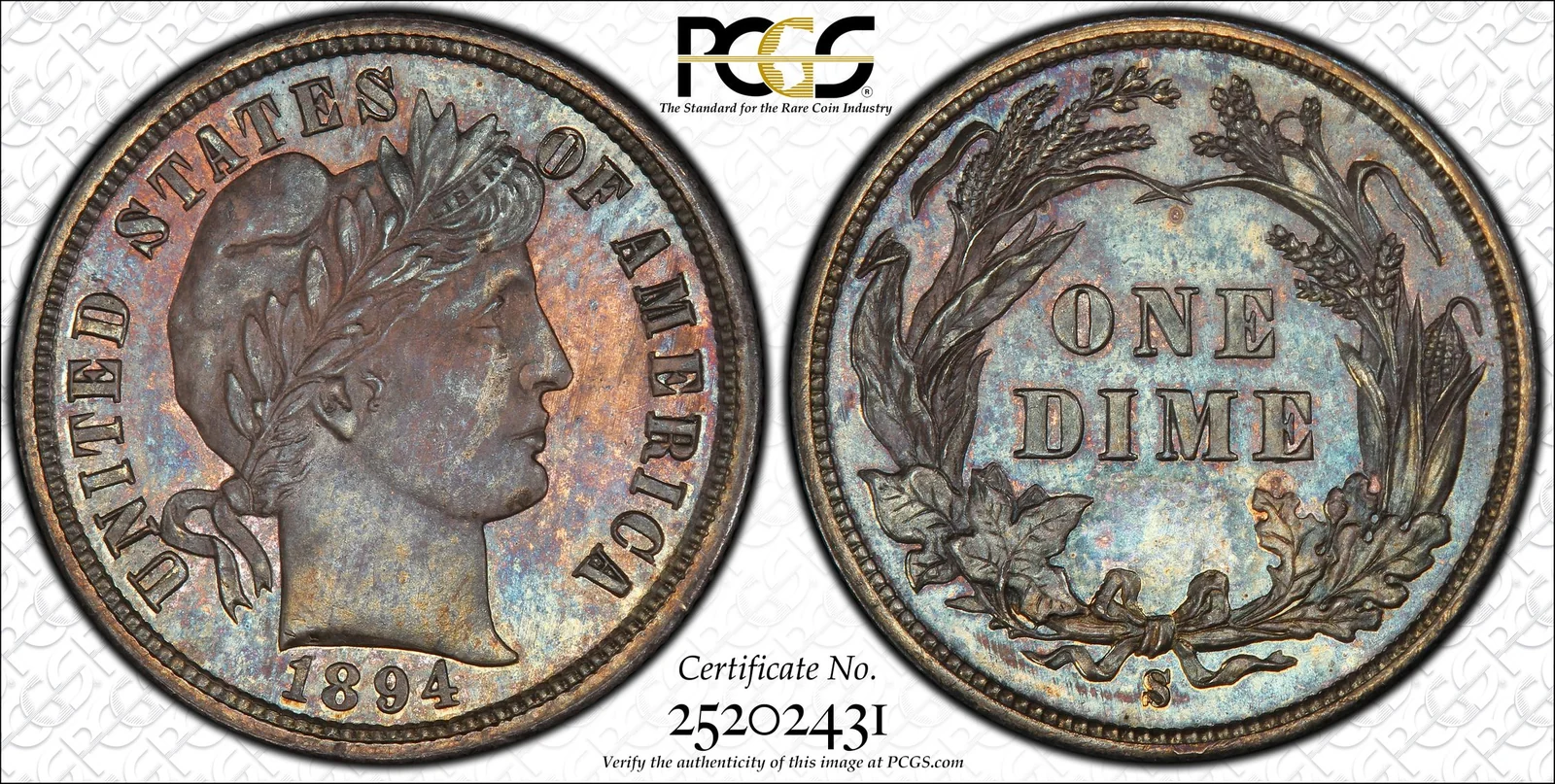
 1894-S Barber dime10 cents
Notable auction sale$2,160,000Newer documented sale
PCGS Branch Mint PR66; CAC
1894-S Barber dime10 cents
Notable auction sale$2,160,000Newer documented sale
PCGS Branch Mint PR66; CAC
 1879 Coiled Hair Stella$4 gold pattern; proof
Notable auction sale$2,135,000
NGC PR67CAM
1879 Coiled Hair Stella$4 gold pattern; proof
Notable auction sale$2,135,000
NGC PR67CAM
 1786 Brasher Doubloon, Lima StyleEarly American gold doubloon; Lima-style design
Notable auction sale$2,100,000
NGC MS61
1786 Brasher Doubloon, Lima StyleEarly American gold doubloon; Lima-style design
Notable auction sale$2,100,000
NGC MS61
 1893-S Morgan Dollar$1 silver; San Francisco
Notable auction sale$2,086,875Newer sale: $1,181,250 (Aug 9, 2026)
PCGS MS67; CAC
1893-S Morgan Dollar$1 silver; San Francisco
Notable auction sale$2,086,875Newer sale: $1,181,250 (Aug 9, 2026)
PCGS MS67; CAC
 1874 Bickford Eagle Pattern, Judd-1373$10 gold pattern; proof
Notable auction sale$2,040,000
PCGS PR65DCAM
1874 Bickford Eagle Pattern, Judd-1373$10 gold pattern; proof
Notable auction sale$2,040,000
PCGS PR65DCAM
 1921 Saint-Gaudens Double Eagle, Roman-Finish Proof$20 gold; Roman-finish proof
Notable auction sale$2,010,000
NGC PF64+
1921 Saint-Gaudens Double Eagle, Roman-Finish Proof$20 gold; Roman-finish proof
Notable auction sale$2,010,000
NGC PF64+
 1794 Flowing Hair Half Dollar50 cents
Notable auction sale$1,800,000
PCGS MS64+; CAC
1794 Flowing Hair Half Dollar50 cents
Notable auction sale$1,800,000
PCGS MS64+; CAC
 1796 Philadelphia Draped Bust half dollar (16 Stars)50 cents
Notable auction sale$1,800,000Newer sale: $671,000 (Sep 1, 2026)
PCGS MS66
1796 Philadelphia Draped Bust half dollar (16 Stars)50 cents
Notable auction sale$1,800,000Newer sale: $671,000 (Sep 1, 2026)
PCGS MS66
 1835 Classic Head Half Eagle, Proof$5 gold; proof
Notable auction sale$1,800,000
PCGS PR67+DCAM
1835 Classic Head Half Eagle, Proof$5 gold; proof
Notable auction sale$1,800,000
PCGS PR67+DCAM
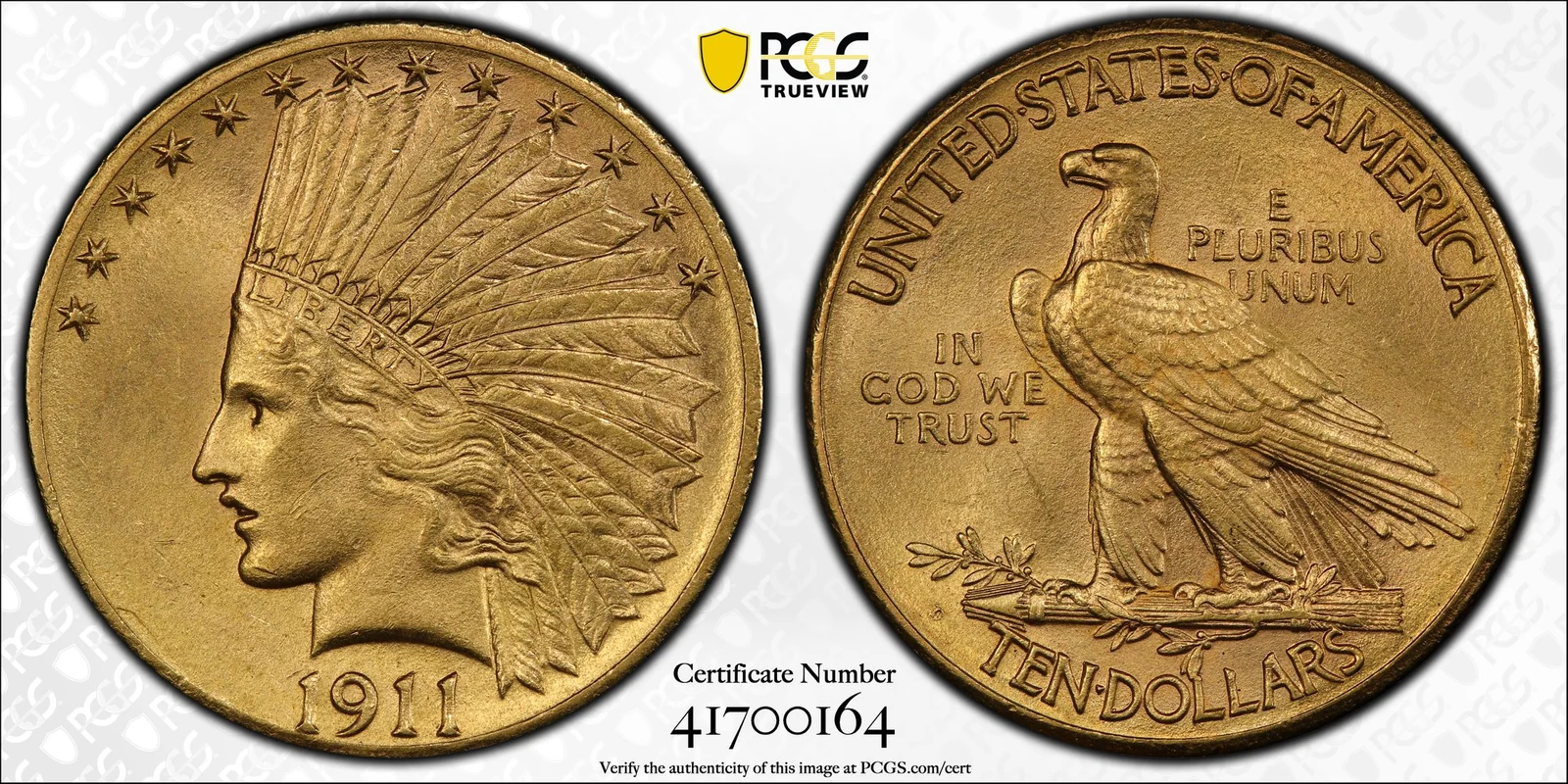
 1911-D Indian Head Eagle$10 gold; Denver
Notable auction sale$1,800,000
PCGS MS66
1911-D Indian Head Eagle$10 gold; Denver
Notable auction sale$1,800,000
PCGS MS66
 1796 Philadelphia Draped Bust quarter (Small Eagle)25 cents
Notable auction sale$1,740,000Newer sale: $292,800 (Sep 1, 2026)
PCGS MS66
1796 Philadelphia Draped Bust quarter (Small Eagle)25 cents
Notable auction sale$1,740,000Newer sale: $292,800 (Sep 1, 2026)
PCGS MS66
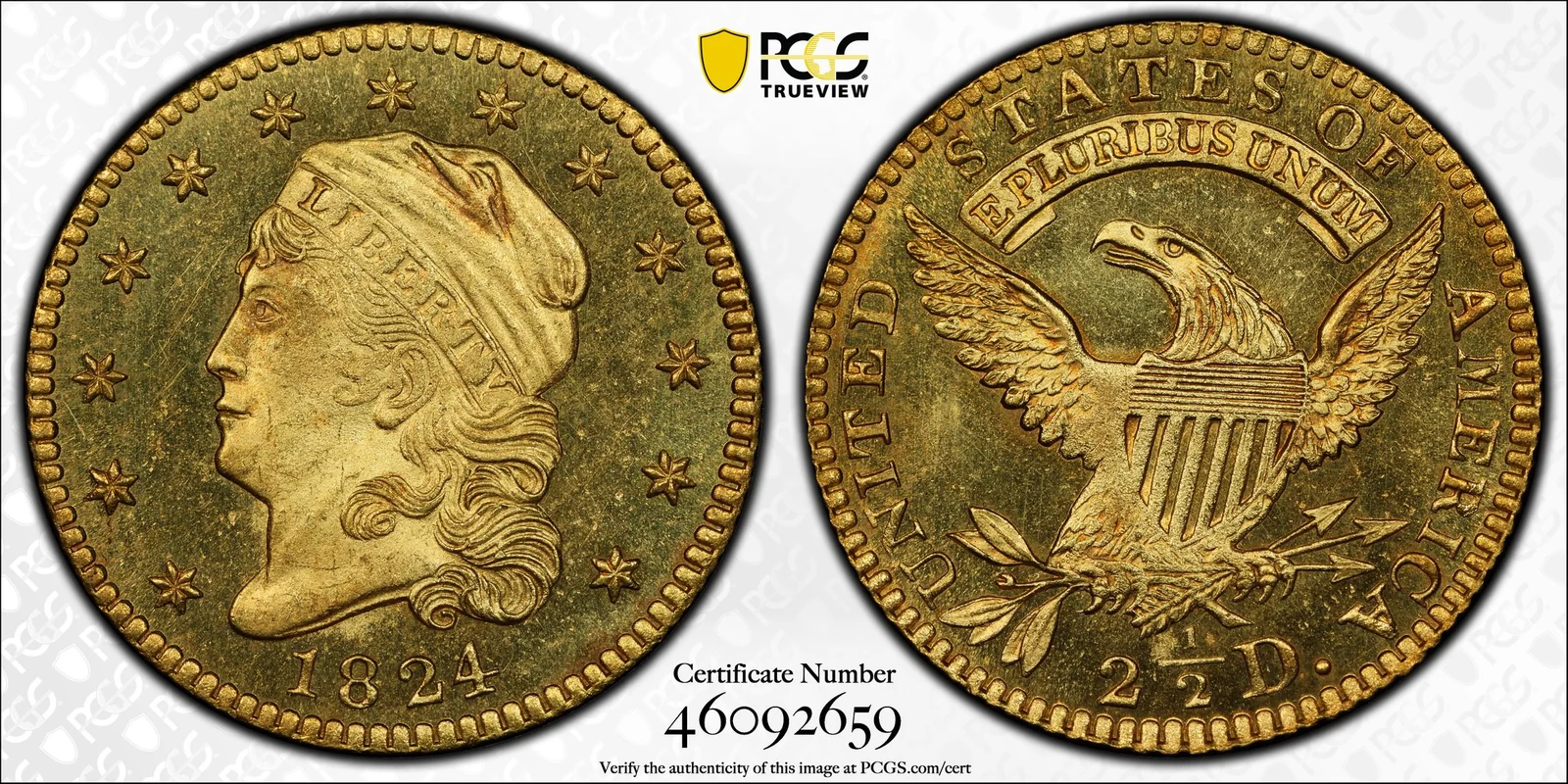
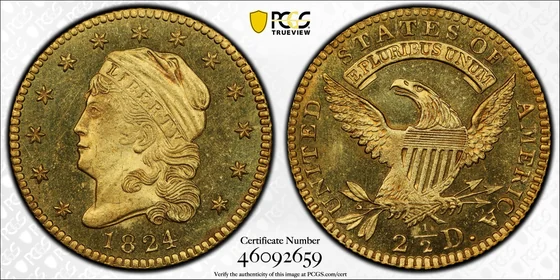 1824/1 Capped Bust Quarter Eagle, Proof$2.50 gold; proof overdate
Notable auction sale$1,740,000
PCGS PR67
1824/1 Capped Bust Quarter Eagle, Proof$2.50 gold; proof overdate
Notable auction sale$1,740,000
PCGS PR67
 1920-S Indian Head Eagle$10 gold; San Francisco
Notable auction sale$1,725,000
PCGS MS67
1920-S Indian Head Eagle$10 gold; San Francisco
Notable auction sale$1,725,000
PCGS MS67
 1797 Philadelphia Draped Bust half dollar (Small Eagle)50 cents
Notable auction sale$1,680,000Newer sale: $1,560,000 (Jan 12, 2023)
PCGS MS66; CAC
1797 Philadelphia Draped Bust half dollar (Small Eagle)50 cents
Notable auction sale$1,680,000Newer sale: $1,560,000 (Jan 12, 2023)
PCGS MS66; CAC
 1907 Saint-Gaudens Double Eagle, Small Edge Letters Proof$20 gold; low-relief satin proof
Notable auction sale$1,680,000
PCGS PR68
1907 Saint-Gaudens Double Eagle, Small Edge Letters Proof$20 gold; low-relief satin proof
Notable auction sale$1,680,000
PCGS PR68
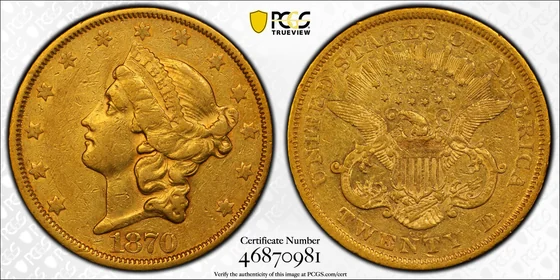 1870-CC Liberty Head Double Eagle$20 gold; Carson City
Notable auction sale$1,620,000
PCGS AU53
1870-CC Liberty Head Double Eagle$20 gold; Carson City
Notable auction sale$1,620,000
PCGS AU53