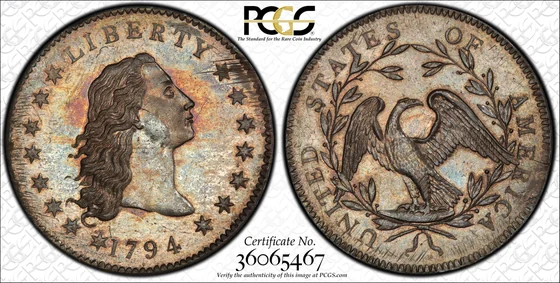
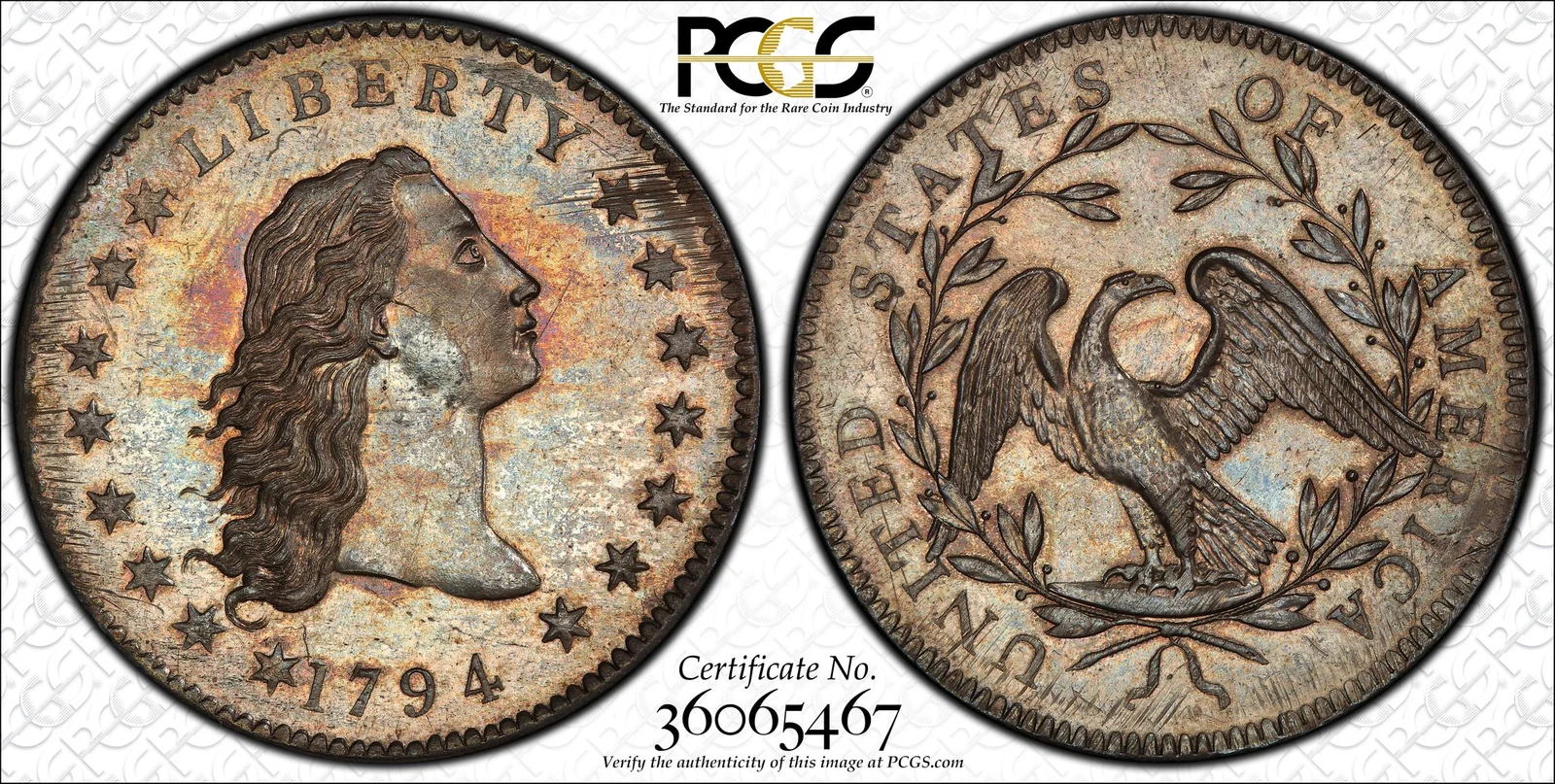
The Brand-Carter-Cardinal-Morelan PCGS SP66 specimen; photographed after the 2013 auction. Photo: PCGS TrueView
1794 Flowing Hair Dollar, Silver Plug
A remarkably preserved survivor from America's first silver-dollar year, this specimen crossed the ten-million-dollar auction threshold in 2013. The silver plug is part of its distinctive preparation.
What makes this one different
The featured coin is the exceptional SP66 silver-plug specimen, not a typical circulated 1794 dollar. Its status as the very first dollar struck is not proven.
The same specimen was reported sold privately for $12 million in 2022. That private transaction is not used in this auction ranking.
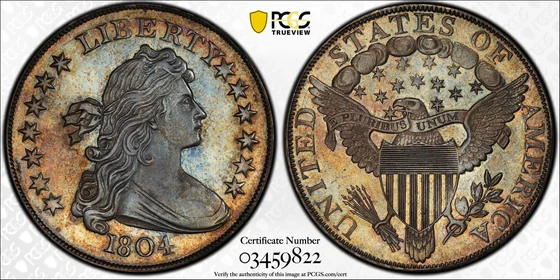
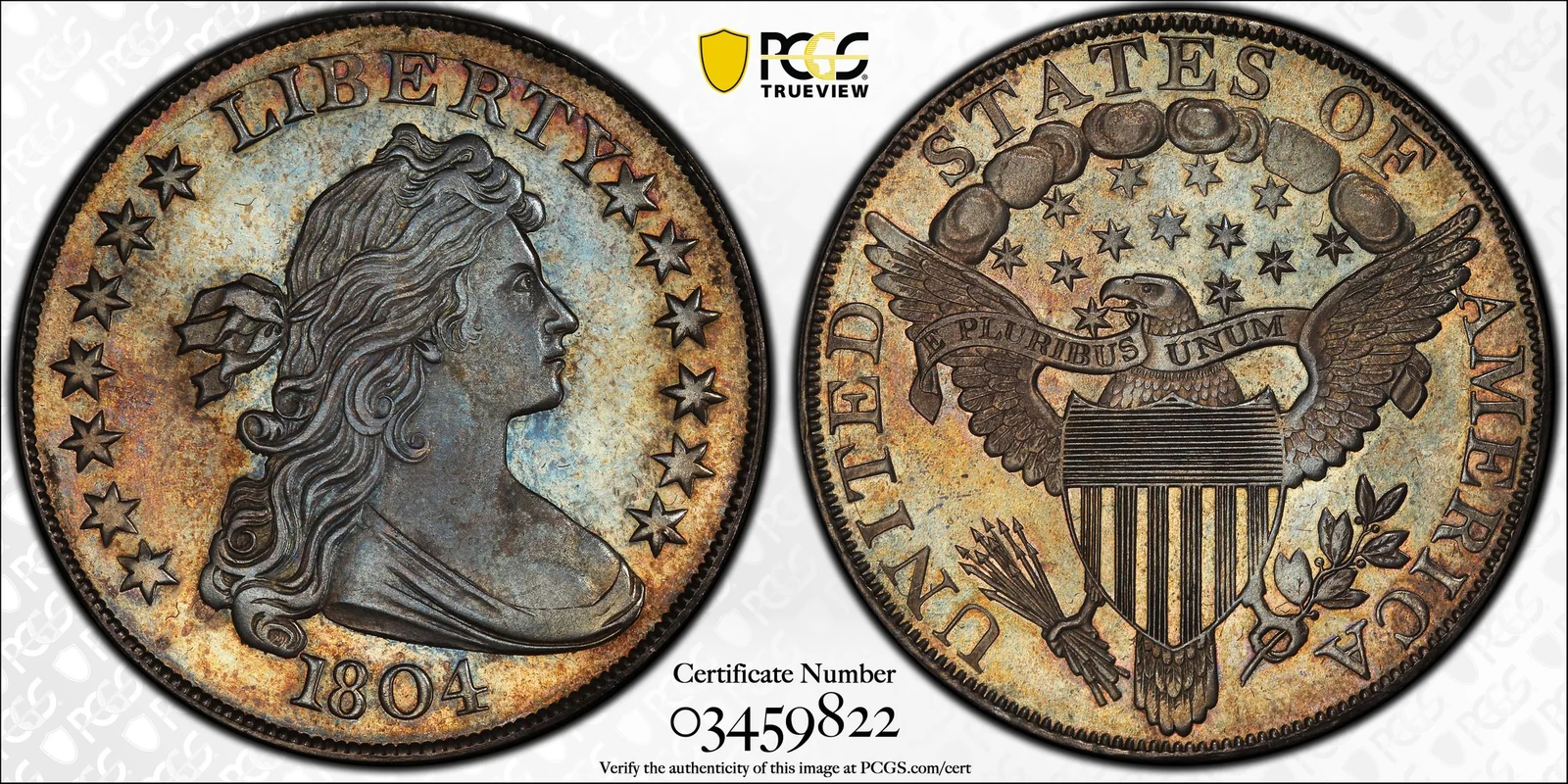
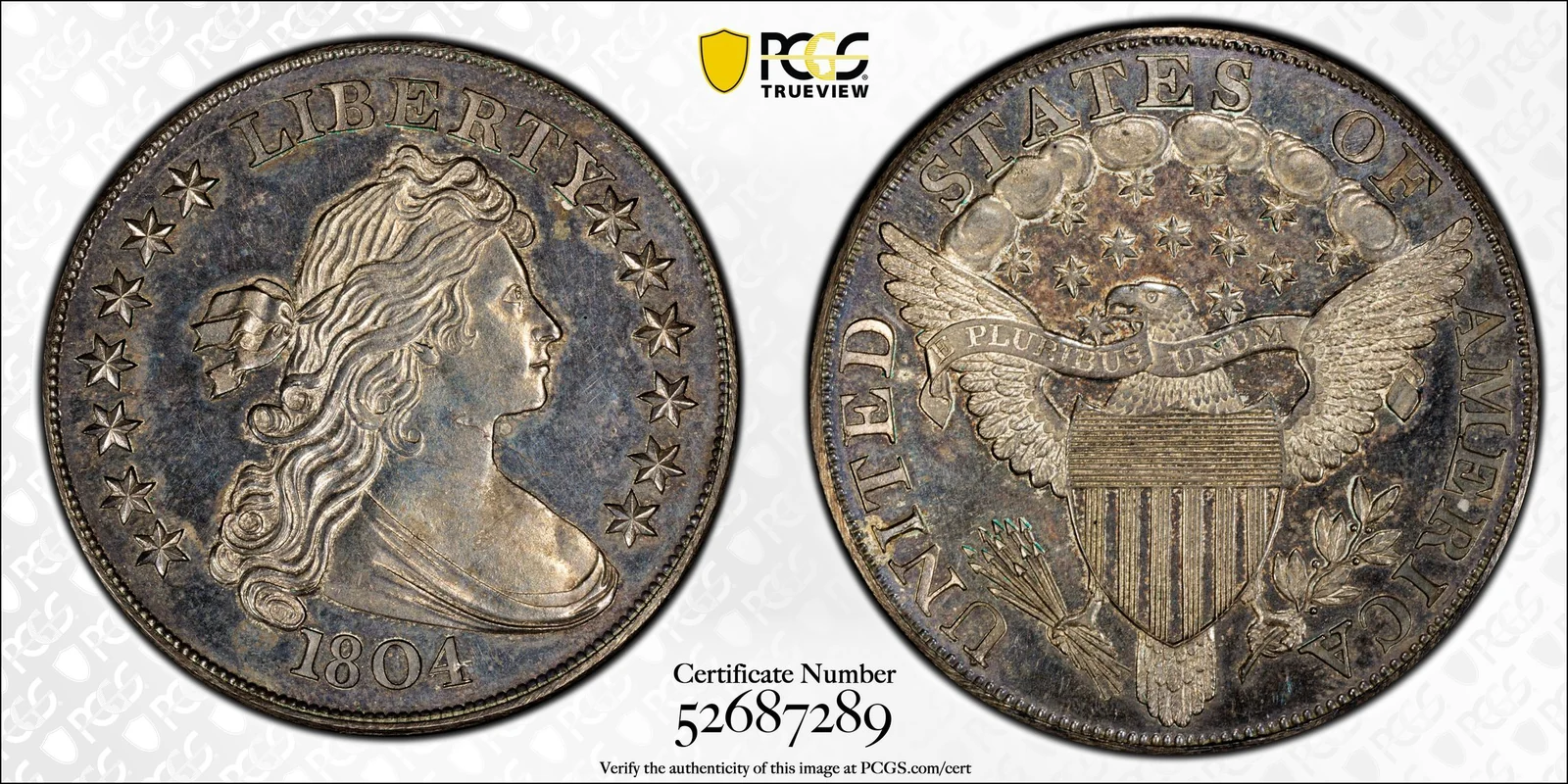
The PCGS PR68 Sultan of Muscat-Childs-Pogue specimen featured in the 2021 sale. Photo: PCGS TrueView
1804 Draped Bust Dollar, Class I
The finest-known Class I example belongs to a small group made for diplomatic presentation sets in the 1830s. The date reads 1804, but the coin was struck decades later.
What makes this one different
Class I dollars are separate from Class II and Class III restrikes. Copies are common; a matching date or design is not authentication.
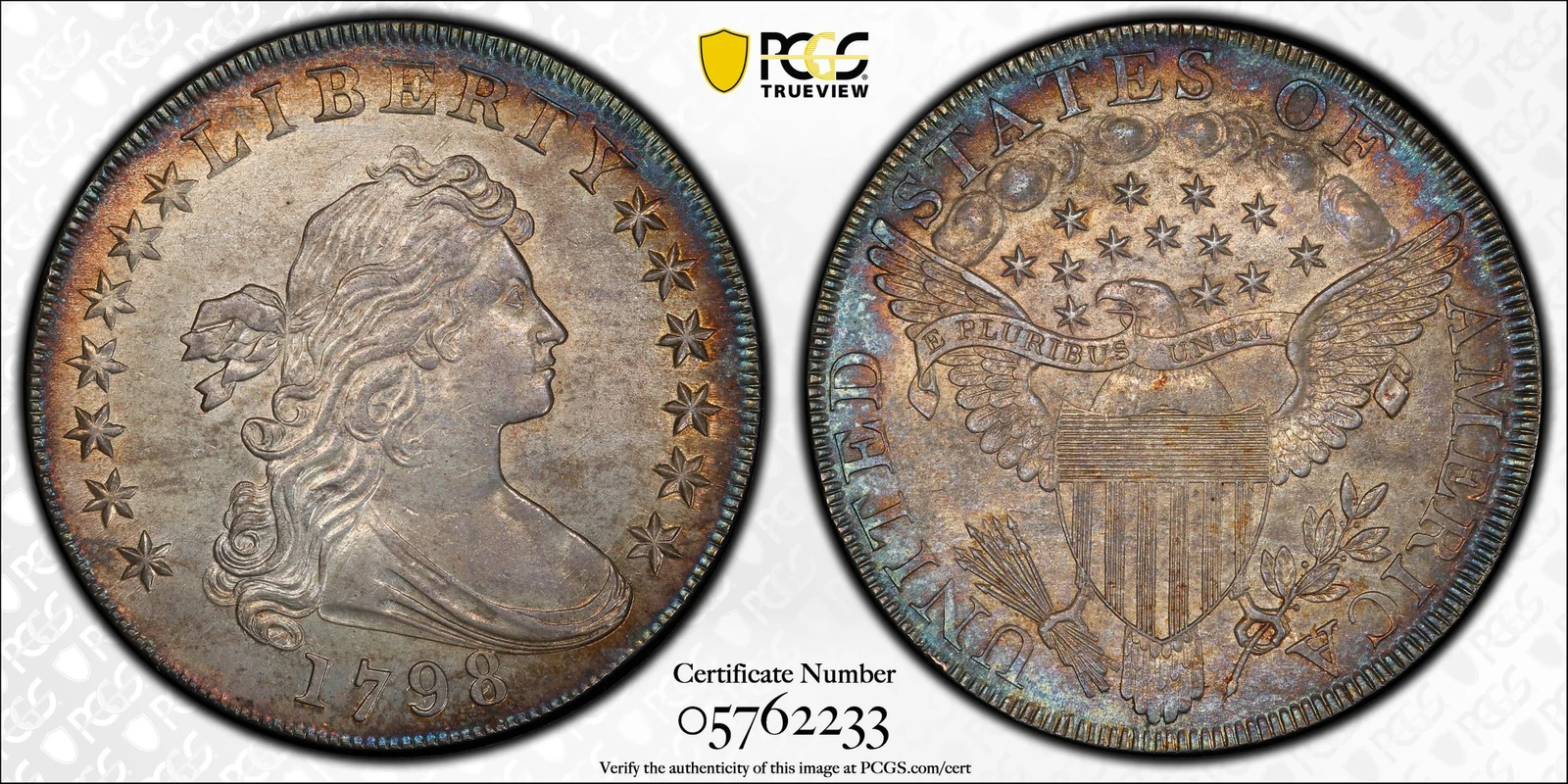
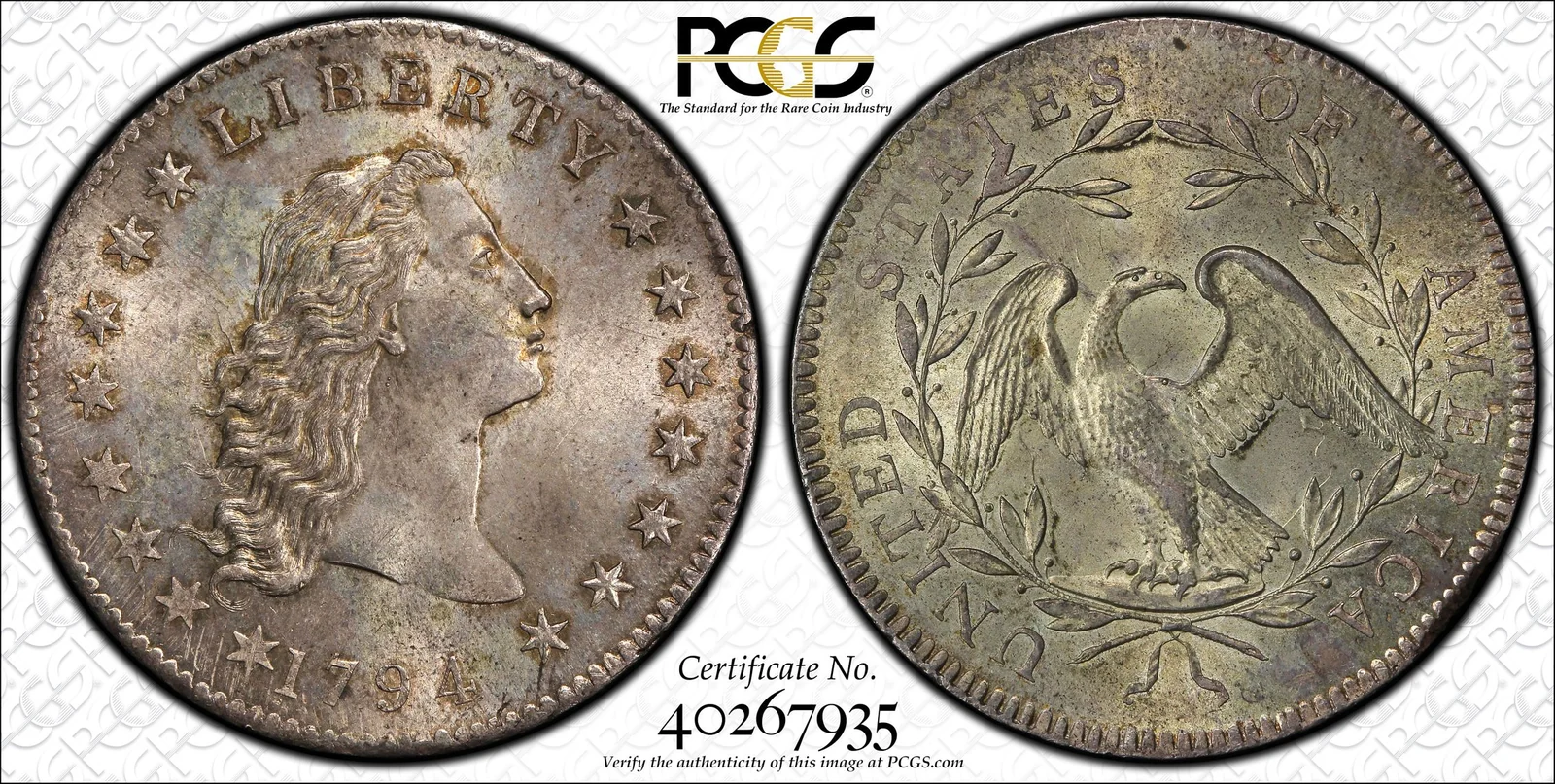
PCGS MS66+ Lord St. Oswald specimen; the certificate's sale history links the $6.6 million August 2021 benchmark. Exact sale coin. Photo: PCGS TrueView
1794 Flowing Hair Dollar, Regular Strike
The first federal silver-dollar date is especially prized in exceptional preservation. This regular-strike benchmark is separate from the silver-plug specimen-strike record.
What makes this one different
A 1794 date does not establish the grade or special-strike status. Check the complete attribution and surfaces before comparing auction prices.
The PR65 James A. Stack specimen sold in December 2025, not the PR58 specimen sold in January 2026. Photo: PCGS TrueView
1804 Draped Bust Dollar, Class III
A previously unrecorded Class III dollar emerged in the James A. Stack collection and sold for $6 million in December 2025. Another specimen sold the following month, illustrating why grade and identity matter.
What makes this one different
Class III is a later restrike with a lettered edge. Its market is separate from Class I, even though both display the 1804 date.
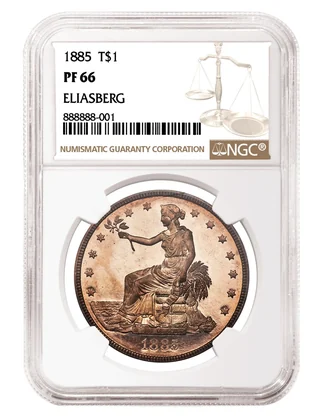
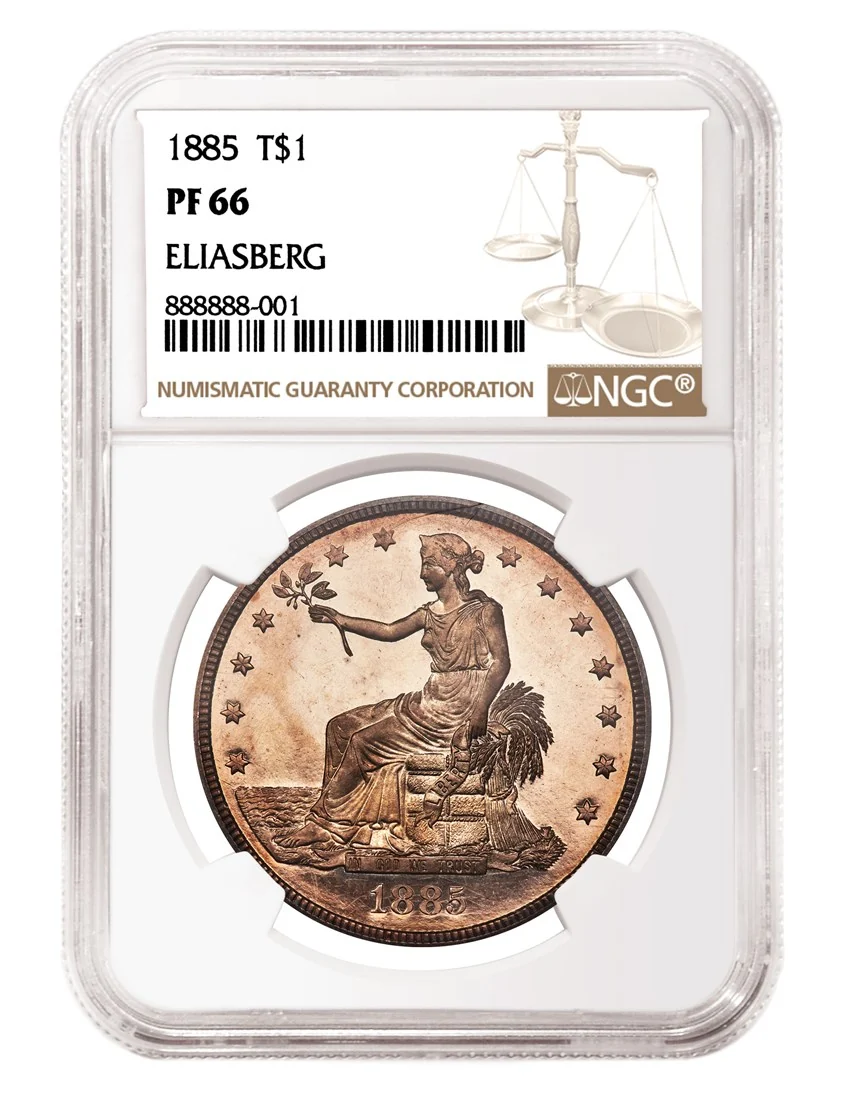
NGC obverse photograph of the Eliasberg PF66 specimen sold in 2019, not the 2021 Cameo example. Photo: NGC
1885 Trade Dollar
Just five 1885 Trade dollars are known. This proof-only date closes the series with extreme rarity, far removed from the more familiar circulation-strike Trade dollars of the 1870s.
What makes this one different
The 1885 date and genuine proof manufacture are essential. The two results concern different specimens, grades and finish designations, not a fall in one coin's price.
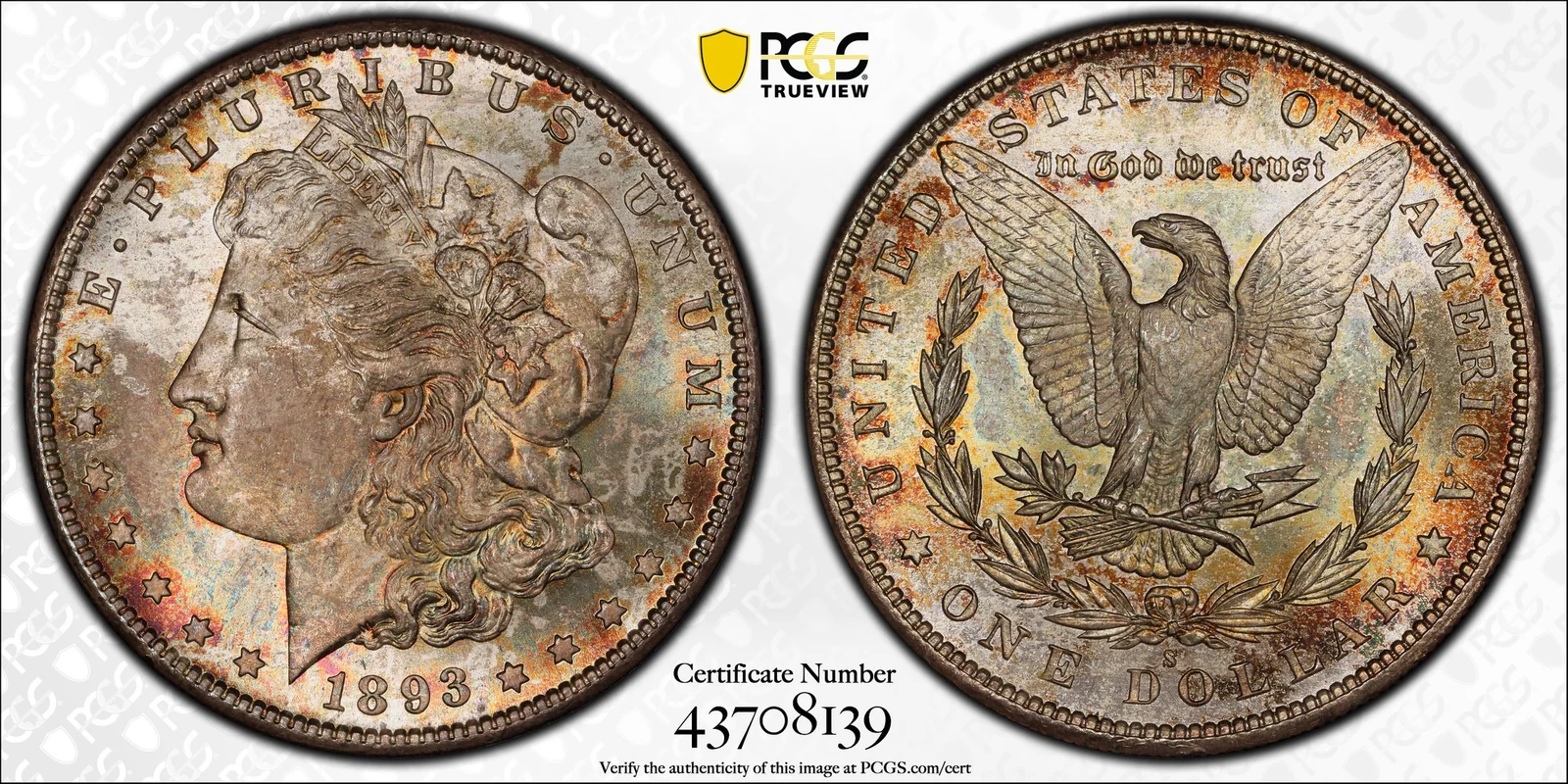
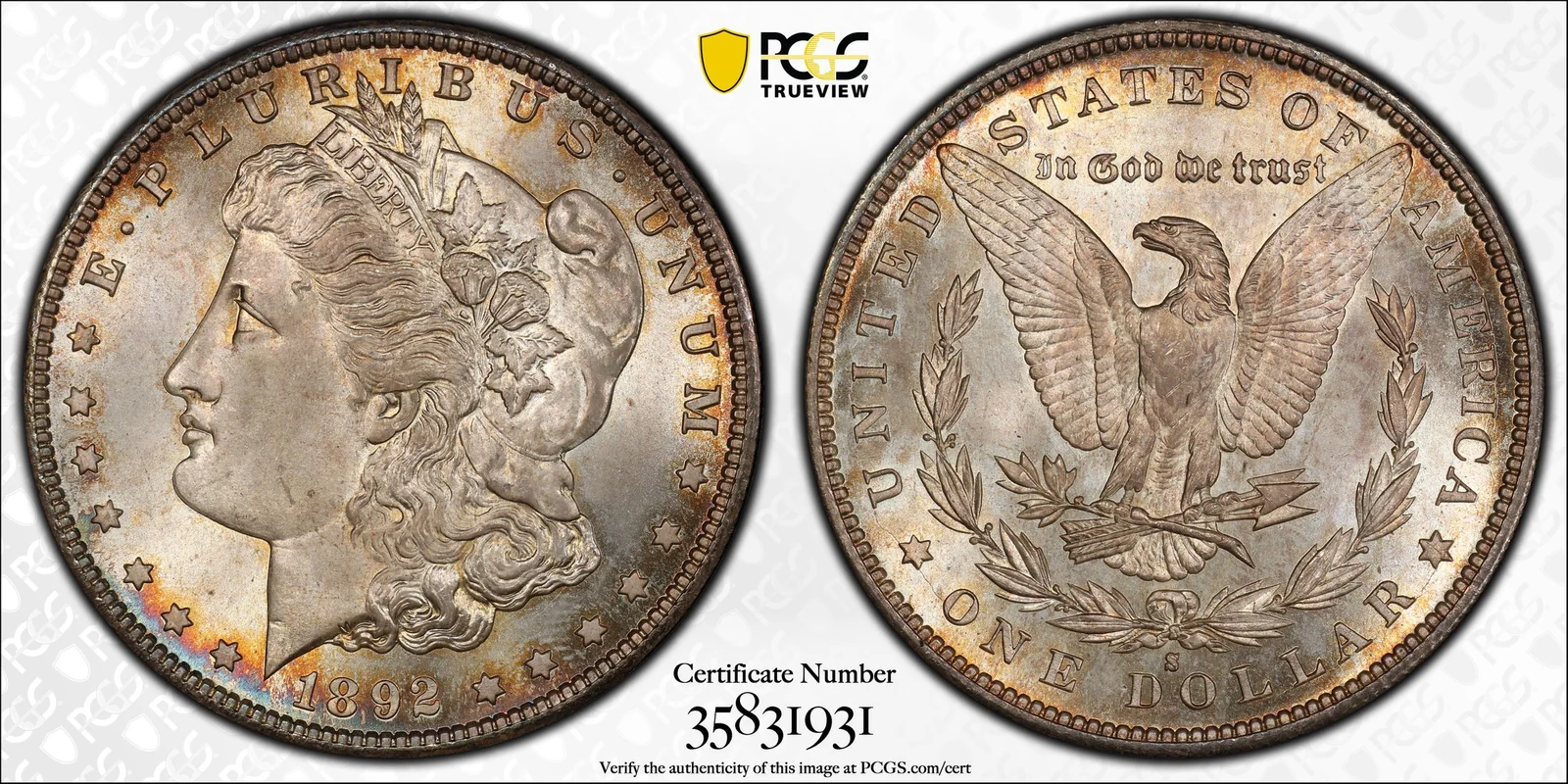
061893-S Morgan Dollar$1 silver; San FranciscoNotable auction sale$2,086,875Newer sale: $1,181,250 (Aug 9, 2026)PCGS MS67; CAC
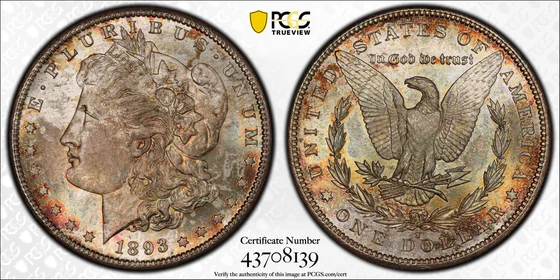
PCGS MS67 reference photograph, not the MS65 Clapp-Eliasberg specimen sold in 2026. Photo: PCGS TrueView
1893-S Morgan Dollar
A famous Morgan dollar key date becomes an entirely different rarity in superb mint condition. The 2026 Gem sale is newer, but the finer Vermeule specimen's 2021 total remains higher.
What makes this one different
Check the S mint mark below the reverse wreath and authenticate the date and mint mark. A worn genuine 1893-S is not valued like an MS65 or MS67 specimen.
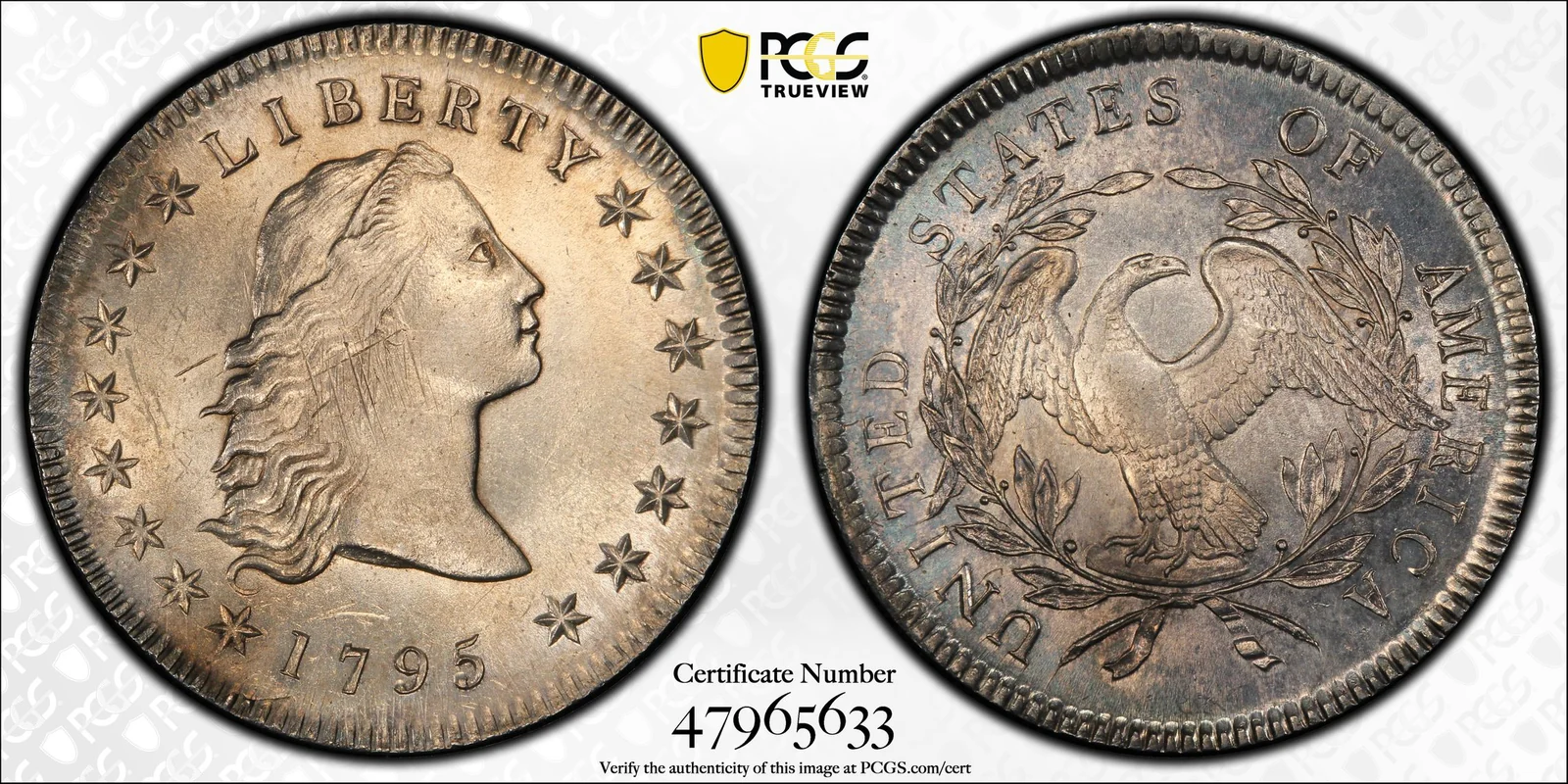
071795 Flowing Hair Dollar, Three Leaves$1 silverNotable auction sale$1,265,000Newer sale: $822,500 (Sep 2015)Uncertified; cataloged V CH to GEM UNC
Representative same-issue PCGS MS62 specimen, certificate 47965633; not asserted to be the benchmark auction coin. Photo: PCGS TrueView
1795 Flowing Hair Dollar, Three Leaves
This reverse variety is collected separately from the Two Leaves design. The benchmark is the 2005 sale of a coin cataloged without a numerical third-party grade.
What makes this one different
Count the leaves in the attributed reverse cluster; do not treat later grading opinions as the grade assigned at the 2005 sale.
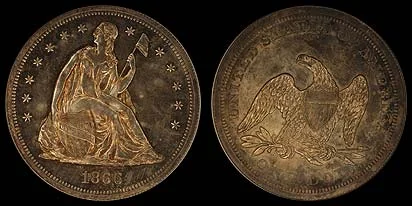
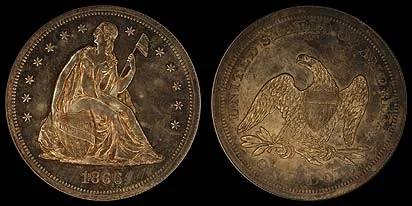
081866 Liberty Seated Dollar, No Motto Proof$1 silver; proofNotable auction sale$1,207,500NGC PR63
NGC PF63 1866 No Motto dollar shown in NGC's 2006 BRS Legacy Collection exhibit announcement; not asserted to be the benchmark auction specimen. Photo: NGC
1866 Liberty Seated Dollar, No Motto Proof
The 1866 No Motto proof is a special rarity distinct from the regular With Motto dollar. Its auction result reflects that unusual issue, not the date alone.
What makes this one different
Inspect the reverse for the absence of IN GOD WE TRUST and obtain specialist authentication. Removing a motto does not create a genuine rarity.
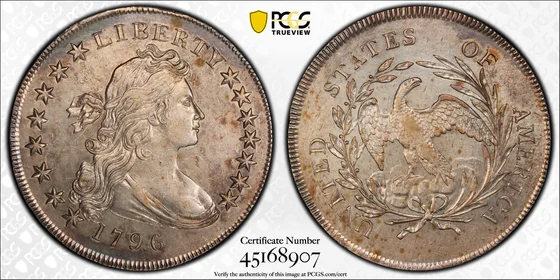
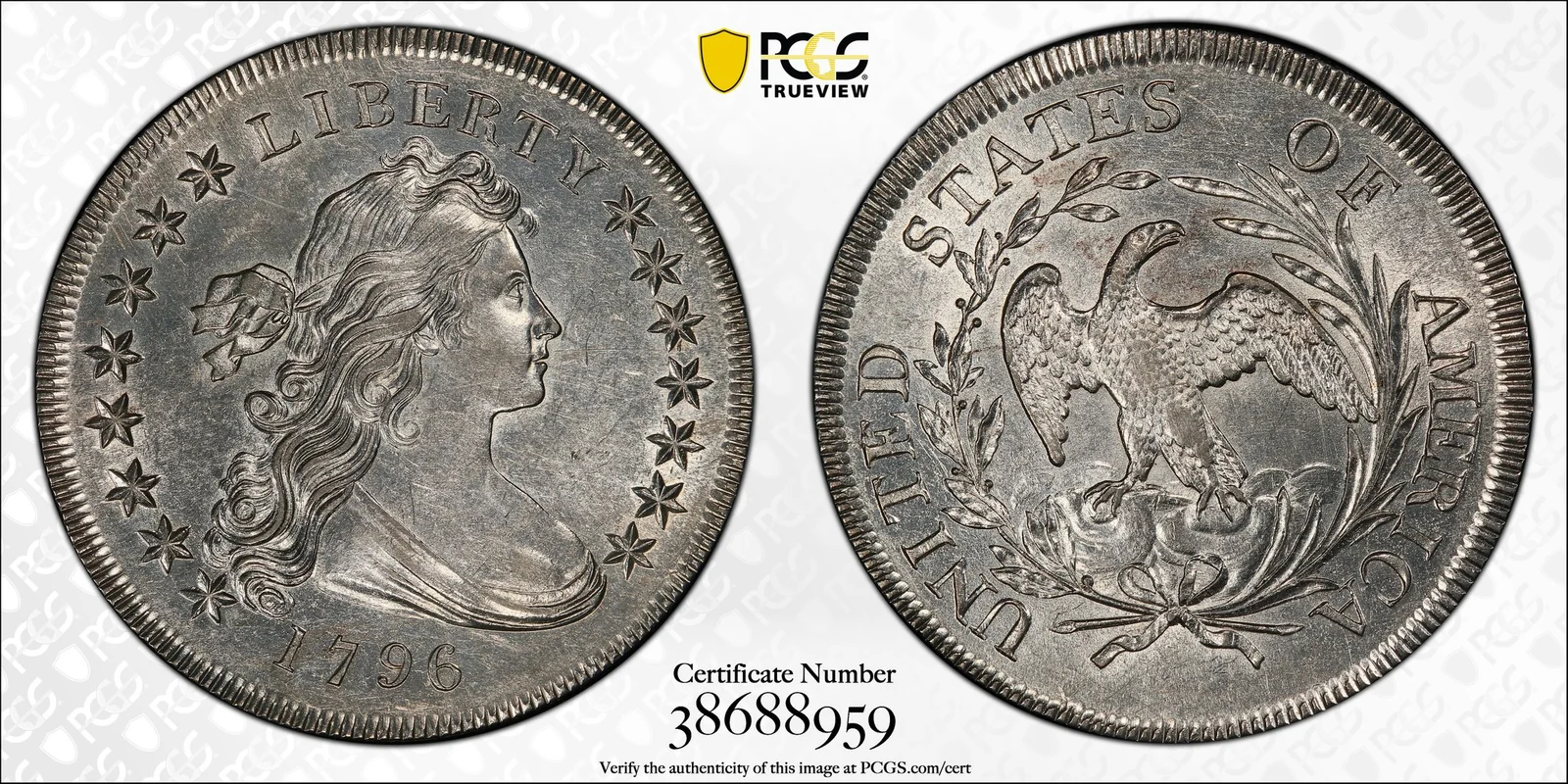
091796 Draped Bust Dollar, Small Date and Small Letters$1 silverNotable auction sale$1,175,000NGC MS65
Representative same-issue PCGS AU55 specimen, certificate 45168907; not asserted to be the benchmark auction coin. Photo: PCGS TrueView
1796 Draped Bust Dollar, Small Date and Small Letters
Date size and reverse lettering distinguish this early dollar variety. The seven-figure benchmark concerns an exceptional Mint State example.
What makes this one different
Compare both the date punches and reverse lettering with an attributed reference; neither a small-looking date nor attractive toning establishes the variety.
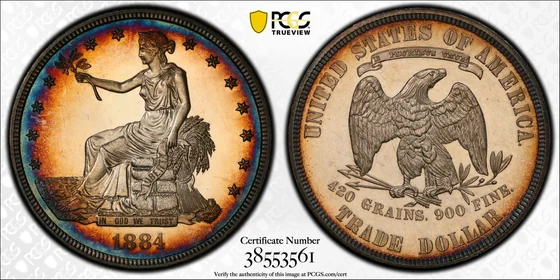
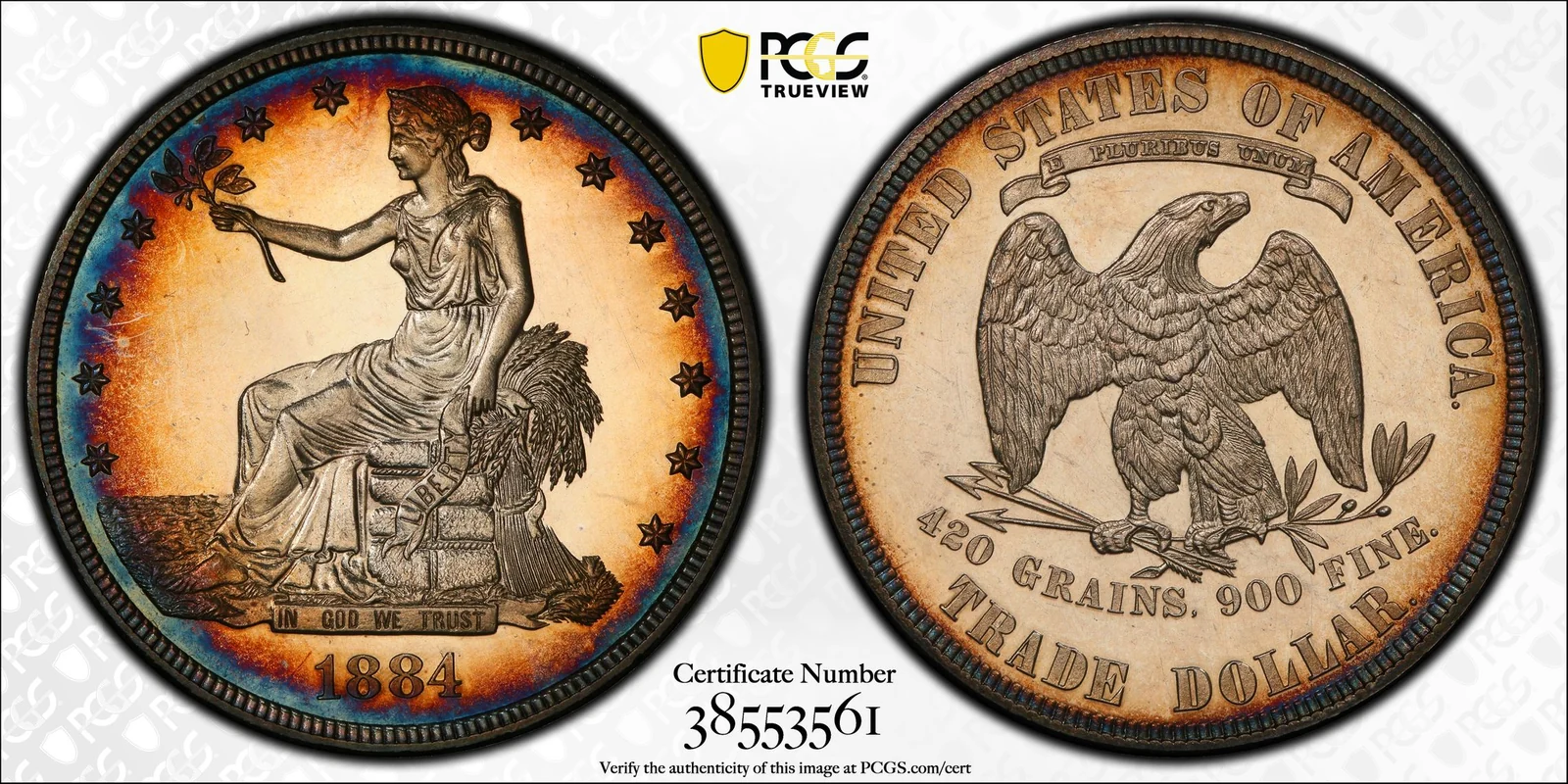
Representative same-issue PCGS PR64+CAM specimen, certificate 38553561; not asserted to be the benchmark auction coin. Photo: PCGS TrueView
1884 Trade Dollar, Proof
The late proof-only Trade dollar dates occupy a different collecting market from the circulation issues. This 1884 sale concerns an NGC-certified proof.
What makes this one different
Authenticate the 1884 date and proof manufacture. Do not use this benchmark for a common-date Trade dollar with polished fields.
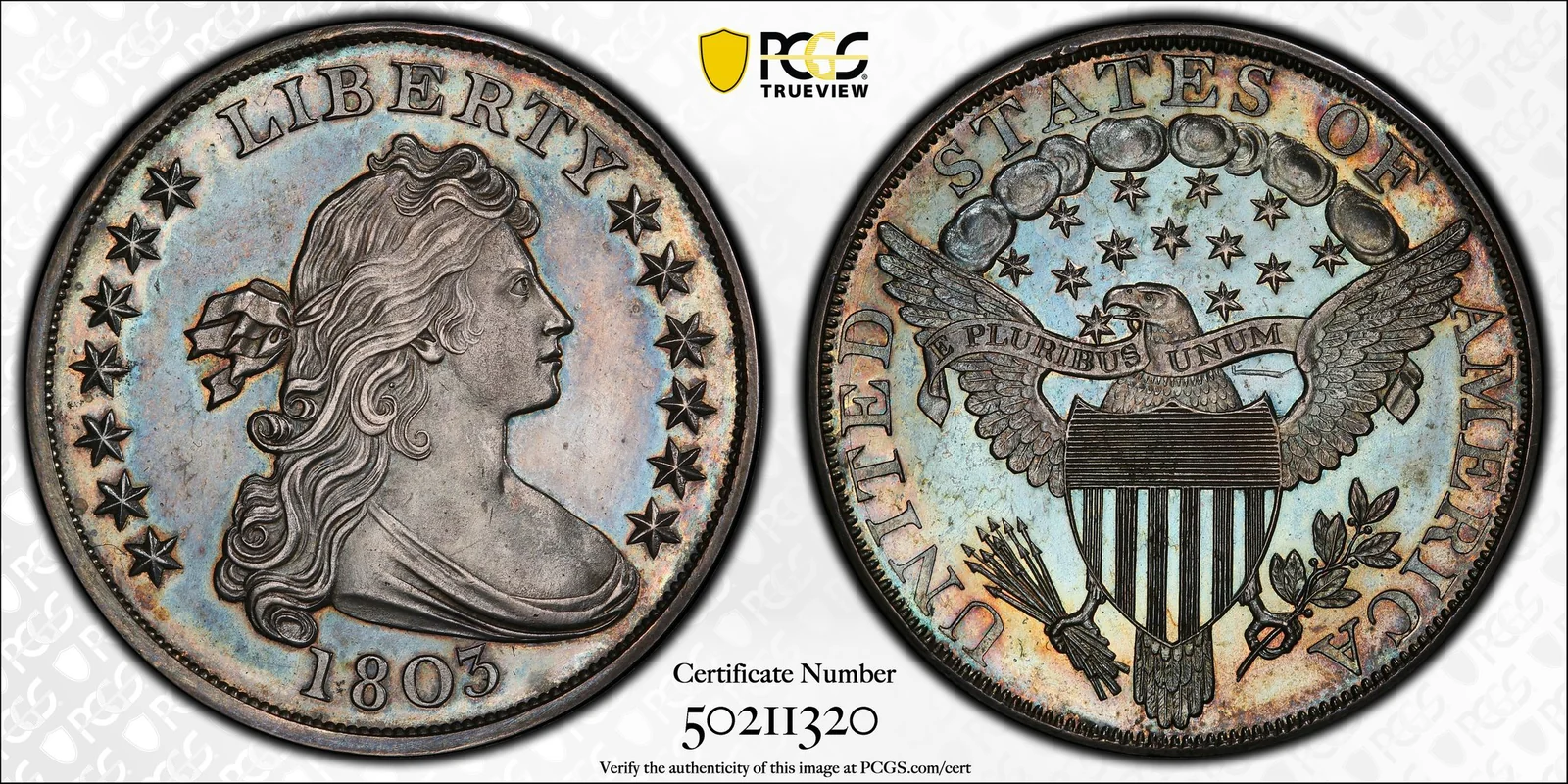
Representative same-issue PCGS PR66 specimen, certificate 50211320; not asserted to be the benchmark auction coin. Photo: PCGS TrueView
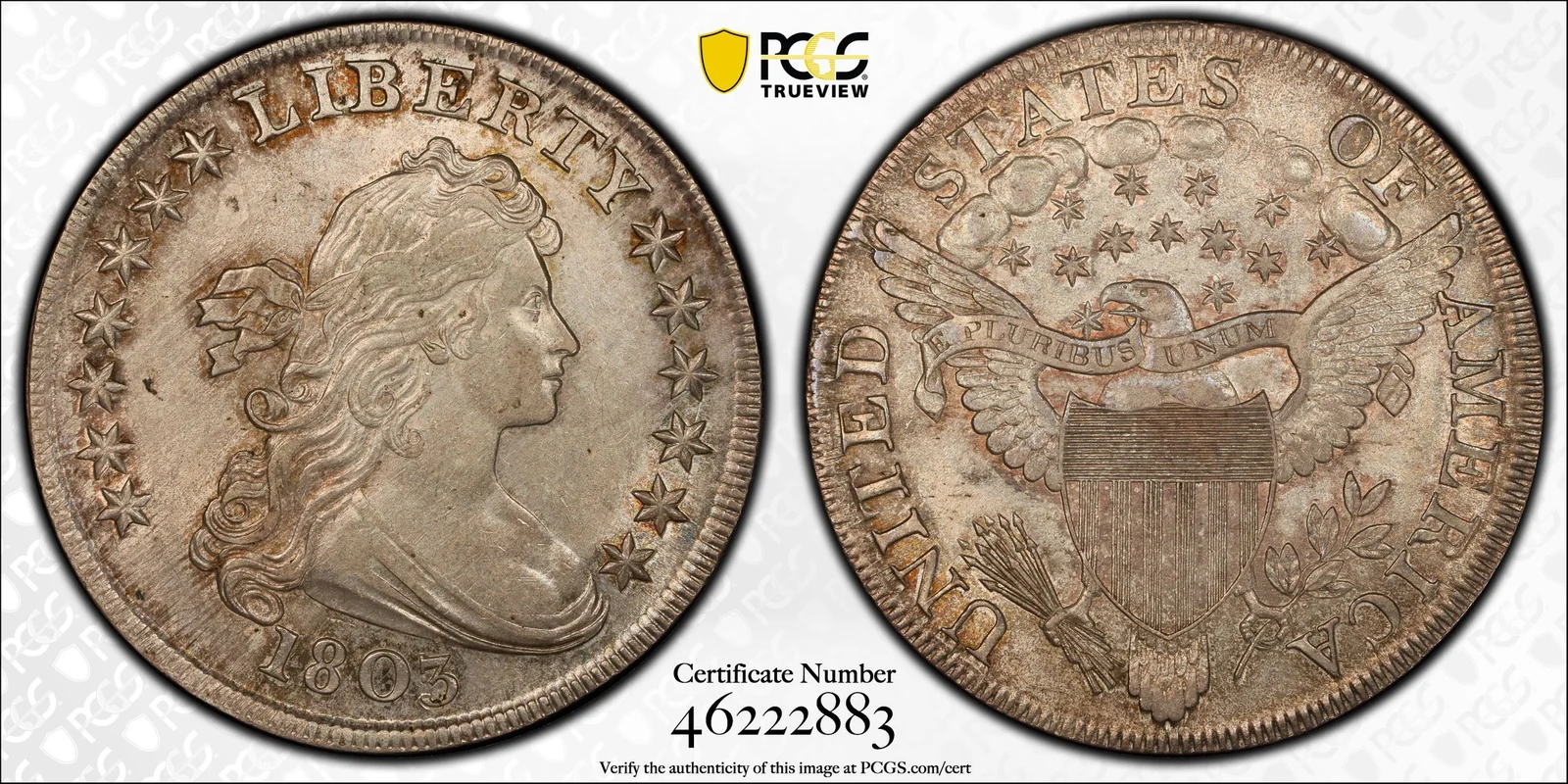
1803 Draped Bust Dollar, Proof Restrike
The proof issue dated 1803 is cataloged separately from regular-strike dollars. The date on these later special strikings does not establish their manufacture year.
What makes this one different
A reflective surface is not proof status. Attribution must distinguish the later proof issue from a polished or prooflike circulation strike.
121870-S Liberty Seated Dollar$1 silver; San FranciscoNotable auction sale$1,092,500Uncertified; cataloged BU
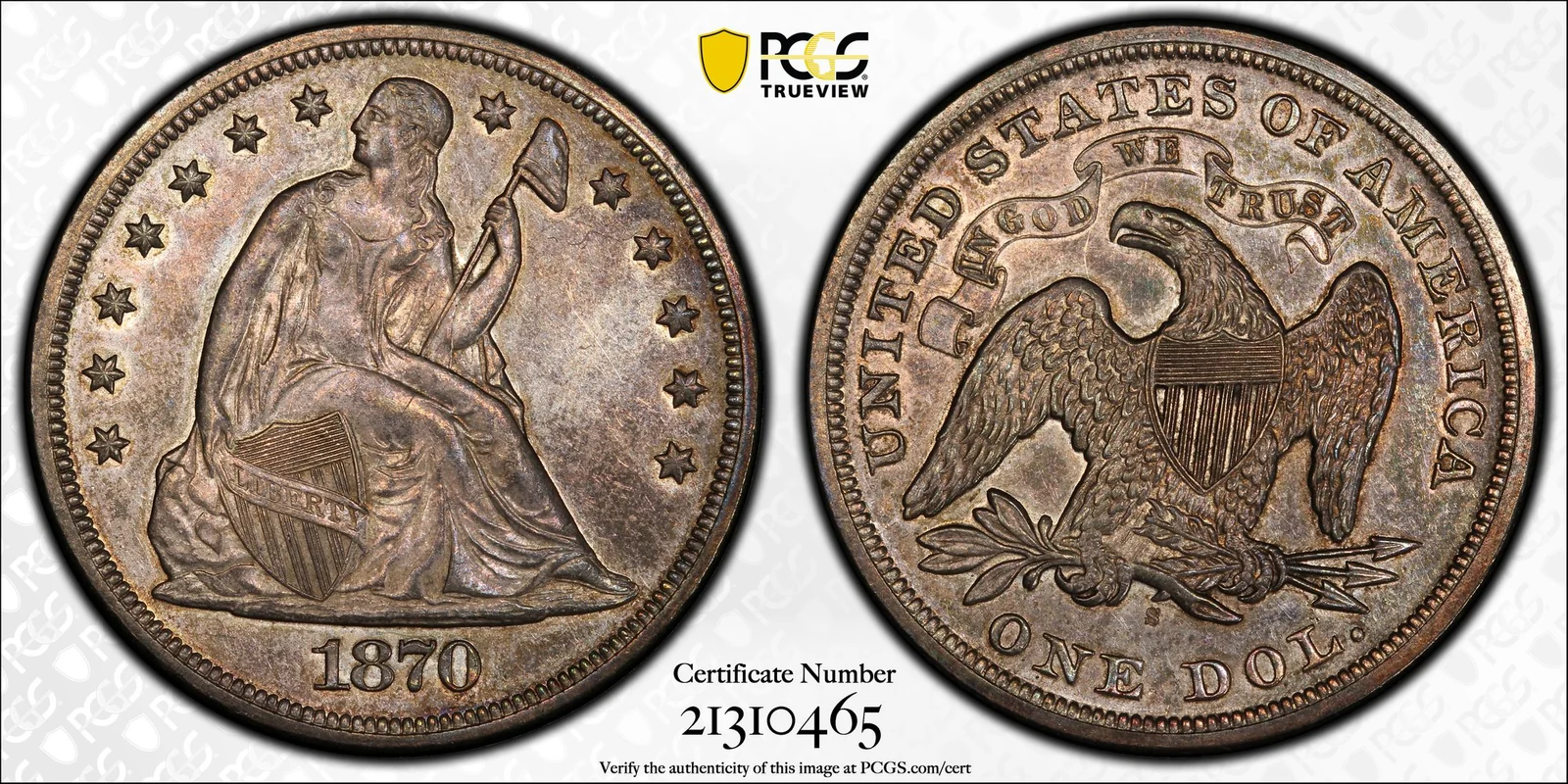
Representative same-issue PCGS MS62 specimen, certificate 21310465; not asserted to be the benchmark auction coin. Photo: PCGS TrueView
1870-S Liberty Seated Dollar
The San Francisco 1870 dollar is a major Seated dollar rarity. The benchmark retains the older auction's BU catalog description rather than assigning a modern numerical grade.
What makes this one different
Confirm the S mint mark and documented specimen identity. Added mint marks and later grade changes require particular care.
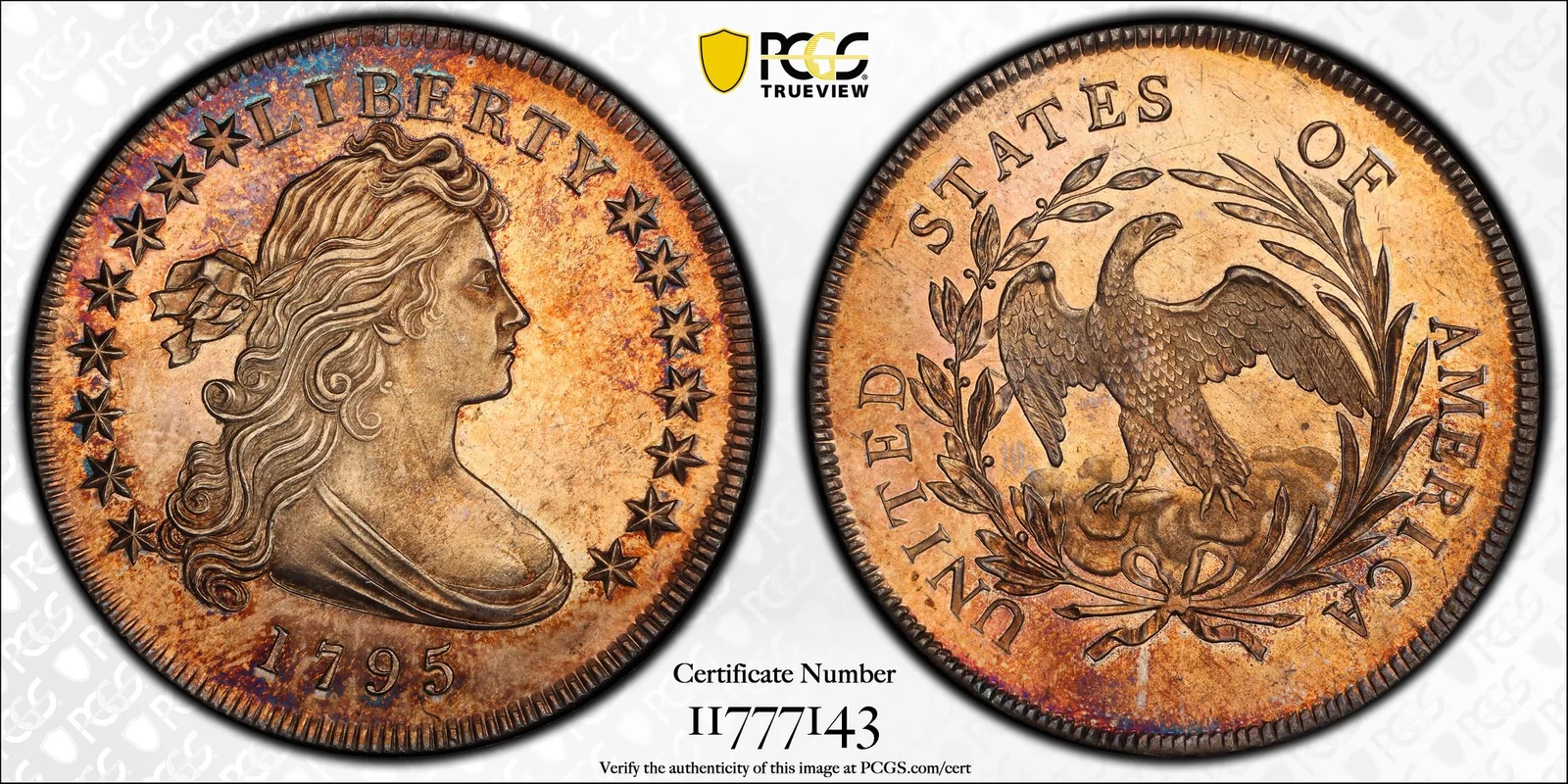
Representative same-issue PCGS SP66 specimen, certificate 11777143; not asserted to be the benchmark auction coin. Photo: PCGS TrueView
1795 Draped Bust Dollar, Off-Center Bust Specimen
The Off-Center Bust layout is a recognized variety of the first Draped Bust dollar date. This benchmark concerns a coin certified as a specimen strike.
What makes this one different
Off-Center Bust describes the portrait's position in the design, not an off-center striking error. Specimen status requires separate authentication.
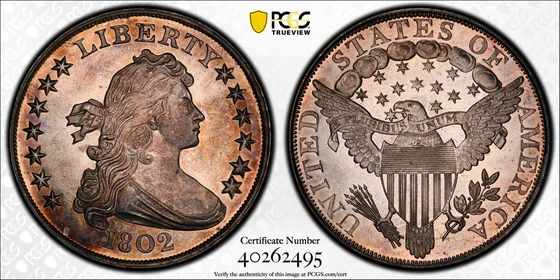
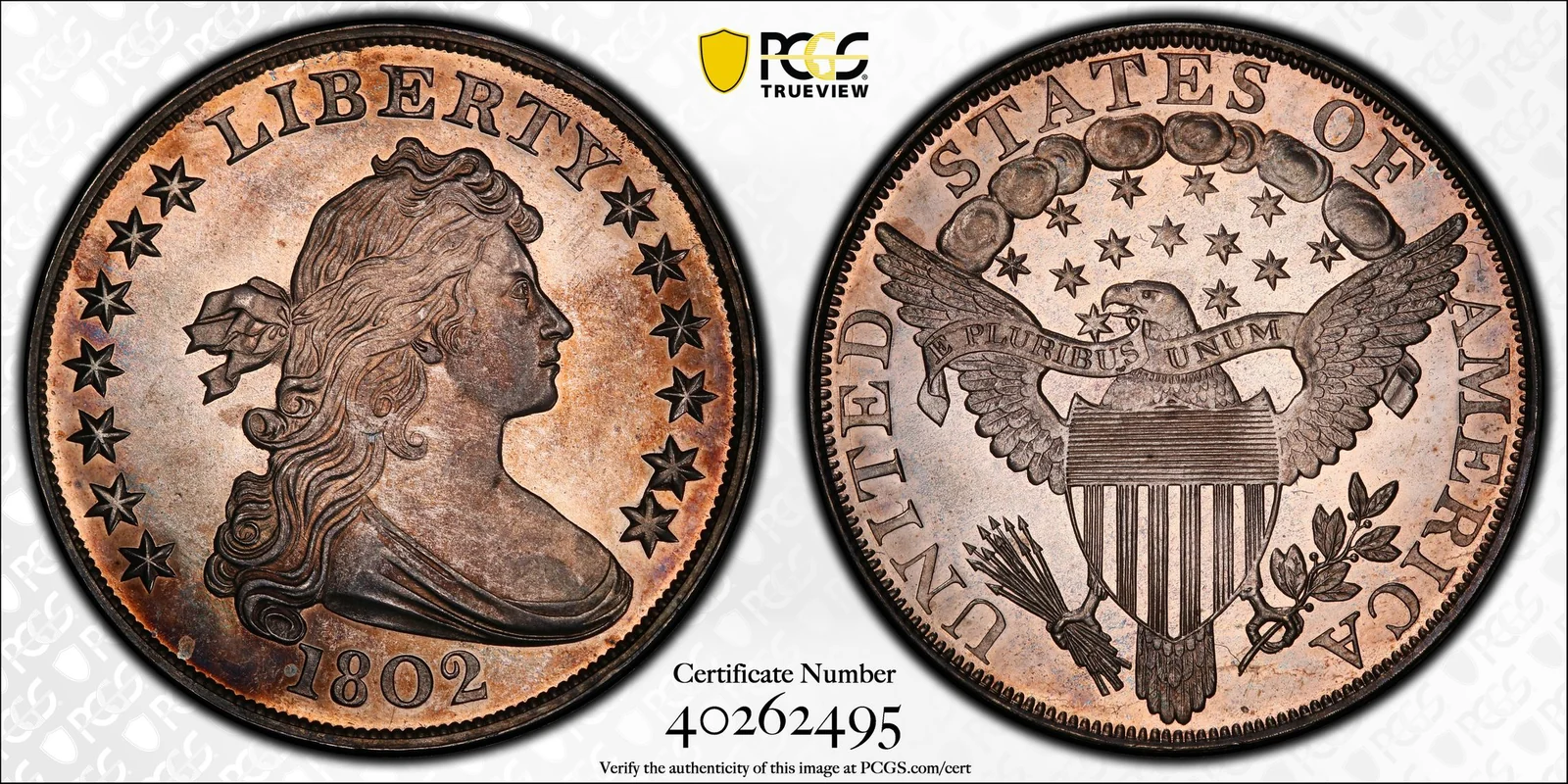
Representative same-issue PCGS PR66CAM specimen, certificate 40262495; not asserted to be the benchmark auction coin. Photo: PCGS TrueView
1802 Draped Bust Dollar, Proof Restrike
The proof dollar dated 1802 is a later special-strike issue, not simply a high-grade regular 1802 dollar. Its proof classification drives the comparison.
What makes this one different
Verify the proof attribution and die pairing with a specialist. Do not infer proof status from a bright or cleaned surface.
151889-CC Morgan Dollar$1 silver; Carson CityNotable auction sale$881,250PCGS MS68
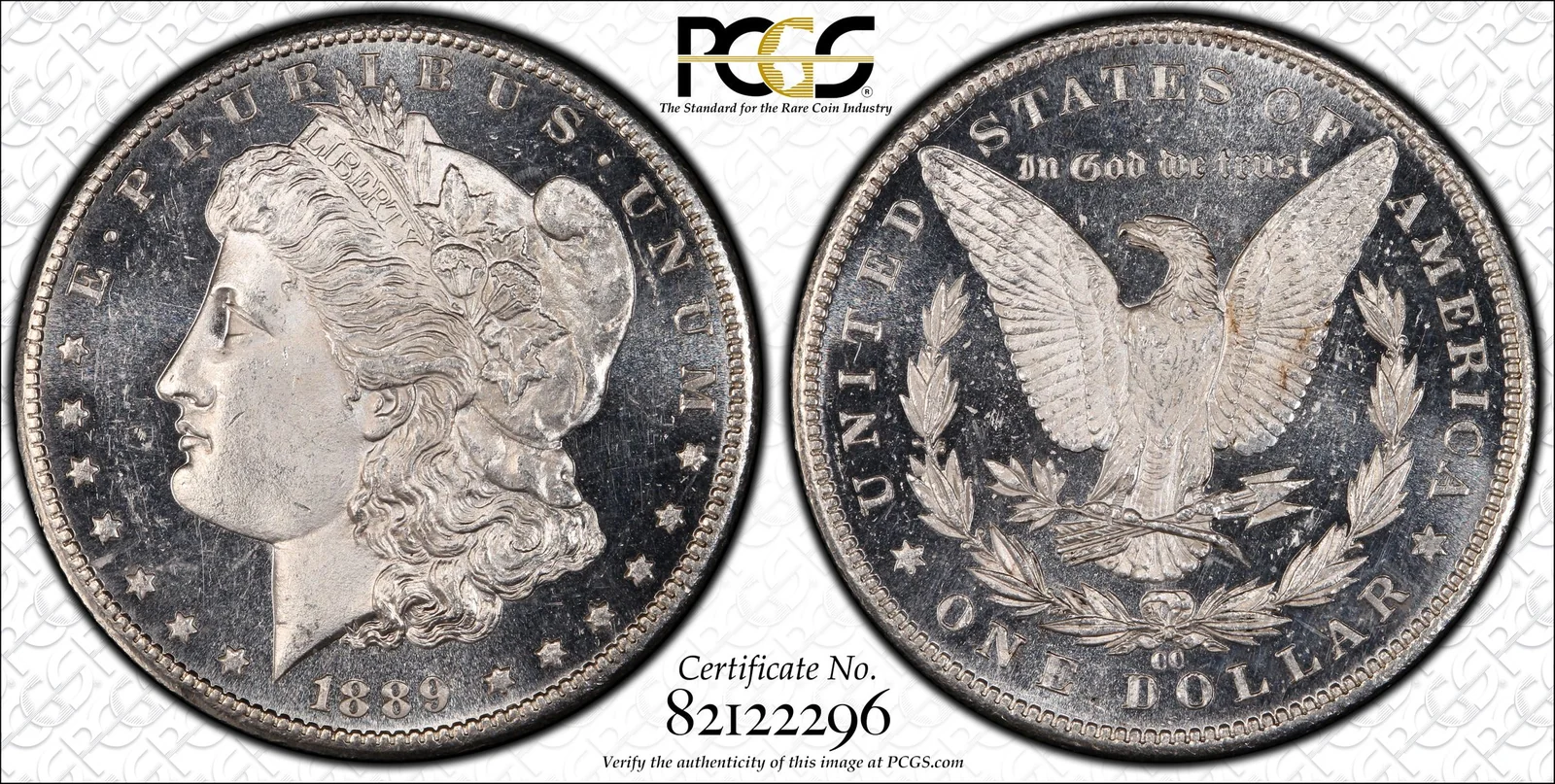
Representative same-issue PCGS MS64+DMPL specimen, certificate 82122296; not asserted to be the benchmark auction coin. Photo: PCGS TrueView
1889-CC Morgan Dollar
This Carson City date is a recognized Morgan key issue. The cited auction sold an unusually high-grade example, far above the ordinary circulated market.
What makes this one different
Look for CC below the reverse wreath and authenticate the mint mark. The listed MS68 benchmark should not be applied to a worn example.
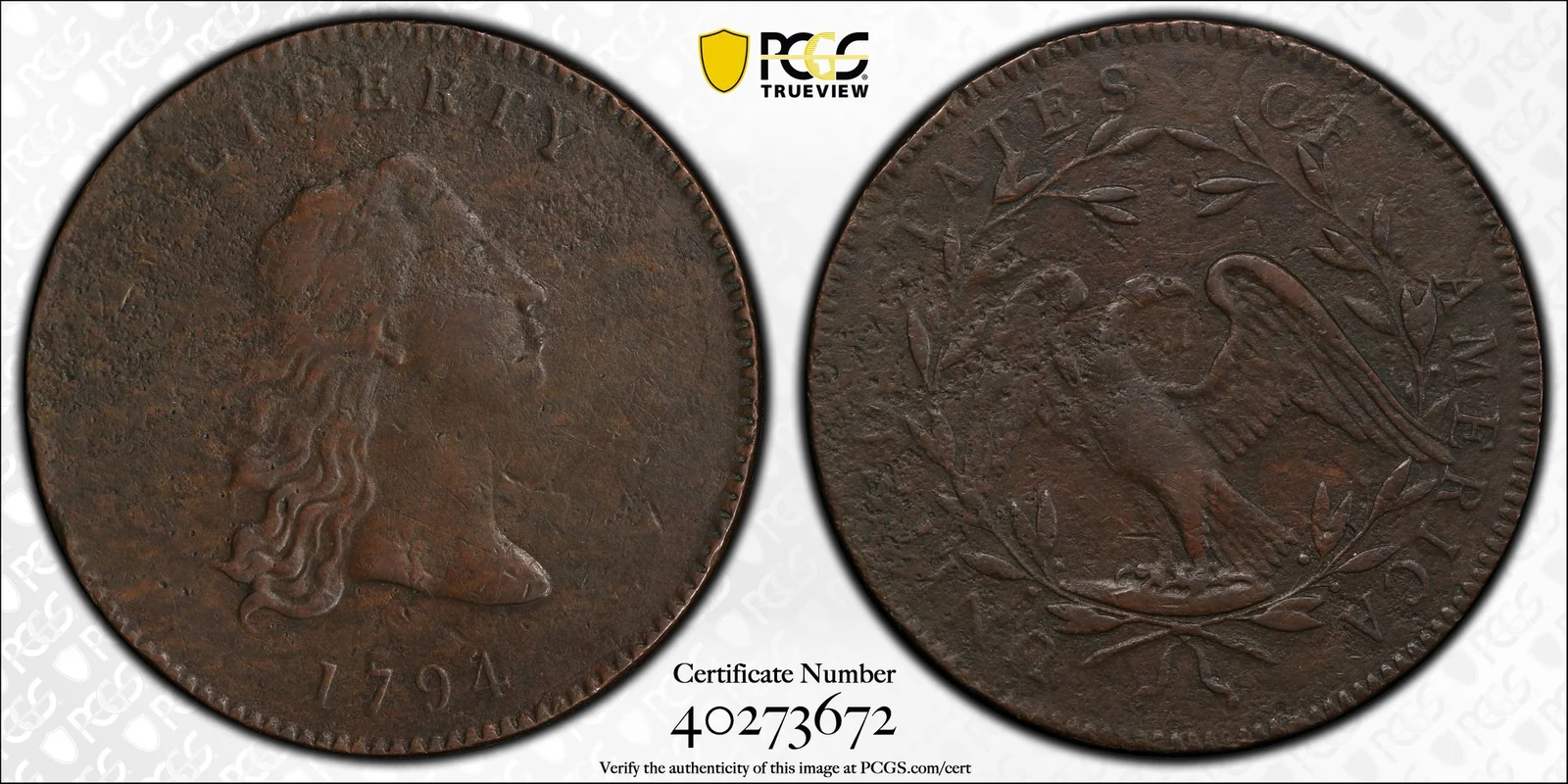
161794 Dollar Pattern, Judd-18$1 pattern; copperNotable auction sale$840,000PCGS VF25BN
Representative same-issue PCGS VF25BN specimen, certificate 40273672; not asserted to be the benchmark auction coin. Photo: PCGS TrueView
1794 Dollar Pattern, Judd-18
Judd-18 is a dollar-denomination pattern rather than an ordinary silver dollar. Its copper fabric and pattern attribution make it a distinct collecting issue.
What makes this one different
Match the Judd-18 attribution and metal, not just the 1794 date. Copper patterns and silver circulation coins are not interchangeable.
191886-O Morgan Dollar$1 silver; New OrleansNotable auction sale$780,000PCGS MS67DMPL
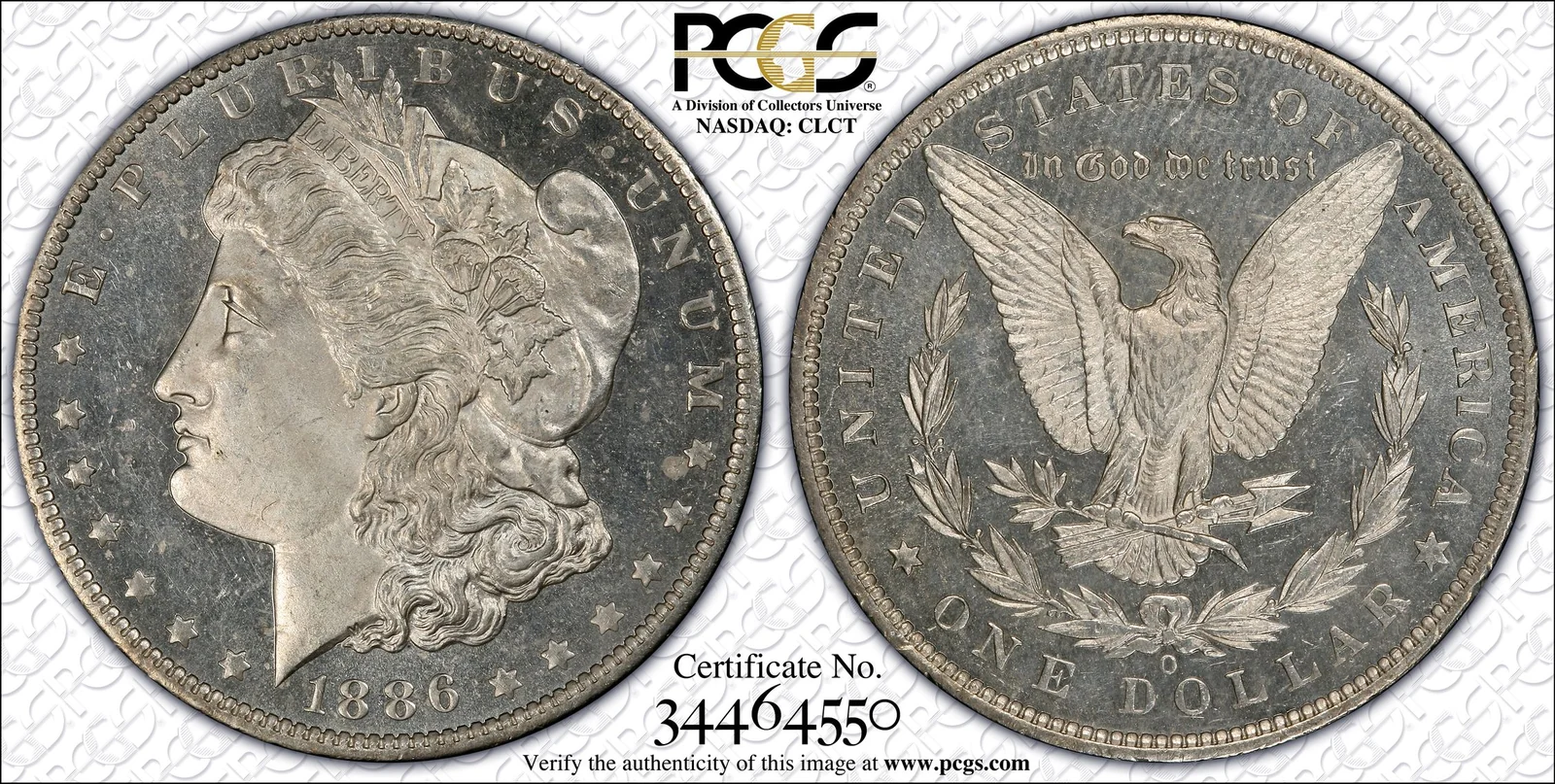
Representative same-issue PCGS MS64DMPL specimen, certificate 34464550; not asserted to be the benchmark auction coin. Photo: PCGS TrueView
1886-O Morgan Dollar
This benchmark combines a New Orleans date with exceptional preservation and deeply reflective fields. Its DMPL designation is retained as sale detail, not counted as another issue.
What makes this one different
The O mint mark appears below the reverse wreath. Deep mirrors do not by themselves establish proof manufacture or the numerical grade.
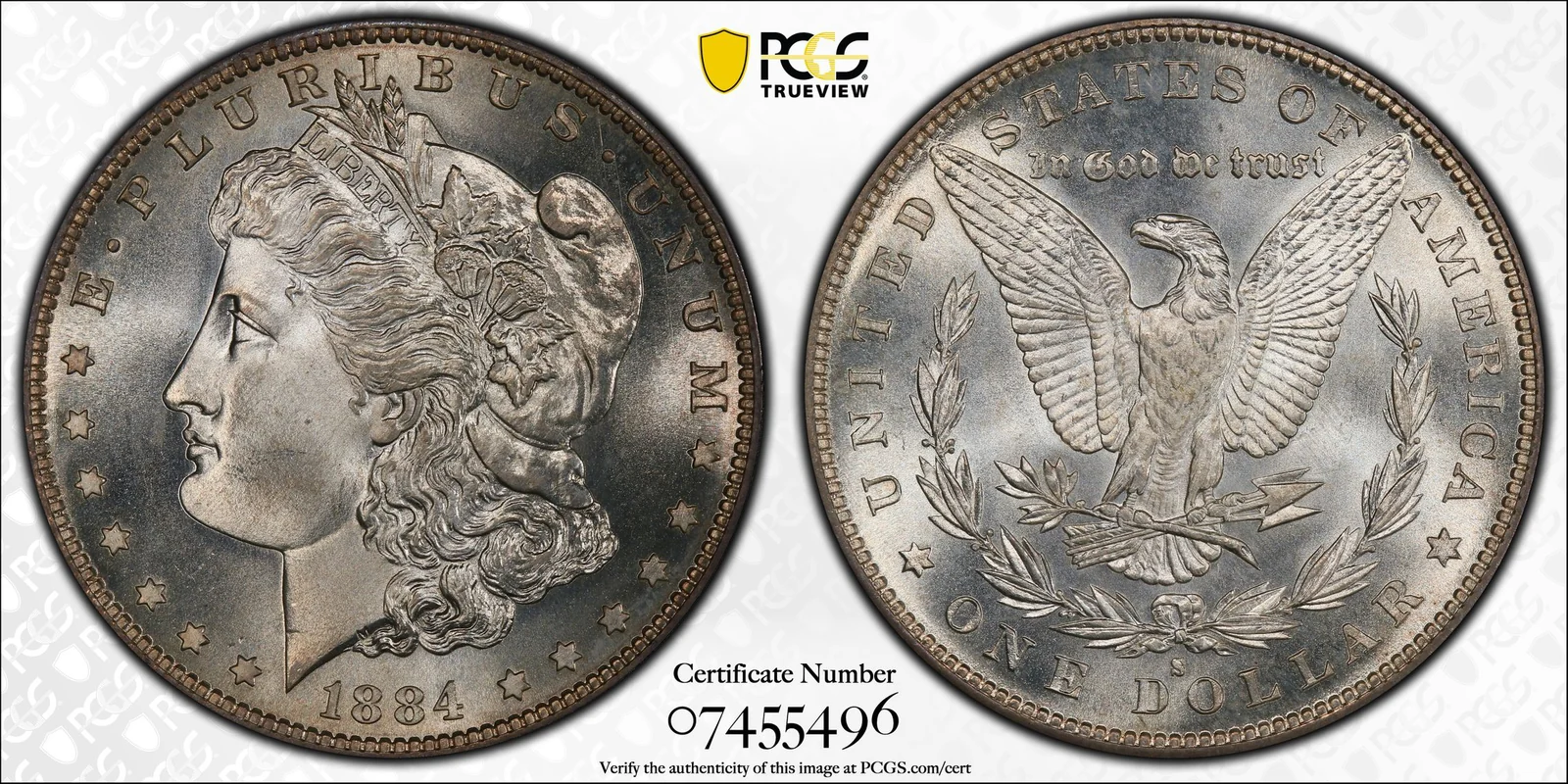
201884-S Morgan Dollar$1 silver; San FranciscoNotable auction sale$750,000PCGS MS68
Representative same-issue PCGS MS68 specimen, certificate 07455496; not asserted to be the benchmark auction coin. Photo: PCGS TrueView
1884-S Morgan Dollar
The auction illustrates the large premium for a superb Mint State survivor of this San Francisco issue. A date-and-mint match alone is not a price comparison.
What makes this one different
Authenticate the S mint mark and assess friction on the cheek and high points. AU and Mint State examples can look similar in photographs.
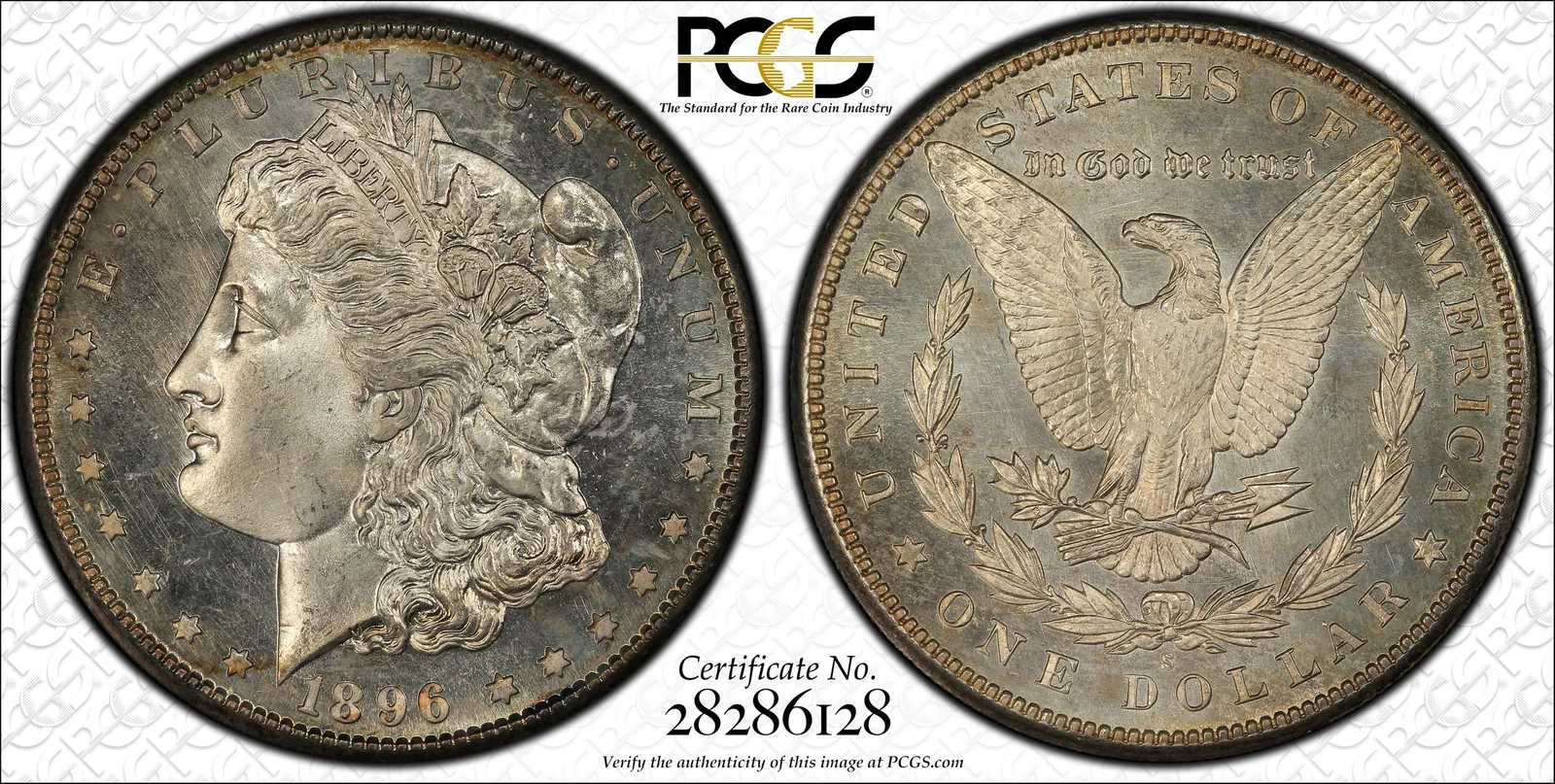
211896-S Morgan Dollar$1 silver; San FranciscoNotable auction sale$720,000PCGS MS69
Representative same-issue PCGS MS66PL specimen, certificate 28286128; not asserted to be the benchmark auction coin. Photo: PCGS TrueView
1896-S Morgan Dollar
The cited MS69 sale represents extraordinary preservation in the Morgan series. This is a specimen-specific auction benchmark rather than a guide value for the date.
What makes this one different
Confirm the S mint mark and independent grade. Small marks, cleaning or friction matter even when the design and date match.
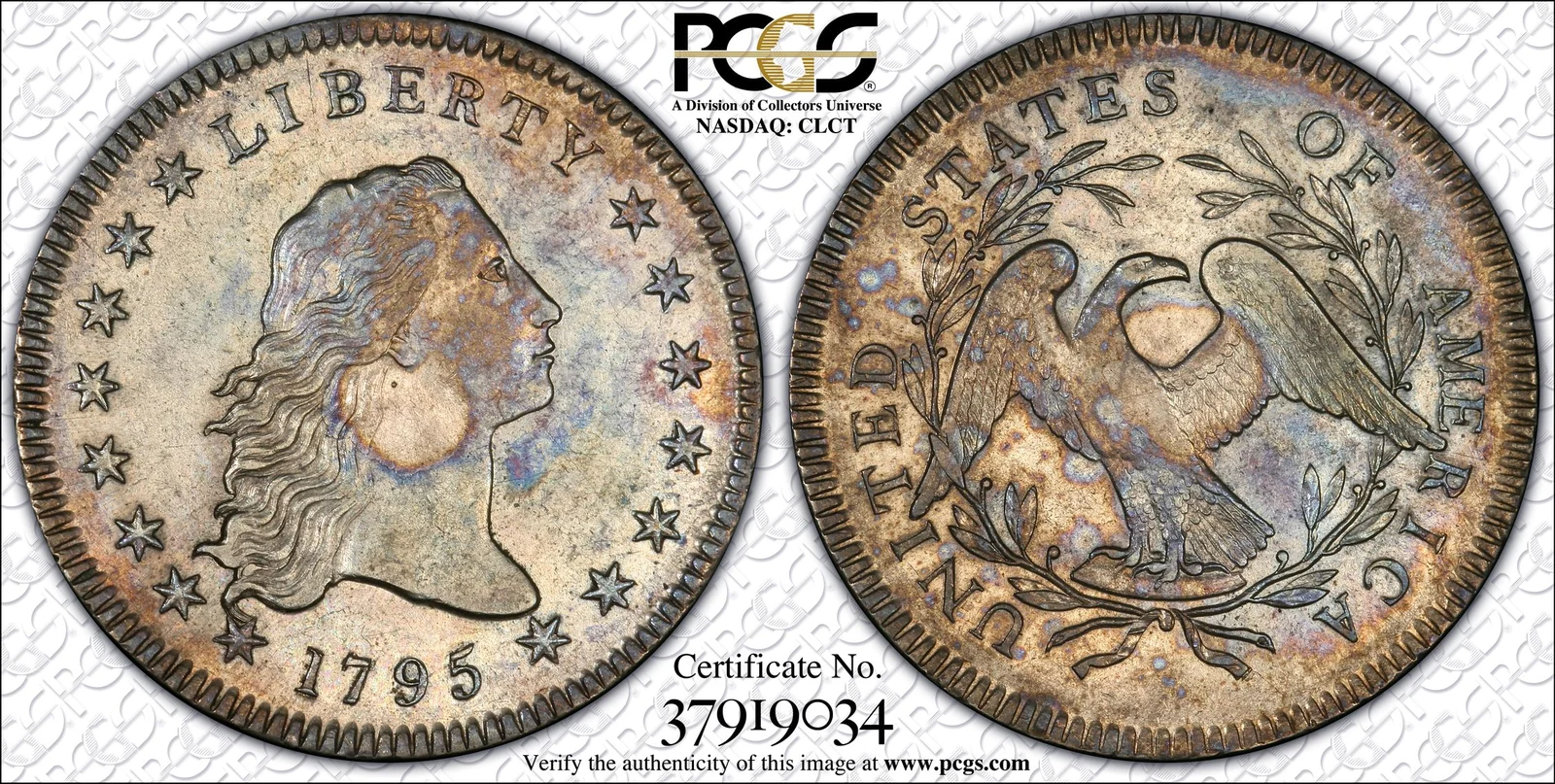
Representative same-issue PCGS AU55 specimen, certificate 37919034; not asserted to be the benchmark auction coin. Photo: PCGS TrueView
1795 Flowing Hair Dollar, Silver Plug
The attributed silver plug is part of this early dollar's manufacture. The benchmark is a regular-strike example rather than the separate 1794 specimen rarity.
What makes this one different
A spot or discoloration is not proof of a silver plug. Confirm the physical plug and variety with expert examination.
301896-O Morgan Dollar$1 silver; New OrleansNotable auction sale$528,000PCGS MS66
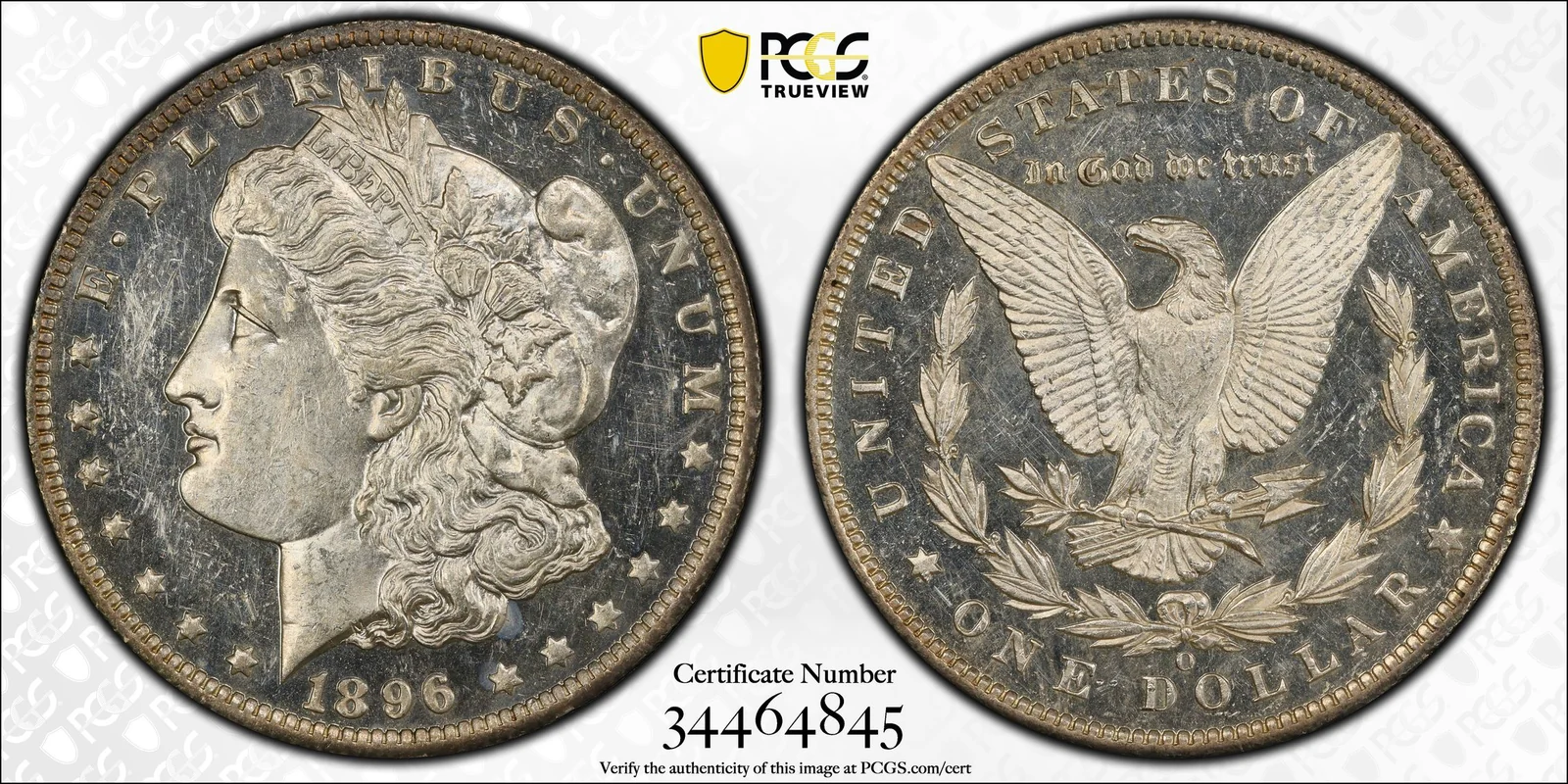
Representative same-issue PCGS MS62DMPL specimen, certificate 34464845; not asserted to be the benchmark auction coin. Photo: PCGS TrueView
1896-O Morgan Dollar
The selected auction records a high-grade example of this New Orleans issue. Preservation accounts for much of the gap between this result and ordinary examples.
What makes this one different
Identify the O mint mark and assess high-point wear. A lightly circulated coin should not be compared directly with the MS66 sale.
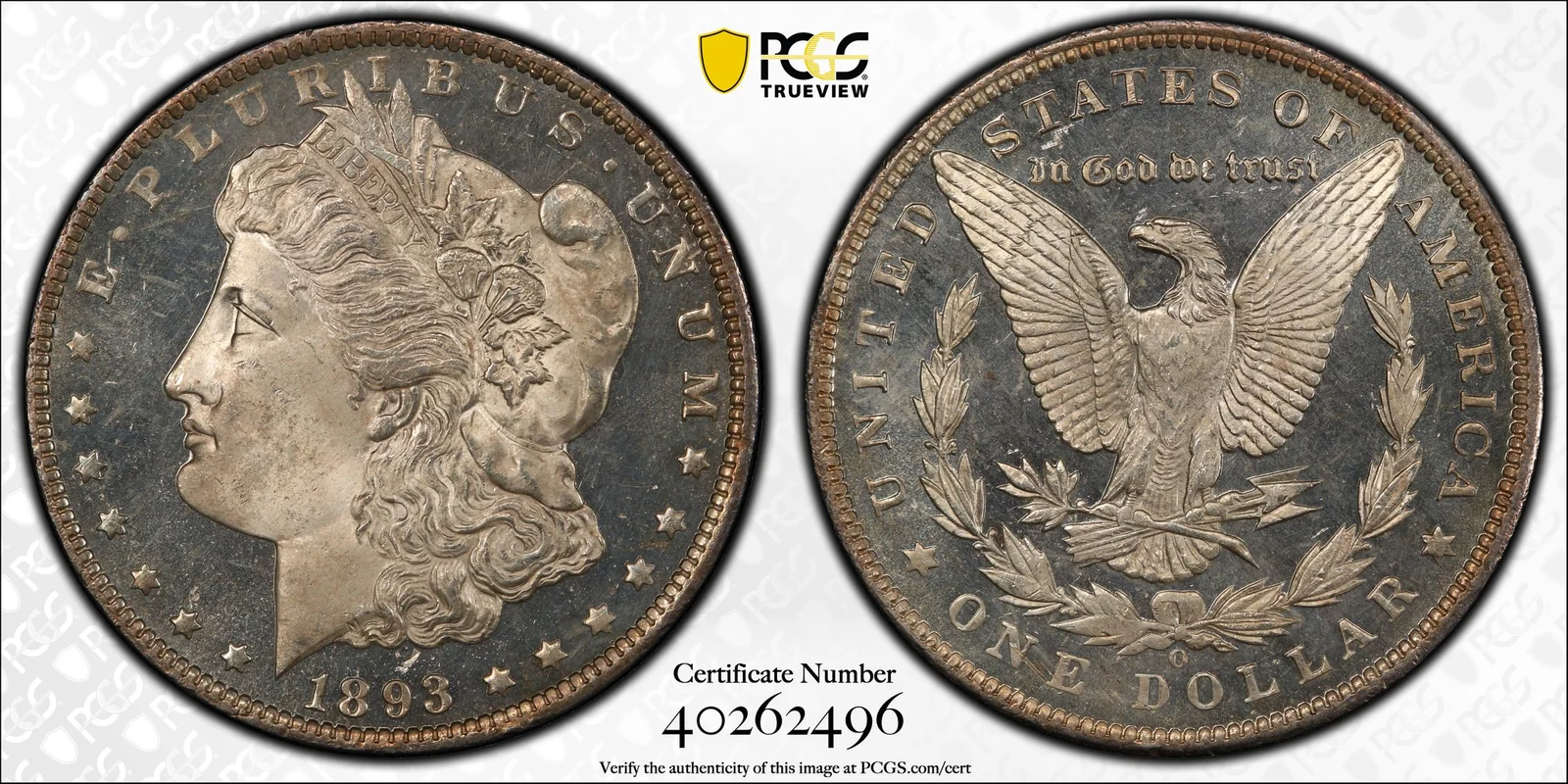
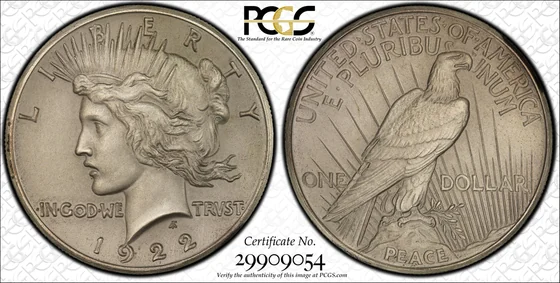
Representative same-issue PCGS PR67 specimen, certificate 29909054; not asserted to be the benchmark auction coin. Photo: PCGS TrueView
1922 Peace Dollar, High Relief Matte Proof
This special high-relief proof is separate from ordinary low-relief 1922 Peace dollars. Its manufacture is central to the auction result.
What makes this one different
Matte texture alone does not establish proof status. Match the high-relief dies and obtain specialist authentication rather than relying on surface appearance.
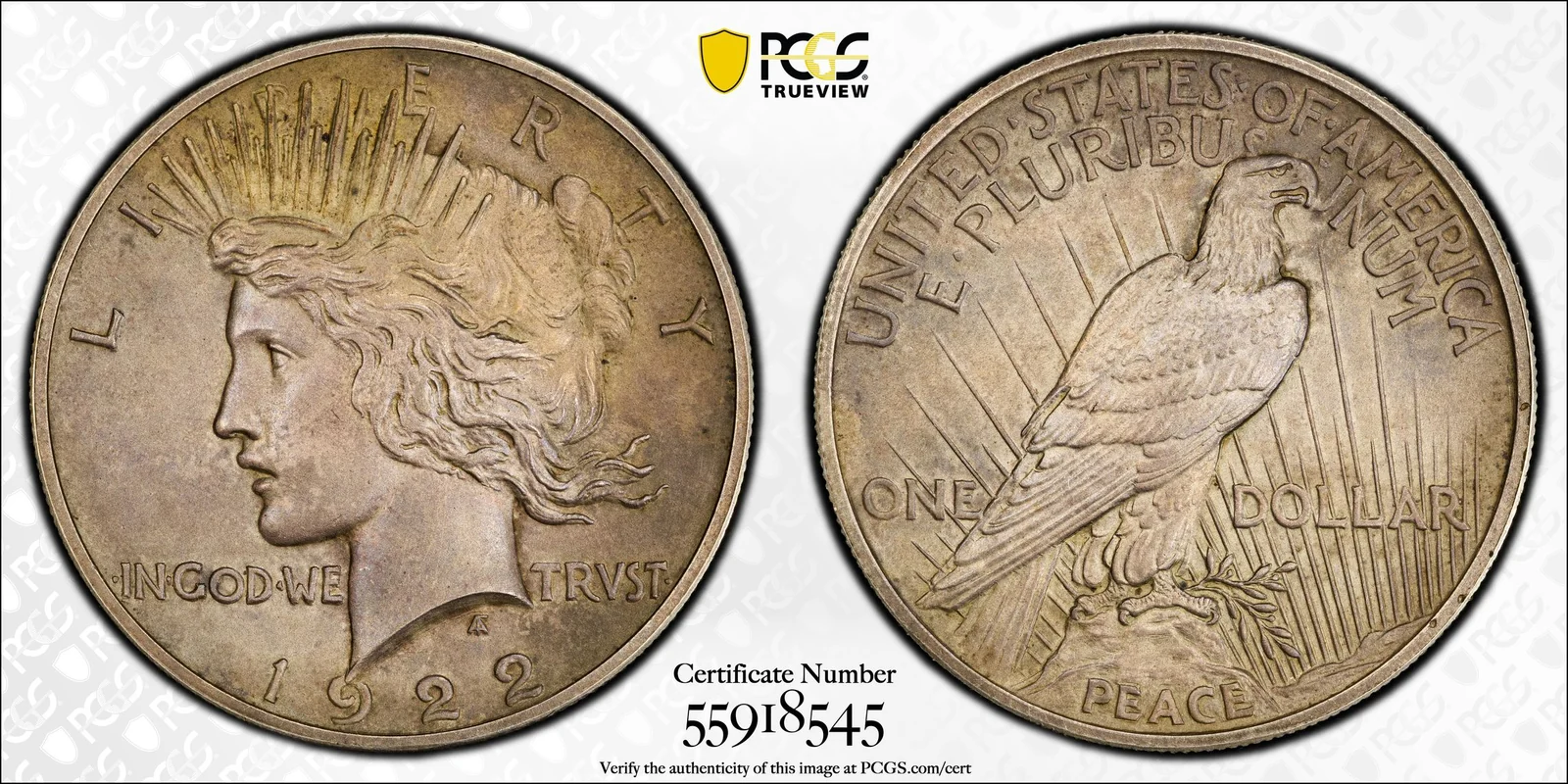
Representative same-issue PCGS PR63 specimen, certificate 55918545; not asserted to be the benchmark auction coin. Photo: PCGS TrueView
1922 Peace Dollar, Modified High Relief Judd-2020
Judd-2020 represents a modified high-relief experiment, also described as medium relief. It is distinct from the separate high-relief matte-proof issue.
What makes this one different
Specialists compare the reworked portrait, date and reverse die details. Do not identify this pattern merely because a 1922 dollar looks sharply struck.
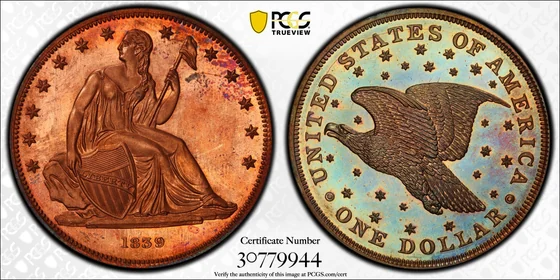
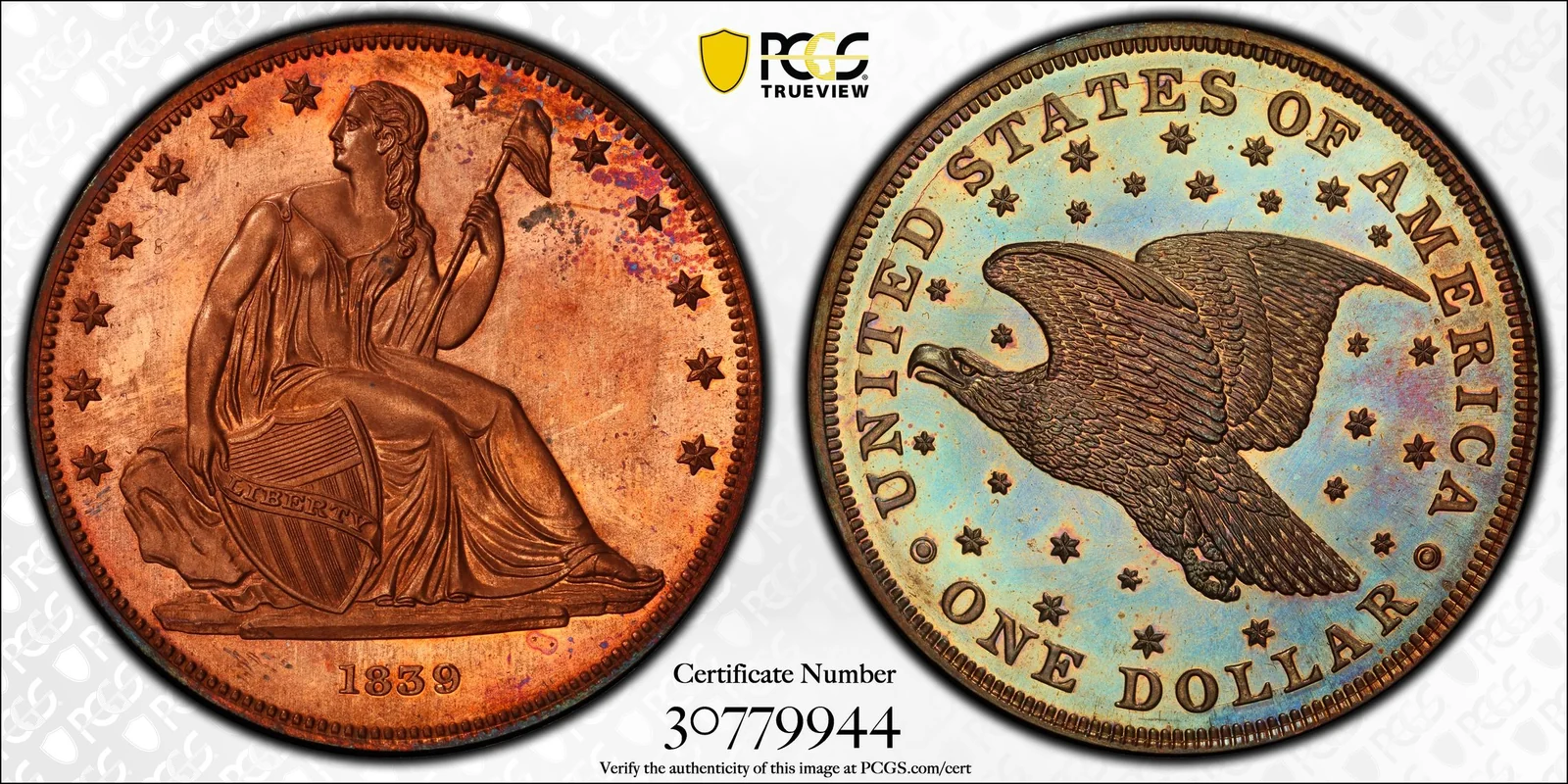
Representative same-issue PCGS PR64RB specimen, certificate 30779944; not asserted to be the benchmark auction coin. Photo: PCGS TrueView
1839 Gobrecht Dollar Restrike, Judd-109
This separately cataloged copper pattern uses the dollar denomination. Its Judd number and restrike status matter more than the color suffix in the grade.
What makes this one different
Check the full die attribution and metal. Do not compare an ordinary silver Gobrecht dollar with a copper Judd-109 restrike.
431895-S Morgan Dollar$1 silver; San FranciscoNotable auction sale$336,000PCGS MS67DMPL
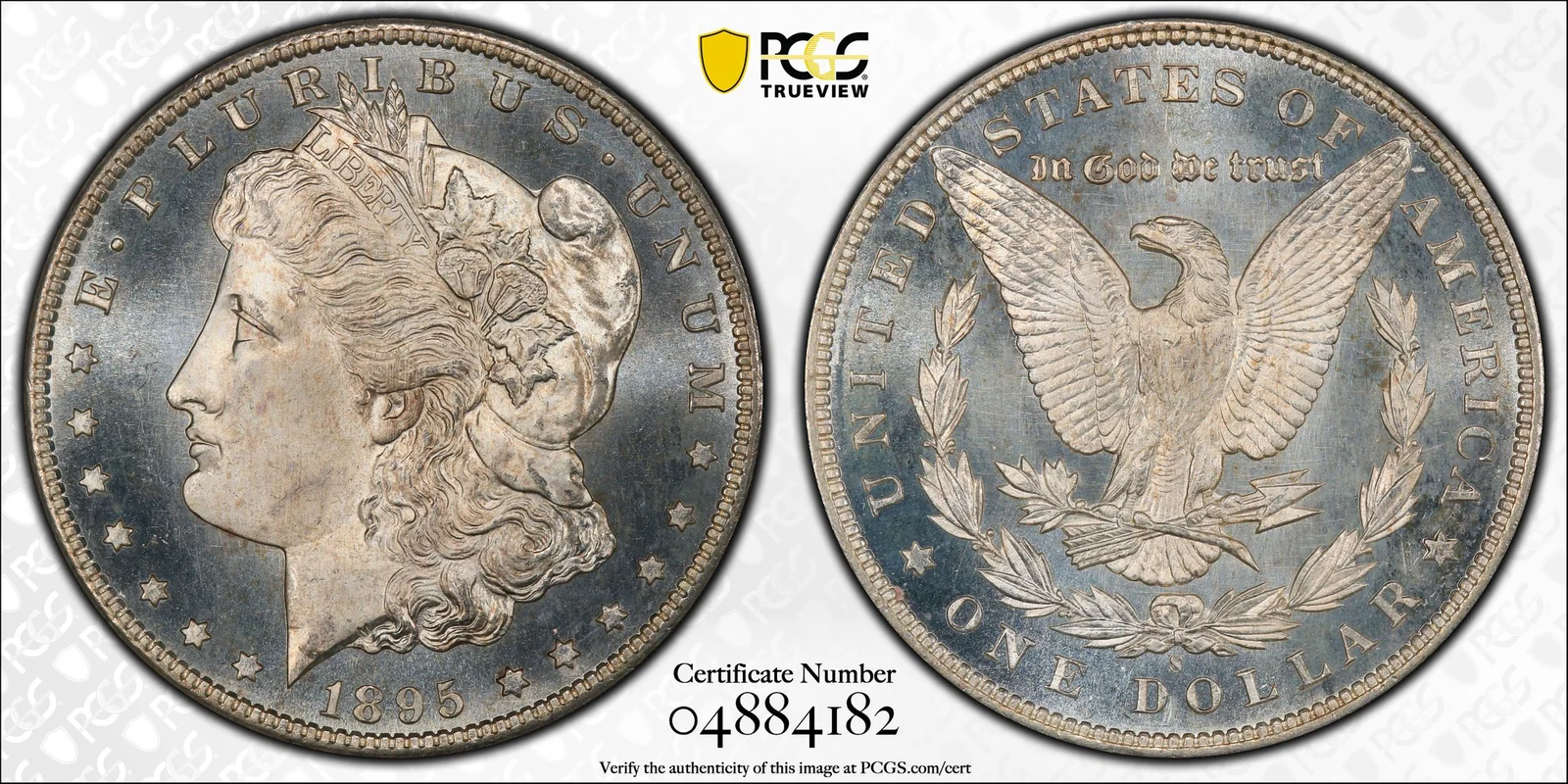
Representative same-issue PCGS MS67DMPL specimen, certificate 04884182; not asserted to be the benchmark auction coin. Photo: PCGS TrueView
1895-S Morgan Dollar
This sale combines San Francisco mint attribution with a high numerical grade and deep mirrors. The DMPL suffix remains a specimen descriptor, not a separate issue.
What makes this one different
Verify the S mint mark and distinguish deep-mirror circulation strikes from proofs. Mirror depth does not replace grade assessment.
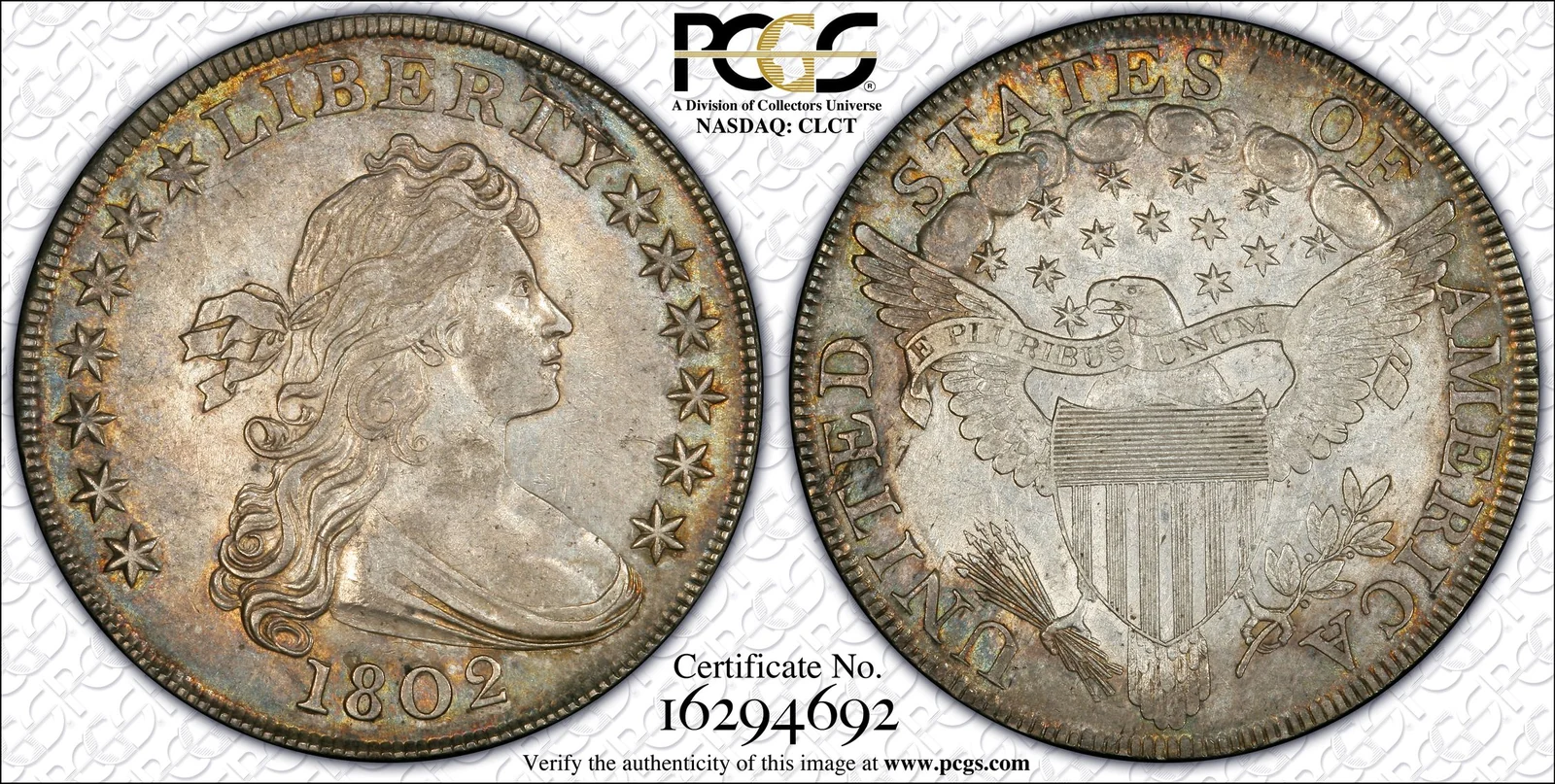
Representative same-issue PCGS AU58 specimen, certificate 16294692; not asserted to be the benchmark auction coin. Photo: PCGS TrueView
1802 Draped Bust Dollar, Regular Strike
This benchmark belongs to the regular-strike 1802 dollar rather than the later proof issue. High Mint State preservation is essential to the comparison.
What makes this one different
Identify the strike category and date first. A polished business strike cannot be assumed to be a proof.
Compare the same date, mint mark, variety, strike and grade before comparing prices. A spectacular auction result is evidence of one transaction, not an appraisal or a promise.
How this list is put together
Seven denomination lists contain 50 distinct coin issues each, for 350 researched entries. The overall top 50 is drawn from that collection. Lists are ordered by the highest documented sale included for each entry, not a current price estimate. This is a curated selection of notable U.S. and early American auctions, not an exhaustive census of every transaction or a live auction feed. Distinct dates, mint marks, varieties and strike types can appear separately; different grades of the same issue do not fill extra places. Museum-only coins, unsold bids, estimates and private transactions are excluded from the ranking.
Each sale links to its auctioneer or a grading-service record, with the grade reported at that sale. Newer documented sales appear separately when verified; they can involve another specimen or grade and do not show a like-for-like price change. Sorting by newest uses the newest sale included in each entry, not a claim that every auction has been searched.
Buyer-premium treatment is stated with each result. Historical dollars are not adjusted for inflation; taxes and shipping are not assumed included. Sources can report an auction's closing date instead of the individual session date. We use the session date where established and otherwise show the verified month.
Why isn't the unique 1849 double eagle ranked?
A museum rarity can attract large estimates without a comparable public sale. This resource ranks documented auction transactions, so it does not turn an estimate for a Smithsonian-held coin into a sold price.
Is my coin worth the price shown?
Not necessarily. The precise variety, authenticity, surfaces, grade and provenance matter. Many similar-looking coins are common. Do not clean a possible rarity; compare its details and get an independent authentication or appraisal before treating a headline result as your coin's value.
Photographs & corrections
These are real coin photographs, credited to their sources in every entry. The caption identifies the exact sold specimen where established; otherwise it identifies a reference example. No AI-generated coin details are used. CoinHub's editorial selections and descriptions are independent of the grading services and auction houses.
Have a newer public sale or a correction? Send CoinHub the auction link and lot number. The checked date changes only after editorial review, not automatically when the calendar changes.

 1794 Flowing Hair Dollar, Silver Plug$1 silver; specimen strike
Notable auction sale$10,016,875
PCGS SP66; CAC
1794 Flowing Hair Dollar, Silver Plug$1 silver; specimen strike
Notable auction sale$10,016,875
PCGS SP66; CAC
 1804 Draped Bust Dollar, Class I$1 silver; proof
Notable auction sale$7,680,000
PCGS PR68
1804 Draped Bust Dollar, Class I$1 silver; proof
Notable auction sale$7,680,000
PCGS PR68
 1794 Flowing Hair Dollar, Regular Strike$1 silver
Notable auction sale$6,600,000
PCGS MS66+
1794 Flowing Hair Dollar, Regular Strike$1 silver
Notable auction sale$6,600,000
PCGS MS66+
 1804 Draped Bust Dollar, Class III$1 silver; proof restrike
Notable auction sale$6,000,000Newer sale: $3,538,000 (Jan 14, 2026)
PCGS PR65; CAC; CMQ
1804 Draped Bust Dollar, Class III$1 silver; proof restrike
Notable auction sale$6,000,000Newer sale: $3,538,000 (Jan 14, 2026)
PCGS PR65; CAC; CMQ
 1885 Trade Dollar$1 silver; proof
Notable auction sale$3,960,000Newer sale: $2,100,000 (Jan 2021)
NGC PF66
1885 Trade Dollar$1 silver; proof
Notable auction sale$3,960,000Newer sale: $2,100,000 (Jan 2021)
NGC PF66
 1893-S Morgan Dollar$1 silver; San Francisco
Notable auction sale$2,086,875Newer sale: $1,181,250 (Aug 9, 2026)
PCGS MS67; CAC
1893-S Morgan Dollar$1 silver; San Francisco
Notable auction sale$2,086,875Newer sale: $1,181,250 (Aug 9, 2026)
PCGS MS67; CAC
 1795 Flowing Hair Dollar, Three Leaves$1 silver
Notable auction sale$1,265,000Newer sale: $822,500 (Sep 2015)
Uncertified; cataloged V CH to GEM UNC
1795 Flowing Hair Dollar, Three Leaves$1 silver
Notable auction sale$1,265,000Newer sale: $822,500 (Sep 2015)
Uncertified; cataloged V CH to GEM UNC
 1866 Liberty Seated Dollar, No Motto Proof$1 silver; proof
Notable auction sale$1,207,500
NGC PR63
1866 Liberty Seated Dollar, No Motto Proof$1 silver; proof
Notable auction sale$1,207,500
NGC PR63
 1796 Draped Bust Dollar, Small Date and Small Letters$1 silver
Notable auction sale$1,175,000
NGC MS65
1796 Draped Bust Dollar, Small Date and Small Letters$1 silver
Notable auction sale$1,175,000
NGC MS65
 1884 Trade Dollar, Proof$1 silver; proof
Notable auction sale$1,140,000
NGC PR66
1884 Trade Dollar, Proof$1 silver; proof
Notable auction sale$1,140,000
NGC PR66
 1803 Draped Bust Dollar, Proof Restrike$1 silver; proof restrike
Notable auction sale$1,110,000
PCGS PR66
1803 Draped Bust Dollar, Proof Restrike$1 silver; proof restrike
Notable auction sale$1,110,000
PCGS PR66
 1870-S Liberty Seated Dollar$1 silver; San Francisco
Notable auction sale$1,092,500
Uncertified; cataloged BU
1870-S Liberty Seated Dollar$1 silver; San Francisco
Notable auction sale$1,092,500
Uncertified; cataloged BU
 1795 Draped Bust Dollar, Off-Center Bust Specimen$1 silver; specimen strike
Notable auction sale$1,057,500
PCGS SP66
1795 Draped Bust Dollar, Off-Center Bust Specimen$1 silver; specimen strike
Notable auction sale$1,057,500
PCGS SP66
 1802 Draped Bust Dollar, Proof Restrike$1 silver; proof restrike
Notable auction sale$920,000
PCGS PR65
1802 Draped Bust Dollar, Proof Restrike$1 silver; proof restrike
Notable auction sale$920,000
PCGS PR65
 1889-CC Morgan Dollar$1 silver; Carson City
Notable auction sale$881,250
PCGS MS68
1889-CC Morgan Dollar$1 silver; Carson City
Notable auction sale$881,250
PCGS MS68
 1794 Dollar Pattern, Judd-18$1 pattern; copper
Notable auction sale$840,000
PCGS VF25BN
1794 Dollar Pattern, Judd-18$1 pattern; copper
Notable auction sale$840,000
PCGS VF25BN
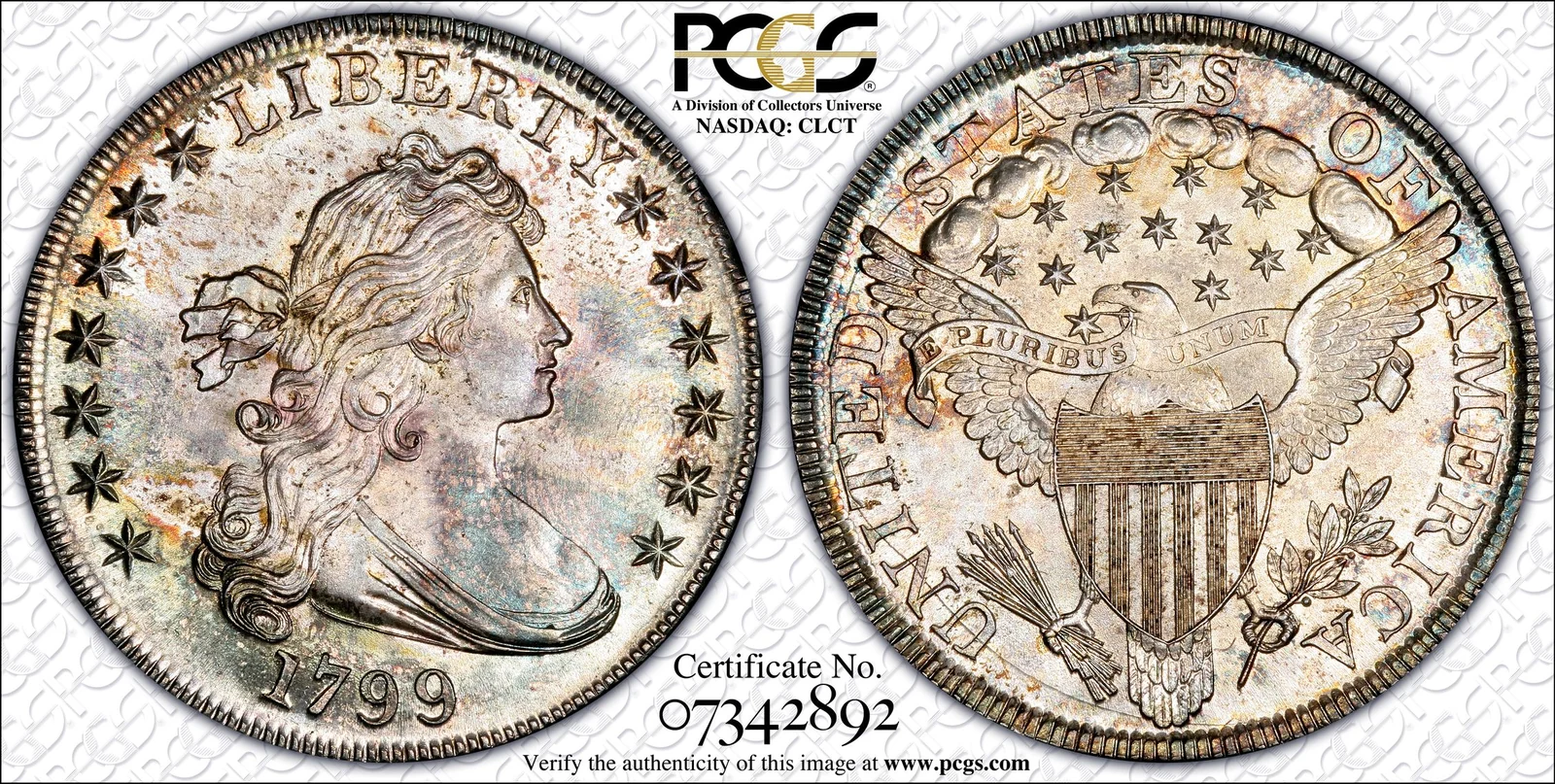
 1799 Draped Bust Dollar$1 silver
Notable auction sale$822,500
NGC MS67
1799 Draped Bust Dollar$1 silver
Notable auction sale$822,500
NGC MS67
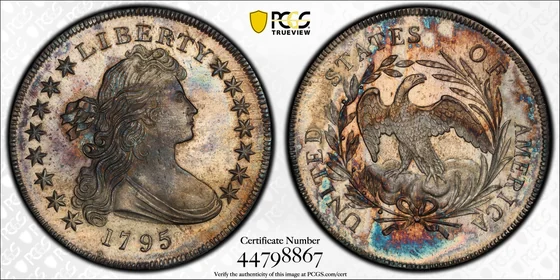 1795 Draped Bust Dollar, Centered Bust Specimen$1 silver; specimen strike
Notable auction sale$780,000
PCGS SP65
1795 Draped Bust Dollar, Centered Bust Specimen$1 silver; specimen strike
Notable auction sale$780,000
PCGS SP65
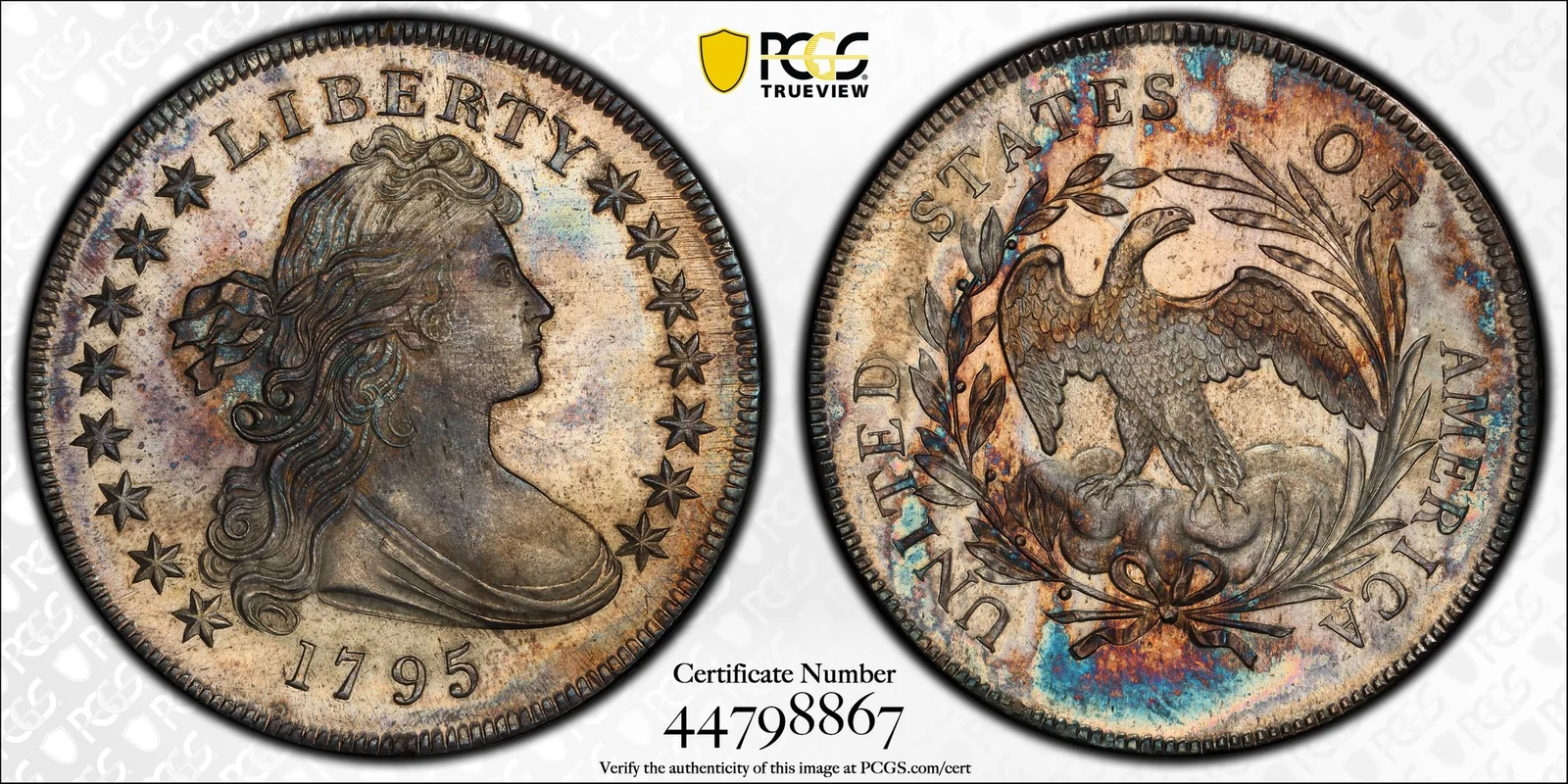
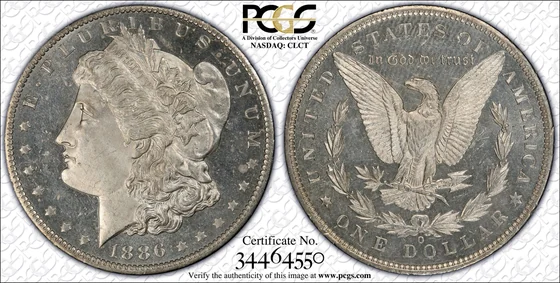 1886-O Morgan Dollar$1 silver; New Orleans
Notable auction sale$780,000
PCGS MS67DMPL
1886-O Morgan Dollar$1 silver; New Orleans
Notable auction sale$780,000
PCGS MS67DMPL
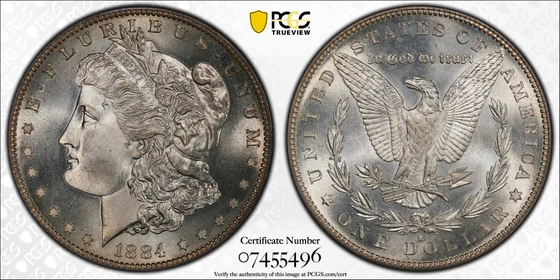 1884-S Morgan Dollar$1 silver; San Francisco
Notable auction sale$750,000
PCGS MS68
1884-S Morgan Dollar$1 silver; San Francisco
Notable auction sale$750,000
PCGS MS68
 1896-S Morgan Dollar$1 silver; San Francisco
Notable auction sale$720,000
PCGS MS69
1896-S Morgan Dollar$1 silver; San Francisco
Notable auction sale$720,000
PCGS MS69
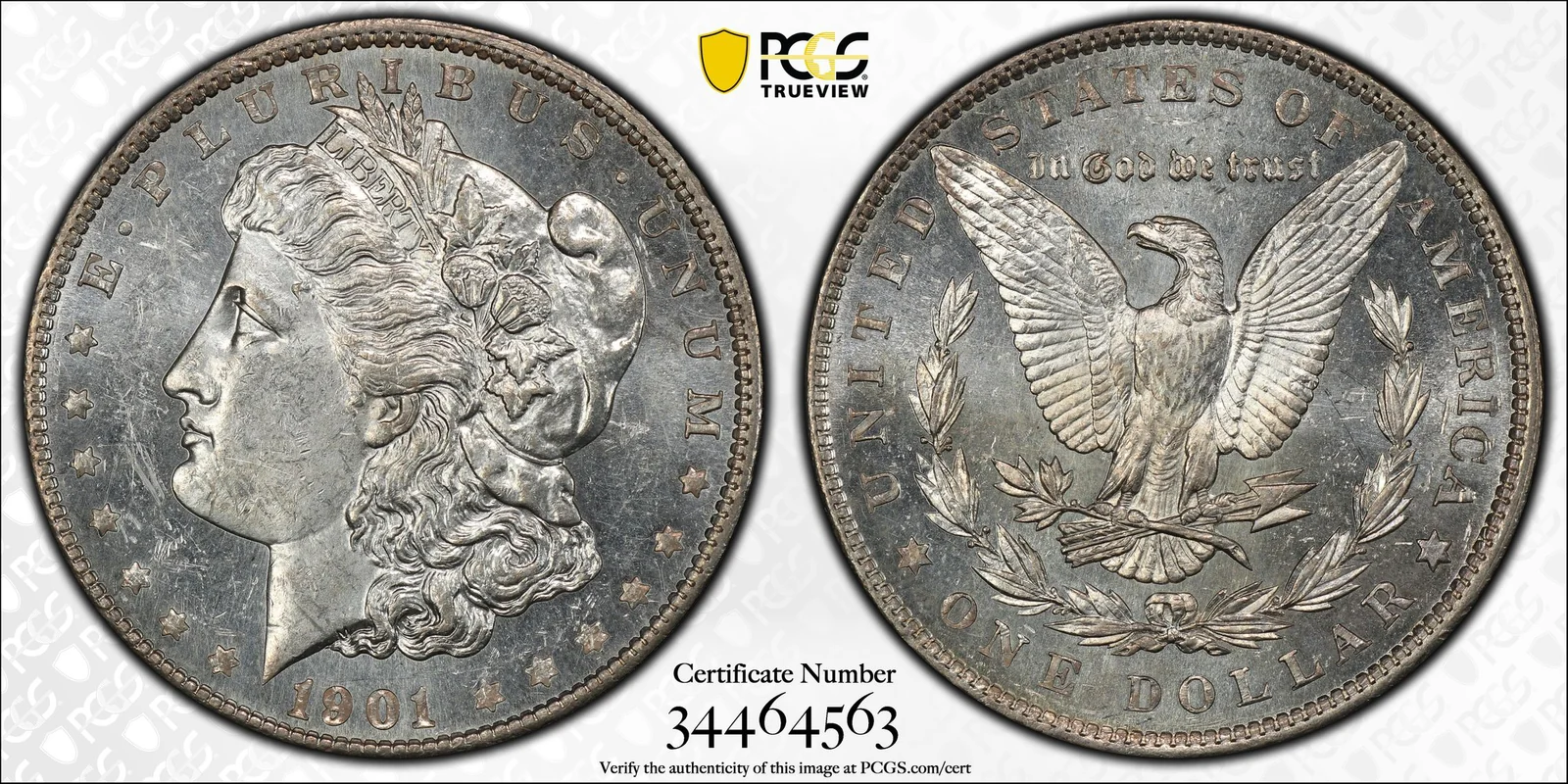
 1901 Morgan Dollar, Philadelphia$1 silver; Philadelphia
Notable auction sale$720,000
PCGS MS66
1901 Morgan Dollar, Philadelphia$1 silver; Philadelphia
Notable auction sale$720,000
PCGS MS66
 1795 Flowing Hair Dollar, Silver Plug$1 silver; silver-plug variety
Notable auction sale$705,000
PCGS MS65+
1795 Flowing Hair Dollar, Silver Plug$1 silver; silver-plug variety
Notable auction sale$705,000
PCGS MS65+
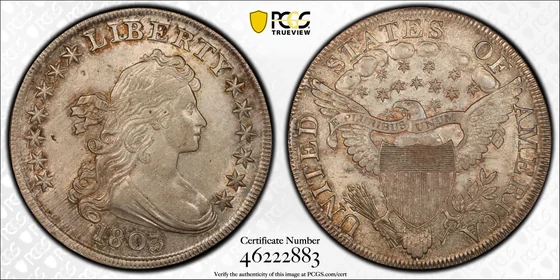 1803 Draped Bust Dollar, Large 3$1 silver
Notable auction sale$705,000
NGC MS65+
1803 Draped Bust Dollar, Large 3$1 silver
Notable auction sale$705,000
NGC MS65+
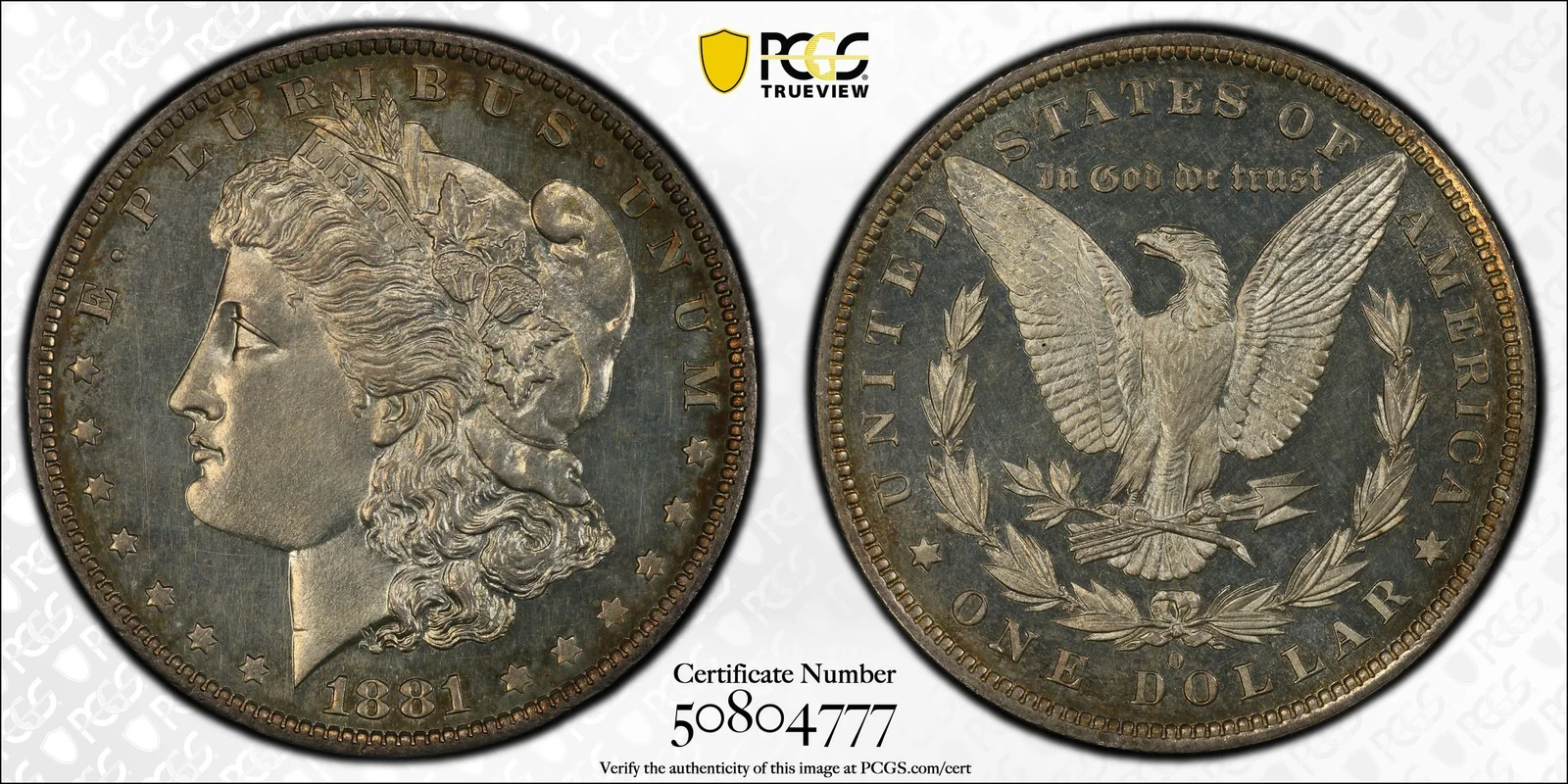
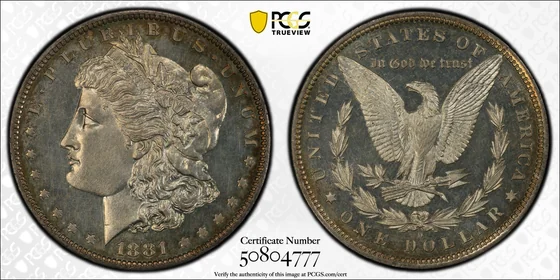 1881-O Morgan Dollar, Branch-Mint Proof$1 silver; branch-mint proof
Notable auction sale$660,000
PCGS PR64; CAC; CMQ
1881-O Morgan Dollar, Branch-Mint Proof$1 silver; branch-mint proof
Notable auction sale$660,000
PCGS PR64; CAC; CMQ
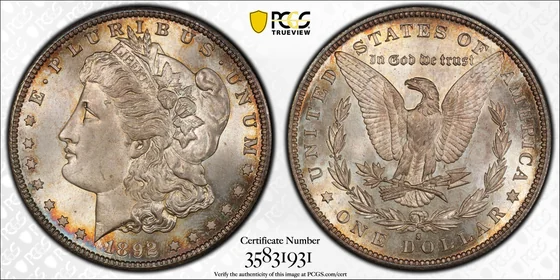 1892-S Morgan Dollar$1 silver; San Francisco
Notable auction sale$630,000
PCGS MS68
1892-S Morgan Dollar$1 silver; San Francisco
Notable auction sale$630,000
PCGS MS68
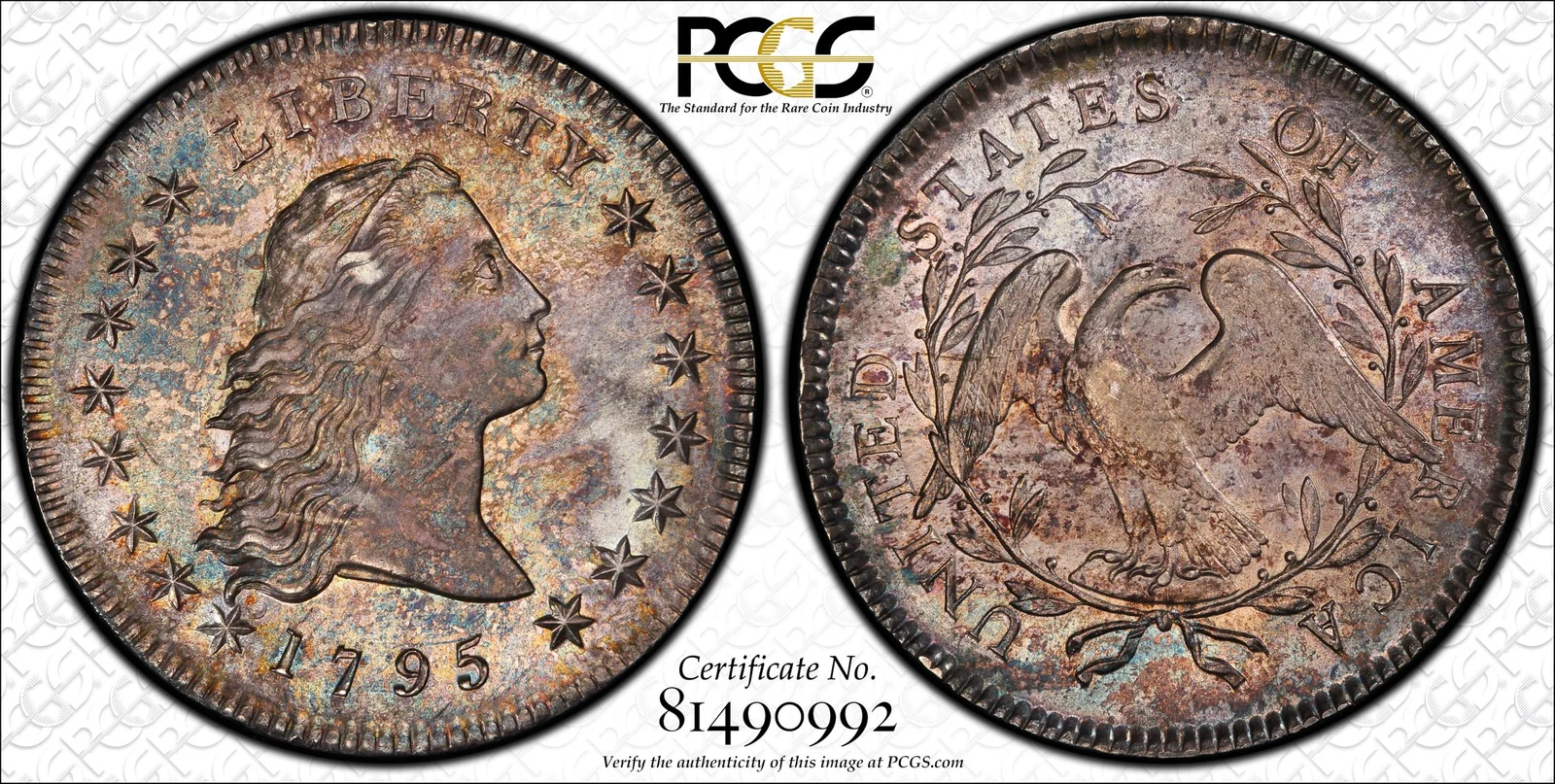
 1795 Flowing Hair Dollar, Two Leaves$1 silver
Notable auction sale$600,000
PCGS MS65
1795 Flowing Hair Dollar, Two Leaves$1 silver
Notable auction sale$600,000
PCGS MS65
 1895-O Morgan Dollar$1 silver; New Orleans
Notable auction sale$575,000
PCGS MS67
1895-O Morgan Dollar$1 silver; New Orleans
Notable auction sale$575,000
PCGS MS67
 1896-O Morgan Dollar$1 silver; New Orleans
Notable auction sale$528,000
PCGS MS66
1896-O Morgan Dollar$1 silver; New Orleans
Notable auction sale$528,000
PCGS MS66
 1893-O Morgan Dollar$1 silver; New Orleans
Notable auction sale$458,250
PCGS MS66
1893-O Morgan Dollar$1 silver; New Orleans
Notable auction sale$458,250
PCGS MS66
 1922 Peace Dollar, High Relief Matte Proof$1 silver; high-relief matte proof
Notable auction sale$458,250
PCGS PR67
1922 Peace Dollar, High Relief Matte Proof$1 silver; high-relief matte proof
Notable auction sale$458,250
PCGS PR67
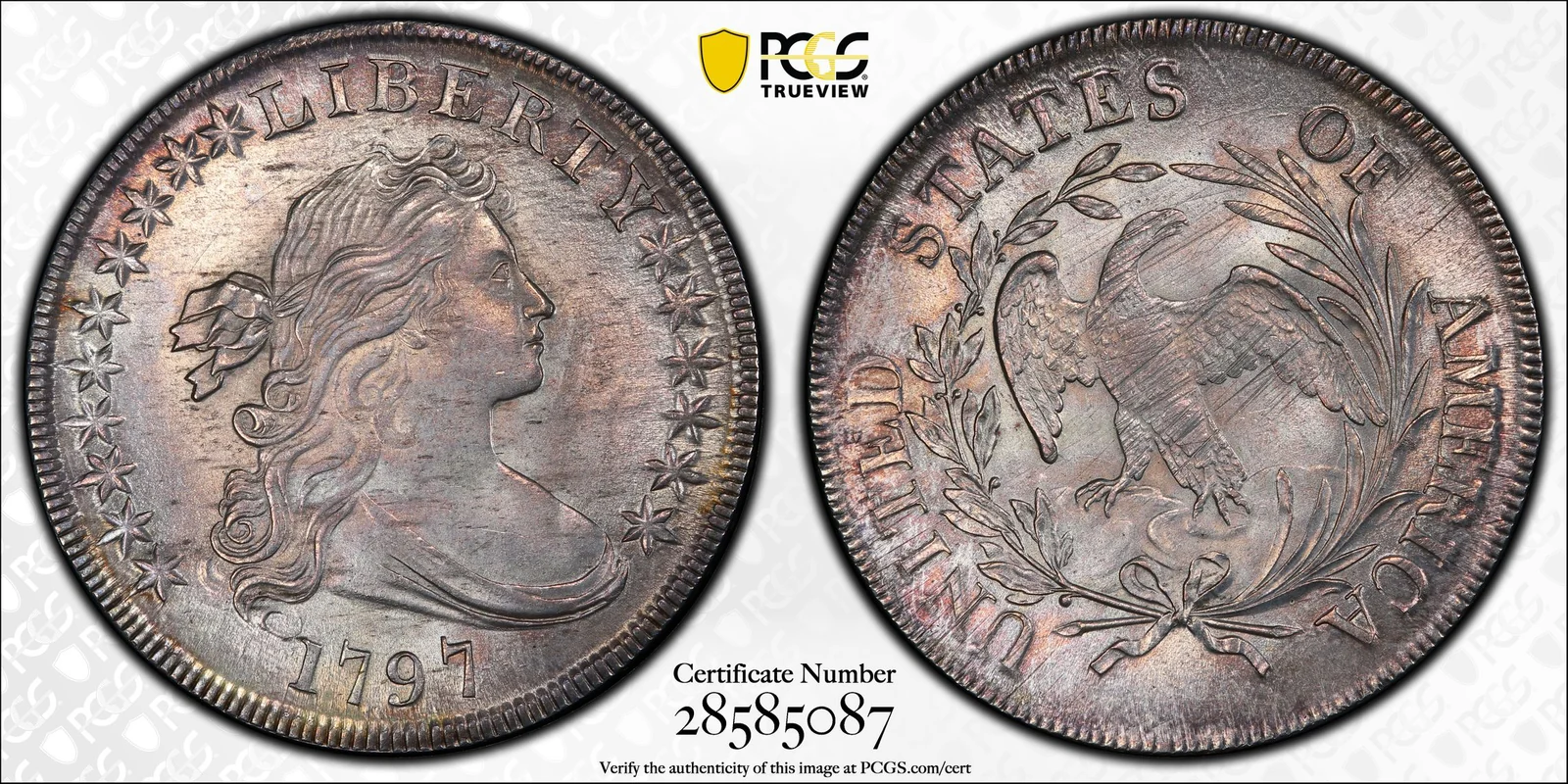
 1797 Draped Bust Dollar, 10 by 6 Stars$1 silver
Notable auction sale$440,625
NGC MS64+
1797 Draped Bust Dollar, 10 by 6 Stars$1 silver
Notable auction sale$440,625
NGC MS64+
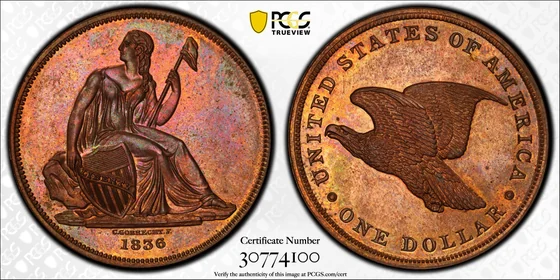 1836 Gobrecht Dollar Restrike, Judd-64$1 pattern; copper restrike
Notable auction sale$400,000
PCGS PR65
1836 Gobrecht Dollar Restrike, Judd-64$1 pattern; copper restrike
Notable auction sale$400,000
PCGS PR65
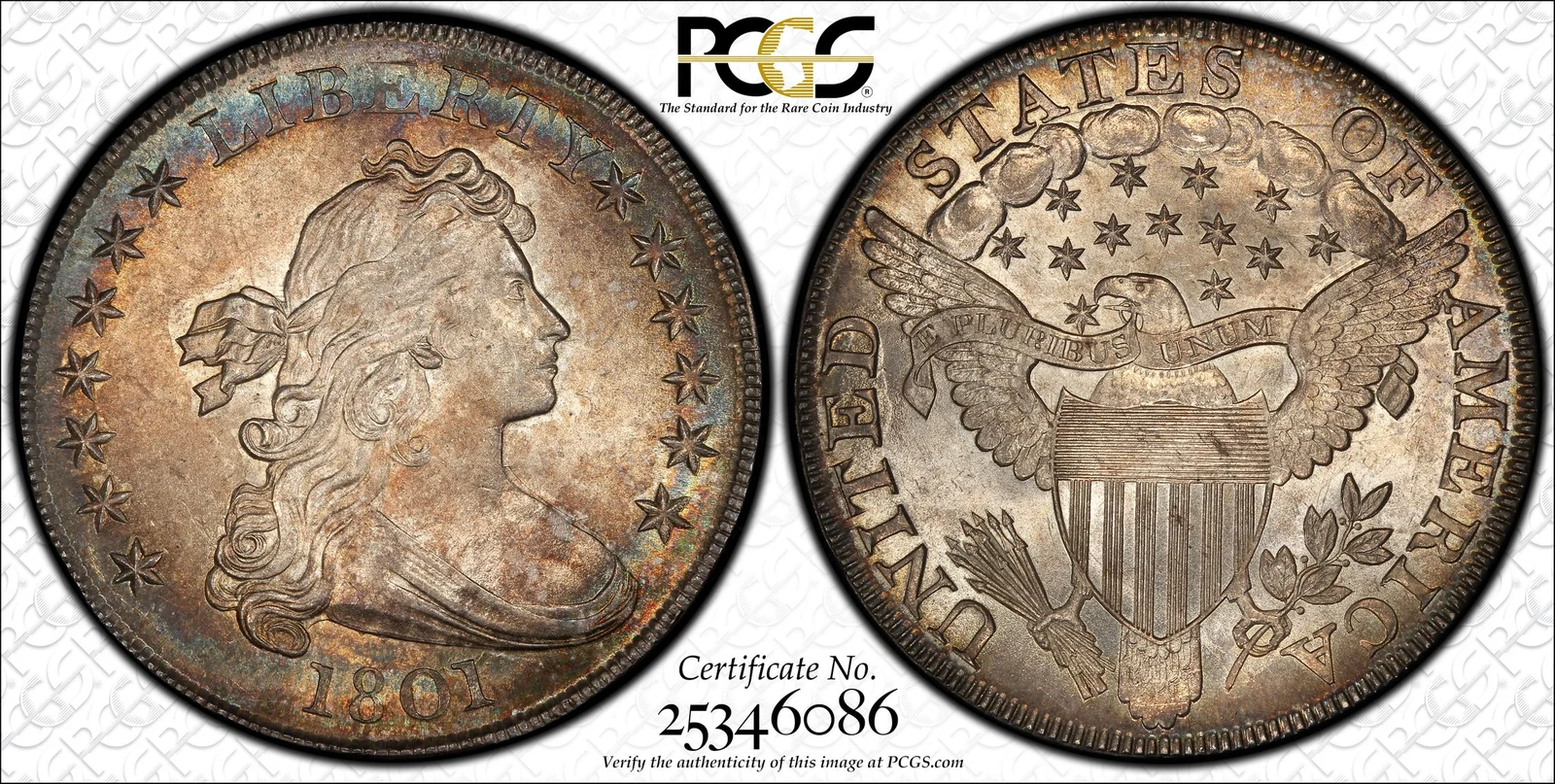
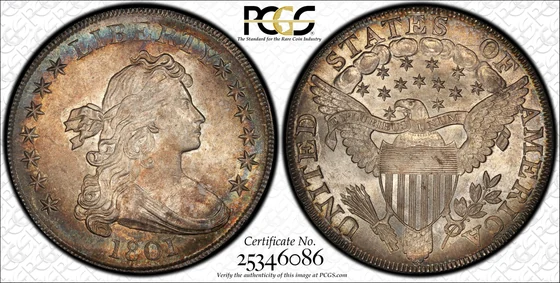 1801 Draped Bust Dollar$1 silver
Notable auction sale$399,500
PCGS MS65
1801 Draped Bust Dollar$1 silver
Notable auction sale$399,500
PCGS MS65
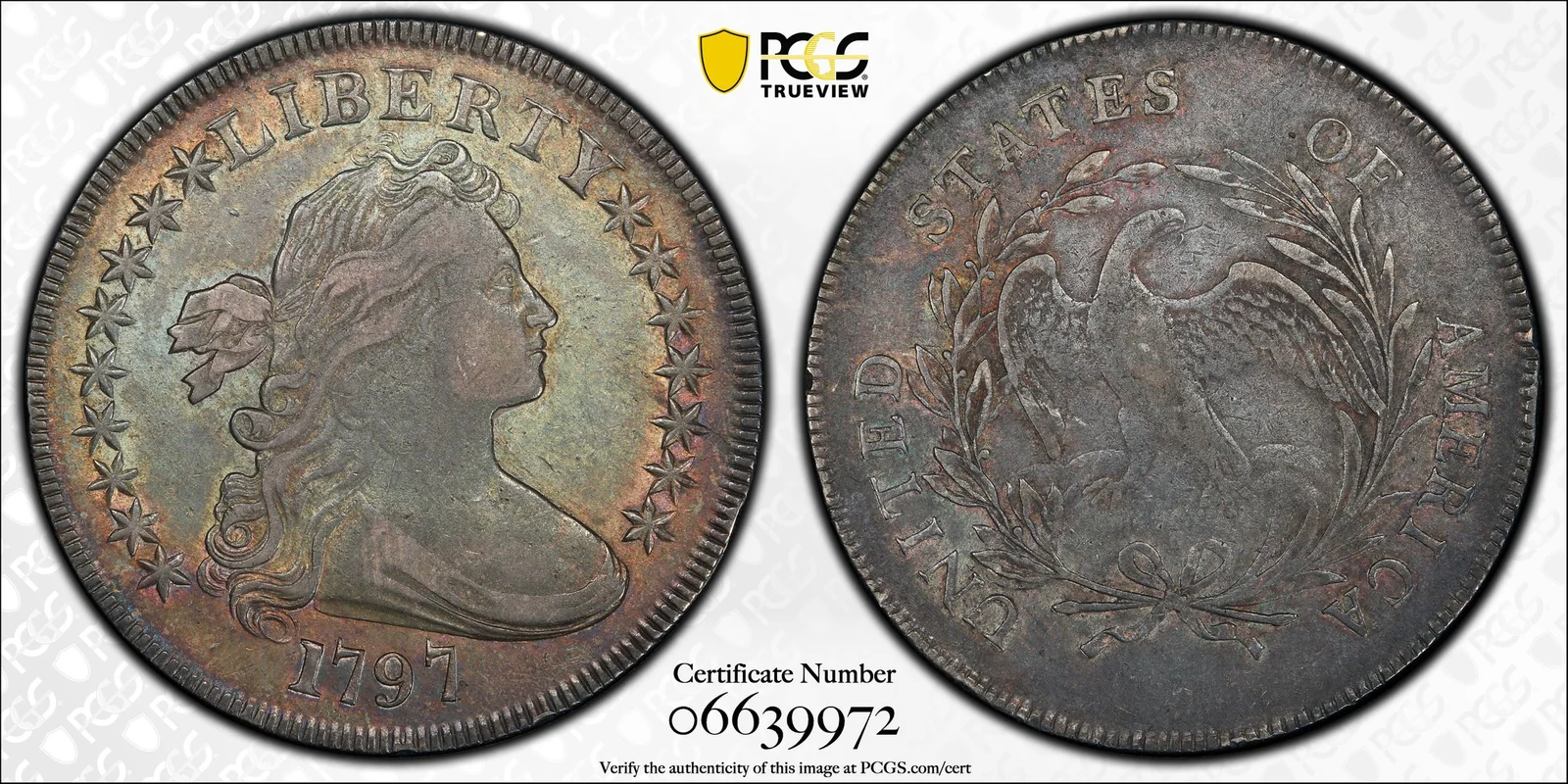
 1797 Draped Bust Dollar, 9 by 7 Stars and Small Letters$1 silver
Notable auction sale$381,875
NGC MS64
1797 Draped Bust Dollar, 9 by 7 Stars and Small Letters$1 silver
Notable auction sale$381,875
NGC MS64
 1922 Peace Dollar, Modified High Relief Judd-2020$1 silver; experimental modified-relief strike
Notable auction sale$381,875
PCGS PR67
1922 Peace Dollar, Modified High Relief Judd-2020$1 silver; experimental modified-relief strike
Notable auction sale$381,875
PCGS PR67
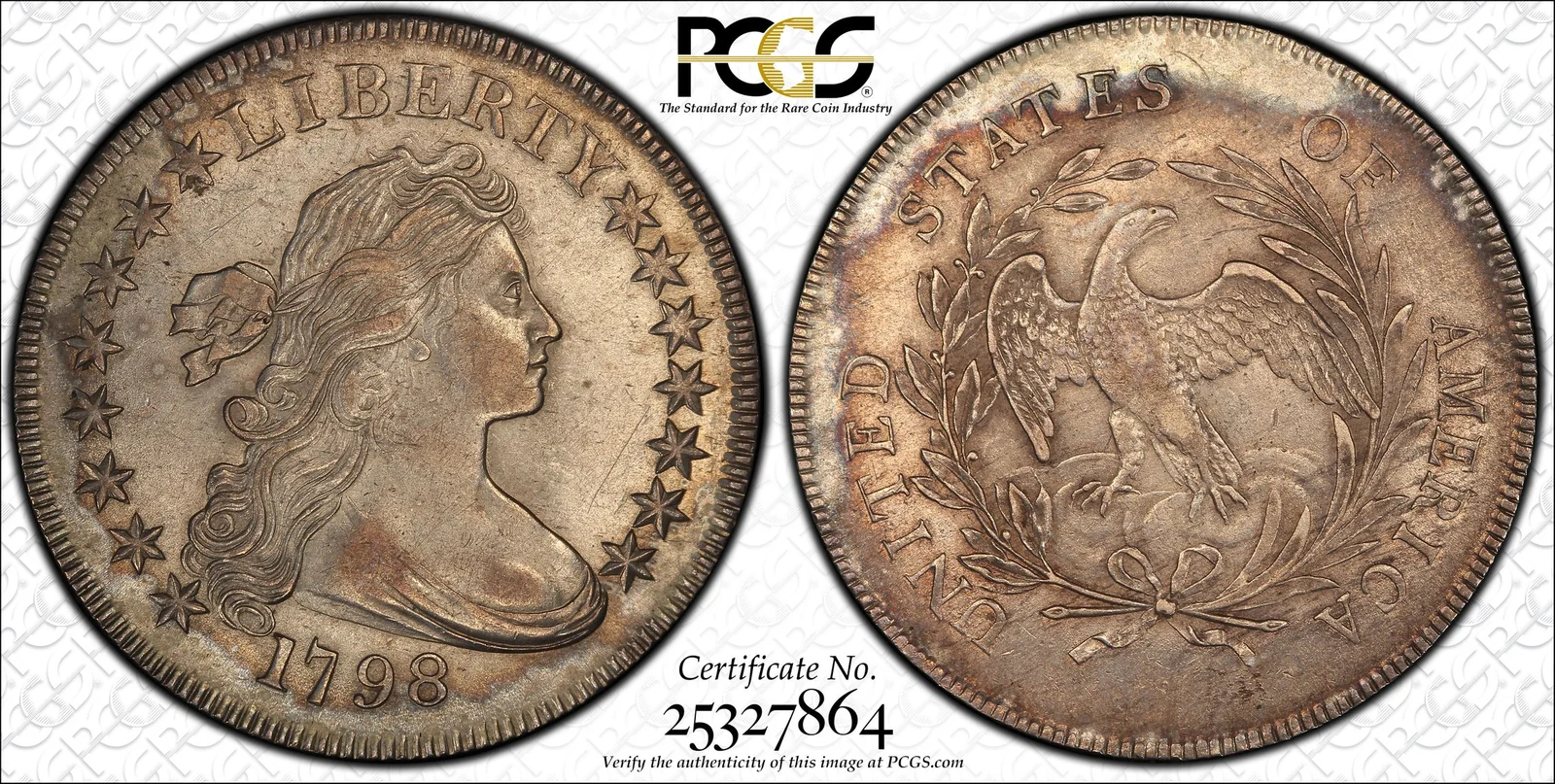
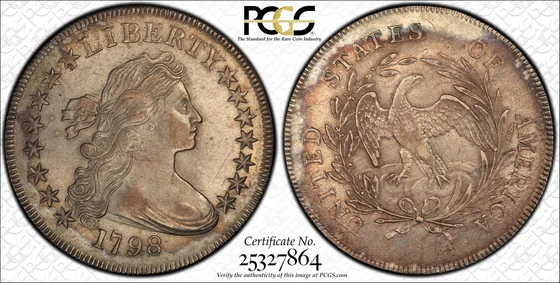 1798 Draped Bust Dollar, Small Eagle and 15 Stars$1 silver
Notable auction sale$360,000
PCGS MS62
1798 Draped Bust Dollar, Small Eagle and 15 Stars$1 silver
Notable auction sale$360,000
PCGS MS62
 1839 Gobrecht Dollar Restrike, Judd-109$1 pattern; copper restrike
Notable auction sale$360,000
PCGS PR64RB
1839 Gobrecht Dollar Restrike, Judd-109$1 pattern; copper restrike
Notable auction sale$360,000
PCGS PR64RB
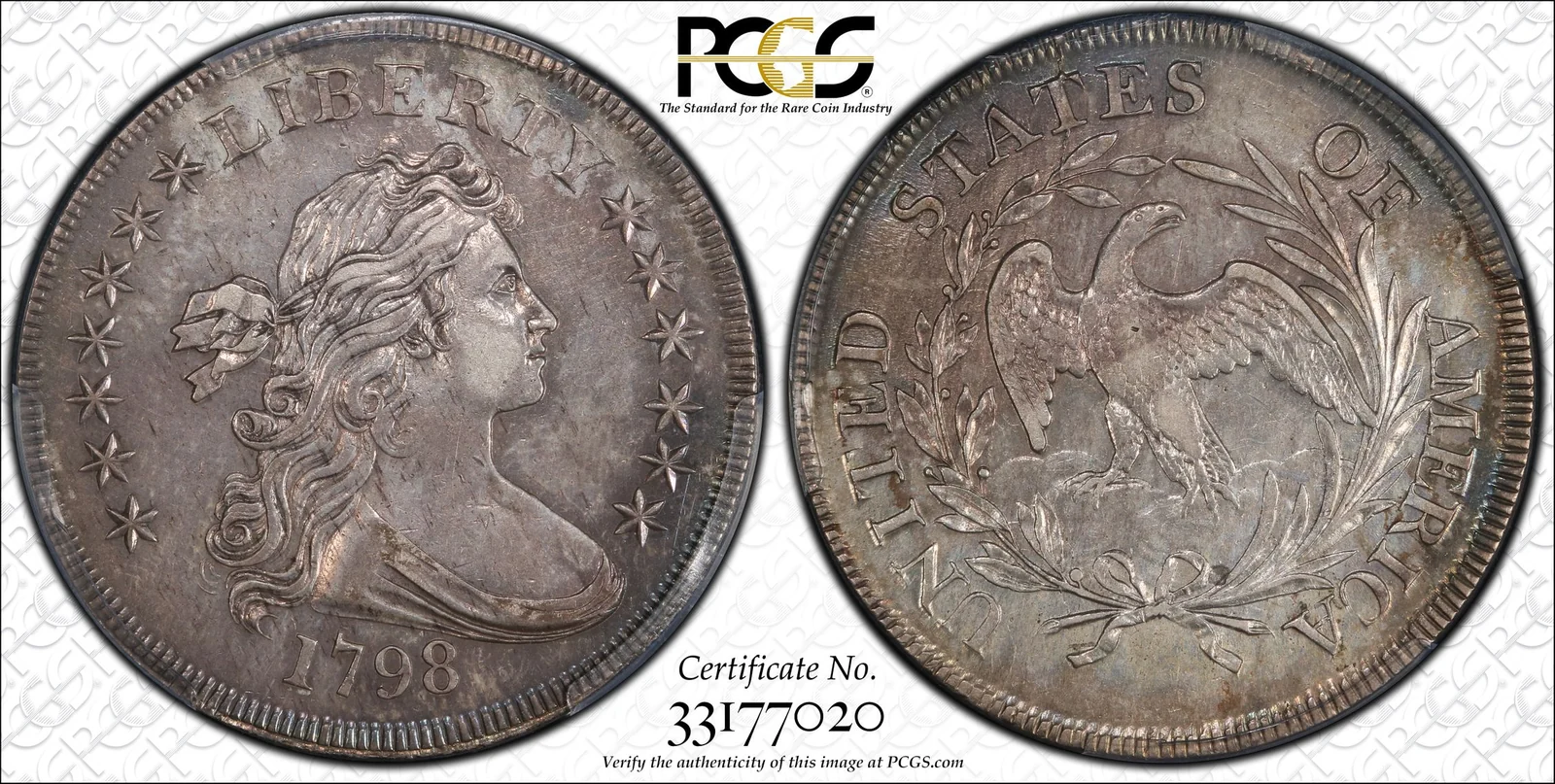
 1798 Draped Bust Dollar, Small Eagle and 13 Stars$1 silver
Notable auction sale$356,500
PCGS AU58
1798 Draped Bust Dollar, Small Eagle and 13 Stars$1 silver
Notable auction sale$356,500
PCGS AU58
 1796 Draped Bust Dollar, Small Date and Large Letters$1 silver
Notable auction sale$352,500
NGC MS63+
1796 Draped Bust Dollar, Small Date and Large Letters$1 silver
Notable auction sale$352,500
NGC MS63+
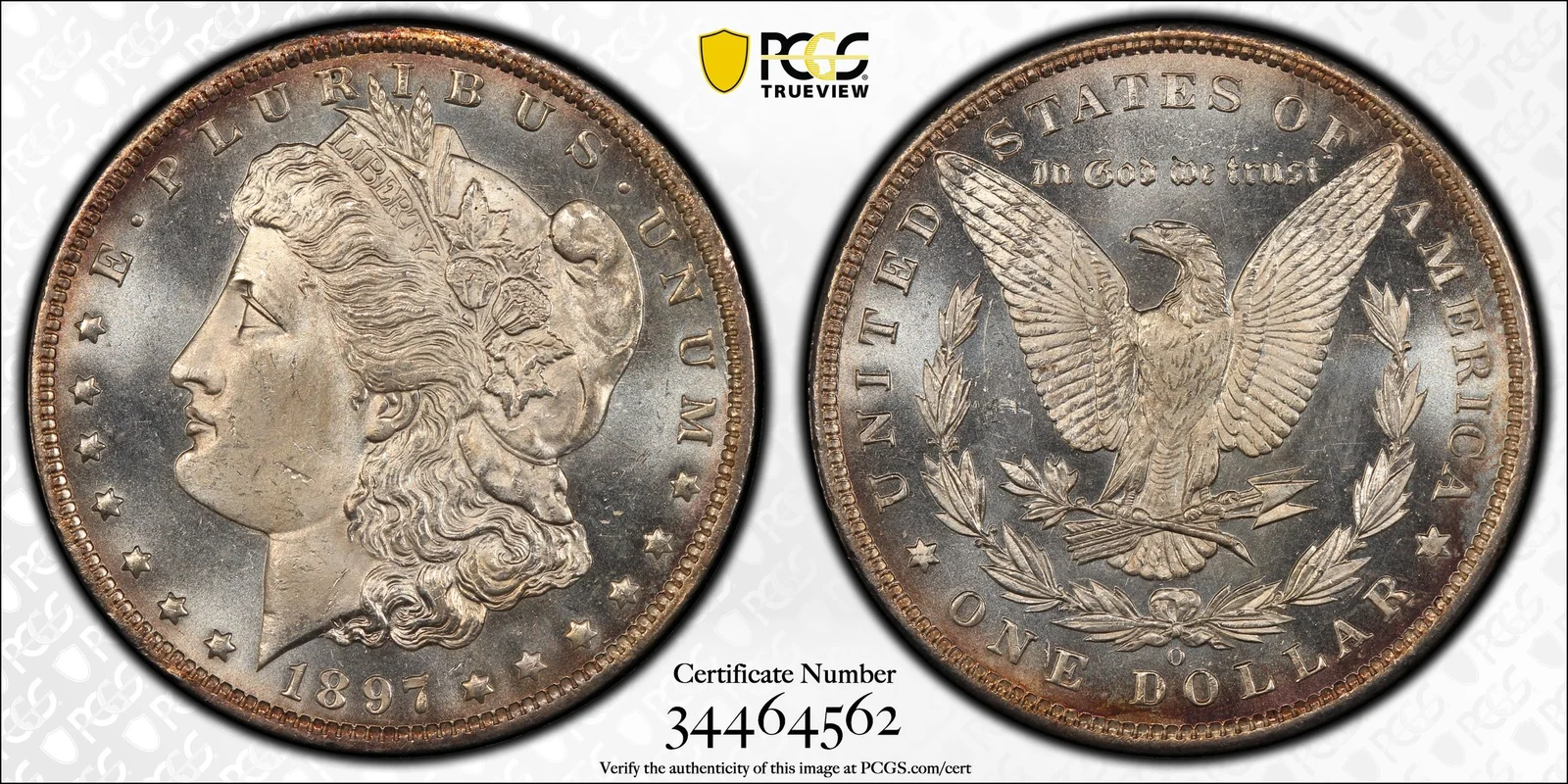
 1897-O Morgan Dollar$1 silver; New Orleans
Notable auction sale$348,000
PCGS MS67
1897-O Morgan Dollar$1 silver; New Orleans
Notable auction sale$348,000
PCGS MS67
 1895-S Morgan Dollar$1 silver; San Francisco
Notable auction sale$336,000
PCGS MS67DMPL
1895-S Morgan Dollar$1 silver; San Francisco
Notable auction sale$336,000
PCGS MS67DMPL
 1802 Draped Bust Dollar, Regular Strike$1 silver
Notable auction sale$329,000
PCGS MS65
1802 Draped Bust Dollar, Regular Strike$1 silver
Notable auction sale$329,000
PCGS MS65
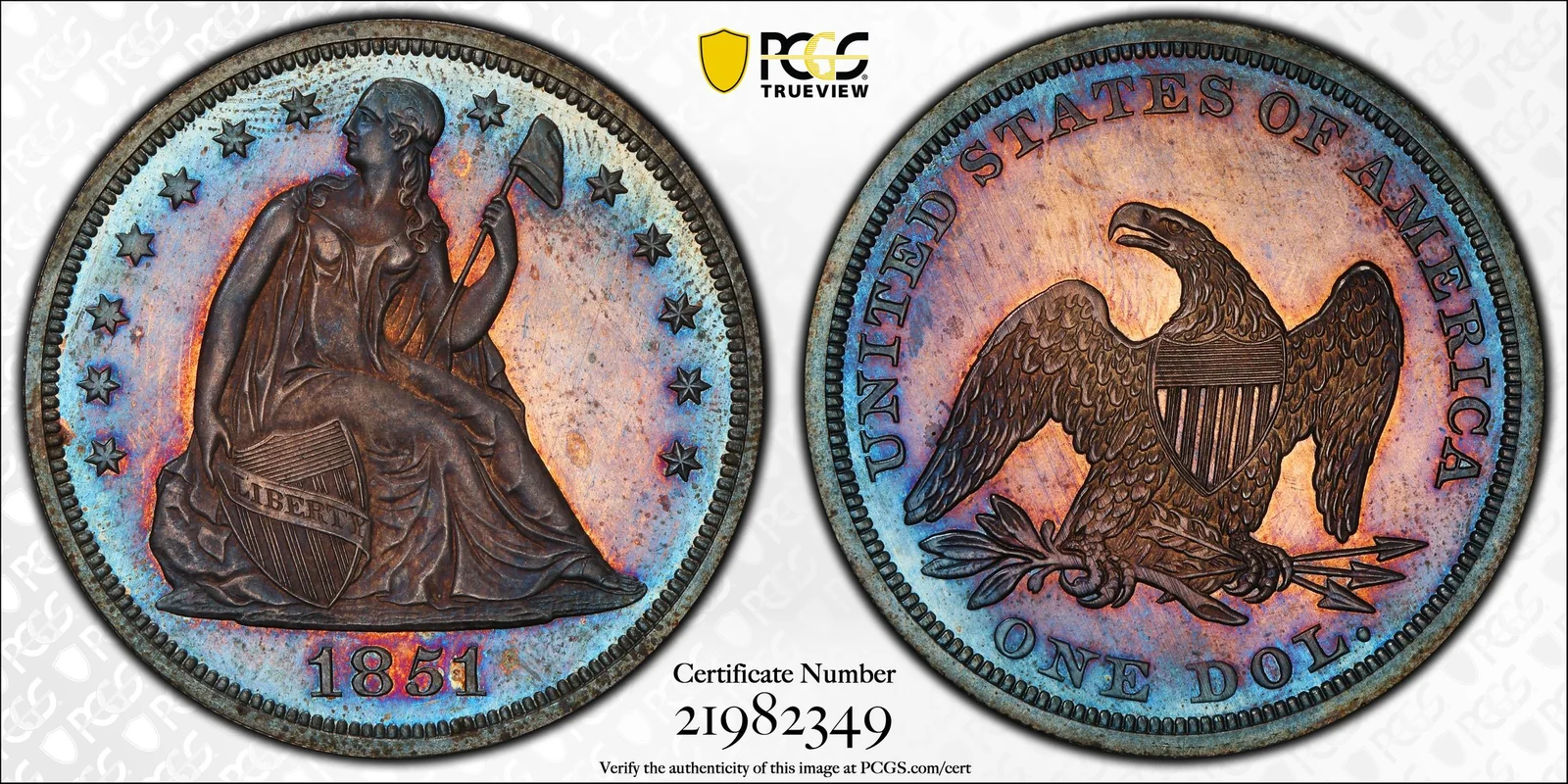
 1851 Liberty Seated Dollar, Proof Restrike$1 silver; proof restrike
Notable auction sale$325,000
PCGS PR62
1851 Liberty Seated Dollar, Proof Restrike$1 silver; proof restrike
Notable auction sale$325,000
PCGS PR62
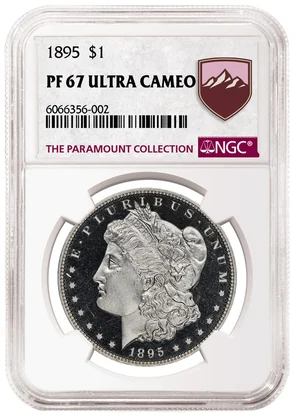 1895 Morgan Dollar, Philadelphia Proof$1 silver; proof
Notable auction sale$324,000
PCGS PR67+DCAM
1895 Morgan Dollar, Philadelphia Proof$1 silver; proof
Notable auction sale$324,000
PCGS PR67+DCAM
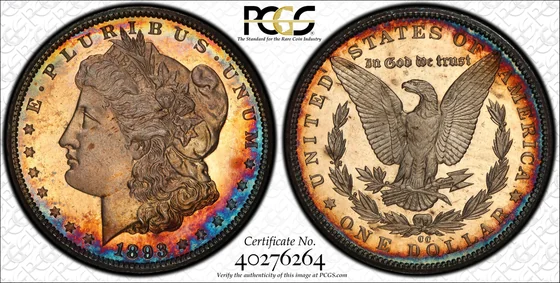 1893-CC Morgan Dollar, Branch-Mint Proof$1 silver; branch-mint proof
Notable auction sale$323,125
NGC PR66
1893-CC Morgan Dollar, Branch-Mint Proof$1 silver; branch-mint proof
Notable auction sale$323,125
NGC PR66
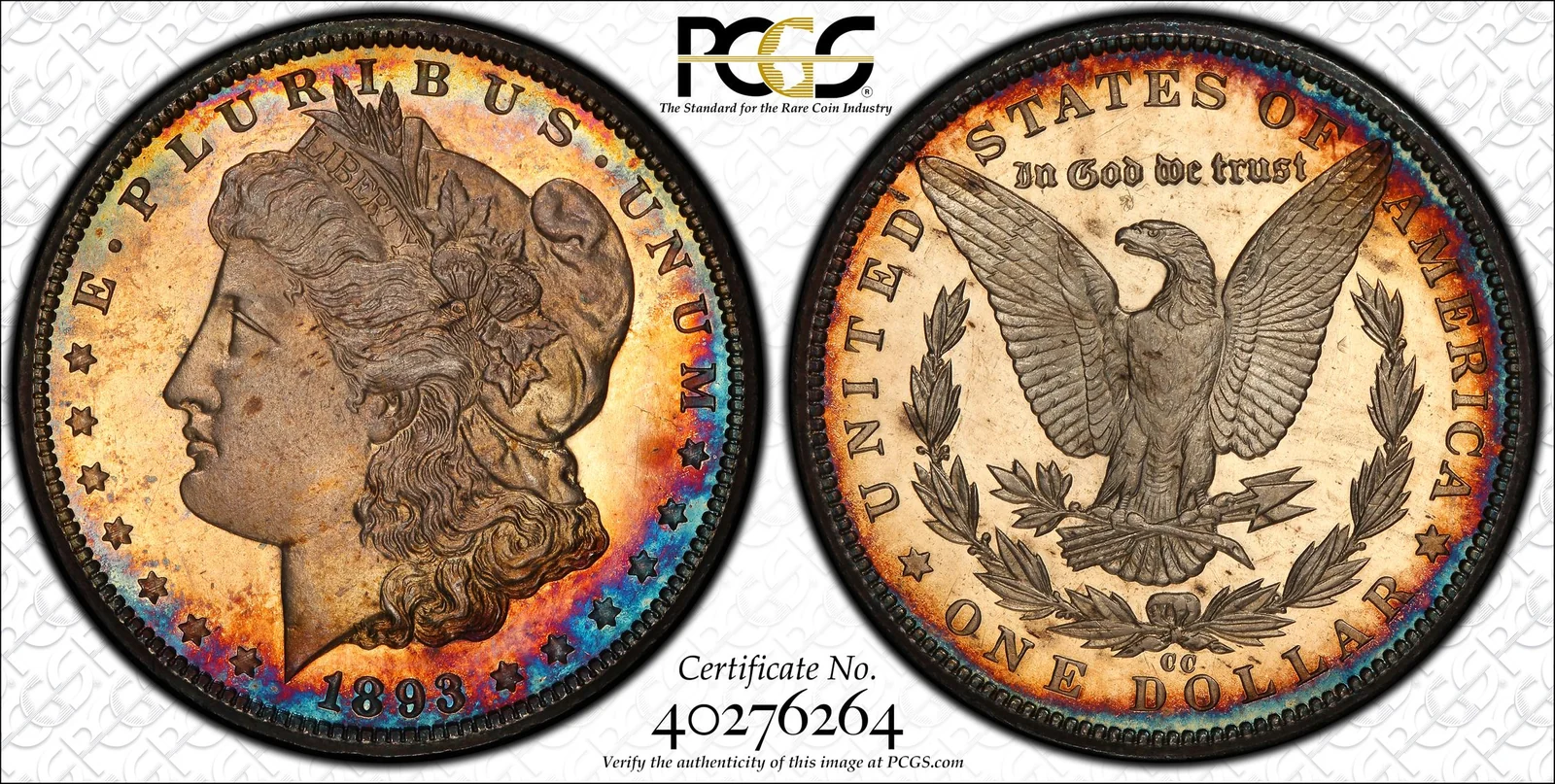
 1838 Gobrecht Dollar Restrike, Judd-88$1 silver; pattern restrike
Notable auction sale$288,000
PCGS PR64
1838 Gobrecht Dollar Restrike, Judd-88$1 silver; pattern restrike
Notable auction sale$288,000
PCGS PR64
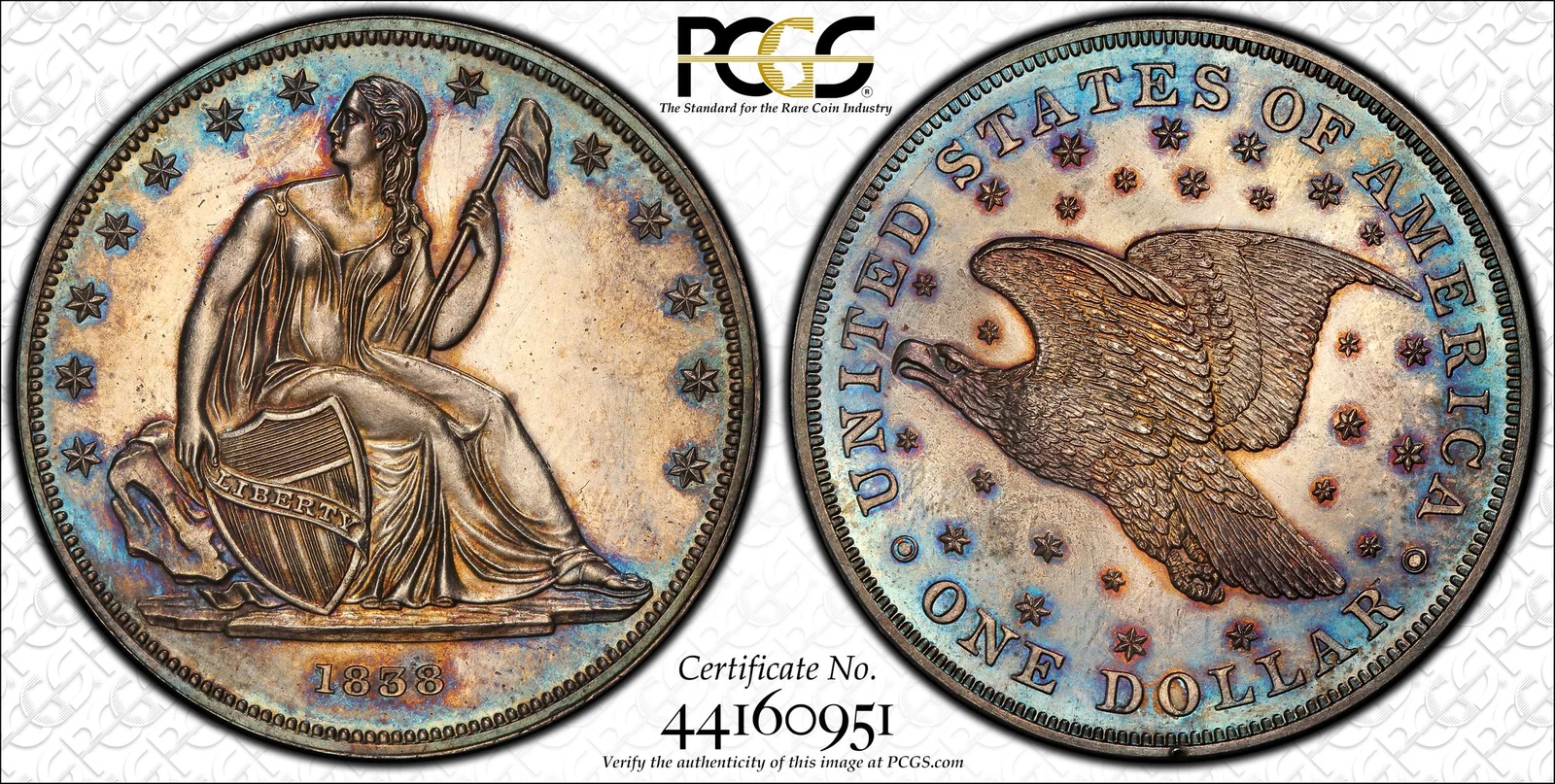
 1798 Draped Bust Dollar, Wide Date$1 silver
Notable auction sale$270,250
PCGS MS65
1798 Draped Bust Dollar, Wide Date$1 silver
Notable auction sale$270,250
PCGS MS65