
Seven Sacagawea dollars that deserve a closer look
1. 2000-P Cheerios prototype-reverse dollars
A promotion placed 2000-P dollars in Cheerios cereal boxes. The collectible exception is not simply any coin with old packaging: it is a recognized prototype reverse with distinctly detailed tail feathers on the eagle. NGC explains that these pieces were discovered years after the promotion. Packaging, the Philadelphia mint mark, and the correct tail-feather diagnostics should all agree before anyone calls one a Cheerios variety.
2. 2000-P Goodacre presentation dollars
Glenna Goodacre, designer of the obverse, received 5,000 specially finished 2000-P dollars as payment. Their distinctive presentation finish and documented provenance set them apart from normal circulation strikes. A polished-looking raw coin is not automatically a Goodacre dollar; cleaning, polishing, or lighting can imitate a finish in a photograph. Look for credible provenance or recognized certification.
3. 2000-D Millennium Coinage and Currency Set dollars
The 2000-D dollar included in the U.S. Mint's Millennium Coinage and Currency Set had a smaller, documented set distribution than the ordinary Denver issue. NGC reports 75,000 sets. Some examples receive Prooflike or Deep Prooflike designations, but the set packaging and the coin's actual surfaces matter more than a seller's description. Do not apply a set-issue premium to an uncertified loose 2000-D dollar without evidence.
4. 2000-P Wounded Eagle die variety
The Wounded Eagle is a recognized 2000-P reverse variety with raised die-damage lines in a specific area of the eagle. It is not a category for random scratches or contact marks. The mark should be raised from the strike, repeat the known location, and match an attributed reference. CoinHub's Wounded Eagle guide walks through the diagnostic in detail.
5. 2000-P Speared Eagle die variety
The Speared Eagle is another 2000-P reverse variety, named for a long raised die-gouge feature that appears to cross the eagle. Its appeal comes from a repeatable Mint-made die state, not from a one-off surface injury. A mark that is cut into the coin, changes direction unpredictably, or does not match the established location is more likely damage than the variety.
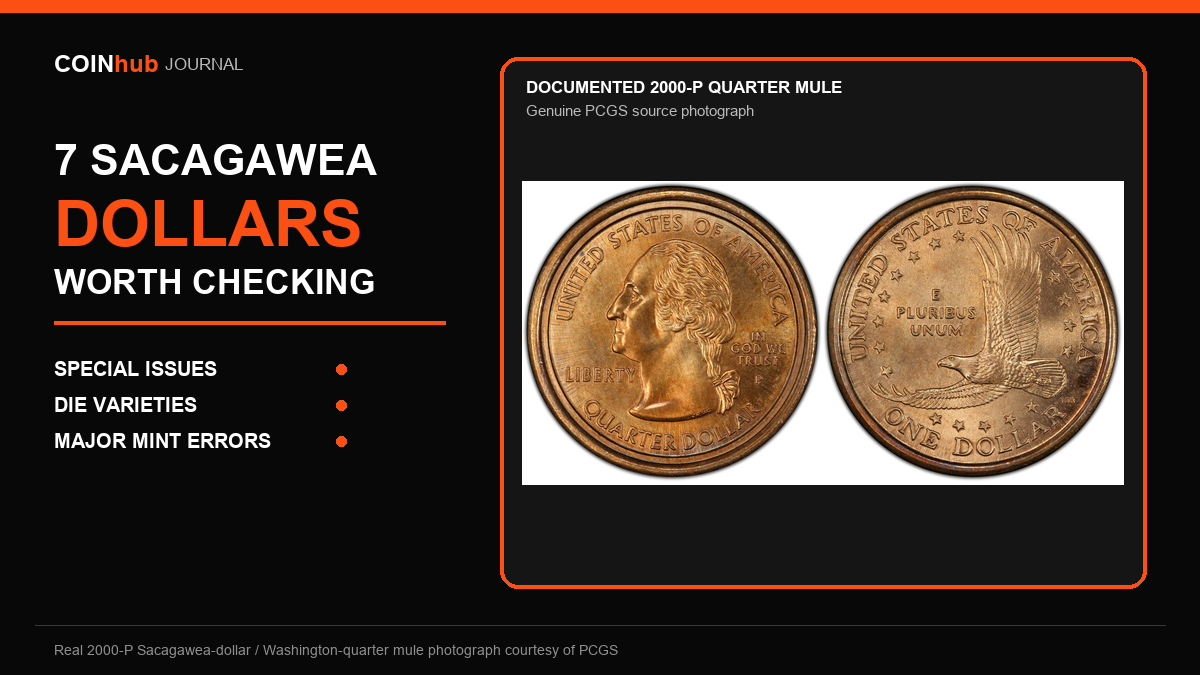
6. 2000-P Sacagawea-dollar/Washington-quarter mule
This famous Mint error combines a Sacagawea-dollar obverse with a Washington Statehood-quarter reverse. It is dramatically different from a normal dollar: the quarter side, reeded edge, and authenticated physical characteristics matter. NGC Auction Central lists a historic certified sale of a 2000-P mule at $102,000 in 2019, but that result is context—not a promise about any unusual coin. If a coin seems to show this pairing, protect it, photograph it, and seek professional authentication. CoinHub's quarter-mule guide covers the identification process.
7. 2000-W gold Sacagawea dollars
The 2000-W gold dollar is a special issue, not something to expect in circulation. NGC reports that 39 were struck and gives a net mintage of 12. That extraordinary scarcity is why the issue belongs on a list of important Sacagawea dollars, but it is also why provenance is essential. A regular golden-colored clad dollar is not a gold coin, and home tests can damage a potentially collectible piece.
What makes a Sacagawea dollar valuable?
Rarity alone does not decide value. The marketplace differentiates between a normal issue, a documented special finish, a recognized variety, and an isolated Mint error. Grade, original surfaces, attribution, certification, holder label, and recent completed sales can all change the answer.
| Clue | What it may mean | What to do next |
|---|---|---|
| 2000-P or 2000-D date | Usually a normal high-output dollar. | Check diagnostics; do not price it as scarce by date alone. |
| Unusual eagle details | Possibly a named die variety—or post-Mint damage. | Compare the exact raised feature to an attributed reference. |
| Original special-set packaging | Potential set issue or provenance. | Keep packaging with the coin and document it before selling. |
| Wrong reverse or reeded edge | Potential major error, including a mule. | Handle carefully and get an expert opinion before altering or listing it. |
How to check a possible variety safely
- Start with the basics. Confirm the date, mint mark, denomination, edge type, and whether the reverse matches a normal dollar for that year.
- Inspect for raised, repeatable features. Die varieties are created by the dies, so their markers are usually raised and in a known location. Damage is commonly incuse, random, or accompanied by displaced metal.
- Preserve provenance. Keep original set or promotional packaging, certification inserts, and purchase records. Photograph the coin before moving it from any holder.
- Compare like with like. Match the exact variety, grade range, certification status, and surface quality to recent completed sales. An unsold asking price does not establish market value.
- Choose certification deliberately. The cost of grading, attribution, shipping, and insurance should make sense for the likely value. A major mule or a convincing special issue merits a different response than a circulated common date.
Frequently asked questions
Are any regular Sacagawea dollars rare?
Most normal 2000-P and 2000-D dollars are common. A date and golden appearance alone do not make one rare. The collectible exceptions need a specific special issue, recognized diagnostic, or error.
How do I tell whether a mark is a variety or damage?
Named die varieties use repeatable, raised markers in known locations. Scratches and gouges are usually cut into the surface and vary from coin to coin. Compare to a reliable attributed image before deciding.
Does a Cheerios dollar need the original package?
Original packaging helps establish provenance, but the prototype-reverse tail-feather diagnostic is the key. Packaging alone cannot prove that a coin is the valuable variety.
Can I test a suspected gold Sacagawea dollar at home?
Do not scratch, drill, or chemically test it. The 2000-W gold issue is specialized and extremely scarce; a professional evaluation is safer for any coin with credible provenance.
Should I submit every unusual dollar for grading?
No. Start with clear photos and a comparison to credible references. Submission costs should be justified by the specific variety or error, the coin's condition, and the likelihood of a recognized attribution.