
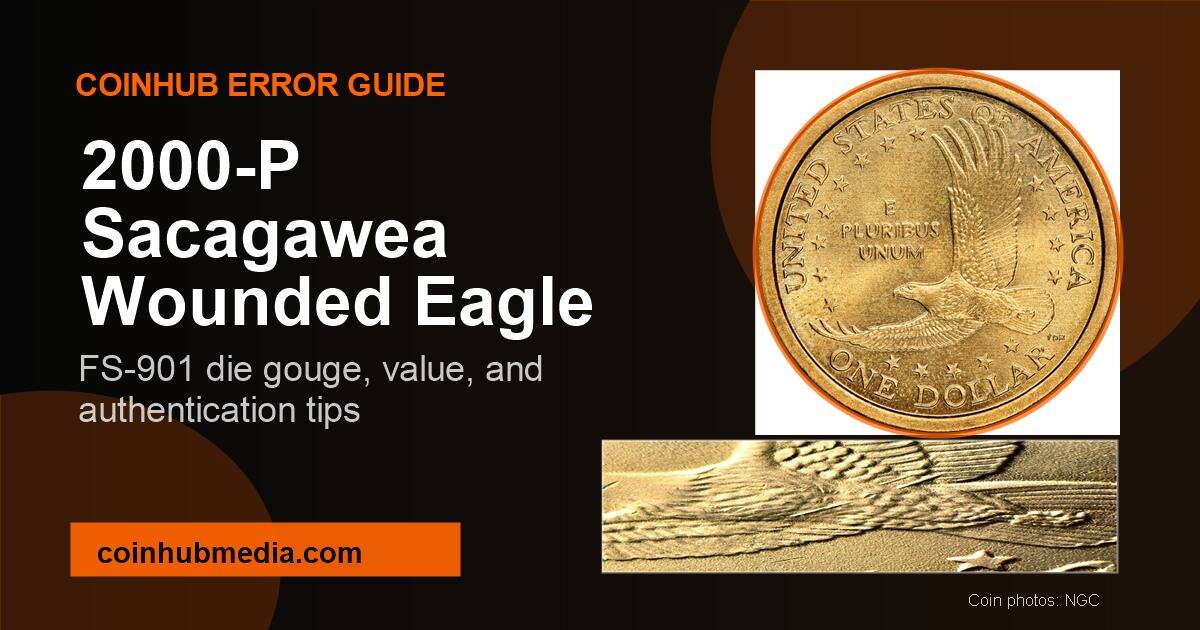
2000-P Sacagawea Wounded Eagle Value and FS-901 Diagnostics
Quick answer: The 2000-P Sacagawea Wounded Eagle, also called the Speared Eagle, is the FS-901 die variety. A die is the tool that stamps a coin's design. Look for raised diagonal lines across the eagle's breast on the back. They must match the known pattern, not just look like a scratch. A normal 2000-P dollar is generally worth one dollar; a confirmed variety may bring more. Condition matters.
What Is the 2000-P Wounded Eagle Sacagawea Dollar?
The Wounded Eagle is a variety of the first-year Sacagawea dollar. A variety is a coin with a known difference from the usual design or surface. This one is a 2000-P dollar struck with a damaged die, the tool that stamps the design. Grooves in that die left raised diagonal lines across the eagle on the back of the coin.
It is not a separate coin design, a gold coin, or the rare quarter-dollar mule. A mule is a coin struck with dies that were not meant to be paired. The Wounded Eagle has the usual Sacagawea portrait on the front and eagle on the back.
PCGS lists the Wounded Eagle as FS-901, the reference number used to identify this variety. NGC calls it the Speared Eagle and describes a pair of die gouges across the eagle's breast. Both names refer to the same variety. The grooves are in the die; the lines they leave on the coin stand above its surface.
Raised metal is the key clue. An ordinary scratch can cross the eagle without making the coin valuable. Look for extra metal above the design, rather than a cut made after the coin left the Mint. A raised mark alone does not confirm FS-901: its location and shape must also match a known example.
How To Identify the Real FS-901 Error
First check the date and mint mark on the front, also called the obverse. The coin must be dated 2000 and have a P for Philadelphia. Turn it to the back, or reverse. Under bright light, study the eagle's lower breast and nearby belly area. Compare the diagonal lines with clear photos of certified FS-901 examples.
- Look for raised lines. A true die-gouge mark stands above the coin's surface. An incuse mark is sunken into it.
- Check the pattern. The lines run diagonally across the eagle's breast. A random raised mark elsewhere does not prove FS-901.
- Use magnification. A 5x to 10x loupe, a small magnifier, or a clear phone close-up can help. A blurred photo may hide the difference between raised metal and damage.
- Compare certified examples. Use the photos in NGC's Speared Eagle guide and PCGS CoinFacts. A seller's error label alone is not proof.
A sunken cut is a warning sign. A dark line or bright photo alone cannot show whether metal is raised or cut away. Tilt the coin under a light and look from more than one angle. If the mark stands up and matches the known pattern, seek a closer review before calling it the Wounded Eagle.
What Is a 2000-P Wounded Eagle Worth?
Value depends on condition, proof that the variety is genuine, and how the coin looks. A normal 2000-P dollar is generally worth face value. A confirmed Wounded Eagle can bring more. Buyers need to know that the marks match FS-901, rather than wear or damage.
A worn example and a very well-preserved example belong in different price comparisons. Mint State means a coin has no wear from circulation; it can still have contact marks. Numeric grades run up to 70, with higher numbers describing better condition. A grading label should name the variety as well as the grade.
PCGS lists a $7,200 MS68 Heritage auction result from July 2023. NGC cites a Speared Eagle graded MS62 that sold for $94 at Heritage in June 2018. These are two dated examples, not a price range for all Wounded Eagles. They differ in grade and sale date.
Do not treat an auction record as a promise for your coin. Confirm the variety, then compare recent completed sales of coins in a similar grade. Include selling costs when weighing an offer. An ungraded coin may be harder to compare because buyers must judge the variety and condition from photos. Asking prices are not completed sales.
Common Mistakes Collectors Make
The main mistake is confusing damage with a die variety. Dollars can pick up scratches in vending machines, bank bags, drawers, and mixed change. A scratch cuts or moves metal on the coin. A groove in the stamping die can leave raised metal on every coin struck from that part of the die. Check the pattern as well as its height.
Other 2000 Sacagawea coins need different checks. The Cheerios prototype reverse has extra detail on the eagle's tail feathers. NGC notes that some dollars from the cereal promotion have the regular reverse, so the packaging and variety are not the same thing.
The quarter-dollar mule pairs a Washington quarter front with a Sacagawea dollar back. Goodacre Presentation pieces have a special finish and a different history. NGC explains these separate types. None can be confirmed by the Wounded Eagle's diagonal lines alone.
The 2000 circulation dollar is not made of gold. The U.S. Mint describes a copper core with outer layers of manganese brass, which give it a golden color. That description applies to the circulation coin, not the Mint's later gold anniversary issue. Do not clean or polish a possible variety to make the marks stand out. You may damage its surface and make it harder to judge.
Should You Grade One?
Grading may make sense when the lines match and the coin's likely value justifies the total cost. Check current grading, variety-attribution, shipping, and insurance charges before submitting. For a worn or damaged coin, those costs may exceed the value gained. A clear grade and variety label can help buyers assess an unworn example, but it does not guarantee a sale price.
Take photos of both sides and a sharp close-up of the eagle. Compare the marks with known certified examples. If you cannot tell whether the line is raised or sunken, ask a trusted dealer for a second opinion before paying for grading. Keep the coin as it is while you investigate; do not rub or scratch the mark to test it.
CoinHub tip: Check the date and P first. Then look at the eagle: are the diagonal lines raised, and do they match a known example? If the mark is sunken or looks like ordinary contact damage, pause before calling it the Wounded Eagle. Do not alter the coin to test it.
Sources: PCGS CoinFacts for the FS-901 listing and dated MS68 record; PCGS Auction Prices for separate 2018 and 2023 appearances; NGC for the Speared Eagle diagnostic, June 2018 MS62 sale, and other Sacagawea types; and the U.S. Mint for circulation-dollar design and metal construction. Historical sale results are not current typical values or guaranteed offers.