
By Blake Alma
1976 Washington Quarter Value Guide
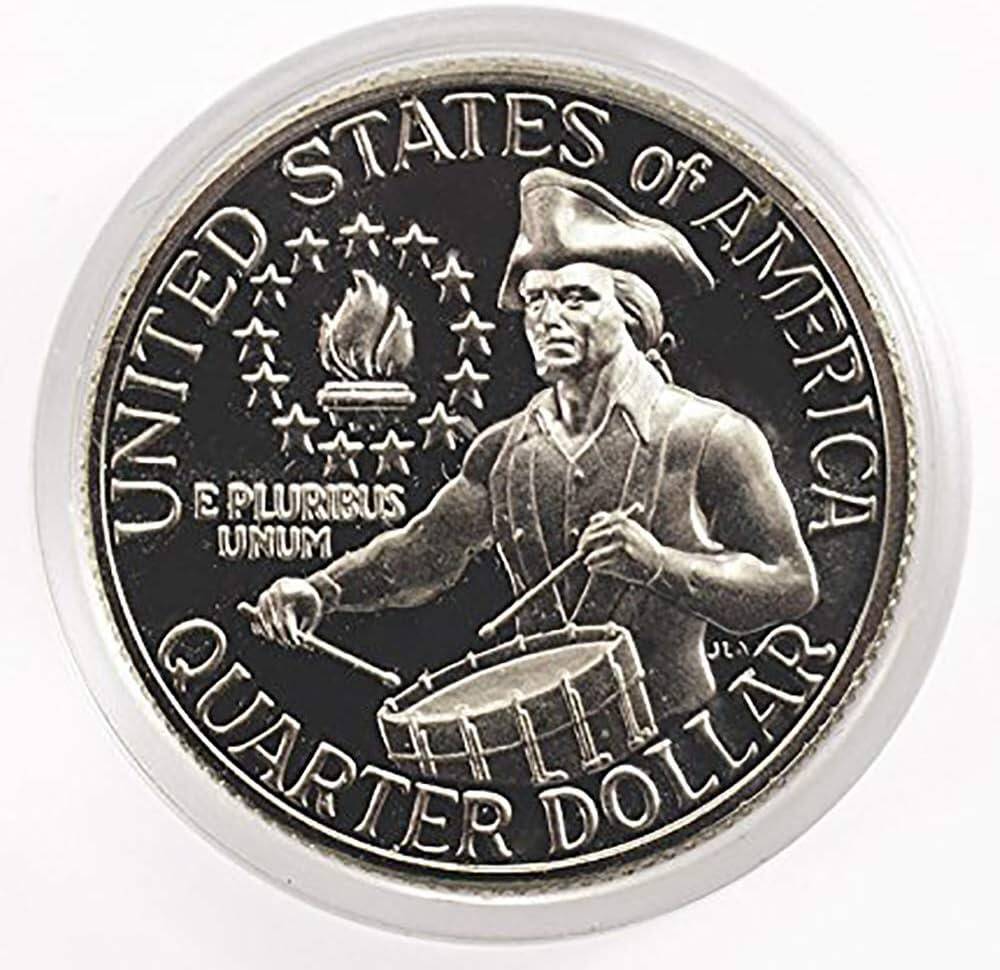
The 1776–1976 Bicentennial Washington Quarter was issued to commemorate the 200th anniversary of American independence. It features a special reverse design and was struck in large numbers in both copper-nickel clad and 40% silver versions. Value depends on composition, condition, mint mark, and errors.
Quick Facts
- Date: 1776–1976
- Denomination: Quarter Dollar
- Series: Washington Quarter (Bicentennial Issue)
- Composition:
- Copper-Nickel Clad (standard circulation)
- 40% Silver (collector issues only)
- Weight:
- Clad: 5.67 grams
- Silver: 5.75 grams
- Diameter: 24.3 mm
- Edge: Reeded
- Designer (Obverse): John Flanagan
- Reverse Designer: Jack L. Ahr
Mint Marks
The Bicentennial Quarter was struck at three U.S. Mint locations:
- Philadelphia Mint (No mint mark)
- Denver Mint (D mint mark)
- San Francisco Mint (S mint mark – Proof and Silver issues)
Mint marks are located on the obverse, to the right of Washington’s ponytail.
1776–1976 Bicentennial Quarter Value
Values vary depending on composition and condition.
Copper-Nickel Clad Versions
- Circulated: Face value ($0.25)
- Extremely Fine: $0.50 – $1
- About Uncirculated: $1 – $2
- Mint State (MS-60+): $3 – $20+
40% Silver Versions (San Francisco)
- Silver Uncirculated: $8 – $20+
- Silver Proof: $10 – $30+
High-grade examples and deep cameo proofs can sell for more.
Silver vs Clad Bicentennial Quarters
Only San Francisco–minted Bicentennial quarters were struck in 40% silver. Most examples found in circulation are clad and contain no silver.
Collectors often check silver melt value when evaluating silver Bicentennial quarters, while clad coins are valued primarily by condition.
What Impacts Value Most
- Composition: Silver coins are worth more than clad
- Condition / Grade: The biggest pricing factor
- Mint Mark: San Francisco silver and proof coins carry premiums
- Eye Appeal: Strong luster and clean surfaces increase value
- Originality: Uncleaned coins are preferred
Common Errors and What They’re Worth
The Bicentennial Quarter is known for collectible errors due to extremely high production.
- Off-center strikes
- Broadstrikes
- Clipped planchets
- Struck-through grease or debris
- Wrong planchet errors (very valuable)
Major errors can be worth hundreds to thousands of dollars depending on type and condition.
How to Identify a Bicentennial Quarter
- Look for the dual date 1776–1976
- Check the reverse for the Colonial drummer design
- Examine the edge for silver (solid gray) or clad (copper stripe)
- Identify the mint mark, if present
Is the Bicentennial Quarter Valuable?
Most circulated Bicentennial quarters are worth face value, but 40% silver issues, Proof coins, high-grade Mint State examples, and error coins can be worth significantly more. Its historical significance makes it one of the most popular modern U.S. quarters.