
U.S. Coin Guide / 1795
1795 Liberty Cap Small-Head Half Cent
Values by grade
USD per coin| Grade | Coin value |
|---|---|
| G-4Good | Not available |
| VG-8Very Good | Not available |
| F-12Fine | Not available |
| VF-20Very Fine | Not available |
| XF-40Extremely Fine | Not available |
| AU-50About Uncirculated | Not available |
| MS-63Mint State | Not available |
| MS-65Mint State | Not available |
No verified current values are available.
Price scope: Lettered edge, punctuated date (C-2a), Brown (BN), business strike; Plain edge, punctuated date (C-2b), Brown (BN), business strike; Plain edge, punctuated date (C-3), Brown (BN), business strike.
About this coin
The 1795 Liberty Cap half cent has a small right-facing Liberty, but its date does not settle the edge or pole variety. First identify the half-cent denomination, then examine both faces and the edge. A worn outline, an attractive brown surface or a seller's variety label cannot complete that work for you.
1795 half cents in the Alvord catalogue
These six front-and-back pairs were published in the 1924 Alvord catalogue. The C-numbers below use modern Cohen die-pair labels; the original catalogue uses Gilbert numbers. Edge descriptions come from the catalogue; the edges are outside the photographs. Some fine details are faint.
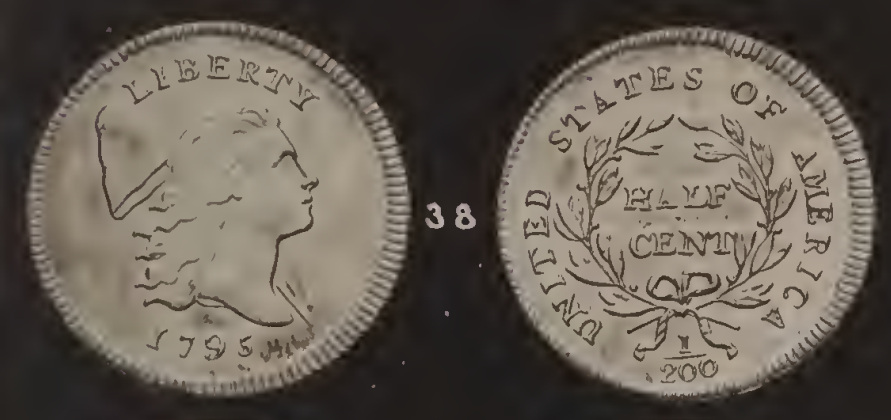
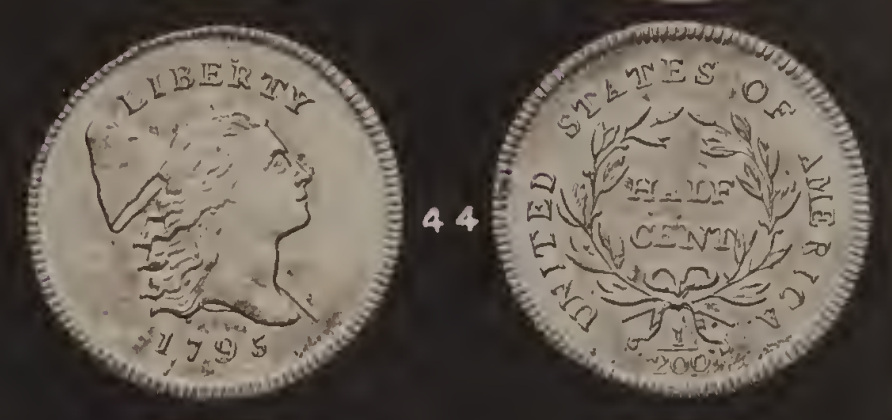
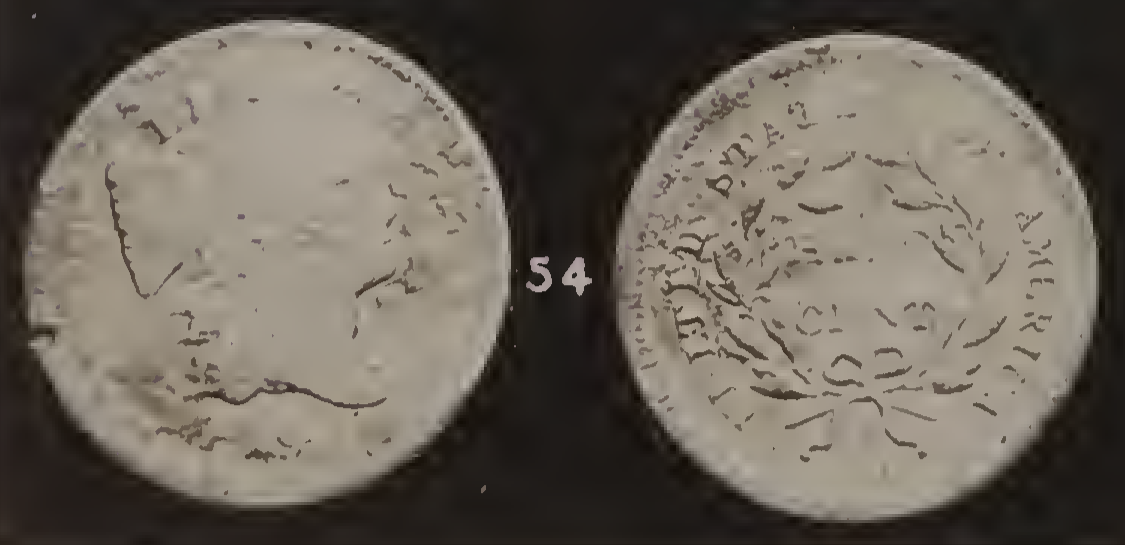
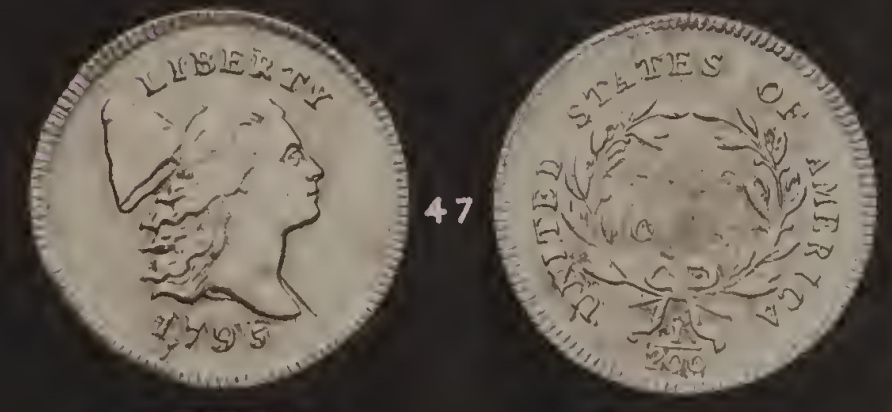
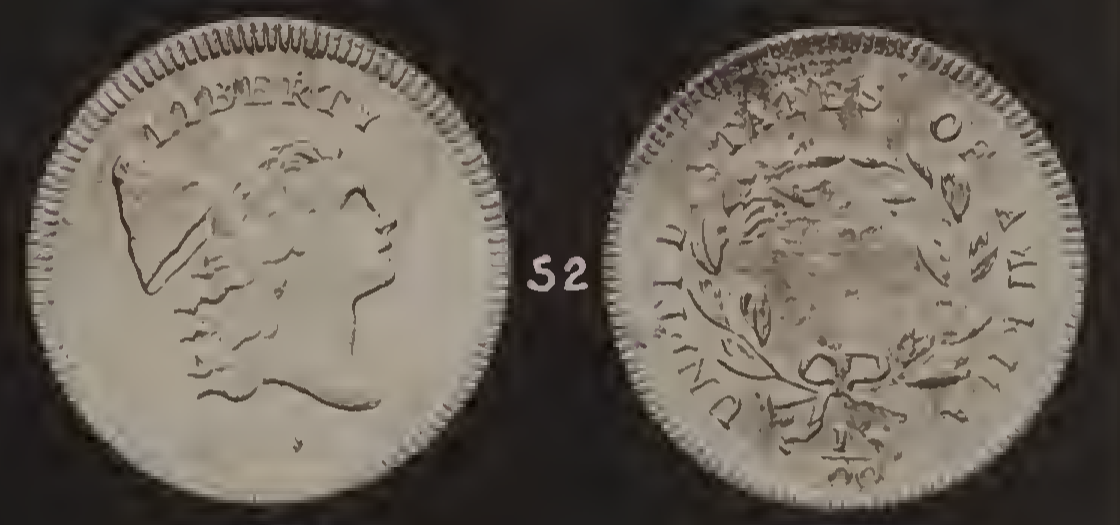
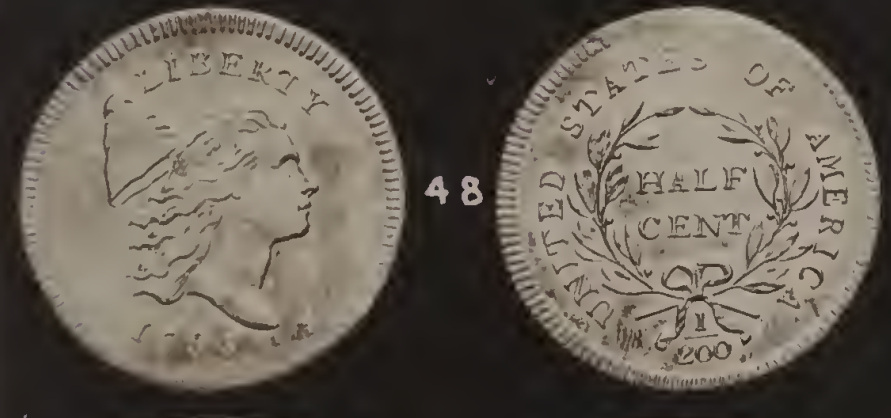
S. H. Chapman, F. R. Alvord sale catalogue, 1924. Library of Congress scan via Internet Archive. Public domain in the United States.
Alvord catalogue, lots 38–55, pages 8–9 · Alvord catalogue, Plate II · Gilbert, 1795 varieties, page 15 · Eckberg, modern 1795 die-pair descriptions · Heritage, Gilbert 7 / C-3 cross-reference · Heritage, Gilbert 6 / C-5 cross-reference
Recognize the Small Head Before Naming a Variety
Small Head names this design. It has a smaller right-facing portrait than the 1794 half cent. The 1793 half cent faces left. Compare the direction and size of Liberty's portrait first. Then examine the small marks in the date and the curls in her hair. This name does not mean the coin is a miniature cent.
Look for HALF CENT within the reverse wreath, rather than ONE CENT. On the front, look for Liberty, the separate cap and the date below. Write down those large features first. If you cannot read the denomination or the last digit of the date, leave it unknown. Do not fill in a missing detail from an online listing.
Treat the Edge and Pole as Separate Questions
Both lettered-edge and plain-edge 1795 half cents are recognized. An unexplained smooth edge calls for examination, not an automatic mint-error claim. Check the edge and rim for damage. Washington's proclamation of January 26, 1796 says reduced copper weights applied from December 27, 1795. The half-cent standard fell from 104 grains to 84. A blank, or planchet, is the disk before striking. Do not apply the reduced standard to every coin dated 1795, or use wear alone to explain a large mismatch.
The pole supports the cap; it is not the cap itself. Heritage's analysis of a 1795 C-6b half cent describes that support as lost when a previously used die was resurfaced, or lapped. The punctuated date has a comma-like die defect between 1 and 7. On a worn coin, an invisible pole or apparent dot is a question to investigate, not a completed attribution.
Do not use No Pole as another name for Plain Edge. Professional Coin Grading Service (PCGS) records a Plain Edge, No Pole entry, but also an entry titled No Pole, Lettered Edge. Those are catalogue references, not a shortcut for identifying a worn coin. Examine the edge and the area below the cap separately, and keep either observation unresolved when the photographs do not show it clearly.
Use the date, pole and edge together
Start with the four ordinary descriptions below. C-2a and C-2b share both face dies, so a readable date can narrow the match to C-2 without settling the edge suffix.
On C-5 and C-6, Eckberg identifies a reworked front die with the pole gone. Compare the back to tell those two pairings apart. For a heavily worn coin, keep the pole and edge observations open until you can see them clearly.
- C-1 · Pole present, regular date, lettered edge.
- C-2a · Punctuated date, lettered edge.
- C-2b, C-3 and C-4 · Punctuated date, plain edge.
- C-5 and C-6 · No pole, ordinarily plain edge.
Some unusual C-6 specimens carry lettering from an earlier coin. Eckberg describes two with the small edge letters of 1794 half cents and interprets them as overstrikes. An overstrike is a coin struck on an object that already carried a design. Record that earlier evidence with the individual coin.
Thickness and edge lettering are separate observations. Jon Lusk reported a thick C-2 with a plain edge and left its suffix in question. The 1907 Stickney catalogue separately describes a thick, plain-edge No Pole example. Examine the edge for wear or tooling before deciding why a coin has a smooth edge.
Jon Lusk, half-cent edge photographs, Penny-Wise, January 2025, pp. 10–11 · Henry Chapman, Stickney catalogue, 1907, p. 128
Read Condition Without Trying to Improve It
Look at the hair, cheek, letters and wreath. Move the light and compare more than one view. Note where detail remains and where the surface changes. Weak striking can leave detail missing from the start. Wear removes it later. These checks can help you talk about a coin's condition. They do not give it a numerical grade.
Keep surface problems separate from wear. Brown is a copper-color description; it does not tell you how much wear a coin has. Color alone cannot show that the surface is original. A coin can keep much of its design and still have harsh cleaning, corrosion or changed color. Record those problems as well as wear. A damaged coin is not the same as a coin with a problem-free numerical grade. Never remove a deposit to make a doubtful date or pole easier to sell.
Authenticate the Whole Object
A portrait that looks right is only one clue. Ask for clear photos of the front, back and edge. Leave details unknown if you cannot see them. Ask a specialist to compare the date punches, reverse design, edge and claimed die variety together. If a seller calls a coin plain edge, ask for a clear edge photo. A sharp front photo cannot settle what is hidden on the edge.
Measurements are clues; they do not prove that a coin is genuine. Write down the tool you used and its actual reading. Let an examiner consider that result with the wear, damage and claimed variety. Similar size alone does not identify a die variety or prove a coin is genuine. Do not scratch, file or polish the coin to test it. Those tests destroy evidence.
Keep the Coin Date Separate From Production Claims
The U.S. Mint says Philadelphia was its only mint in its earliest years. It says mint marks first appeared in 1838. A missing P alone does not make a coin a mint error. The date 1795 names the dated design. It does not tell you the day the coin was struck. Nor does it show whether that coin was made before or after the weight-change delivery. Those questions need more specific records.
A museum catalogue lists objects in a collection. It does not count all the coins made. A museum's examples, a mint's output and an estimate of coins that survive are three different counts. This guide gives no mintage or survivor count for a coin whose variety is unknown. A rarity claim should name the variety and say which kind of count it uses.
Build a Collection Around an Explained Example
For a first type coin, look for a clear denomination and an edge you can explain. Those checks matter more than an ambitious variety name. PCGS lists separate Punctuated Date entries with lettered and plain edges. Its lettered-edge entry gives TWO HUNDRED FOR A DOLLAR as the edge inscription. A punctuation label alone cannot tell you what is on a particular coin's edge.
PCGS calls its Lettered Edge, Brown reference a Regular Strike and lists Philadelphia as its mint. That label describes the named catalogue entry. It is not a condition grade and does not prove your coin is genuine. It also gives no exact day of striking. Keep the catalogue's description separate from what an examiner can establish about your coin.
Ask what evidence could change the identification. Your purchase note can say that the date is clear but the pole is still uncertain. That gives you a better place to start learning than an unsupported claim of a rare variety.
Keep front, back and edge records with the seller's description and any independent examination. Handle the coin by its edge over a soft surface and choose an inert holder. Use the table above for the selected price reference. A missing value is not zero and is not a reason to rush a sale. Compare the same date, supported variety, grade and copper color. A guide price or a record auction result is not an offer for your coin.
Research sources
- Partrick Half-Cent Catalogue: The 1795-1797 Small-Head Design
- 1795 Plain-Edge No-Pole Half Cent: Reworked Obverse Die
- 1795 Lettered-Edge Punctuated-Date Half Cent
- Catalogue of Coins, Tokens, and Medals in the Numismatic Collection of the Mint of the United States at Philadelphia (1912)
- Early American Copper Coin Project
- Proclamation: Reduction in Weight of the Copper Coin, January 26, 1796
- Act of January 14, 1793: Legislation to Regulate Copper Coins
- Historic Coin Production
- Coin-Grading Basics
- Caring for Your Coin Collection
- Mint Marks
- A Numismatic Recipe
- PCGS CoinFacts:1795 Punctuated Date, Lettered Edge, Brown
- PCGS CoinFacts:1795 Punctuated Date, Plain Edge, Brown
- American Numismatic Association: color abbreviations (Brown/BN)
- PCGS CoinFacts:1795 Plain Edge, No Pole
- PCGS CoinFacts:1795 No Pole, Lettered Edge (catalogue title)
- PCGS CoinFacts:1795 Lettered Edge, Brown
- William R. Eckberg, The Half Cent, 1793–1857, pp. 44–48
- Bill Eckberg, Unusual Edges, Penny-Wise, April 2024, p. 95