
CoinHub / Observe, record, then interpret / 20-30 minutes
Materials: this sheet, a pencil, and optionally ordinary change and a magnifier. No special coins required. Work alone or in pairs. The historical photograph is reference material, not evidence of a local find.
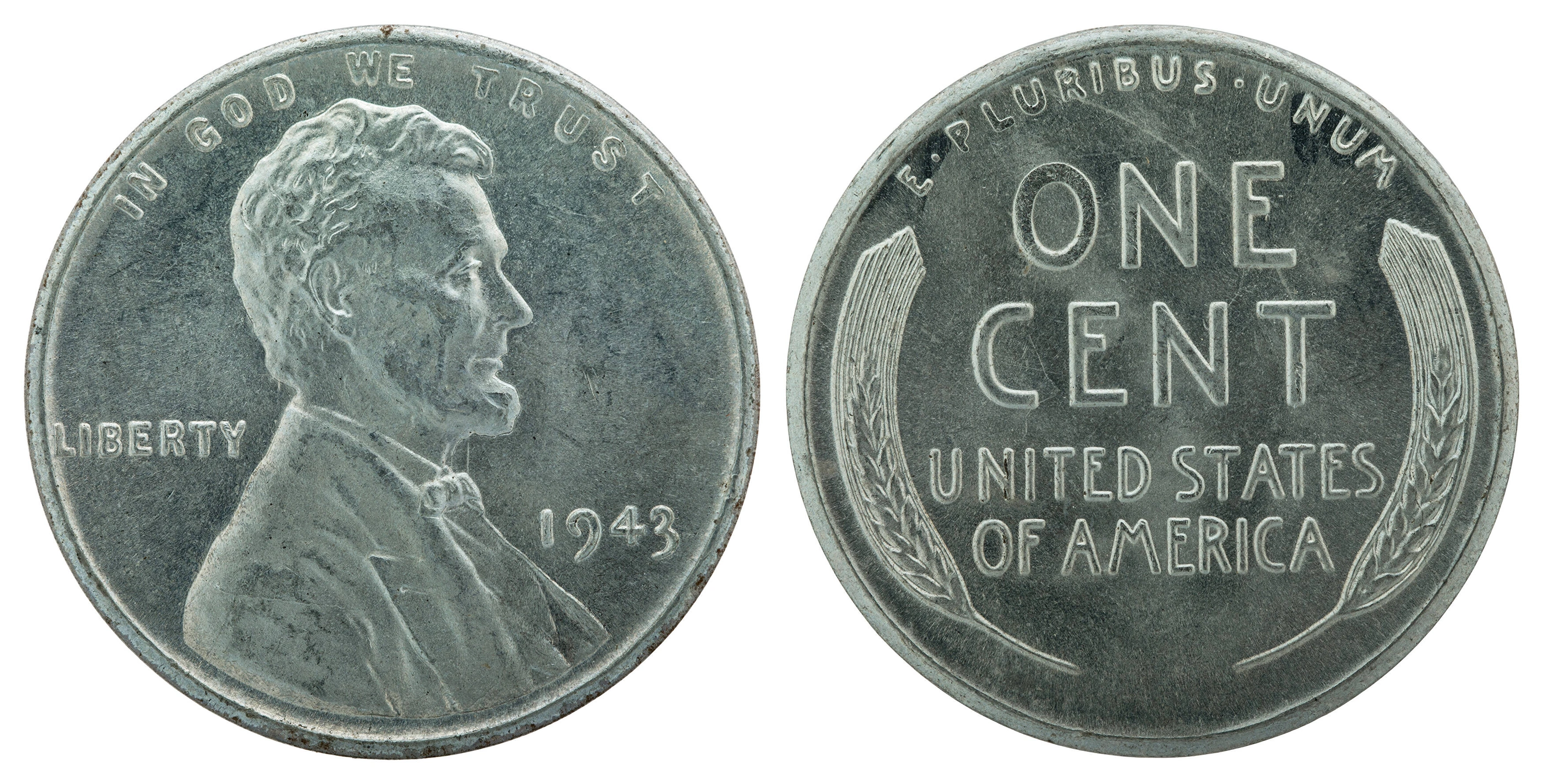
.jpg)
1. Read the evidence
- Which side shows Lincoln? Which side spells out the denomination?
- Record the visible date and denomination. Describe where you found each.
- Identify one field (background area), one raised design feature, and the rim.
- Can this face-on photograph establish the edge type or authenticate an unusual metal composition? Why?
Text alternative: the left face shows Lincoln facing right, LIBERTY at left, and 1943 below his chin at right. The right face reads ONE CENT above UNITED STATES OF AMERICA between wheat stalks. Open background surrounds the designs, with a narrow outer rim. The side edge is not shown.
2. Count an entire search
Invented classroom example, not Atlas data: Group A searches 100 cents and finds two U.S. coins dated before 1960. Group B searches 400 cents and finds none. No other find categories apply.
- What is each group's observed pre-1960 rate per 1,000 coins?
- Pool both searches: total finds / total coins x 1,000. How does omitting Group B change the result?
- Give two reasons why this pooled rate is not a national prediction.
3. A question for your next hunt
Write one visible detail you can record consistently, and one claim needing stronger evidence.
Facilitator answer key
- Lincoln is on the obverse at left. ONE CENT is on the reverse at right.
- 1943 appears at the lower right of the obverse. ONE CENT on the reverse gives the denomination.
- Examples: open area in front of Lincoln = field; portrait or lettering = raised design; narrow outer boundary on a face = rim.
- No. A face-on view does not show the side edge. Color and a photograph alone cannot authenticate an unusual composition. The normal 1943 circulating cent was zinc-coated steel; that is sourced historical context, not a test of another coin.
- Group A: 2 / 100 x 1,000 = 20. Group B: 0 / 400 x 1,000 = 0.
- Pooled: 2 / 500 x 1,000 = 4. Omitting the zero-find search gives 20, five times the full-sample rate. Averaging 20 and 0 to get 10 is also wrong because the groups searched different quantities.
- Examples: small samples, non-random source selection, shared supply, repeat coins, or observation mistakes.
Discussion: an ordinary coin and a zero-find session both contain useful information. Do not turn the exercise into a price or rarity competition. Never add this invented example to the real notebook.
References: U.S. Mint: Anatomy of a Coin; U.S. Mint: The 1943 Cent; CoinHub notebook methodology.