
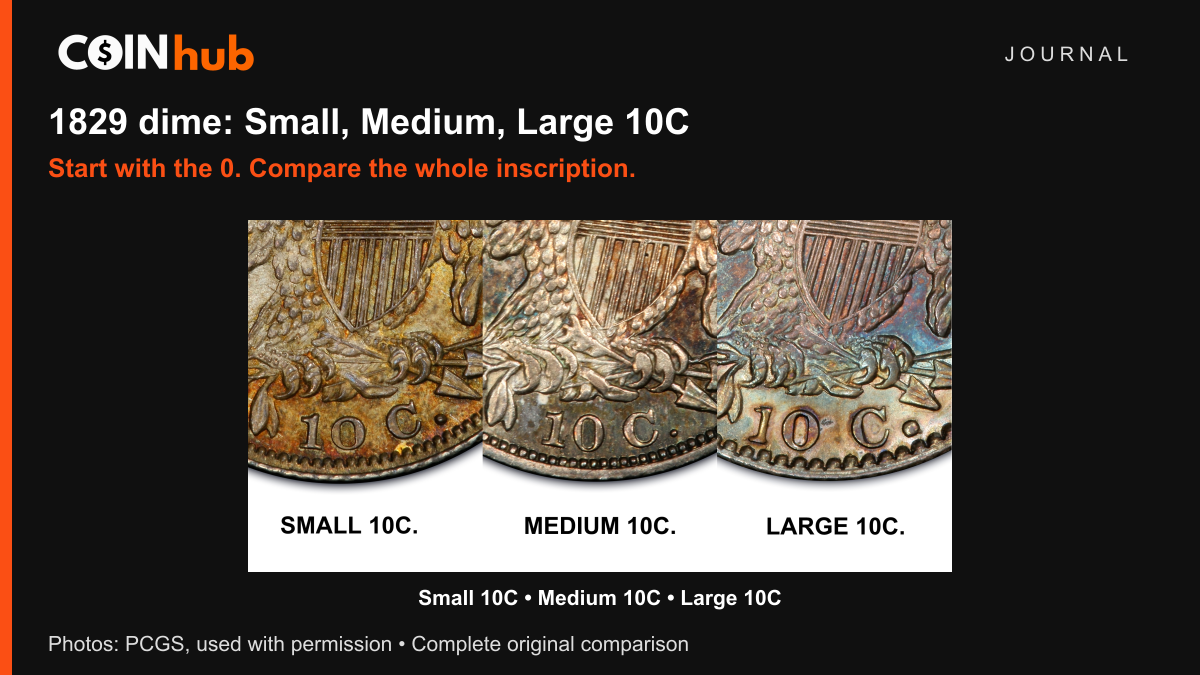
What do Small, Medium and Large 10C mean?
The PCGS photo above shows Small 10C at left, Medium 10C in the middle and Large 10C at right. Keep each label with its photo. A tight crop of one number can hide the nearby shapes you need to make a match.
Start with the 0, then read the whole inscription
The PCGS Small 10C reference describes a round 0 that is smaller than the adjacent 1. The comparison makes that compact shape easier to see. It gives you a specific feature to inspect instead of asking whether a numeral merely “looks small.”
In the Medium 10C comparison, the 0 is a taller oval. Compare its height with the 1 in the same photograph. For Large 10C, examine the full group, including the larger-looking C in the right-hand panel, against the labeled Large 10C reference.
The size on your screen is not the coin's true size. Two sale photos may use a different zoom. Look at how the shapes fit next to each other in each photo. Do not measure pixels in one photo and compare them with another.
- Small 10C: Begin with the compact, round 0 and its height beside the 1.
- Medium 10C: Compare the taller oval 0 and the complete denomination.
- Large 10C: Match the larger denomination forms with a labeled reference; do not judge by one enlarged photograph.
Small/Large 10C is a separate description
A slash in Small/Large 10C does not mean the cataloger was undecided between two sizes. PCGS has a separate Small/Large 10C entry for the repunched denomination, associated with JR-9. Here one denomination impression overlaps an earlier one in the die.
That feature needs a closer look. A worn edge, glare or a line that looks doubled is not enough to call it JR-9. Keep the whole back in your photo. Match the known feature before you add that label to your notes.
The three photographs are also not a complete catalog of 1829 dime varieties. Extra Large 10C appears in specialist listings. Curl Base 2 refers to the shape of the 2 in the date on the front, so it asks you to inspect a different part of the coin.
Why JR numbers matter
NGC's early-dime reference explains that JR numbers identify varieties in the John Reich Collectors Society system. The sequence starts again for each date. JR-1 without a year therefore leaves out essential information.
A size label is just a first step. A die is the steel tool that strikes a coin's face. A full die match may need small clues from both sides. Keep the date and back photos together when you ask for help.
A practical comparison routine
- Confirm the 1829 date and photograph the entire front and back.
- Take a sharp close-up of 10 C. without clipping the nearby design.
- Compare the 0, the 1 and the C within the same image.
- Write the tentative size label and list any unclear feature separately.
For example: “Round, short 0 suggests Small 10C; area around the C is unclear.” Another collector can check those notes. They say what you see without turning one vague detail into a firm label or a price claim.
A reference coin's sale price or grade does not apply to your coin. First check the variety. Then assess wear, surface quality and whether the coin is genuine. Old grading counts cover a past point in time. They do not count every coin that still exists today.
If the coin has a seated Liberty figure instead, compare it with the 1837 No Stars dime guide. The 1829 denomination comparisons here belong to the earlier Capped Bust design.