
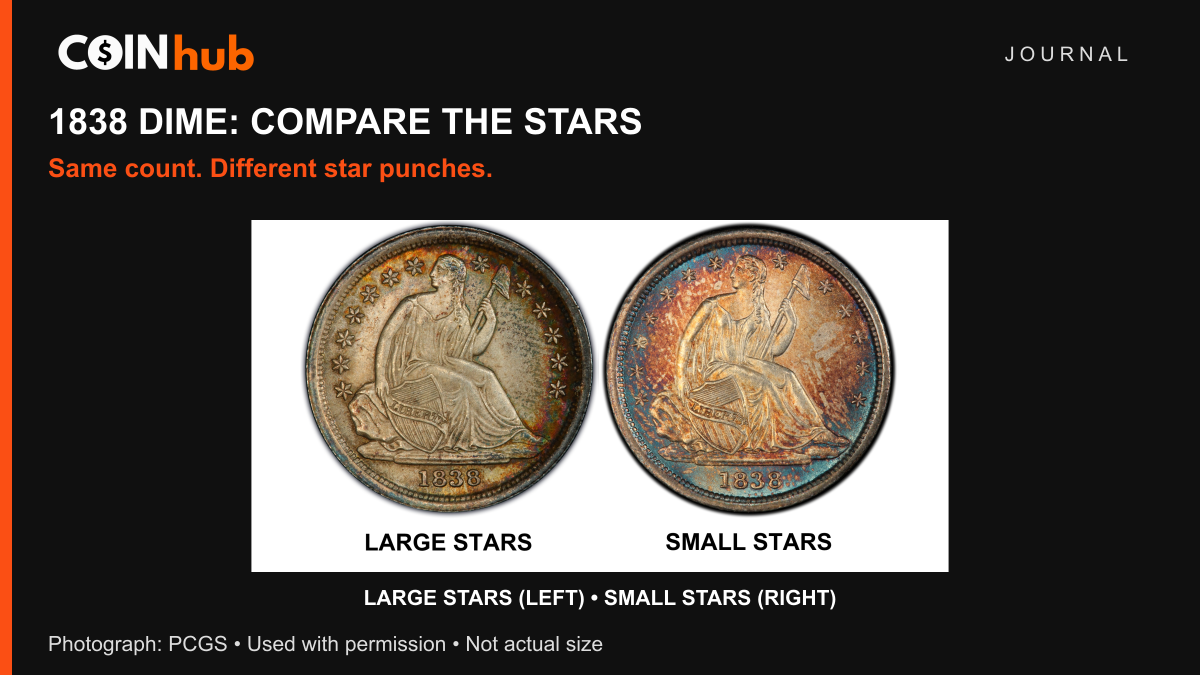
The 1838 Small Stars dime has smaller star shapes than the 1838 Large Stars dime. Both have 13 stars around Liberty. The difference is the size of the star punches used to make the dies, not the number of stars.
Start by checking the denomination on the back. This guide concerns the ten-cent Seated Liberty dime made at Philadelphia. An 1838 half dime is a different coin, even though search results and sale listings may place the two beside each other.
Compare the stars at the same scale
The genuine PCGS comparison photograph above puts Large Stars on the left and Small Stars on the right. Look at the stars around the upper and side edges of the portrait. The Small Stars shapes take up less space, leaving wider-looking gaps between them.
Compare photographs with the coins displayed at equal width. A zoomed-in Small Stars coin can otherwise look larger than a distant Large Stars example. Use the full round coin as your scale, rather than the size of a cropped star on a screen.
Check several clear stars on both sides of Liberty. Do not base the whole decision on one flat or shadowed point. The labels describe the original design, while wear and lighting affect how much of that design you can see today.
Why the star shapes differ
PCGS explains that the Small Stars dies used punches intended for half dimes. A punch is a tool that impresses a design element into a die. The die then stamps that design onto coins.
The Large Stars listing provides the other catalog reference. NGC's analysis notes that the stars were added to working dies by hand, so their positions can vary. A slightly crowded group of stars does not alone settle which entry fits your coin.
This also separates the question from the earlier 1837 No Stars dime. For the two 1838 Philadelphia designs shown here, count is not the deciding clue: both have stars. Compare their shapes and size.
Wear can flatten the points, and glare can hide an edge. If the photograph does not show enough detail, leave the attribution open until you have a clearer view.
Separate a design clue from a die crack
PCGS notes that Small Stars examples often show a die crack joining stars on the left. A die crack is a break in the stamping tool that can leave a raised line on the coin. It can support a closer comparison, but it should not replace the star-size check.
NGC also describes cracked dies for the Large Stars issue. A line near the stars is therefore not an automatic shortcut to Small Stars. Surface scratches, glare and a raised die line can also be hard to tell apart in a poor photograph.
Build a useful identification record
- Record the date and confirm that the reverse says ONE DIME.
- Take clear photographs of both faces, keeping the full rims visible.
- Compare several stars with the reference coins at equal displayed width.
- Copy any grading holder's full description, including the variety name.
- Mark missing or unclear details instead of guessing.
For example, suppose a seller calls a coin Small Stars, but the only photograph cuts off the upper rim. Save the listing description as a claim, then ask for an uncropped front image. The missing area is a reason to gather evidence, not to fill in the answer from the title.
Keep the coin uncleaned while you work. A design match is only an identification step: it does not authenticate the piece, assign a grade or establish a sale price. If those decisions matter, have the actual coin and its attribution checked by a qualified specialist or grading service.