
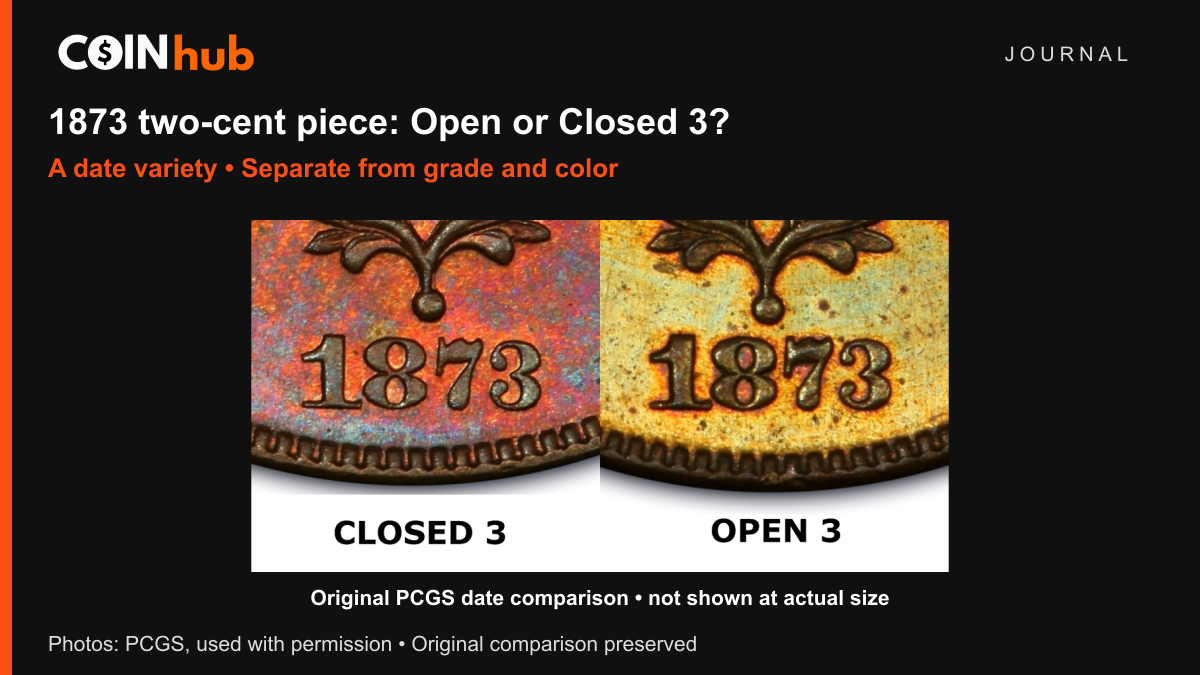
On an 1873 two-cent piece, Open 3 and Closed 3 describe the shape of the last digit in the date. The Closed 3 has a tighter opening between the ends of the numeral. The Open 3 leaves a wider gap. Both are Proof issues; the date shape does not tell you the coin's grade or whether its surface is original.
The PCGS comparison above shows the actual difference, with Closed 3 on the left and Open 3 on the right. Keep the denomination in view while searching: several other U.S. coins dated 1873 have similar variety names, but their photographs are not a substitute for a two-cent reference.
How to compare the two date shapes
Find the date below the shield on the front of the coin. Look at the two rounded ends of the 3 and the space between them. On the Closed 3, those ends curl inward more tightly. “Closed” does not mean they touch or that the digit is actually an 8. PCGS's Open 3 entry explains that the cramped earlier shape could be mistaken for an 8.
Compare the whole numeral, not just one dark spot. Tilt the light slightly if glare hides an edge. Do not scrape dirt from the date to make a gap look larger. If the picture is too soft to show the ends clearly, get a better photograph before choosing a variety.
| Check | Closed 3 | Open 3 |
|---|---|---|
| Date numeral | Tighter gap between the ends | Wider gap between the ends |
| Other catalog wording | May be called Close 3 | Often discussed as a restrike |
| Method of manufacture | Proof | Proof |
| What the name does not establish | Grade, surface condition, color or value | |
Proof is a method, not a promise of perfection
The 1873 two-cent piece was made as a Proof for collectors. Proof describes how a coin was made, not a guarantee that it remains flawless. A Proof can acquire wear, scratches or other damage after leaving the Mint. A dull or worn surface does not turn it into a regular circulation strike.
Likewise, a shiny surface by itself does not prove that a coin is an authentic Proof. Read the whole coin and any grading label. A reference photo helps with the shape of the 3; it cannot authenticate a different coin from one enlarged digit.
Separate three questions: What date variety is it? What condition is it in? Is it genuine and unaltered? Answering the first does not settle the other two.
Was the Open 3 made later?
A restrike is a coin made later than its stated date would normally suggest, using dies associated with the earlier issue. The 1873 Open 3 two-cent piece is often described that way. PCGS's Closed 3 entry calls the Open 3 a restrike.
NGC's account is more cautious: it describes later production of the Open 3 as speculation. It also says the often-listed production totals are reconstructed and uncertain. That distinction matters. The visible date shape can be identified without claiming to know the exact year a particular coin was struck.
For your collection notes, “Open 3; commonly described as a restrike” preserves that difference. There is no need to turn a debated history into a firm date or an exact count of survivors.
Keep color and grade separate from the 3
Bronze coins may be cataloged as Brown, Red and Brown, or Red. You may see these shortened to BN, RB and RD. Those labels concern color, not the Open 3 or Closed 3 design. Both date varieties can appear under more than one color heading in a reference.
Do not assign a color designation from a bright photograph alone. Lighting can change the apparent tone, and surface treatment can affect how a coin looks. Use the full certified description when comparing certified examples, including the Proof grade and any problem noted on the label.
A simple comparison record
- Denomination: confirm that the reverse says 2 CENTS.
- Date: save a complete front photograph and a clear 1873 close-up.
- Variety: record Open 3, Closed 3 or unresolved, with the feature you can actually see.
- Condition: copy the full grading description if available; keep your own observations separate.
- Comparison: use the same date variety, grade and color category when reviewing dated sales.
A sale of a Red high-grade Proof is not a ready price for a Brown coin with scratches. Nor does the word restrike supply a price on its own. Identification narrows the right comparison; condition and the individual coin still matter.
For the denomination's broader story and date overview, use our two-cent piece guide. This comparison addresses the two shapes found on the final date, rather than replacing that series guide.
Comparison photographs: PCGS, used with permission. Original coin details and Closed 3/Open 3 labels preserved; complete comparison resized in the CoinHub layout. Reference coins are not CoinHub inventory.