
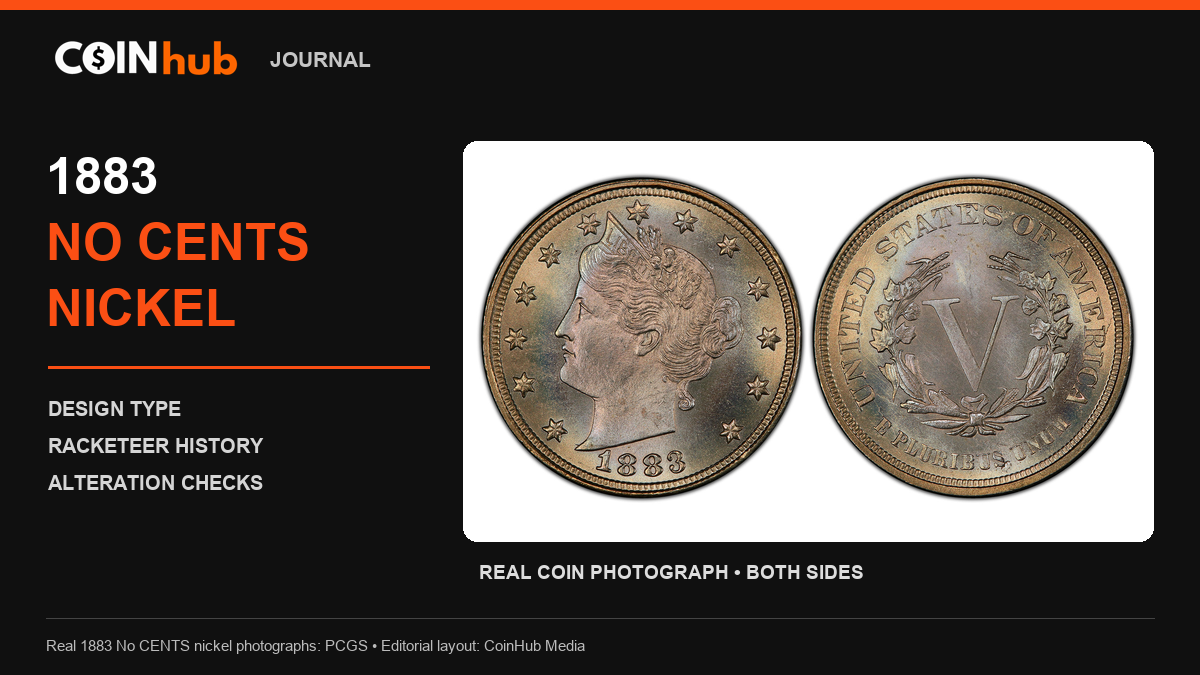
A missing denomination word with two very different explanations
Start by looking beneath the wreath. That small area helps separate the two 1883 reverse types before a seller’s story, a shiny surface, or an optimistic listing price influences your judgment.
How to identify the No CENTS reverse
Charles E. Barber’s Liberty Head nickel entered circulation in 1883. On the first reverse, E PLURIBUS UNUM sits below the wreath surrounding the V. On the revised design, CENTS occupies the lower position and the motto moves above the wreath. PCGS describes both designs in its history of the 1883 nickel.
| Check | No CENTS type | With CENTS type |
|---|---|---|
| Center of reverse | Large V inside a wreath | Large V inside a wreath |
| Below the wreath | E PLURIBUS UNUM | CENTS |
| Motto position | Low on the reverse | Above the wreath |
| Meaning | Original five-cent design | Revised five-cent design |
Use a clear reverse photograph, not just a listing title. If grime, glare, wear, or an incomplete photograph hides the lower lettering, ask for a better view. You do not need to scrape or polish the area to identify the layout.
What a normal example is made of
PCGS CoinFacts lists a normal No CENTS nickel at 5 grams, 21.2 millimeters across, with a plain edge and a composition of 75% copper and 25% nickel. Philadelphia struck 5,474,300 circulation pieces. Those are reference specifications, not a promise that every worn coin will weigh exactly the original amount.
A weight or diameter check can flag a question, but it cannot authenticate the coin by itself. Record your scale’s precision and photograph the complete edge. The basic design identification and any later surface modification are separate observations.
Why collectors call some examples racketeer nickels
The absence of CENTS created an opportunity for deception. According to PCGS, some nickels were gold plated and passed as five-dollar gold coins. The later reverse made the denomination more explicit. That historical episode explains the familiar racketeer nickname.
The often-repeated Josh Tatum tale adds a named character and a clever courtroom ending. PCGS cautions that his existence is questionable. Treat that story as folklore, not documented provenance for a particular coin.
Gold plating cannot date the alteration
A genuine 1883 nickel can receive plating long after it leaves the Mint. Coin World’s discussion of racketeer nickels describes modern recreations and explains the difficulty of confidently separating them from period alterations. Some altered examples also have added edge reeding. Neither an old-looking surface nor an altered edge provides a complete history.
Before paying extra for a claimed nineteenth-century racketeer piece, ask these practical questions:
- What exactly is being claimed? A No CENTS nickel, a plated nickel, and a documented period alteration are different descriptions.
- What records accompany it? Request earlier photographs, dated collection records, or a traceable sale description supporting the claimed history.
- What does the holder actually say? Read the full description. Do not expand a basic coin identification into a guarantee about the age of its plating.
- Can you inspect the whole coin? Review both sides and the edge under neutral light, with plating or damage clearly disclosed.
Does No CENTS automatically mean rare or valuable?
No. The reported circulation mintage alone runs into millions. A valuation should start with the exact type and condition, then compare genuinely similar sold examples. A normal unplated coin and a coin with an uncertain alteration should not be treated as interchangeable comparables.
For the wider series, see our Liberty Head nickel collecting guide. If a graded example is part of your comparison, our guide to PCGS and NGC labels helps you read the description without treating every holder as the same.
Two quick collector questions
Is No CENTS the same as a missing-letter error?
No. Identify the reverse layout first. The entire type was designed without that word; a deliberate design choice is different from lettering lost during a particular strike.
Should I remove the gold-colored surface to check underneath?
Do not strip, rub, or polish it as a diagnostic experiment. Photograph it as found and seek an experienced numismatist’s assessment if its identity or history affects a purchase decision.
Sources checked September 12, 2026: PCGS history and CoinFacts, and Coin World’s expert discussion linked above. The hero image shows a normal No CENTS nickel, not a claimed historical racketeer alteration. No current retail value or auction record is asserted.