
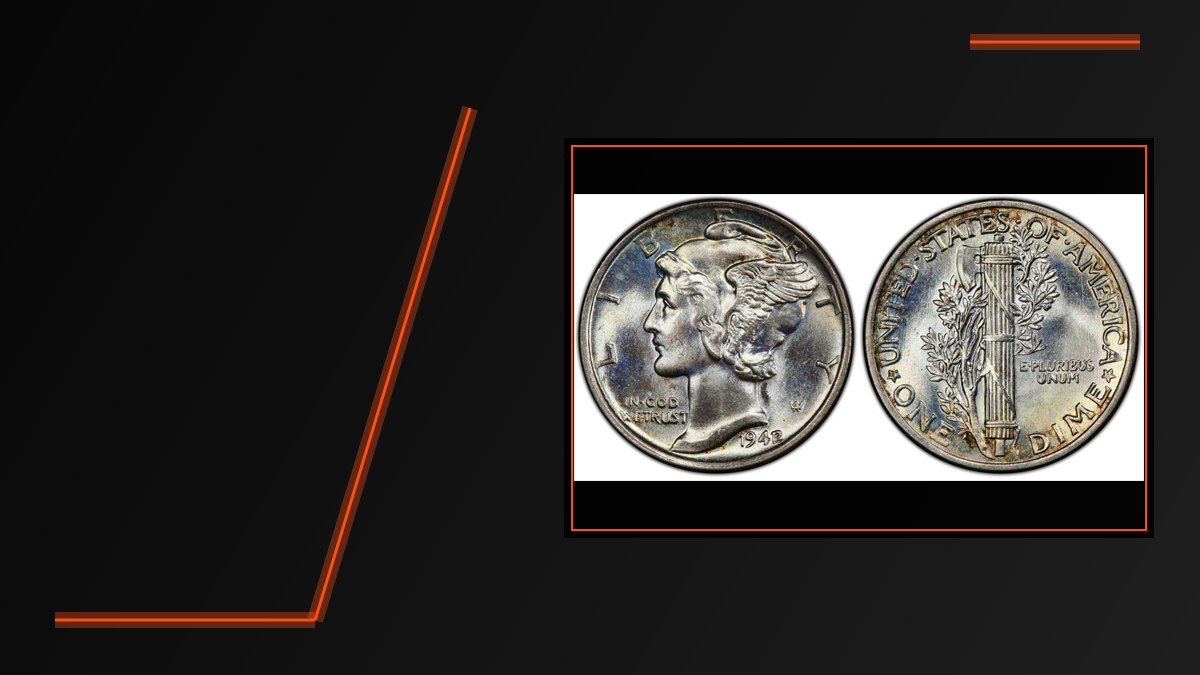
What a 1942/1 Mercury dime overdate is
An overdate is created before the coin is struck, when an earlier numeral remains visible in the working die beneath a later date. On a genuine 1942/1 Mercury dime, the identifying evidence is therefore part of the die-made design. It should be evaluated in context with the date, lettering, rims, mint-mark area, and other known markers—not treated as a free-floating numeral hiding in damage.
PCGS CoinFacts lists the 1942/1 Mercury dime as a recognized issue and provides attribution-oriented reference material. It also notes that circulated pieces are more available than Mint State examples. Availability, however, does not make a raw coin easy to authenticate: the popularity of the variety has attracted altered-date and counterfeit claims for decades.
Start with the P/D/S reality check
The first question is not “how much is it worth?” It is whether the claimed variety can exist. NGC’s counterfeit-detection guide says that genuine 1942/1 Mercury dime varieties occur for Philadelphia and Denver, while a 1942/1-S claim is impossible. That one fact can prevent an expensive mistake.
On a Denver example, the mint mark belongs where it normally belongs for the issue; do not confuse a tiny surface mark elsewhere on the coin with a mint mark. On a Philadelphia example, the absence of a mint mark is normal. If a seller’s photos do not show the relevant area clearly, treat the claim as unverified instead of trying to rescue it with assumptions.
| Claim or clue | What it may mean | Safe response |
|---|---|---|
| 1942/1 with no mint mark | A Philadelphia variety is possible. | Compare several established diagnostics before drawing a conclusion. |
| 1942/1 with D | A Denver variety is possible. | Verify both the date and the normal mint-mark location. |
| 1942/1 with S | An impossible attribution claim. | Stop; do not bid or price it as a genuine overdate. |
| Thin rims or weak legends | Possible counterfeit warning signs, depending on the piece. | Compare to authoritative reference images and obtain expert review. |
| Incuse scratch around the date | Likely post-Mint damage, not a die feature. | Do not scrape it; photograph it and seek a second opinion. |
How to inspect the date without fooling yourself
Begin with even, diffuse light and a loupe or macro photographs. Look at the date from more than one angle. A genuine overdate’s evidence is struck into the design and should remain coherent as lighting changes. A scratch, tool mark, corrosion line, or added metal can look persuasive in one dramatic photo but collapse under another angle.
NGC notes several broad counterfeit-detection concepts for this issue, including rim character, the angle of the date, and the relationship between the date and surrounding design. Those are comparison tools—not a do-it-yourself certification checklist. A genuine coin is established by an agreement of diagnostics, while a fake can imitate one eye-catching detail.
What does not prove a 1942/1?
- A photo with a circle or arrow drawn around the date.
- A shallow line that cuts into the metal, especially if it wanders across the numeral.
- A date that only appears “wrong” under harsh side lighting.
- A seller’s headline, a generic third-party holder, or an asking price.
- A resemblance to a reference image without agreement on the mint-mark, rims, lettering, and date diagnostics.
A cautious authentication workflow
- Confirm the type and date first. Make sure the coin is a 1942 Mercury dime and identify whether it is a normal no-mint-mark Philadelphia coin or a Denver coin with a D in the correct location.
- Rule out the impossible S claim. If an S is present and the seller calls it 1942/1, do not rationalize the conflict. The claimed attribution is wrong.
- Use clear comparison images. Photograph both sides and the edge at high resolution, then compare the date, rim, lettering, and other markers to PCGS and NGC references. Do not enlarge a blurry image until it becomes a pattern.
- Preserve the coin exactly as found. No polishing, dipping, brushing, or date “cleaning.” Put it in an inert holder and keep any old envelope, holder, or purchase record.
- Choose professional attribution when the evidence stays credible. A recognized third-party service can weigh the full set of diagnostics. The submission cost should make sense for the coin’s likely grade, surfaces, and authentication prospects.
Why value talk comes after authentication
Two coins called “1942/1” can have very different market outcomes. Mint mark, authenticity, grade, strike, surface quality, problems, certification, and the specific variety all matter. A raw, damaged, or altered coin does not inherit the price of a high-grade certified example merely because its date looks unusual.
Use recent completed sales only after you know what you are comparing. Match the exact variety, the same attribution standard, a similar grade range, and comparable surfaces. A high asking price, an old auction headline, or an unverified social-media claim is not a reliable value guide.
For broader context on how real Mint-made errors differ from damage, see CoinHub’s coin errors guide. The 1942/1 is a specialized overdate question; it should not be diagnosed by a generic “rare error” list.
Frequently asked questions
Are all 1942 Mercury dimes overdates?
No. Ordinary 1942 Mercury dimes are not automatically 1942/1 varieties. The overdate requires matching die-made evidence.
Does an S mint mark make a 1942/1 dime rarer?
No. NGC identifies a purported 1942/1-S as impossible. That is an attribution failure, not a rare third variety.
Can I authenticate it from a phone photo?
Clear photographs can help screen a claim, but a photo alone may miss rims, texture, altered-date work, or diagnostic relationships. Use it to decide whether a professional review is warranted, not to guarantee authenticity.
Should I clean a dark or toned dime so the date shows?
No. Better lighting and photography are safer. Cleaning can permanently harm the surface and the coin’s collector appeal.
Is this the same topic as a 1916-D Mercury dime?
No. The 1916-D is a famous key-date/mint-mark issue. The 1942/1 is an overdate attribution question. CoinHub’s 1916-D guide covers that separate key-date topic.