
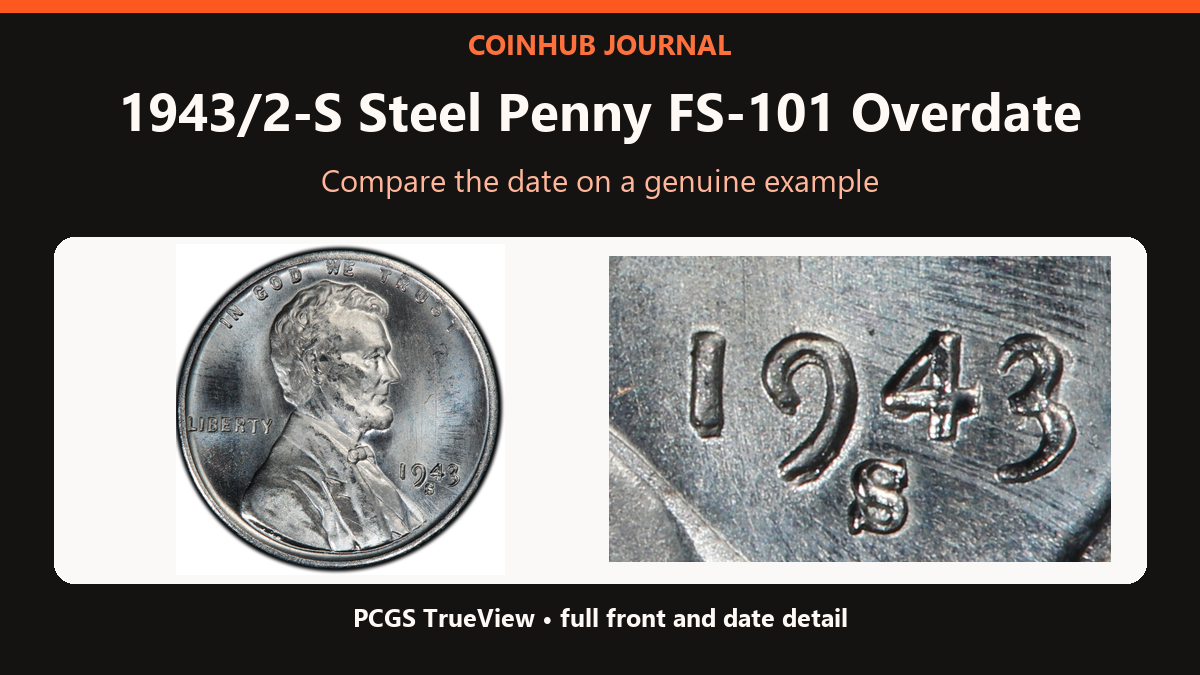
To check a 1943/2-S steel penny for FS-101, start with the last digit. The coin still reads 1943. The variety shows a small trace of an underlying 2 around the 3, along with doubling elsewhere in the date. An S under the date only tells you the mint. It does not tell you the variety.
PCGS lists this variety as 1943/2-S 1C DDO, FS-101. DDO means doubled die obverse, or doubling on the die that struck the front of the coin. An overdate shows part of an earlier date in the later design. Here, those two labels describe the same cataloged variety.
Where to look around the 3
Hold the coin so the date is upright and move the light across the right side of the 3. Compare the top curve and the space below its middle arm with the close-up above. You are looking for small extra raised shapes that fit the reference. You will not see a full 2 next to the 3.
Then check the rest of the date. On a good reference photo you can compare the base of the 1, the shape of the 9 and the left angle of the 4. Those are supporting details. A single bright line at the 3, without the rest of the pattern, is a weak match.
The PCGS gallery of certified FS-101 examples shows how the same date can look under different lighting or with different surface marks. Use more than one photo before drawing a conclusion.
Separate the variety from a scratched or worn date
Steel cents can have rough areas, stains or worn coating. A scratch can cut through a digit or leave a bright edge. A weak strike can make a detail hard to see. None of those features, by itself, confirms an earlier digit under the date.
Compare the shape and location of the raised parts. A feature from the die should line up with the cataloged pattern. If the area is too rough to see, leave the result open. Scrubbing the date will not reveal reliable evidence and can harm the coin.
What steel and the S actually tell you
The standard 1943-S cent and FS-101 are both zinc-coated steel. A magnet can help you screen for a steel cent, but it cannot identify the die that struck it. The mint mark is on the front below the date. PCGS lists the normal steel reference at 2.70 grams and 19 millimeters across.
A bronze 1943-S cent is a separate coin to research. Color and a seller’s description cannot settle the metal or variety. Focus on the actual date and the right catalog entry instead of jumping to a price.
Save two photos before asking for an opinion
Take one photo of the full front and one close-up of the date. Keep the S and all four digits in the frame. Save an untouched copy, since heavy sharpening can add an outline that is not on the coin. The CoinHub Variety Attribution Assistant can help organize the observations. It cannot assign a variety or authenticate the coin for you.
Photo: PCGS TrueView of a certified 1943/2-S FS-101, cert 40438435. The date close-up is cropped from the same photo. The reference does not assign a grade to any other coin.