
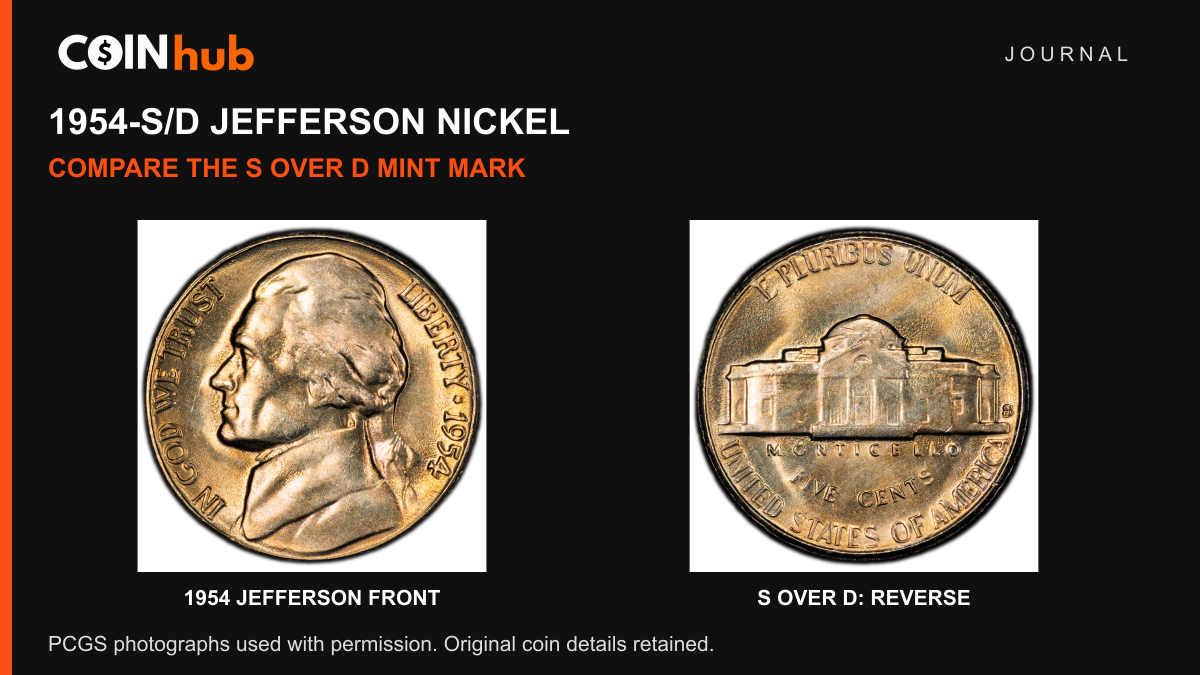
A small mark on the reverse needs a careful comparison
The 1954-S/D Jefferson nickel has an S mint mark over an earlier D on the die. For the recognized FS-501 overmintmark, compare the lower part of the S with genuine reference photographs. The earlier D leaves detail below it. A thick S or an isolated bump is not enough to confirm the variety.
Start with the whole nickel, then move to the small mark beside Monticello. That order keeps a promising close-up tied to the correct date and coin. It also helps separate an S over D from other mint mark varieties that turn up in searches.
Find the 1954 date and the small reverse S
The obverse, or front, shows Jefferson and the date. Turn the coin over to the reverse, which shows Monticello. The small S is to the right of the building. This is where to compare the overmintmark; a mark near the date is a different question.
The main photo shows a genuine example catalogued by PCGS as 1954-S/D, FS-501. Its source grade describes that photographed specimen. It does not assign a grade to another coin that seems similar.
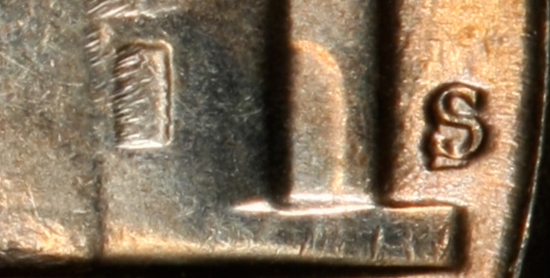
Compare the lower part of the mark
The specialist reference Top OMM and RPM Varieties, printed page 41, describes the bottom and serif of the D beneath the S. A serif is the small end stroke of a letter. Match the shape and position together, rather than treating any extra line as a D.
That reference also records different die stages, meaning different points in a die's working life. Its listed scratches change between stages. Use those details as supporting evidence for the matching stage, not a demand that every example show every scratch in the book.
| Observation | What to check next |
|---|---|
| Extra detail below the S | Does its outline and position match the earlier D in the reference? |
| Mark changes strongly with the light | Take a second sharp photo to separate the surface shape from glare. |
| Wear or damage hides part of the mark | Keep the identification provisional; a hidden feature is not proof either way. |
Why S/D differs from S/S
Mint marks were once punched by hand into working dies, the tools that struck coins. NGC's history of mint marks explains that process. A die could retain traces of an earlier punch after another letter was applied.
An overmintmark involves different letters. An S/S repunched mint mark repeats the same letter; S/D describes an S over a D. PCGS explains this distinction using the 1954-S/D as an example. It concerns work on the die, not a finished nickel receiving a second mint's mark.
For a same-letter comparison, see the 1964-D/D Jefferson nickel guide. Its FS-501 label belongs to that different issue. A matching catalogue number alone does not make two coins the same variety.
Keep the variety code separate from Full Steps
FS-501 is a variety reference. The separate Full Steps designation concerns the steps on Monticello. PCGS lists a Full Steps version of the FS-501 entry, so the two descriptions can appear together. An S over D does not by itself establish Full Steps.
Save evidence before making a value claim
Photograph the full front, full reverse and mint mark. Keep the original images, note the reference used, and describe an uncertain match as possible. Do not scrape or polish the S to make the underlying detail easier to see.
The CoinHub Variety Attribution Assistant can help narrow research. It does not authenticate the coin or confirm an FS number. If a purchase or sale depends on the attribution, seek an experienced review before assigning a premium.
For broader background, CoinHub founder Blake Alma's The CoinHub: An Ultimate Guide to Coin Errors is an optional resource. The photographs and evidence above remain the starting point for this specific comparison.
References checked October 23, 2026. Historical prices, population totals and the parent issue's mintage are not used as counts or current values for this variety. PCGS photographs used with permission; original coin details retained.