
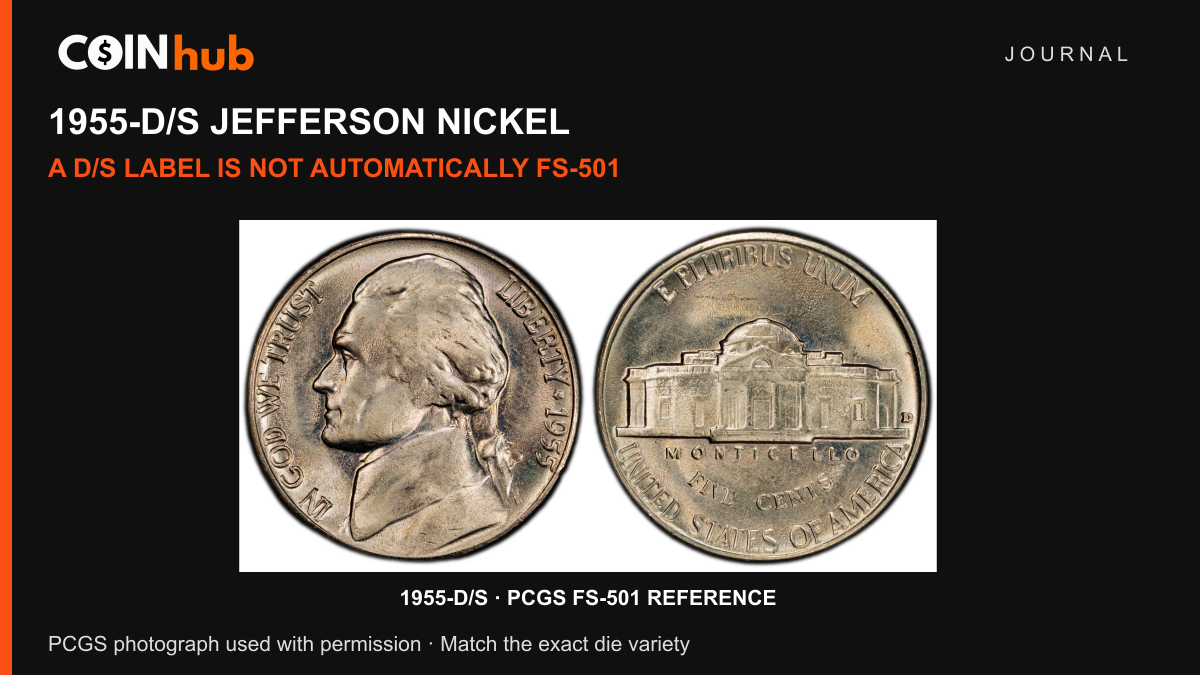
A 1955-D/S Jefferson nickel has a Denver D mint mark over traces of an earlier S. Look on the back, just to the right of Monticello. But finding a D/S is only the first step: FS-501 names one particular die variety, not every 1955 nickel with an unusual D.
The useful comparison is between your coin and an attributed reference. Start with a clear date and both complete sides. Then examine the small mint mark. A thick letter, a scratch or glare alone cannot establish the variety.
Where to look on the coin
The obverse, or front, shows Thomas Jefferson and the date 1955. Turn the coin over to the reverse, or back. Find Monticello, the building above FIVE CENTS. The small D sits to the viewer's right of the building.
The PCGS FS-501 listing identifies the issue as a Denver Jefferson nickel. The photograph below is an enlarged crop from that listing's reference specimen. Keep the crop tied to the complete coin; an isolated mark without a date is an incomplete record.
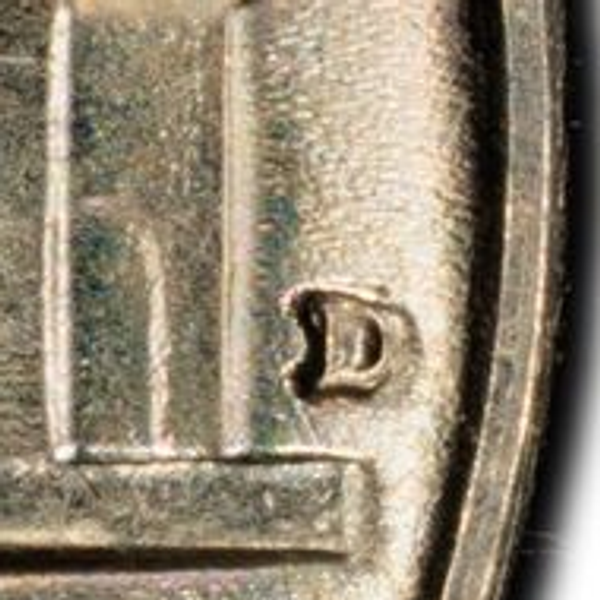
Compare the extra shape above the D with a recognized example. A Heritage description of an attributed FS-501 notes the top of the underlying S emerging above the Denver mark. Match the shape and position, rather than calling any bump an S.
Why a D/S label does not always mean FS-501
An overmintmark forms when one mint letter is punched over a different letter in a die. The die is the tool that strikes the design into a coin. In this case, the overlapping letters were on the tool before it struck the nickel.
NGC's explanation of the 1955 D/S says unused reverse dies intended for San Francisco were given D marks for Denver. NGC describes about a dozen D/S dies and distinguishes FS-501 within that group. That is why a general D/S description should not be silently upgraded to this specific attribution.
| Description | What still needs checking |
|---|---|
| 1955-D nickel | The date and Denver mint mark; an ordinary D does not prove an underlying S. |
| 1955-D/S nickel | The actual overmintmark; more than one D/S die is known. |
| 1955-D/S FS-501 | A match to the specific recognized die variety, beyond the general D/S label. |
Make a useful comparison
- Photograph the complete front and back, with the date and rims visible.
- Take a focused mint-mark close-up. Include nearby parts of Monticello so its position stays clear.
- Compare the D and the remaining S detail with an attributed reference at a similar viewing angle.
- Record any holder's attribution exactly. If the detail is unclear, keep the identification provisional.
Change the light before deciding that a line is part of a letter. Do not rub, scrape or polish the mint mark to reveal it. If a purchase or sale depends on the FS-501 attribution, seek an examination by a service or specialist familiar with the variety.
Keep attribution, grade and price separate
The FS number identifies a cataloged die variety. It does not assign a grade or a price. Surface preservation, wear and other grading details still need their own review. A photograph of an attributed coin does not transfer its grade to another specimen.
The broader Jefferson nickel guide puts this issue beside other dates and varieties. For organizing your own evidence, the Variety Attribution Assistant accepts the date, mint mark and unusual feature. It suggests research categories; it cannot assign an FS number or confirm your coin.