
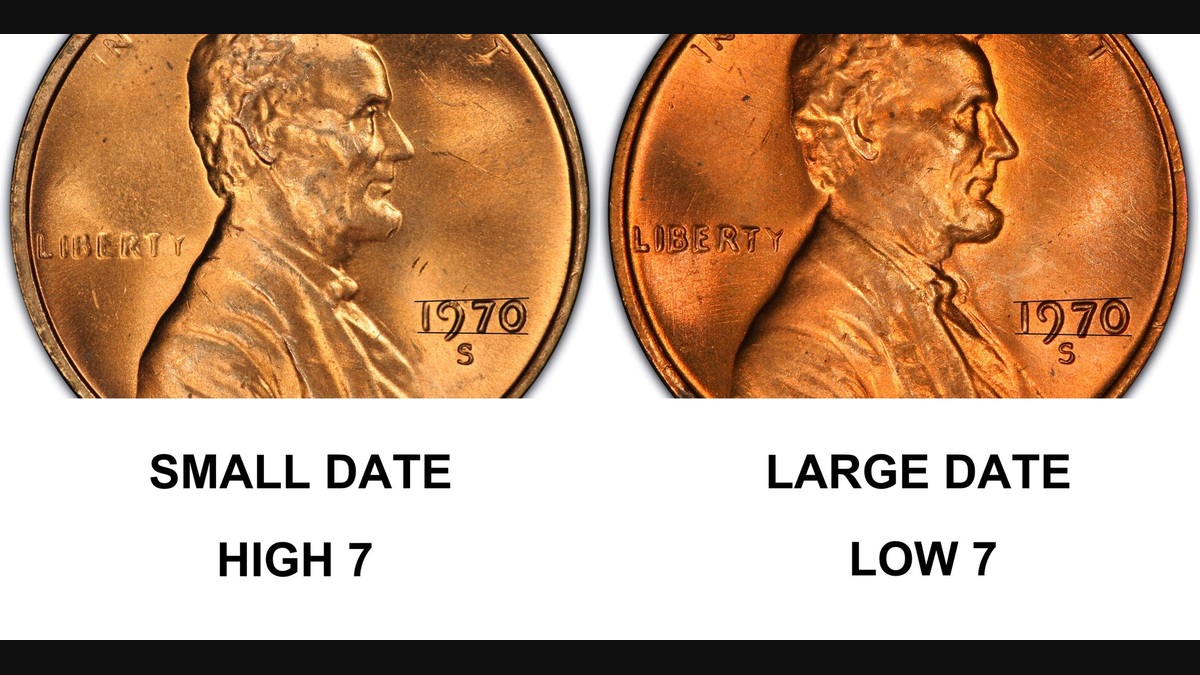
Why the 1970-S Small Date gets so much attention
Most 1970-S cents are ordinary Lincoln Memorial cents. The Small Date is different because the date was made with a distinct punch style. That makes it a variety collectors can attribute from repeatable visual markers—not a random post-Mint mark, a “floating roof” claim, or a worn-looking digit.
The search results for this variety are crowded with listings and short videos. That is exactly why the safest approach is diagnostic first, price second. PCGS lists separate CoinFacts entries for 1970-S Small Date regular strikes and proofs, as well as separate Large Date entries. Those separate entries are useful confirmation that collectors are looking at a recognized distinction, not a generic damaged penny.
Start with the right coin
Put the cent under direct light and photograph the date straight on. A phone in macro mode can work if it focuses cleanly; a loupe is better for inspecting the date. Do not judge from a blurry marketplace photo or a heavily edited image.
How to compare Small Date and Large Date safely
- Use a side-by-side reference. PCGS CoinFacts displays a date comparison on its 1970-S Small Date page. Compare the entire date, not one nick or dark spot.
- Inspect the shape and alignment of the numerals. The diagnostic is a date-style relationship. Wear, glare, plating bubbles, and contact marks can make a normal Large Date look unusual in a single photograph.
- Check more than once under different light. Rotate the coin slightly. A real numeral shape remains; a reflection or scratch changes character with the angle.
- Compare only like with like. Do not use an unrelated year, a proof photo to identify a worn business strike, or an auction caption as the only evidence.
What a scale can—and cannot—tell you
PCGS lists the 1970-S Small Date regular strike at 3.11 grams and 19.00 millimeters, with a plain edge. Those are normal bronze Lincoln-cent specifications. A scale may help identify a grossly altered or nonstandard piece, but it does not tell you whether the date is Small Date or Large Date. Date attribution remains a visual comparison job.
Proofs, business strikes, and why the distinction matters
PCGS has separate Small Date references for regular strikes and for proofs. The proof entry reflects the 1970 proof-set issue, while a regular strike is the circulation-style San Francisco issue. Their surfaces and production context differ, so compare your coin with a reference from the same category whenever possible.
This is also why a broad mintage number should not be presented as the Small Date population. The 1970-S total applies to the date/mint issue, not automatically to every variety or grade. Certified population reports and documented auction records are more useful than a one-number shortcut when a specific coin looks promising.
Before you spend money on attribution
- Keep the cent in the condition you found it; cleaning can permanently reduce collector appeal.
- Take clear obverse and reverse photos, including a close date crop.
- Compare against a known certified Small Date and known Large Date reference.
- If the coin still looks convincing, ask a reputable dealer or submit it to an established grading service for an attribution opinion.
- Use actual certified sales for value research. Asking prices are not realized prices.
Is a 1970-S Small Date penny automatically valuable?
No. Value depends on whether the variety is correctly identified, the coin’s condition, color designation, eye appeal, certification, and current demand. A certified Small Date can be collectible, but a claim in a listing is not the same as authentication. Treat dramatic online prices as leads to investigate, never as a guarantee.
1970-S Small Date FAQ
Does every 1970-S penny have the Small Date?
No. The Small Date is a distinct variety. Compare the date carefully with a reliable Small Date/Large Date reference.
Can I identify the variety by weight?
No. A normal 1970-S bronze cent should be near the standard 3.11-gram specification, but weight does not identify the date style.
Should I clean a dark 1970-S penny to see the date?
No. Use better lighting, magnification, or a clear photograph. Cleaning can damage the surfaces and lower collector value.