
Read the number and the words beside it
To read a banknote grade, keep the grading service, number and qualifier together. A qualifier is an added term about the paper, appearance or a stated problem. The same number with different words can describe a different condition. A seller's shortened title may leave out the part you need most.
Quick answer: Read the whole assigned grade. Keep EPQ, PPQ, Star, NET or DETAILS attached to the service that issued it. These terms do not add points to the number or supply a sale price.
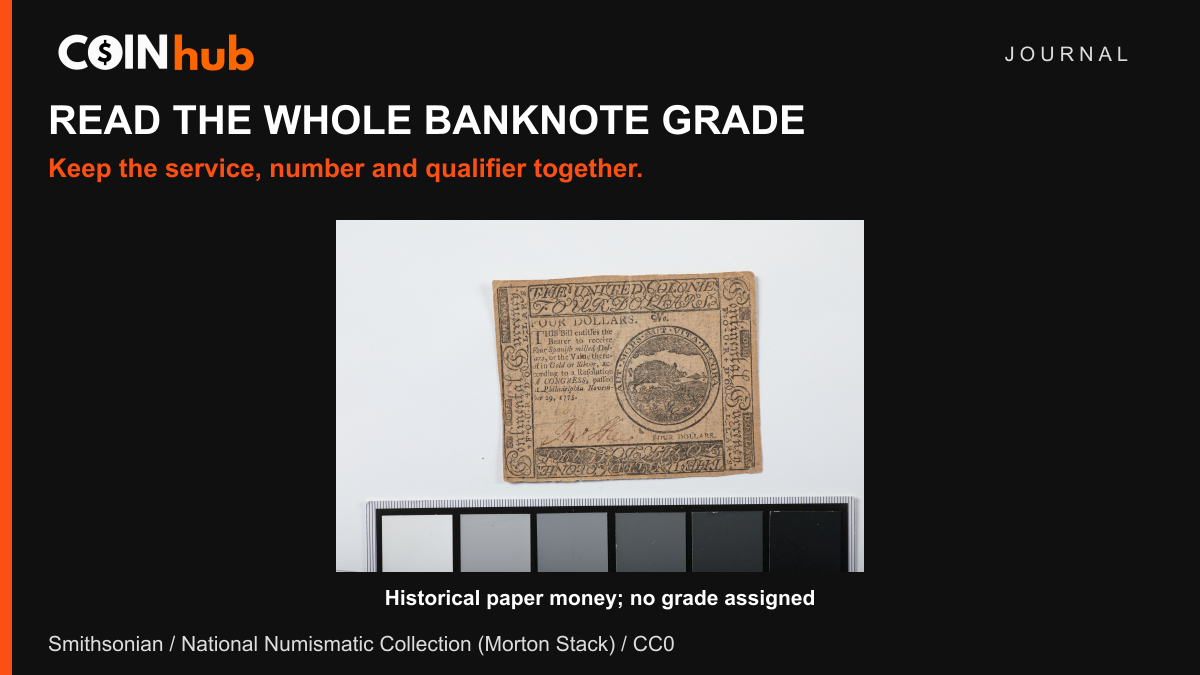
This guide helps you read a grade already assigned to a note. It does not assign a grade from a photograph. The historical note in the main image is an illustration; no grade is assigned to it here.
Where Uncirculated and AU meet
A banknote is a paper-money note. PMG and PCGS Banknote use a 70-point scale, but their lists do not assign every number from 1 to 70. Both list 60 through 64 as Uncirculated grades. Their listed About Uncirculated grades are 50, 53, 55 and 58; AU is the usual short form.
That makes a description calling 64 “About Uncirculated” worth checking. Open the actual service's standards rather than adopting a search summary or guessing from the number. See the PMG scale and PCGS Banknote standards.
Uncirculated does not mean every note looks alike. The services describe differences in margins, centering and handling within that group. Centering means where the printed design sits within the paper's edges. The grade needs those qualifications; counting one fold or spotting one corner issue is not a complete grading method.
EPQ and PPQ belong to their own services
PMG uses Exceptional Paper Quality, or EPQ, for paper its graders judge to be original. Notes graded 20 through 64 can qualify. EPQ is required for PMG grades of 65 and above. Thus, a number below 65 does not rule out EPQ.
PCGS Banknote uses Premium Paper Quality, or PPQ. Its standards allow PPQ from Very Good through Gem, and grades 65 through 70 require it. PCGS describes its own paper standards; PPQ is not automatic just because no small problem is listed.
Keep the wording as issued. Replacing EPQ with PPQ in your notes changes the service's description. Calling either one “extra grade points” also changes its meaning. Follow the linked service definitions when you need the full criteria.
Star, NET and DETAILS answer different questions
PMG Star recognizes exceptional eye appeal for the assigned grade. It requires EPQ, and PMG 70 requires both. This Star is a grading designation. The star printed in a replacement note's serial number is a separate subject, covered in CoinHub's star-note guide.
PMG NET flags serious problems beyond what the number can express. The problems are listed, and PMG's grade guarantee does not cover NET notes; they are guaranteed genuine only.
PCGS Banknote DETAILS can retain a number assessed apart from the stated problem. The label also names that problem. These notes are guaranteed genuine only. Do not erase the number because you have read a different rule for coin Details grades.
Try two fictional reading exercises
These examples are invented text records for practice. They are not photographs of certified notes, actual certificate numbers, sale listings or an appraisal. They do not say that two services' grades are interchangeable.
Example one: PMG 64 EPQ
The assigned number is 64. EPQ remains part of PMG's description. If you shorten the entry to “64,” someone reading it later cannot tell whether you forgot the paper designation or whether none was present.
Write “PMG 64 EPQ” in a field that can hold the full text. You have preserved what this practice label says. You have not turned the note into a 65, predicted a selling price or assessed another note that looks similar.
Example two: PCGS Banknote 64 DETAILS — tear
The number and problem must travel together. Recording only “64” loses the tear. Recording only “DETAILS” loses the number the banknote service assigned. Neither shortened entry faithfully preserves this fictional description.
This is a reading exercise, not a claim that every tear receives this number. A real label and the service's rules must supply the facts for a real note.
When a seller uses only condition words
You may see terms such as Crisp Uncirculated or CU without a grading-service number. Heritage's currency tutorial explains how it considers paper, folds, centering and appearance. Its descriptive vocabulary is not an automatic conversion to a PMG or PCGS Banknote number.
Write down the description and who supplied it. Leave an unassigned number blank. A crisp-looking surface does not by itself establish original paper: processing or repairs can change appearance. Do not wash, press or repair a note to pursue a different description.
For the next note you examine, read the complete grade aloud before saving it. If the seller's title drops a qualifier, compare it with a clear view of the actual label. Keep an unanswered question visible instead of filling it with a guess.