
Read the bidding screen before you commit
A coin can appear to fit your budget until the invoice adds the buyer’s premium and other charges. These five coin auction terms explain the numbers on the screen and the questions to resolve before pressing Bid.
1. Hammer price: the accepted winning bid
The hammer price is the bid at which the lot is sold. It is a starting point for the buyer’s bill, not necessarily the final amount paid. Heritage’s buyer’s-premium explanation separates this bid amount from the additional auction fee.
When you compare past sales, first determine what each reported result includes. A figure labeled “price realized” may follow a different reporting convention from a hammer-only figure. Record that convention beside each comparison instead of assuming two similar numbers measure the same thing.
2. Buyer’s premium: a fee added to the bid
A buyer’s premium is an additional charge paid by the buyer. A percentage is common, but a minimum charge can matter on an inexpensive lot. The amount and calculation depend on the auction’s terms; do not borrow a rate from an unrelated sale or an old article.
Stack’s Bowers’ online-bidding FAQ is an example of an auction source that specifies both a percentage and a minimum. Check the actual sale and bidding channel you will use, then write down the full cost formula.
3. Maximum or proxy bid: your ceiling under the platform’s rules
A maximum bid tells a proxy-bidding system how far it may bid on your behalf. It does not necessarily mean your current bid immediately jumps to that ceiling. Heritage’s bidding tutorial explains how its system responds to competing bids and reserves; it also explains that an earlier maximum wins a tie under its rules.
The important distinction is between what you are currently leading at and what you have authorized the platform to bid. Before entering a maximum, check whether the input is a hammer amount or an all-in figure. Never assume that the visible ceiling includes buyer’s fees.
For a practical check, imagine winning at your full maximum. Calculate that invoice first. If that outcome exceeds your planned spending, your proposed maximum is too high for that plan, regardless of how low the current bid looks.
4. Reserve: the minimum needed for a sale
A reserve is a minimum selling threshold. A leading bid may still fail to buy the coin if it does not meet that threshold. Stack’s Bowers’ terms describe reserves and the conditions governing its sales.
Look for a reserve indicator and read the platform’s explanation. “Highest bidder” and “sold to you” are different states when conditions remain unmet. An estimate is another separate number: do not assume it is the reserve, a guaranteed sale price, or a promise about future resale.
5. Bid increment: the permitted next step
A bid increment controls the step between bidding levels. It can change as the price rises. Stack’s Bowers’ online-bidding guidance explains its increment schedule and how maximum bids interact with the next competitive bid.
Before the lot closes, inspect the actual next bid displayed. A small-looking click can authorize a larger step than the previous one. Some platforms have special bidding options; use only the choices and limits explained for that sale.
Keep the five terms separate
| Term | Question it answers |
|---|---|
| Hammer price | What bid amount sold the lot? |
| Buyer’s premium | What auction fee is added? |
| Maximum/proxy bid | How far have I authorized the system to bid? |
| Reserve | Has the minimum sale threshold been met? |
| Bid increment | What is the permitted next step? |
A short check before your first bid
- Confirm the lot number, currency, photographs, and exact coin description.
- Read the premium, minimum fee, and applicable tax and delivery terms.
- Check the payment deadline, accepted methods, and sale-specific return conditions.
- Calculate a possible invoice at your full intended maximum, including known charges.
- After bidding, read the confirmation and current status; do not infer success from the button click alone.
Auction vocabulary does not replace examining the coin. Our PCGS and NGC label guide helps with holder descriptions, while our coin valuation guide explains the wider identification and comparison process.
Does the seller receive the entire price you pay?
Do not infer seller proceeds from the buyer’s invoice. The seller’s agreement is a separate arrangement. For your own bid, focus on the amount you may owe and the coin you are actually buying.
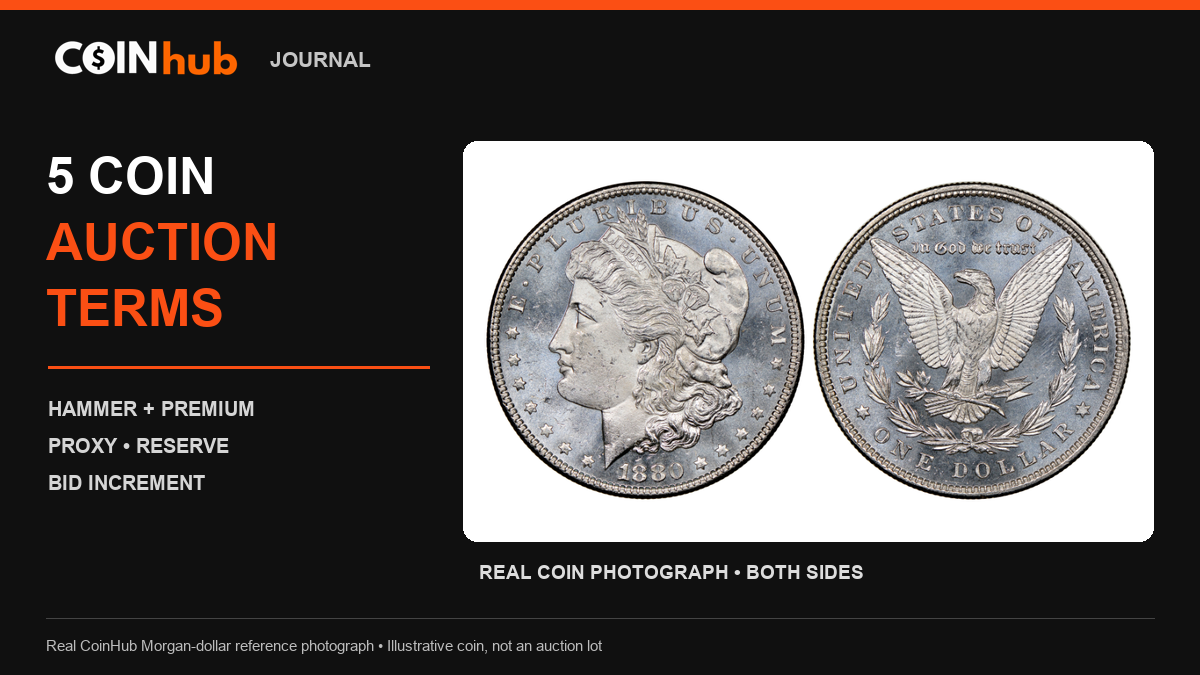
Auction-house sources linked above were checked September 12, 2026. Rules and fees vary by sale and may change. The 20% example is hypothetical. The real Morgan-dollar photograph is illustrative and does not represent a listed lot, estimate, grade, or sale result.