
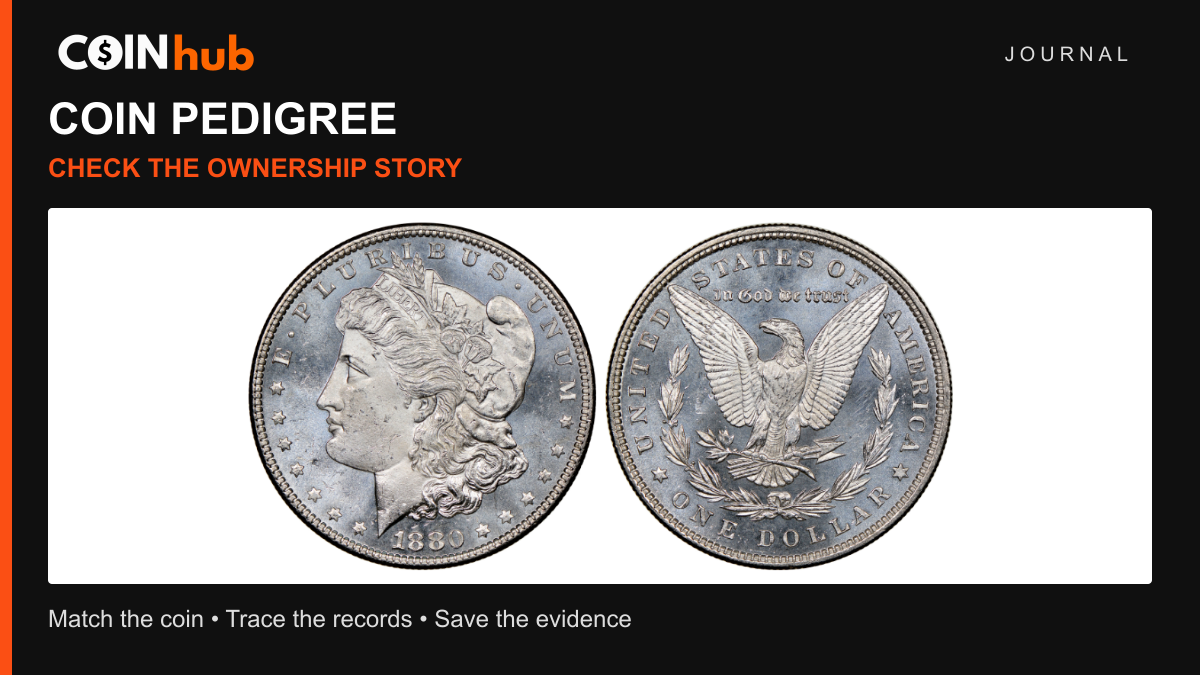
Follow the evidence behind a collection name
“From an important collection” sounds persuasive. The useful next question is specific: which collection, and what connects this exact coin to it? Treat the story as a research question you can document, not an extra grade printed beside the coin.
Separate ownership history from presentation
NGC’s pedigree policy distinguishes evidence for a famous previous owner from a submitter’s request to add their own collection name. For earlier ownership, examples of acceptable evidence include a match to an auction-catalog photograph or an appropriately identified sealed holder from a reputable firm. A personal collection name is a different kind of claim.
NGC also uses some pedigree notations for hoards, sets or events. Read what the particular notation means. Its policy notes that many pedigrees add no premium and that pedigree attributions are not covered by the NGC Guarantee. These limits make the underlying records worth keeping.
For the rest of a slab’s information, start with our PCGS and NGC label guide. Here, the task is narrower: checking the evidence behind the ownership story.
Request a record you can actually locate
Ask for the auction house or catalog author, sale title or number, sale date and lot number. Request a link to the original archive entry when available. A screenshot of a search result or a dealer’s repeated description may help locate the record, but it is not the same as the original entry.
Keep the claimed chain in order. If the story says “Collection A, then Collection B, then this sale,” each transition is a separate link to check. One confirmed recent lot does not establish every earlier name in the description.
Match the individual coin, not just its issue
Two coins can share a date, mintmark and grade. That broad identity is a useful first filter, but it is not an individual match. Compare both sides in the best available photographs. Look for a consistent combination of visible features: the placement of marks, an identifiable rim feature and other stable details. Take account of different lighting, camera angle and image quality.
For example, imagine two photographs of an 1880 Morgan dollar. Both show the right date, but a mark near a star appears in only one image. You cannot settle the question from that difference alone: one photograph may conceal it. Seek a better image or another independently recorded feature. The example is hypothetical; the Morgan dollar pictured above carries no claimed famous pedigree.
Do not add scratches, clean a surface or open a holder to create a “better match.” When the photographs cannot support a confident conclusion, preserve that uncertainty and ask an experienced numismatist to review the evidence.
Keep a compact evidence file
| Record | What to save |
|---|---|
| Coin identity | Date, mintmark, denomination, attribution and full current holder description |
| Earlier appearance | Original archive URL, auction firm, sale date and lot number |
| Image comparison | Both-side photographs and brief notes about matching or unclear features |
| Ownership claim | Exact collection name and who supplied the supporting record |
| Unresolved link | The missing document or photograph, clearly marked unverified |
Retain your purchase invoice and original tickets with the collection records. Keep a backup of your notes and lawful copies of the supporting material. If you later sell the coin, pass on relevant provenance evidence while removing private payment or contact information that the next owner does not need.
Does a pedigree increase value?
PCGS’s pedigree discussion explains why links to notable collectors can interest later owners. That interest varies by the person, the coin and the buyer. It does not create a universal percentage to add to a price guide.
Compare the underlying coin first. Then look for actual market evidence that buyers pay extra for the particular documented association. Keep a seller’s prestige language separate from a completed sale. If the premium is substantial and the chain is uncertain, resolving the evidence is more important than rushing to secure the name.
What should I call an unverified family story?
Record it as a family account, with who told you and when. Preserve any supporting envelope, letter or photograph. That retains potentially useful history without upgrading memory into a documented chain of ownership.
Does a valid certification number prove the entire story?
Read exactly what the grading service’s record identifies. A matching number is useful evidence about that certification; do not expand it into a claim about undocumented earlier owners. A collector’s evidence file and the certification record answer related but different questions.
Sources checked September 13, 2026. This guide offers a collecting-record workflow. It asserts no pedigree for the illustrative coin and gives no guaranteed price premium.