
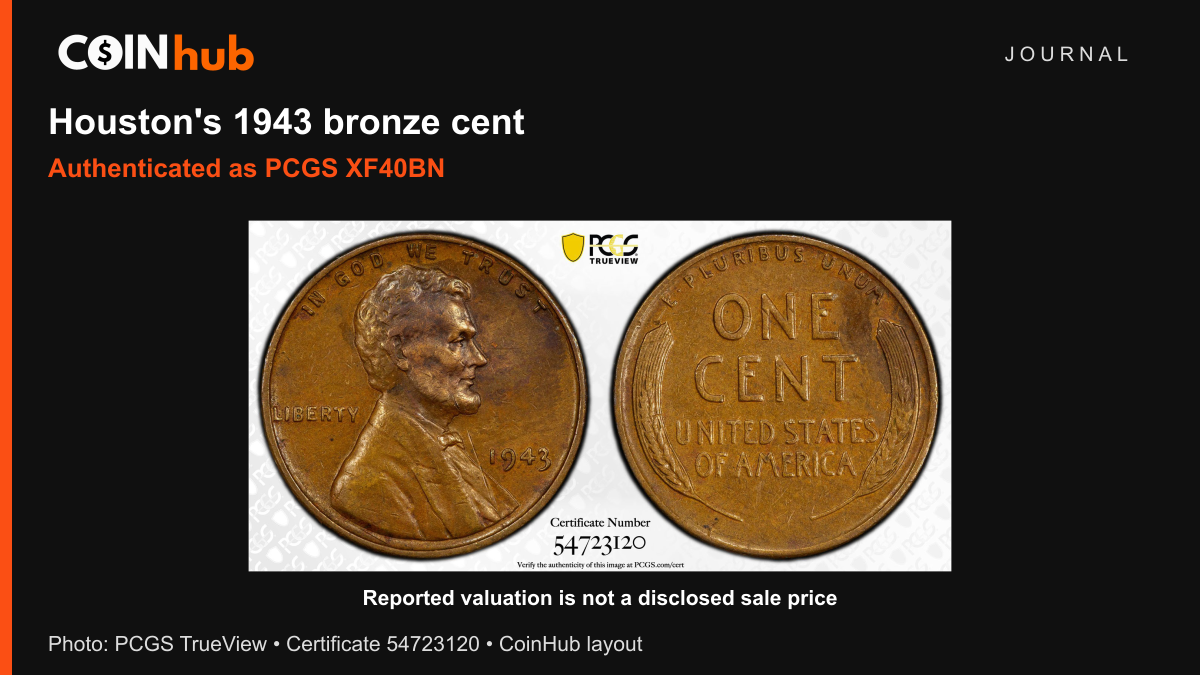
A 1943 bronze Lincoln cent held by a Houston-area family for more than 60 years has been certified by PCGS. U.S. Coins and Jewelry bought the coin. The reported grade is XF40BN, with certificate number 54723120. The report gives it a value of $235,000. It does not say what the dealer paid.
That distinction matters. This is news about one known coin. It is not evidence that an ordinary 1943 penny is worth the same amount, or that this specimen sold for the figure in the headline.
What the announcement establishes
The dealer's October 5 announcement on PCGS says the family bought the coin in the early 1960s. Houston appraiser Alvin L. Stern helped arrange certification before U.S. Coins and Jewelry acquired it. PCGS researcher Charles Morgan said this example did not appear in the modern lists of known examples he reviewed.
The American Numismatic Association reported the acquisition on September 30. October 5 is the PCGS article's date. It does not tell us when the coin was found. The announced Houston display was due to begin October 3; anyone planning a visit should check the viewing hours with the shop.
Keep three records separate: the coin's identity, the reported valuation and the sale. The report gives the first two. It does not give the price paid.
How to read XF40BN
PCGS's grading glossary uses XF40 for Extremely Fine 40. This is a circulated grade. BN means brown, a color designation used for copper and bronze coins; it is not an abbreviation that proves the metal is bronze.
Copy the full designation when making a record. Dropping the letters, confusing a color label with a metal test, or calling this coin uncirculated would change the meaning of the evidence. The photograph above shows the specific PCGS TrueView image identified by certificate 54723120.
What the $235,000 figure does—and does not—tell you
Record the amount as the stated value. Leave the sale-price field blank or mark it “not disclosed.” Do not turn a valuation into an auction result, a dealer offer or a promise of what another coin would bring.
For example, a collection note could read: “Houston specimen; PCGS XF40BN; certificate 54723120; reported valuation $235,000; purchase price not disclosed.” That short entry preserves the useful information without filling the gap with a guess.
Nor should another 1943 cent inherit this coin's identity from a similar color or photograph. A date match is only one part of a comparison. Keep your own coin's observations separate from this coin's record, and seek qualified examination before claiming a rare metal error.
The useful next step for collectors
Save the source link with the coin's PCGS number. If the coin appears in a later sale, match that later listing to this specimen before using its price in your notes. Our guide to reading PCGS and NGC labels explains how to compare a holder, its online record and the physical coin.
For a broader introduction to mint errors, I also wrote The CoinHub: An Ultimate Guide to Coin Errors. It is optional background reading, not a substitute for authenticating an individual coin.