
A solidus is a gold coin first issued under the Roman emperor Constantine I in the early fourth century. It continued in the eastern Roman, or Byzantine, world for centuries. The familiar standard was about 4.5 grams, but a useful coin description also needs a date, mint, design and exact source.
The plural is solidi. A museum label that says “gold solidus” names a kind of coin. It does not by itself tell you which emperor issued it, who appears on the front or what a collector would pay today.
A gold standard with a long history
The University of Warsaw's solidus reference traces the new coin to Constantine's early reign, with a start date of 308–309 or, at the latest, 312. It gives a standard of 72 coins to a Roman pound, about 4.55 grams each. The new coin spread over time; it did not replace every earlier gold issue everywhere on one date.
That history helps explain why solidi can look quite different. The coin stayed in use as rulers, images and lettering changed. Coins from the fourth and seventh centuries can share the name without sharing the same portrait or reverse design.
For an early example, the Met records a gold solidus of Constantine I dated 313–315 CE. Its measured weight is 4.47 grams. Keep that number attached to that museum object, 2025.830.1, rather than making it a rule that all solidi must match.
What about half and third pieces?
This system also had smaller gold coins. A semissis was half a solidus, and a tremissis was a third. The names show how the coins relate to the whole unit. They are not modern price ratios for rare coins.
- One solidus: the whole unit.
- Two semisses: two halves make one solidus.
- Three tremisses: three thirds make one solidus.
For example, six tremisses had a face value of two solidi. That does not mean six surviving tremisses should sell today for the same amount as two surviving solidi. The issue, wear and proof that a coin is real all matter. So does the evidence behind a sale.
Read the photographed coin as two sides
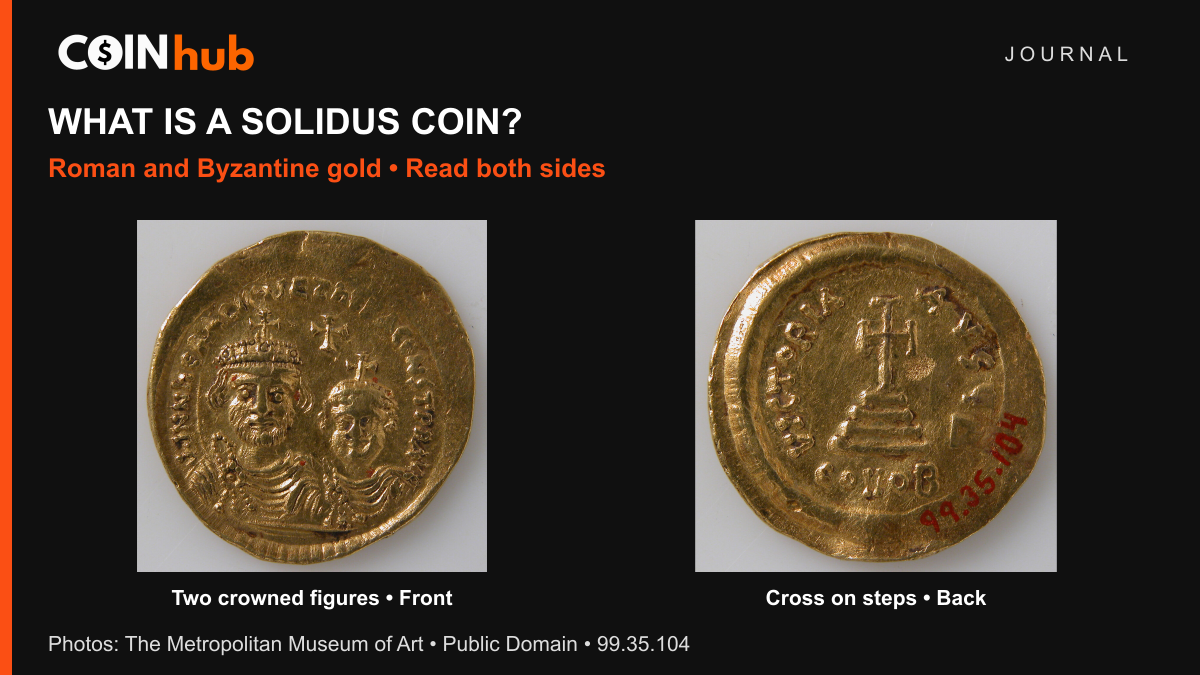
The coin pictured above is Met object 99.35.104, a Byzantine gold solidus dated 613–641. The museum lists dimensions of 2.1 by 0.1 centimeters. Those numbers describe this object. The large photos on this page do not show actual size.
On the front, two crowned figures appear side by side. One is larger and bearded. A cross appears above the space between them, with lettering around the edge. On the back, a cross rises above steps. More letters appear around and below it.
Those are details you can see in the photos. They are a useful first description, but reading the figures' names or naming a mint needs a matching source. A cross or crown alone is not enough to identify a whole issue.
You can also see the museum's red collection number near the lower edge of the back photo. That modern painted mark is not part of the coin's struck letters. Note both in your record. Reading them as one set of ancient letters would lead you astray.
Compare a different solidus
The Met's solidus of Phocas, dated 602–610, gives us a close match in date. The museum names its mint as Constantinople. Its front shows a bearded emperor wearing a crown with a cross. Its reverse shows an angel holding Christian symbols.
That differs from the two figures and cross-on-steps pair pictured here. Both museum records use the denomination solidus, but the two designs help tell them apart. Looking only for “a gold coin with a cross” would miss that difference.
When comparing a coin to an online record, check both sides before naming the type. Note the number of figures, what they hold, the reverse design and readable letters. Leave faint details unresolved rather than filling them in from a similar photograph.
A coin can become part of another object
Gold coins also appear in surviving jewelry. A Met essay on a sixth-century pectoral, a chest ornament, describes twelve solidi and two tremisses mounted in it. The same essay distinguishes ordinary coin denominations from large gold medallions made as official gifts.
The distinction matters when reading a museum display. A mounted coin may have begun as money, while another round gold object belongs to a different category. Shape and metal alone do not establish denomination or intended use. Use the object's full description, including any later setting or modification.
Keep weight, coin type and price separate
“About 4.5 grams” is useful historical context. It does not prove that a coin is real. A scale cannot name a ruler or mint. It cannot explain every worn or cut edge, or prove that a matching object is ancient. Keep the measured weight and the name in the catalog as two separate facts.
CoinHub's ancient coin identification guide covers the broader comparison process. For a solidus, begin a record with the metal description, weight, diameter, both designs and the exact reference you used. Mark what you measured yourself and what belongs to the museum's coin.
Finally, historical denomination and present collector value answer different questions. A solidus was a unit in its own system of money. Today's sale price belongs to one coin and one sale. Name that coin as closely as you can before you compare past sales. If a detail is still unclear, say so in the record.