
A stater is an ancient coin denomination whose metal and weight depend on where and when it was made. The name can describe gold, silver or electrum coins. Electrum is a mixture of gold and silver. A label that says only “Greek stater” leaves out much of the information you need to understand the coin.
Start with three questions: What is the metal? Who issued it? Which local weight system did that issue use? Those details help explain why two genuine coins called staters can look quite different. They also prevent a common mistake: treating every stater as a gold coin with one fixed weight.
Why the name does not give one weight
Ancient Greek coinage came from many cities and rulers. A denomination was a named unit in a monetary system. A weight standard was the target weight system used to make those coins. The name and the standard belong together; neither tells the full story alone.
The Münzkabinett in Berlin explains that a stater was a principal unit in the system of a city or kingdom. Its entry notes that the term can apply to different silver denominations in Athens and Corinth. The familiar gold stater on the Attic standard, at about 8.6 grams, is one use of the name—not a rule for all staters.
That distinction matters when reading a sales label or an old collection envelope. “Stater, 8.6 grams” may suggest a useful line of research, but the number alone does not identify the issuing authority, date or type. Nor does a different weight prove that a coin is false.
Three museum records show the range
These examples are records of specific objects. Their dates and measurements should stay attached to those objects. A museum's measured weight is not automatically the official target for every coin of that type.
| Recorded example | Metal and date | What the record tells us |
|---|---|---|
| Amphipolis, Met 05.44.384 | Gold; about 323/2–315 BCE | 18 mm diameter; no weight supplied in the cited entry |
| Miletos, Cleveland 2000.203 | Electrum; 600–550 BCE | Measured weight of 13.964 grams |
| Lampsakos?, Berlin 18200111 | Electrum; about 460–440 BCE | 15.23 grams and 21 mm; mint attribution includes a question mark |
The Cleveland Museum of Art's Miletos stater has a lion on one side and punched depressions on the other. The Berlin example shows the front part of a winged horse. Its museum title leaves the mint uncertain. Keep that question mark when citing the record; removing it would make the identification sound firmer than the source does.
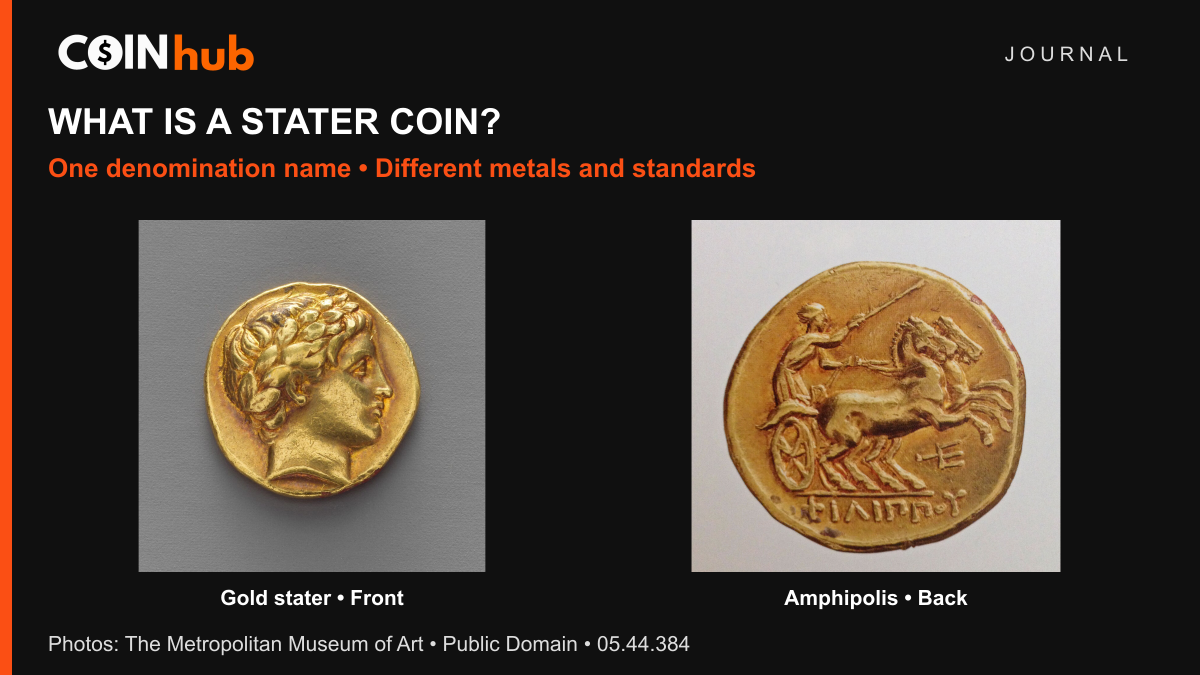
The gold coin pictured above belongs to The Metropolitan Museum of Art. The museum assigns it to Amphipolis in the years just after Alexander the Great's death. Its entry points to the trident beneath the horses as a mint clue. These are details of this issue, not features that every stater must have.
Read the photograph without guessing
The front photograph shows a head facing right with a wreath. The back shows a chariot and horses, with lettering below. Both sides have irregular edges and visible surface detail. Those observations give you a starting record before you attach a ruler's name or a date.
Now separate what is visible from what the museum supplies. “Head facing right” is a visual observation. “Amphipolis, about 323/2–315 BCE” is an attribution from the object record. “18 mm” is the museum's stated diameter. You cannot measure that diameter from the enlarged screen image.
This small exercise is useful for any unfamiliar ancient coin. Write down the visible features first, then add the source-backed identification. If a letter or symbol is unclear, say so. A gap in your notes is more useful than a confident guess that sends later research in the wrong direction.
What to record for a coin in hand
Use a short record that keeps observations, measurements and references distinct. Photograph both sides in even light, with the entire edge visible. CoinHub's ancient coin identification guide covers the broader process; the list below focuses on the details most likely to get lost behind the word stater.
- Exact label: Copy the stated mint, ruler, date range and any uncertainty marks.
- Metal: Record the catalog description. Color in a photograph alone does not establish an alloy.
- Weight and size: Record your measurement separately from a reference coin's figures.
- Both designs: Note the direction of a head or animal, readable letters and small symbols.
- Source: Save the full object or catalog reference, rather than only an image from search results.
When comparing records, match several features together. A similar horse or portrait can be a clue without being a complete match. Do not force a coin into the first listing with a similar picture. If the evidence remains unclear, keep the identification provisional.
Does “stater” tell you what a coin is worth?
No single modern price follows from the denomination. The word covers different metals, issuing authorities and periods. A price for one named type is not a price guide for all coins bearing the same broad label.
Before making a value comparison, establish the specific issue and describe its condition honestly. Then compare records for that issue, paying attention to whether they show an asking price or a completed sale. This guide does not supply a price estimate or authenticate a coin from a photograph.
The most useful first step is simple: expand “stater” into a fuller description. Metal, issuing place, date range and the source of the identification turn a broad name into a record you can check. Keep uncertain details visible, and let the evidence determine how precise that record becomes.