
A tetradrachm is a coin denomination worth four drachms in its historical monetary system. The silver “owl” of Athens is a famous example. But tetradrachm names the denomination, not one design: other issues show different gods, rulers and symbols.
That gives a collector two separate questions to answer. What is the denomination? And which city, ruler or issue produced this particular coin? Recognizing an owl helps with the second question, but it does not settle every detail.
Four drachms in one coin
The Getty Museum describes its Athenian tetradrachm as a four-drachma coin. Drachm and drachma are forms of the name for the smaller unit. In that system, two tetradrachms represented eight drachms. That is denomination arithmetic, not a statement about today's collector prices.
The Met's account of Athenian silver coinage places the introduction of the tetradrachm around the end of the sixth century BCE. It describes a relatively large coin suited to high-value transactions. This was money for a particular ancient economy; converting its name directly into modern dollars would hide more than it explains.
The Athenian owl, front and back
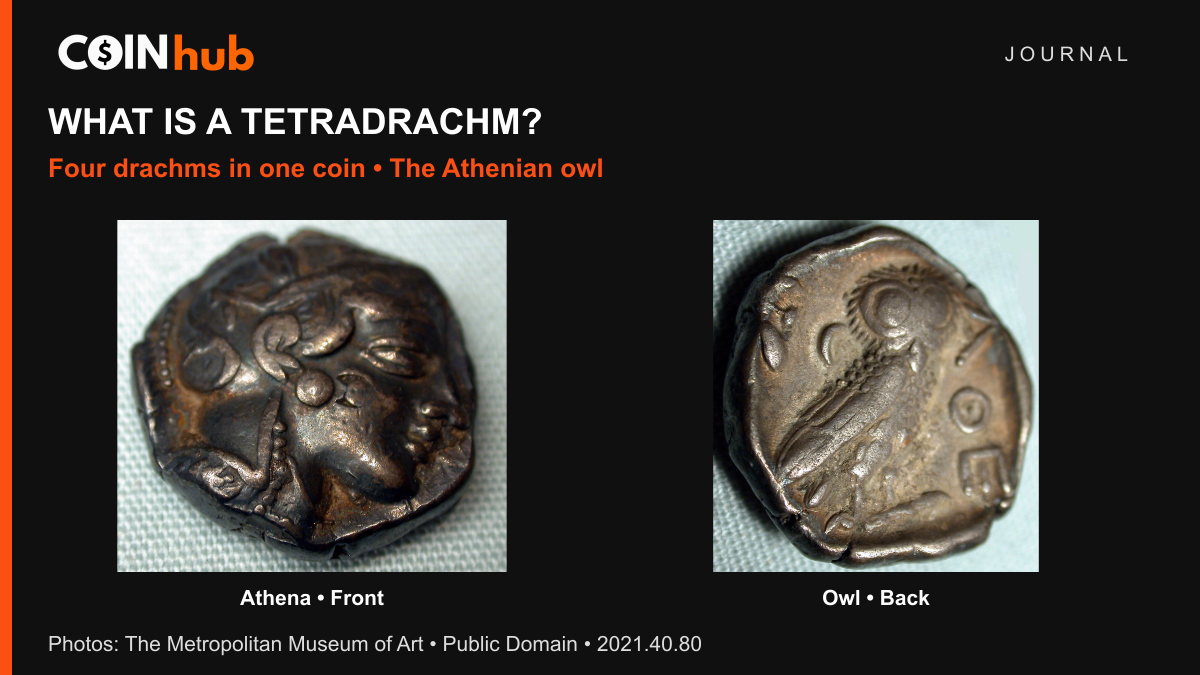
The coin pictured above is Met object 2021.40.80, dated about 440–404 BCE. The front bears Athena's head. She was the city's patron goddess. Her owl appears on the other side. The museum lists the coin as silver and gives a diameter of 24 millimeters.
Look at the photographs as a pair. On the front, the head faces right and wears a helmet. On the back, the owl's face looks toward the viewer while its body is turned to the side. Lettering appears beside it. The metal has an uneven outline and areas of dark and bright surface color.
Those visible details are useful to record, but the photograph is enlarged. It cannot tell you the coin's actual diameter by itself. Nor does surface color establish silver purity. Keep the museum's measurements and metal description separate from what you see on a screen.
Not every owl belongs to the same period
The Getty example offers a useful comparison. Its record dates the coin to 182–181 BCE, much later than the Met coin above. The owl stands on a sideways storage jar called an amphora, within an olive wreath. The Getty identifies a magistrate's name among the reverse inscriptions.
The two records therefore describe the same broad denomination and the same city's familiar imagery, but different issues. A match on “Athena and owl” is a starting point. The layout, added symbols, letters and the source's date range help you go further.
Do not transfer the date from one museum record to every owl coin you see. If an inscription is too faint to read, leave that part unresolved. A clear description of the features you can see is more reliable than a precise date borrowed from a merely similar image.
A tetradrachm without an owl
Another Met tetradrachm, object 05.44.388, shows Herakles on the front and a seated Zeus on the back. The record associates it with Alexander III of Macedon and the mint at Pella. It dates the coin to 315–308 BCE and lists its diameter as 2.7 centimeters.
This example breaks the link between the denomination name and the owl design. The word tetradrachm alone does not mean Athens. It also does not mean that any head on the front must be a portrait of the ruler named in the catalog. Here, the museum identifies the head as Herakles.
Read the design description along with the title. A catalog can name an issuing authority in one line and a god or hero shown on the coin in another. Both can be correct. Combining them into one guessed portrait identity loses that distinction.
Build a comparison that you can check
For an unfamiliar coin, begin with both sides and then compare the full record. CoinHub's ancient coin identification guide explains the wider process. These four notes make a useful starting sheet for tetradrachms:
- Design pair: Write down what is on each side. “Athena and owl” differs from “Herakles and seated Zeus.”
- Small details: Note readable letters, objects below the main design and symbols beside it.
- Specific reference: Save the museum object number or full catalog entry, including any uncertainty.
- Measurements: Keep the coin's recorded size and weight separate from the dimensions of a reference specimen.
The museum entries used here do not provide a complete weight table for the denomination. Their individual diameters are not universal size limits. Avoid declaring a coin genuine or false because it falls near one number in a short guide.
Historical face value and collector value
Four drachms tells you the named value within the relevant system. It does not give a modern sale price. Before comparing prices, identify the issue as closely as the evidence allows and distinguish asking prices from completed sales.
The same care applies to condition. A photograph may show worn lettering or a missing part of the design, but this guide cannot authenticate an object in hand. Record what is clear, preserve what remains uncertain, and compare the whole coin rather than one familiar owl.