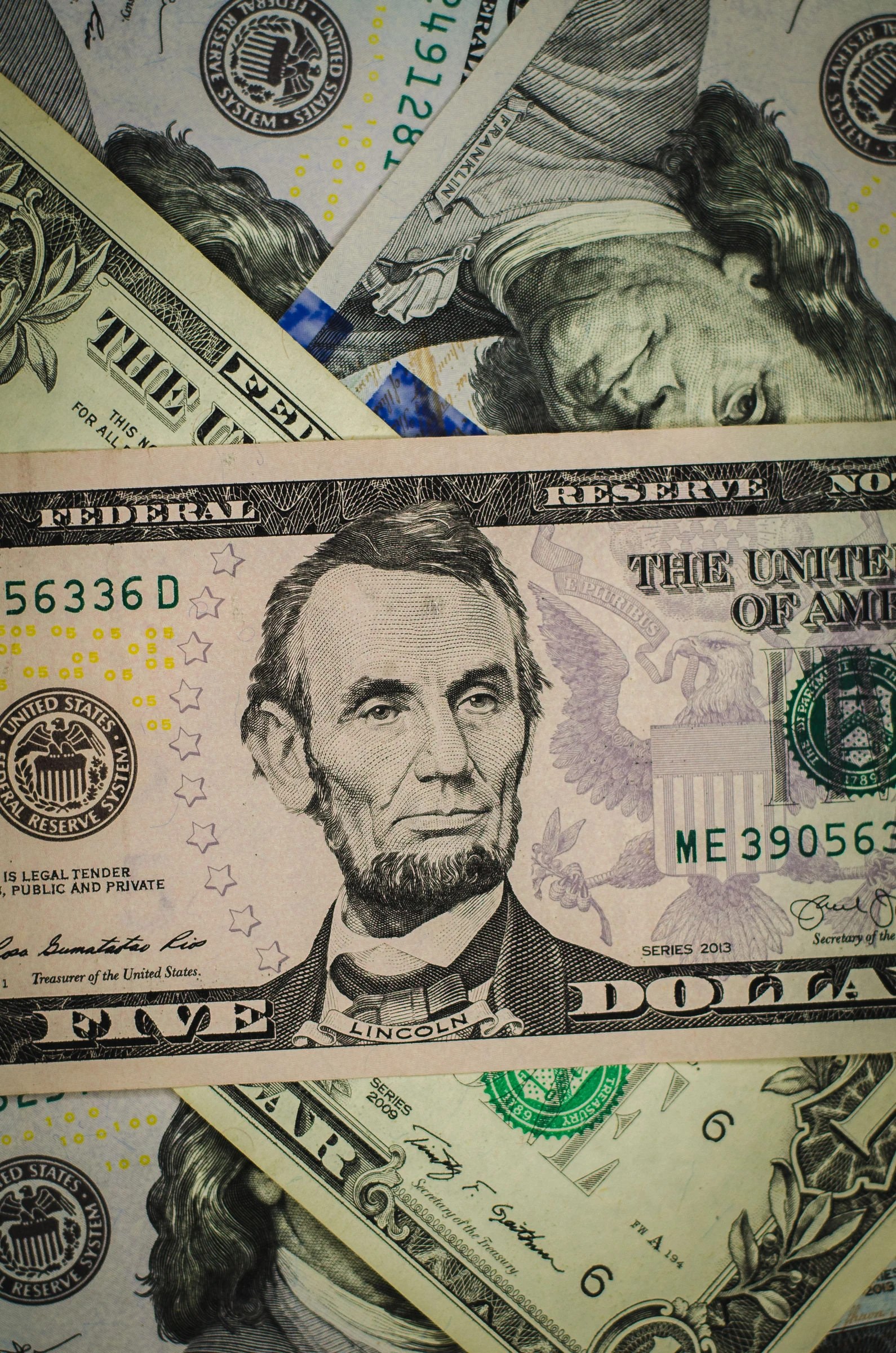
Shifted seals and serial numbers
A shifted overprint is out of place against the main design. The serial numbers or seals may overlap areas they should not touch. The portrait and other design details can still look centered.
Check both sides and the paper's edges. A shifted main design can make correctly placed serial numbers look wrong. Uneven borders alone do not tell you which printing moved. A cutting error is another possibility.
The $5 list includes a Series 1969C note graded PMG 58 EPQ with shifted third printing. No sale price is quoted for it. Its grade identifies that specimen; it does not grade another bill.
Mismatched serial numbers
A mismatch means the two serial numbers on the same note do not agree. Compare every digit and letter. Errors can come from the numbering equipment or from how the number sequence was set.
A made-up reading exercise: A12345678B and A12345679B differ in the final digit. This is a text example, not a photographed note or a real sale. A repeating pattern that appears the same in both places is a different subject.
One Series 1985 $5 mismatch, graded PMG 65 EPQ, sold at Heritage for $600 on December 30, 2020. That past result is for one specific note. It is not a price for every mismatch.
Read the full mismatched serial number bill guide for star-note examples and dated sales.
Upside-down seals and serial numbers
An inverted overprint has serial numbers and seals upside down against the portrait. It can result when a sheet faces the wrong way during that printing step. It differs from an inverted back, where the main back design is upside down against the front.
Check where the numbers are and which way they face. A shift changes position. An inversion changes orientation. More than one error can appear on a note, so record each visible feature.
A Series 1988 $5 example graded PMG 67 EPQ also had a cutting error. It sold at Heritage for $810 on August 31, 2025. Keep that extra error and the full grade with the sale record.
A series date or star is not an error
The series marks an approved design or signature change. It is not the exact date the note was printed. A star in the serial number marks a replacement note. Neither feature alone shows a printing error or sets a collector price.
These clues help you describe a note. They do not prove it is genuine or unaltered. Keep an uncertain finding marked as unconfirmed rather than guessing at an error or price.
PMG is a grading service. EPQ means Exceptional Paper Quality. See CoinHub's guide to full banknote grades. For the short dated examples, return to the $5 bill error list. For paper-related mistakes, read about printed folds and gutter folds.