
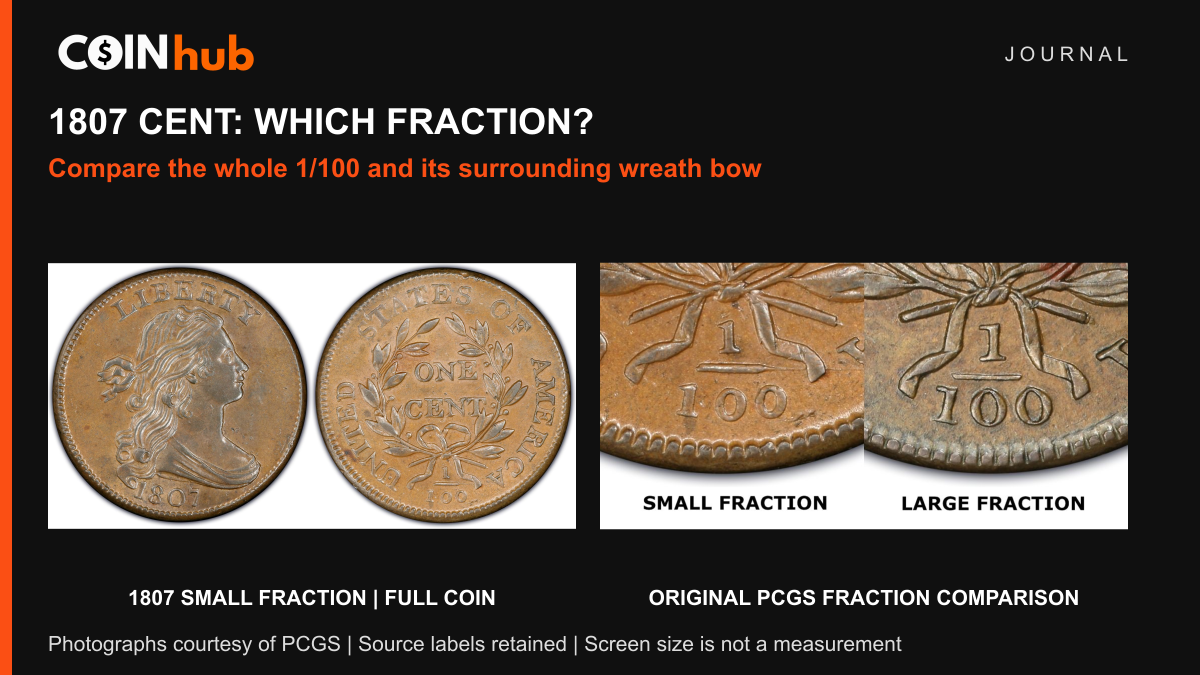
Compare the 1/100 on the back
To separate an 1807 Small Fraction large cent from a Large Fraction example, compare the complete 1/100 below the wreath. Use the numeral shapes, fraction bar and surrounding bow together. The date alone does not tell the two forms apart, and the apparent size of a cropped online photo can mislead you.
The main graphic pairs a complete PCGS example with PCGS’s labeled reverse comparison. The full coin is a Small Fraction example. The comparison shows the two fraction designs; its labels are part of the original source photo. Equal panel sizes in our graphic are not measurements of the coins.
What the fraction means
The fraction states the cent’s denomination as one hundredth of a dollar. Both types are one-cent coins. “Small” and “Large” describe cataloged differences in that reverse feature, not different face values or amounts of copper.
PCGS lists Small Fraction and Large Fraction separately within the Draped Bust cent series. Its references give both a listed weight of 10.89 grams and copper as the metal. A scale cannot tell these two designs apart.
Use the bow as a fixed point
Start at the bow below ONE CENT, then move down to the fraction. Keep that surrounding area in the photo. Compare the full outline of the upper 1, the bar below it and the lower 100 with the labeled reference. Do not enlarge one crop until the numerals happen to look the same size as the other.
It helps to compare equal areas of the reverse. A tightly cropped Small Fraction photo can appear larger on a screen than a loosely cropped Large Fraction photo. Screen size is an editing choice; the relative design and punch shapes are the evidence.
| Check | What to compare | What it does not settle |
|---|---|---|
| Fraction family | The complete 1/100 and its relationship to the bow. | The exact die pair. |
| Date | The whole 1807 date on the front. | Small Fraction or Large Fraction by itself. |
| Overdate | Documented evidence of a 7 over a 6. | A conclusion drawn only from the fraction. |
| Surface condition | Wear, corrosion, scratches and possible alterations. | A guaranteed grade or selling price. |
Keep fraction size separate from Small 7 and Large 7
The 1807 series also includes 1807/6 overdates, cataloged with Small 7 and Large 7 descriptions. Those labels refer to the date area. They are not alternative names for Small Fraction and Large Fraction.
The PCGS series overview lists the overdates, fraction varieties and Comet variety separately. Keep two separate notes: what you see in the date, and what you see in the fraction. Avoid turning one match into a conclusion about the other side.
A fraction match is the beginning of attribution
A Sheldon number names a more specific early-cent die pair. PCGS’s S-274 record is one named Small Fraction example. The broad family name is only a first step toward a full die-pair match. Check the other front and back details before you add that number to your notes.
The CoinHub Variety Attribution Assistant can keep the date, side and feature in one place. Use its result as a clue for study. It does not prove a Sheldon number or that a coin is real. Our die-marriage guide explains how to compare both dies.
Save the evidence before comparing values
Keep full front and back photos, the lower-reverse closeup and the exact reference URL. If wear hides a digit or the bow, say so. Never scrape the surface to uncover a line. Use a different light angle or a clearer photo instead.
Once the die-pair match is secure, compare actual sold coins with similar condition and surface problems. A high price for a high-grade coin does not set the value of a worn or rough find. The fraction name is just one detail. Is the coin real? What is its grade? How do its surfaces look?
Photos courtesy of PCGS CoinFacts, used with permission. The complete Small Fraction reference and original labeled comparison are resized without changing coin details. No current price or count of this variety is claimed. A photo check alone does not prove a coin is real.