
Read the reverse before the mintmark
The 1861 Paquet reverse double eagle has tall, narrow letters on its back. The normal reverse has shorter, broader letters. Both show an eagle and shield, so the design can look much the same at first. Start with the lettering, then check the stars above the eagle.
A double eagle is a U.S. gold coin with a face value of $20. Paquet names a reverse design by engraver Anthony C. Paquet. It does not describe a coin struck twice. The Philadelphia and San Francisco Paquet issues also need to be kept separate.
Two separate questions: The reverse tells you whether the coin has the Paquet design. A small S below the eagle identifies San Francisco. The S alone does not make an 1861 double eagle a Paquet.
Compare the letters, stars and border
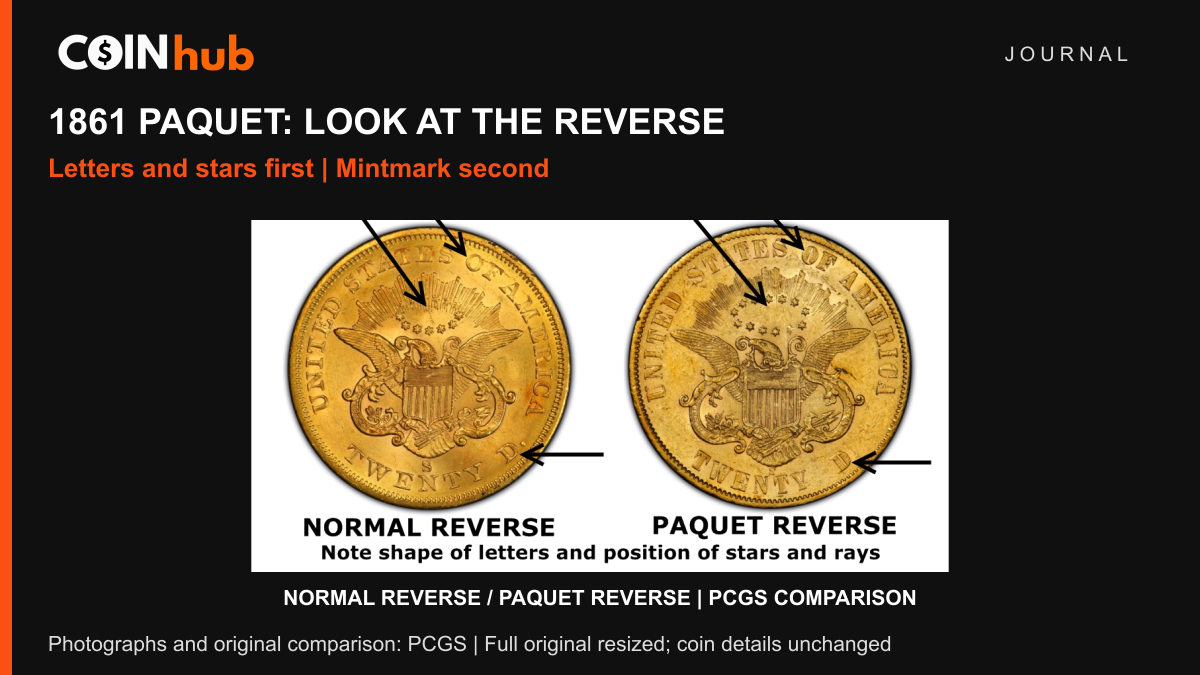
Turn to the reverse, the back of the coin. Read UNITED STATES OF AMERICA and TWENTY D. On the Paquet design, those letters look stretched upward and thin. On the normal design, they look more compact. Compare the whole inscription rather than one worn letter.
Next, look at the group of stars above the eagle. On the Paquet reverse, the upper stars sit clear of the rays above them. On the normal reverse, the top of the star group runs into those rays. PCGS illustrates these differences in its photographic reverse comparison.
| Feature | Normal reverse | Paquet reverse |
|---|---|---|
| Letters | Shorter and broader | Taller and narrower |
| Stars above eagle | Upper stars meet the rays | Upper stars clear of the rays |
| Border | Broader border | Narrow border; wear can hide detail |
The photograph shows normal and Paquet reverses side by side. Its original arrows point to useful areas, but a matching shape in one area is only a starting clue. Wear, glare and a small sales image can hide the very details you need.
Why the S matters after the reverse check
On these coins, look below the eagle and above the denomination for the mintmark. An S means San Francisco. A Philadelphia issue has no mintmark. The normal reverse also appears on 1861-S coins, so an S and the correct date do not settle the attribution.
PCGS lists the two Paquet issues separately: 1861 Philadelphia, catalog number 8933, and 1861-S, catalog number 8936. Those numbers identify catalog entries. They are not a grade or a certificate for a coin in your hand.
The Philadelphia entry lists two known survivors. That statement does not apply to every 1861-S Paquet. Nor does it apply to an ordinary 1861 double eagle. Moving a famous rarity claim from one issue to another is an easy way to misread a sales listing.
A planned design change, not an extra strike
Paquet prepared a revised reverse for the double eagle. The Mint then returned to the normal design amid concern about the narrow border. The Stack’s Bowers coin reference explains how the San Francisco issue entered circulation before the change was stopped there.
This makes the Paquet a design variety. A variety is a repeatable difference in the tools used to make coins. It is different from an accidental extra strike on one finished coin. A similar eagle on the back does not erase the change in lettering and star placement.
Also keep a date’s total production apart from a variety’s production. The Philadelphia CoinFacts narrative says the number of Paquet pieces originally struck is unknown. A large mintage figure for the date must not be presented as a verified count of that rare reverse.
Make a useful identification record
Photograph the whole front and back. Add clear close-ups of the reverse letters, star group and mintmark area. Use gentle light from more than one angle. Our coin loupe guide explains how to inspect small details without relying on extreme magnification alone.
The CoinHub Variety Attribution Assistant can help organize the date, mintmark and visible clues. It cannot authenticate a Paquet, confirm its catalog number or replace an expert’s examination. If the evidence is unclear, record what you can see and leave the attribution open.
Keep the coin as it is. Do not polish the letters or scrape around the mintmark to make a detail stand out. Before a purchase or a major value claim, seek specialist authentication and check any existing certification against the actual coin. A photograph of a rare reference does not establish the identity or value of another piece.
Photograph: PCGS reverse comparison, from its 1861-S Paquet CoinFacts entry, used under CoinHub’s saved PCGS photograph permission. The complete original comparison, including its arrows and labels, is retained. CoinHub added the surrounding layout and branding; no coin details were changed. Historical market estimates and old auction records are not quoted as current prices.