
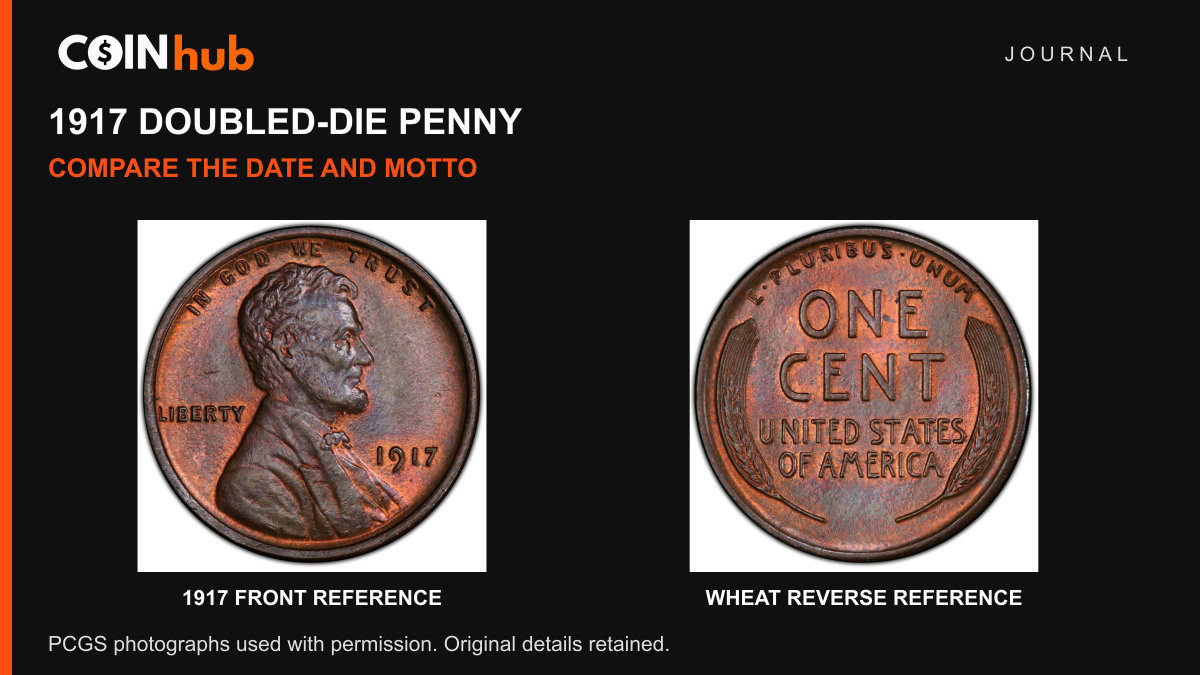
Start with the date and the motto above Lincoln
The 1917 doubled-die penny known as FS-101 shows a repeated design on the front. Compare the date and IN GOD WE TRUST with clear reference photos. A thick digit, a bright edge or a blurry phone image alone does not establish this variety.
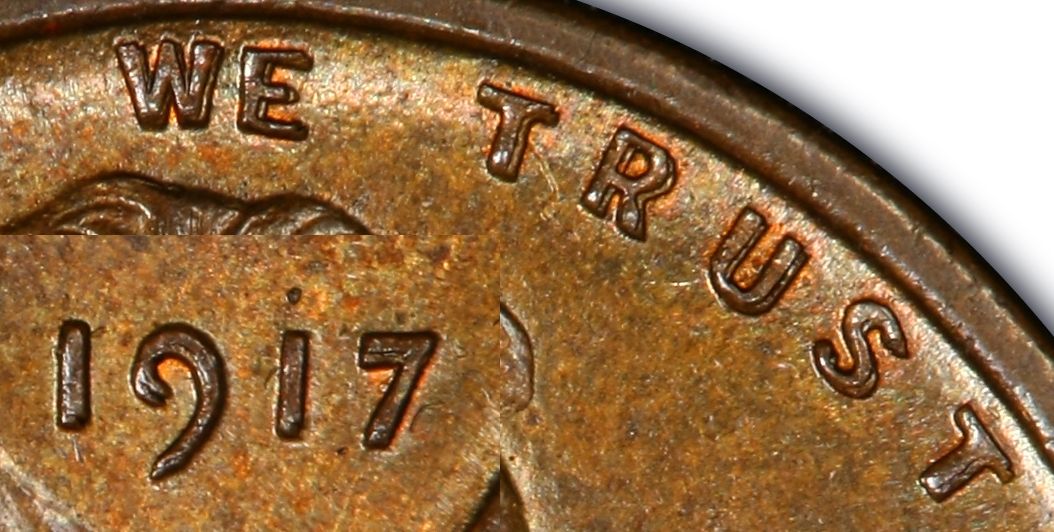
The key is a pattern in specific places. The PCGS reference for the 1917 doubled-die obverse includes a close view of the date and motto. Obverse means the front, which is the side with Lincoln. FS-101 is a catalog label for this particular die variety, rather than a grade.
What the real reference shows
In the close view below, look along the lower edges of the date digits. Then follow the motto above the portrait. Compare the shape and direction of the repeated edges, rather than looking for any mark that might resemble a second line.
PCGS also lists certified FS-101 examples in its image catalog. Those references help keep the variety tied to a known design. A photograph of one certified coin does not certify a different coin that looks similar.
Wear and light can hide a fine edge. If the date is too worn to compare, record that limit. Do not scratch, polish or clean the area to make a second outline appear. An uncertain result is a useful result when the evidence is poor.
A doubled die is different from two strikes
A die is the steel tool that stamps a design into a blank coin. A doubled die has a repeated part of the design on that tool. Coins struck from it can carry the same repeated features. The term does not mean that each coin was struck twice.
NGC's comparison of doubled dies and machine doubling explains a common look-alike. Machine doubling happens during striking and can leave a low, flat shelf beside a design. The two effects can also occur on the same coin, so one flat shelf does not settle every other feature.
Use that distinction to guide your comparison. A random scrape beside a digit is not a matching die design. Glare can also create a bright second-looking edge that changes as the light moves. Keep the original photo and take another view with the light coming from a different direction.
Make a record before assigning a name
- Photograph the whole front and back, with the date and any mint mark readable.
- Take separate, sharp views of the date and IN GOD WE TRUST.
- Compare the same letters and digits with the reference, at a similar angle.
- Write down what matches, what does not match and what wear or glare hides.
For organizing those notes, CoinHub's Variety Attribution Assistant can help narrow a research path. It does not confirm FS-101, authenticate a coin or assign a grade. A possible match still needs a qualified review before it becomes a sale claim.
Keep the variety separate from grade and price
Grade describes a coin's condition. Attribution identifies a die variety. A worn coin can have a real variety, while a sharp ordinary coin can lack it. Copper color labels describe another part of the coin's appearance; they are not different doubling patterns.
Do not apply an ordinary 1917 issue's total mintage to the FS-101 variety. The large date-issue figure on a catalog page is not a count of coins struck from this doubled die. Likewise, a survival estimate is an estimate, not a measured census of every coin still held by collectors.
If you later research value, match the exact variety, grade, surface condition and dated completed sale. Asking prices and a result for a much finer coin are not an offer for your example. This guide makes no current price claim.
For another reference comparison, see the 1936 FS-101 cent guide. Readers who want a broader introduction can also consider CoinHub founder Blake Alma's own book, The CoinHub: An Ultimate Guide to Coin Errors. The article's identification steps stand on their own.
References and photographs checked October 22, 2026. PCGS photographs used with permission; complete coin faces and original close-view details retained. A reference comparison does not establish another coin's authenticity, grade or value.