
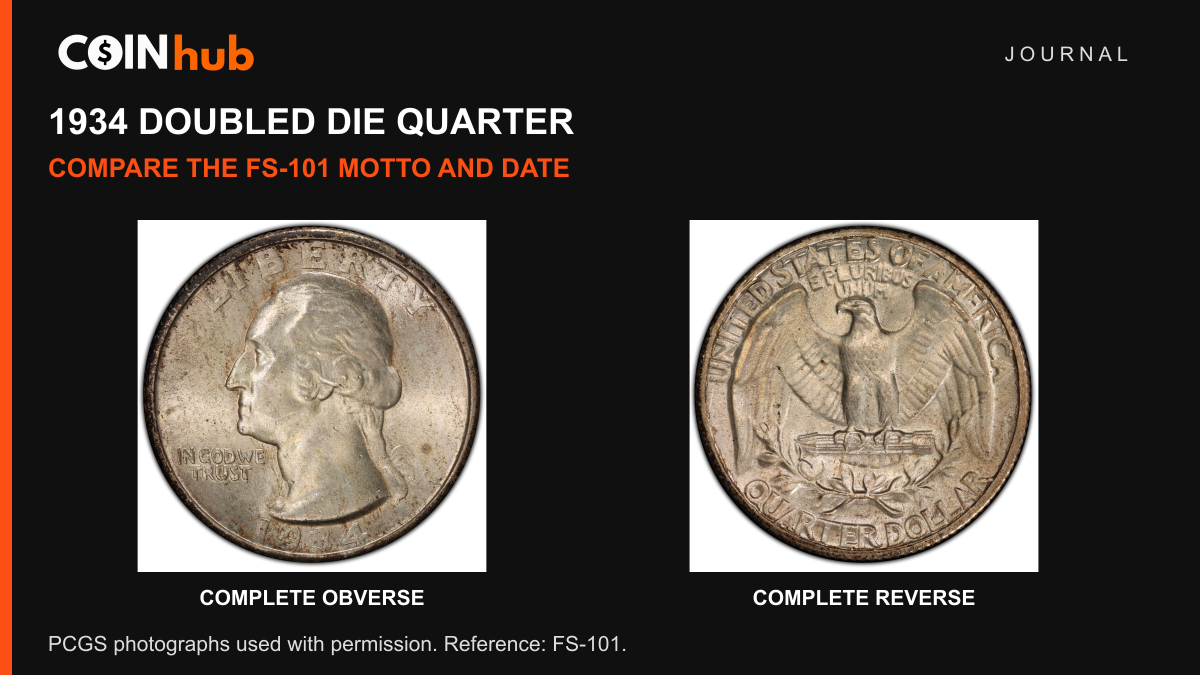
The 1934 doubled die quarter FS-101 shows extra detail on the front, most clearly in IN GOD WE TRUST. Compare the motto, LIBERTY and the date together. This Philadelphia coin has a Medium Motto obverse, or front. Medium Motto describes the lettering style; it does not mean that every quarter with that style is a doubled die.
Start at the motto beside Washington
Hold the portrait upright and find the two-line motto to the left of Washington's neck. On the genuine PCGS reference above, the letters have distinct extra edges. Check the whole phrase. One thick-looking letter is not enough.
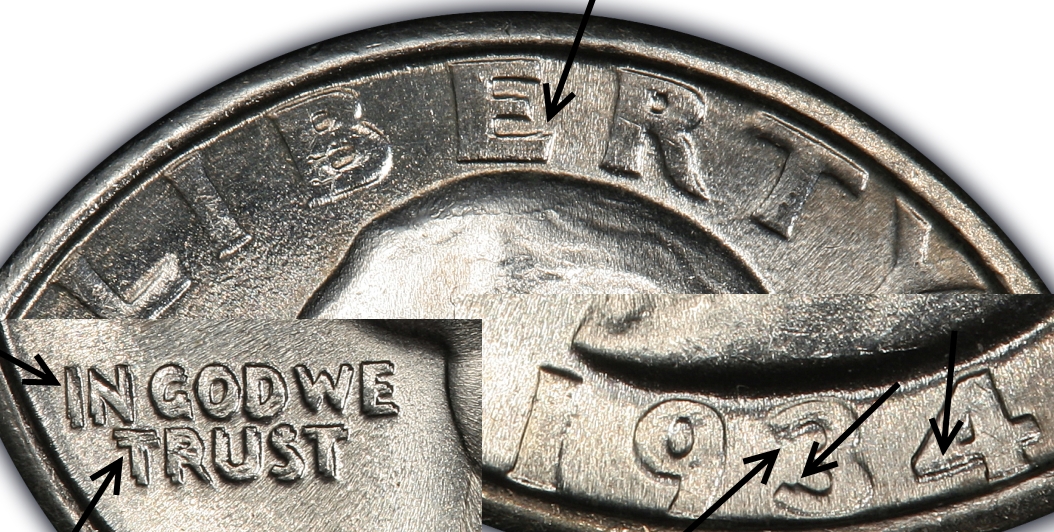
The NGC VarietyPlus entry for 1934 Doubled Die Obverse identifies the motto, date and LIBERTY as the places to check. NGC calls these clues diagnostics. Its note also names the Medium Motto design.
Compare three areas on the same coin
First compare the motto with the supplied detail. Then look above the portrait at LIBERTY, and the extra edge below the E in the close-up. Finally, inspect the complete 1934 date below the bust. PCGS's original arrows point out repeated edges in these areas. Match both the place and shape of each extra edge.
The montage is a set of close-ups. It does not show a second full face or a new coin type. Keep your own complete obverse photo alongside any close-ups so the feature can be placed back on the coin.
Keep the catalog names together
| Reference | Name for this variety |
|---|---|
| Fivaz–Stanton | FS-101 |
| Older Fivaz–Stanton number | FS-009 |
| CONECA | DDO-001 |
| NGC VarietyPlus | VP-001 |
NGC lists those cross-references together. DDO means doubled die obverse. The PCGS FS-101 entry uses coin number 5900 and identifies Philadelphia as the mint. These names help you find the same die in each catalog. They do not give a grade or price.
NGC also lists a separate 1934 Medium Motto DDO as VP-002, or DDO-002. A claim of doubling on a 1934 coin is not enough to call it FS-101. Record the full reference, including the year and denomination; FS-101 appears on other coins too.
A doubled die differs from a second strike
The duplicated detail of a doubled die is in the die that strikes the coin. A double strike is an additional striking event. Machine doubling and wear of a die can also produce extra-looking edges, so the word doubled in a sale title does not name the cause.
NGC's guide to varieties keeps doubled dies separate from strike doubling and die wear. Our double strike versus doubled die guide explains those causes with a different documented specimen.
Make a record before making a price comparison
Save both complete faces, then close views of the motto, LIBERTY and date. Note any wear or damage that hides a clue. Use ordinary light from another direction if glare hides an edge. Do not clean or scrape the lettering to sharpen the evidence.
The Variety Attribution Assistant can help narrow the kind of feature and show which areas to check next. It cannot confirm a doubled die or assign an FS number. If the match is not clear, say so and seek a closer look.
Before using a sale as a value reference, match the exact variety, grade and surface condition. The number of quarters made that year is not a count of FS-101 coins. One high-grade sale is not a price for every piece. This guide helps you check the coin; it does not give a current value.
Sources and photograph credit
References checked October 23, 2026. Whole-coin photo and supplied diagnostic montage: PCGS CoinFacts 5900, used with permission. The source labels the hero specimen MS64. Complete coin faces are proportionally framed; original details, colors and source annotations are retained. No grade is assigned here to a reader's coin.