
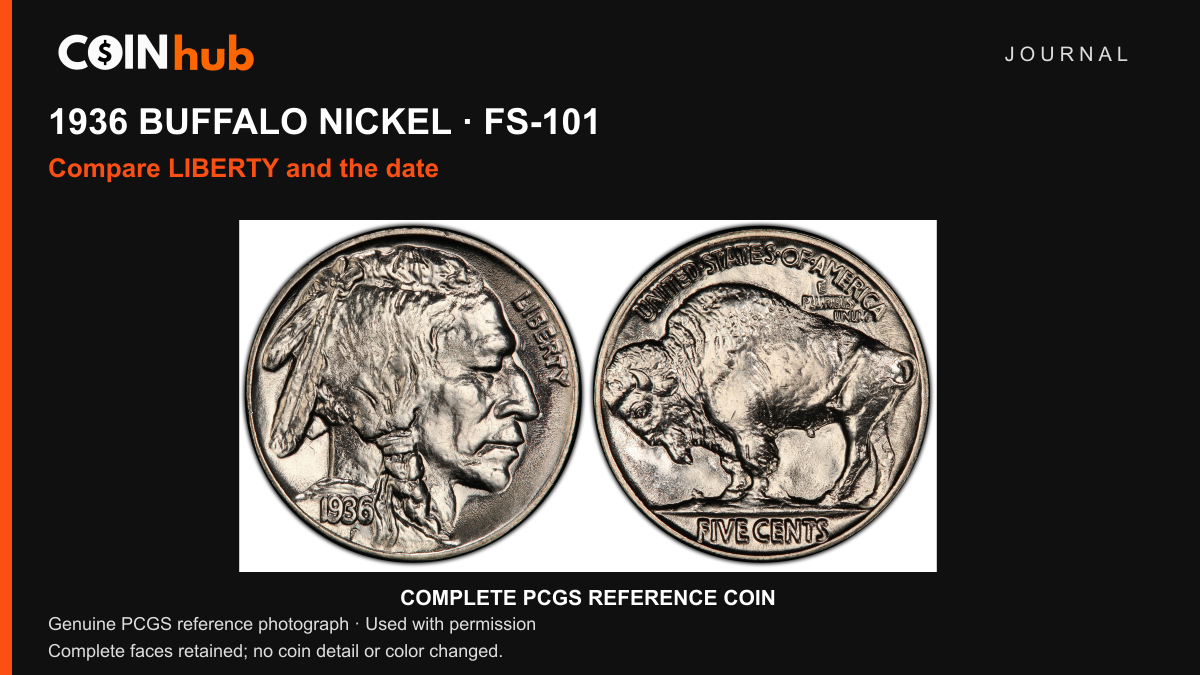
The 1936 Buffalo nickel FS-101 doubled die shows extra thickness in LIBERTY and the date. Those are the two places to compare first. A wide-looking digit alone does not establish the variety, especially when wear or glare hides its shape.
Start with the whole coin, then move closer. PCGS catalogs this as a 1936 regular-strike doubled die obverse. Obverse means the front, with the portrait and date. The photograph here shows a recognized reference; it does not identify or grade another coin you own.
Read LIBERTY and 1936 as one pattern
Find LIBERTY along the upper right edge of the portrait side. Then move to the date near the lower left. GreatCollections describes the FS-101 pattern as strong extra thickness in those two areas. Its record also gives the older label FS-018.7 for the same variety.
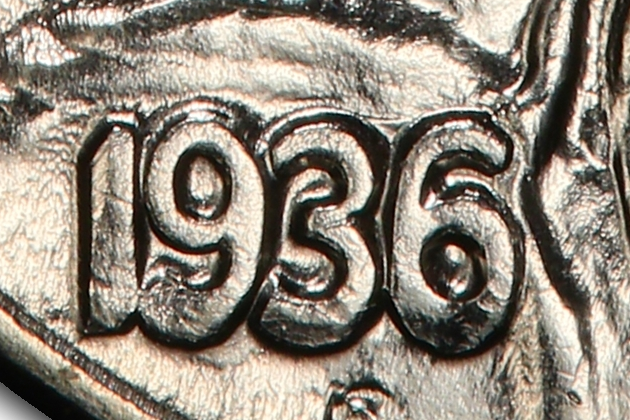
Keep the reference facing the same way as your coin. Compare the shape and position of the thickened strokes across several letters and digits. Do not judge from brightness: a raised edge can catch light strongly in one picture and almost disappear in another.
For your own photos, keep one full front view and one full back view. Add separate close-ups of LIBERTY and 1936 under steady light. Save the first files before making any crops. A second lighting angle can help show whether an apparent extra edge belongs to the metal or to a reflection.
The full label matters more than FS-101 alone
DDO means doubled die obverse. FS-101 is a reference label, not a grade or a dollar value. Write down the year and coin type with it. The same number appears in other parts of the coin catalog.
For example, CoinHub's 1916 doubled die Buffalo nickel is a different date and a different variety. Our 1936 FS-101 penny guide concerns a Lincoln cent, not this nickel. A search for the number alone can send you to either one.
The three-legged bison is a separate check on the back of a different issue. Do not use a faint leg to confirm this front-side doubling. If a photo hides the date or the needed lettering, leave the attribution open rather than filling the gap with a familiar variety name.
Why a flat shelf needs a different explanation
A die is the steel tool that presses a design into the coin. A doubled die carries the repeated design before striking. Coins made with that die can repeat its features. This does not mean that each coin moved and was struck a second time.
NGC explains that strike doubling can instead leave shallow, flat extra edges when a die moves during withdrawal. Such an edge is not enough to assign a doubled-die label. Compare the complete known pattern, including both LIBERTY and the date, rather than accepting every doubled-looking outline.
Wear can blur the very areas you need. Cleaning or polishing to expose them can change the surface and make the next review harder. Photograph the coin as found. If you cannot see enough detail to compare, “possible variety, not confirmed” is a useful record.
Make the next check specific
The CoinHub Variety Attribution Assistant can organize the date, denomination, side and feature you want to examine. It cannot confirm this doubled die or assign an FS number. Keep the reference link with your photographs so a specialist can see which match you are proposing.
Before comparing sales, confirm the variety and assess the actual coin's condition. The reference coin's holder grade is not your coin's grade. A high-grade auction result, an asking price and an offer for a worn, unverified nickel are different kinds of evidence.
For broader reading, CoinHub founder Blake Alma's The CoinHub: An Ultimate Guide to Coin Errors is an optional book by CoinHub's own author. Use the exact variety references above for this identification.
Primary references and genuine PCGS photograph checked November 4, 2026. Historical auction prices, current population totals and a variety mintage are not asserted. The date close-up comes from the same complete reference photograph; CoinHub added framing and labels without changing the coin.