
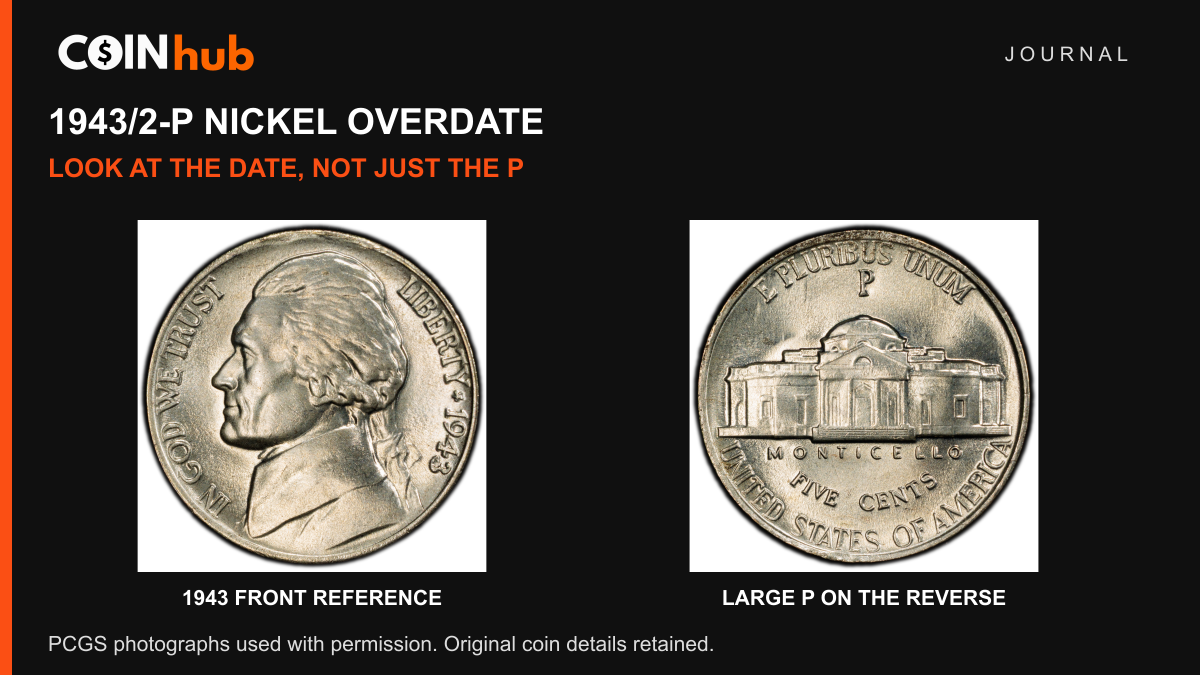
A large P identifies the issue. The date identifies the overdate.
The 1943/2-P nickel is a Jefferson nickel with traces of a 2 beneath the final 3 in its date. Start with a readable 1943 date and the large P above Monticello on the back. Then compare the final digit with a genuine overdate close-up. The P alone does not establish this variety.
That distinction makes the search more useful. A normal 1943-P wartime nickel and an overdate can share the same large mint mark. You need evidence in the date before adding “1943/2-P” to your notes.
Read the whole coin before enlarging the 3
The obverse, or front, carries Jefferson’s portrait and the date. The reverse is the back, with Monticello and its large P. The complete reference photograph above preserves both views so the small feature stays tied to the right coin.
PCGS lists the overdate separately from the ordinary 1943-P issue. Its reference gives the wartime alloy as 56% copper, 35% silver and 9% manganese. Silver content and variety attribution are separate questions: an ordinary silver wartime nickel does not become an overdate because of its metal.
Compare the small traces around the final digit
Look at the 3 under modest magnification and steady light. Compare the position and shape of the extra detail with the source close-up below. You are looking for remnants of the earlier date in a known pattern, rather than any lump or line near a numeral.
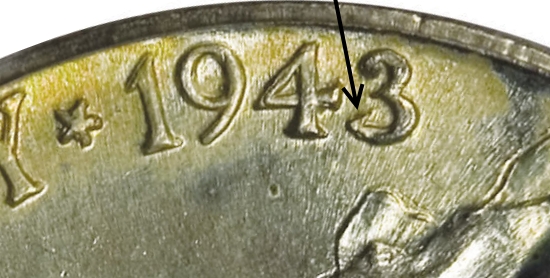
A dark edge in one image can be a shadow. A bright line can be glare. Move the light, keep the coin still and make a second image. If the important area remains blurred or worn, record that limit. A possible match is a reason for closer review, not a finished attribution.
How two dates reached one die
A die is the steel tool that strikes a coin’s design. A hub helps transfer that design into the die. In NGC’s wartime-nickel history, David W. Lange explains that this overdate resulted from hubs bearing different dates being used to make a die.
The mixed detail was therefore in the tool before it struck the coins. It was not a worker changing the date on each nickel. Nor is the name evidence that a completed 1942 coin was stamped again as a 1943 coin. Keep that process separate from a scratch or other later damage.
Keep three different checks apart
- Overdate: compare the final digit of 1943 with the documented 1943/2-P reference.
- Doubled Eye: this is another named 1943-P variety. An unusual eye does not answer the date question.
- Full Steps: this concerns the staircase on the reverse. It is a separate designation, not the name of the overdate.
The PCGS Full Steps overdate entry illustrates that separate combination. CoinHub’s Full Steps guide explains the step terminology. Do not shorten a variety number and a step designation into the same vague label.
Save observations before seeking an opinion
Keep full photographs of both sides and a clear date close-up. Note which feature appears to match and which part you cannot see. Leave the surface as it is; rubbing or scraping a digit can destroy the detail you want someone to inspect.
The CoinHub Variety Attribution Assistant can help organize a research question by date, side and feature. It cannot confirm this overdate or authenticate a coin. If an attribution would affect a purchase or sale, seek a qualified assessment and compare the exact variety, grade and surfaces.
Reference photographs and primary explanations checked October 21, 2026. PCGS photographs used with permission; original coin details and source arrow retained. No current price, variety mintage or grading outcome is implied by these images.