
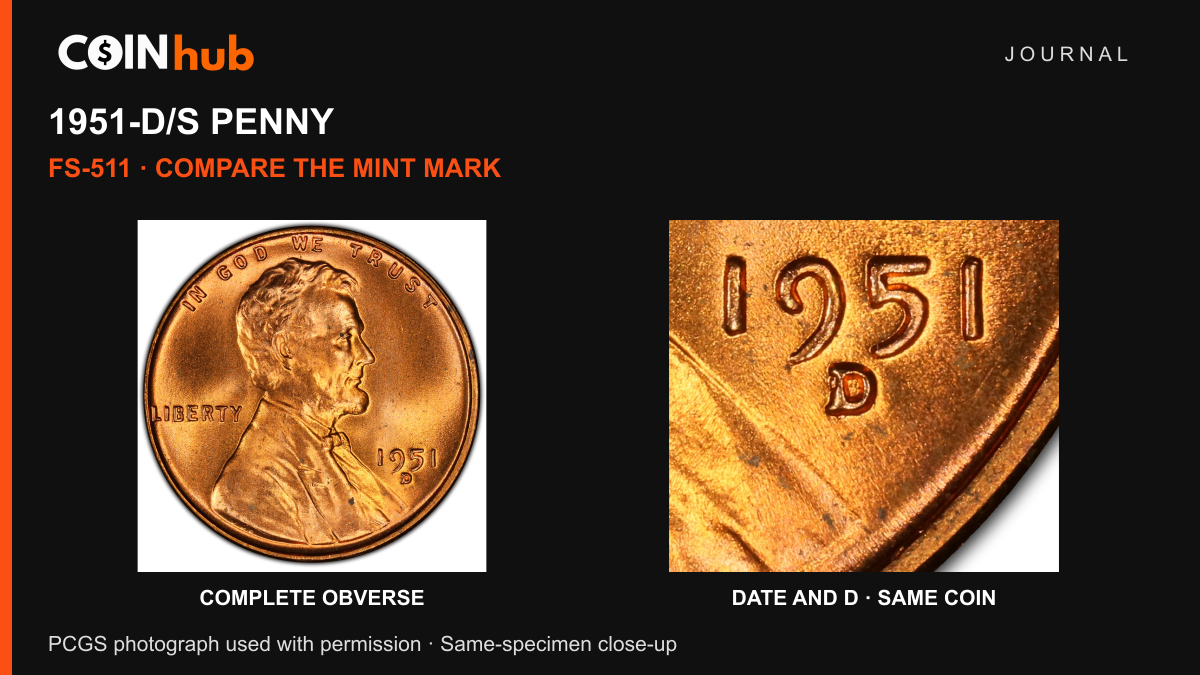
Look below the date on the front
The 1951-D/S penny called FS-511 is a Lincoln wheat cent with an overmintmark: a D punched over an earlier S on the die. The place to examine is below the date on the front, or obverse. PCGS lists this variety separately from a normal 1951-D cent, a D/D repunched mint mark and a doubled die.
The genuine PCGS reference shown here gives you a fixed comparison. A thick D, a dark spot or a seller's label is not enough to assign FS-511. Match the date, mint mark and small details together before considering a variety premium.
Read the catalog label in parts
In PCGS CoinFacts 37879, D/S identifies the overmintmark. OMM is short for overmintmark, and FS-511 is the catalog reference. RD describes a red color designation on the certified copper coin. The color label is not the variety's diagnostic feature.
A die is the steel tool that stamps the design into a coin. The mint-mark punches were applied to that tool; the D/S label does not mean a finished cent traveled between two mints to receive two separate coin strikes. The final D identifies Denver.
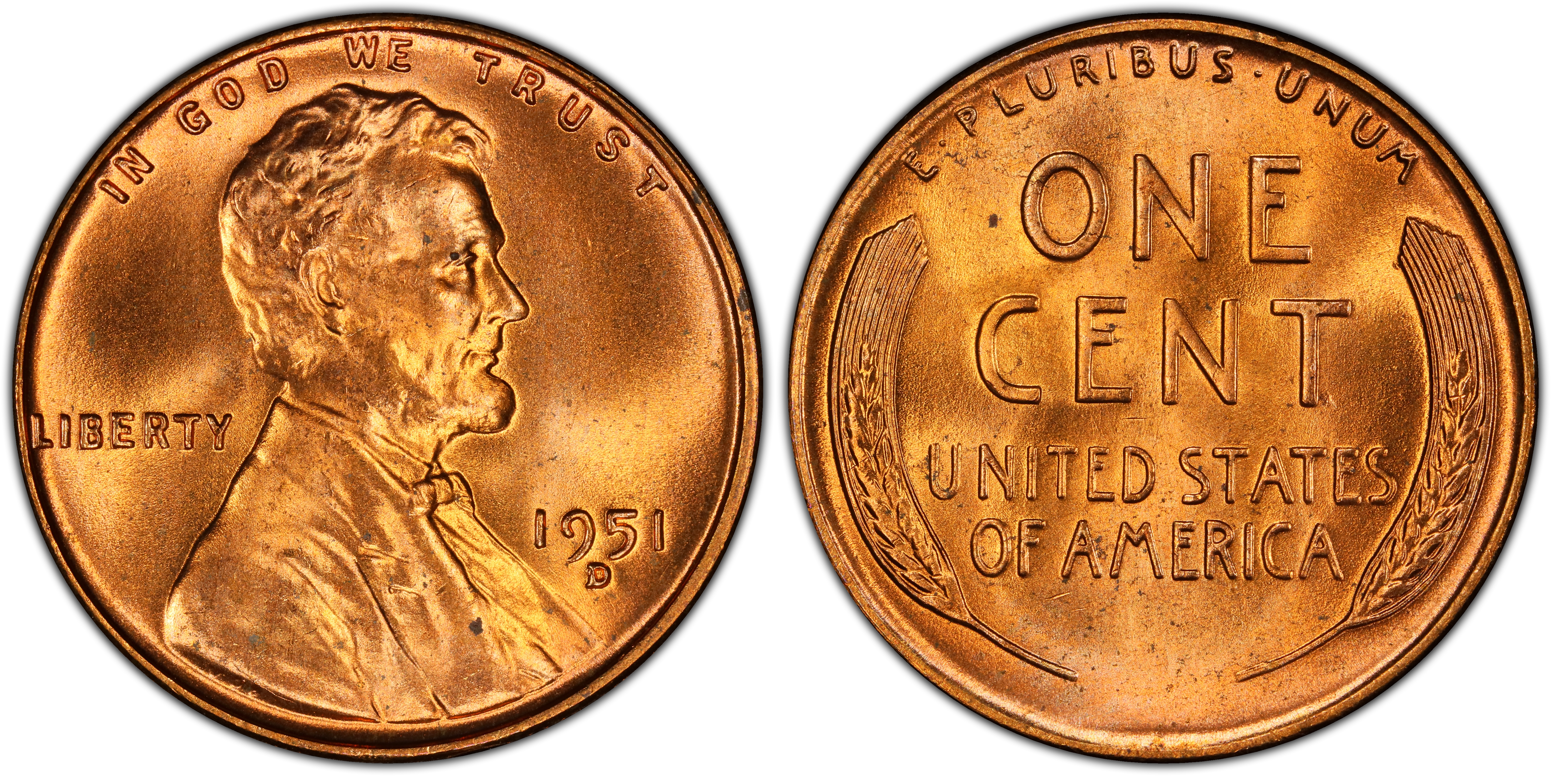
Compare the D without losing the rest of the coin
First take a clear photograph of the whole front. Keep 1951, Lincoln and the mint mark in one frame. Then make a closer photograph of the date and D, with the coin upright. This connects your close-up to the coin you are trying to identify.
Compare the D's shape and any remaining S detail with the attributed reference. Move the light rather than tracing an imagined letter through glare. Save a second view if a shadow changes the apparent shape. A blob with no matching pattern remains an uncertain feature.
The PCGS record for certificate 26475195 provides a separate example of the 1951-D/S OMM FS-511 label. It establishes what that database entry says about that certified coin. A matching number or copied photograph alone does not authenticate a different coin or holder.
OMM, RPM and DDO answer different questions
PCGS's related listings show why the full reference matters. The same date and mint can have several distinct varieties. Do not choose the most valuable-looking name and then try to make the coin fit it.
| Listed 1951 Denver variety | What to keep separate |
|---|---|
| D/S OMM FS-511 | The different-letter overmintmark discussed here. |
| D/D RPM FS-521 | A repunched mint mark involving the same D letter. |
| DDO FS-101 | A doubled-die obverse listing, not another name for D/S. |
DDO means doubled die obverse. It concerns repeated design detail on the front-side die. NGC's comparison of die and machine doubling explains another distinction: a flat shelf caused during striking does not, by itself, establish a doubled die. One unusual edge should not settle every question about a coin.
Record a possible match before pricing it
Keep the whole-coin photo, close-up, source reference and your unresolved observations together. Note wear, scratches or other surface changes that make comparison difficult. Leave an uncertain attribution open rather than turning it into a firm sales description.
CoinHub's 1954-S/D nickel guide uses the same different-letter idea on another coin. Its year, denomination and FS number do not transfer to this cent. Likewise, a price for a high-grade red FS-511 example is not a price for every 1951-D penny.
For broader error-identification reading, CoinHub founder Blake Alma's The CoinHub: An Ultimate Guide to Coin Errors is an optional resource from our own publisher. The reference photographs and qualifications above are enough to begin this specific comparison.