
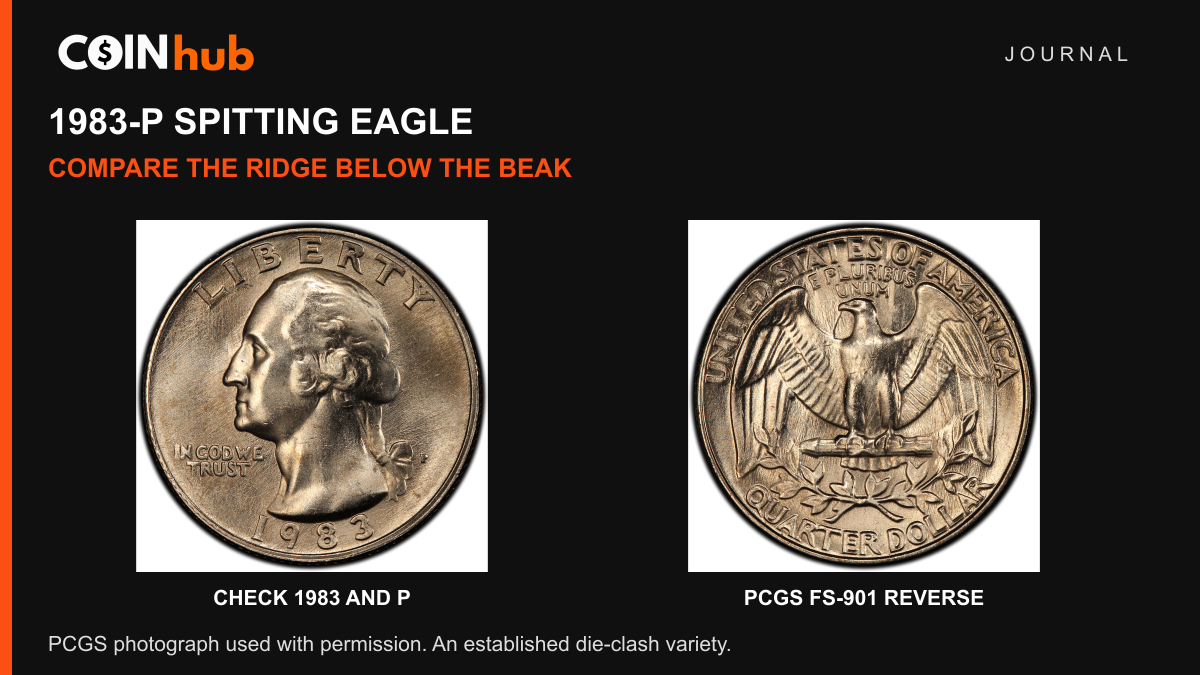
Check the raised ridge below the eagle's beak
The 1983-P Spitting Eagle quarter is a named die-clash variety. Its key feature is a raised ridge below the eagle's beak on the back. NGC's original 2013 announcement traces that ridge to detail from Washington's neck. A random line near an eagle is not enough to identify it.
First confirm 1983 and the P mintmark on the Washington portrait side. Then turn the quarter over and orient the eagle upright. The main graphic uses a real PCGS FS-901 reference, with its two faces separated for comparison.
Use the beak and surrounding design as landmarks
Look below and in front of the beak, toward the left as you view the upright reverse. Compare the ridge's outline and position with the attributed photograph. Keep the eagle's head, neck and nearby lettering visible. Those details make it easier to see where a close-up belongs.
NGC's photograph below provides another documented reference. It comes from the service's July 22, 2013 announcement. It is a different image from the PCGS specimen in the main graphic. Neither photograph assigns a grade to a reader's coin.
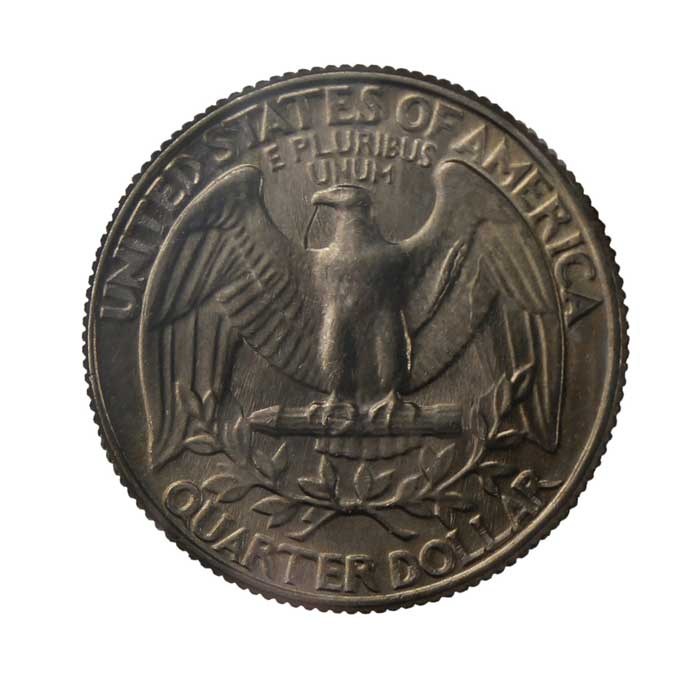
Try a second light direction if glare hides the surface. Save an uncropped reverse as well as the close-up. A photograph that shows only one bright line leaves too much of the comparison out.
Why a clash leaves a design trace
A die is a steel tool that stamps one side of a coin. A planchet is the blank metal piece placed between the two dies. If the dies meet without that blank in place, they can mark each other. Coins struck afterward may show traces of the transferred design.
That is the sequence described in NGC's die-error reference. The quarter did not need to collide with another finished coin to acquire the feature. Our general die-clash guide explains the process and nearby explanations in more detail.
The useful question: Does the feature match the known transferred design in the correct place? Its raised appearance alone does not answer that question.
Keep damage and other Spitting Eagles separate
A scratch can cut into the surface and push up metal beside the cut. That raised edge can look striking in a bright photograph. Check the surrounding surface, the feature's shape and both faces before calling it a clash. Leave an unclear coin as a possible match.
The nickname also appears on Morgan dollars. NGC's announcement compares this quarter with the 1891-CC VAM-4 Spitting Eagle dollar, which has its own die defect. The shared name does not give the coins the same cause, catalog number or price. Start every comparison with the full date, mintmark and denomination.
Document the find before paying for attribution
- Record 1983, the P mintmark and the Washington-quarter design.
- Photograph both complete faces without hiding wear or damage.
- Add a close-up that includes the beak and the ridge's full outline.
- Compare the exact PCGS and NGC reference images, rather than a seller's nickname alone.
- Check a service's current attribution options and costs before deciding to submit.
The CoinHub Error or Damage checker can help organize the surface clues and photographs you still need. It cannot authenticate FS-901, assign a grade or establish a selling price. Use it to frame the next question, then seek a recognized attribution when the evidence warrants it.
A service's example in a high grade is not a value estimate for your quarter. A population count is also a count of recorded submissions, rather than a total of every surviving coin. Preserve the surface, improve the evidence and keep price claims separate from the identification.
Primary sources checked October 19, 2026: PCGS CoinFacts and NGC's 2013 Spitting Eagle announcement and die-error reference. Photographs: PCGS and NGC, used with permission. Main-graphic face crops and proportional resizing preserve the original coin details. This is a guide to an established variety, not a new discovery announcement.