
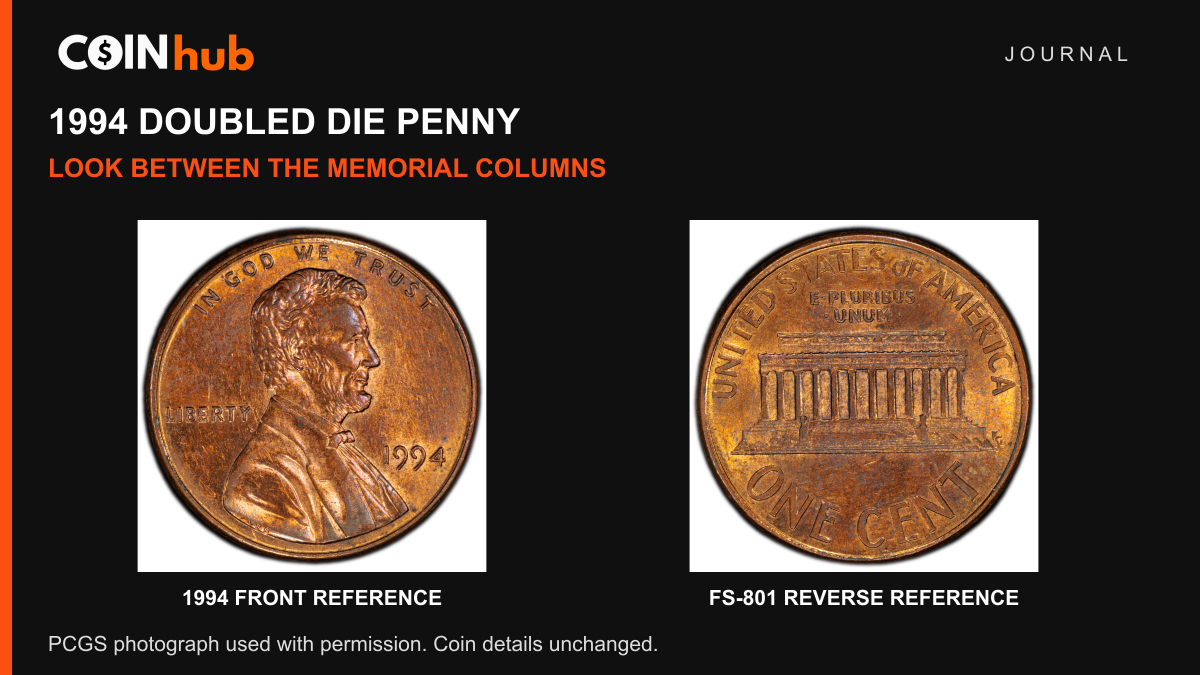
Turn the penny over and look between the columns
The 1994 FS-801 doubled die penny has extra column detail on the back, within the Lincoln Memorial. Start near the right-hand end of the building. Match the shapes and their position to an attributed reference. A second-looking edge on the date, or a ripple on the steps, does not establish this variety.
The main graphic shows a real coin from the PCGS FS-801 Brown reference. Its front reads 1994 with no mint letter below the date. The Memorial is on the reverse, or back. You can open the full PCGS photograph for a larger comparison.
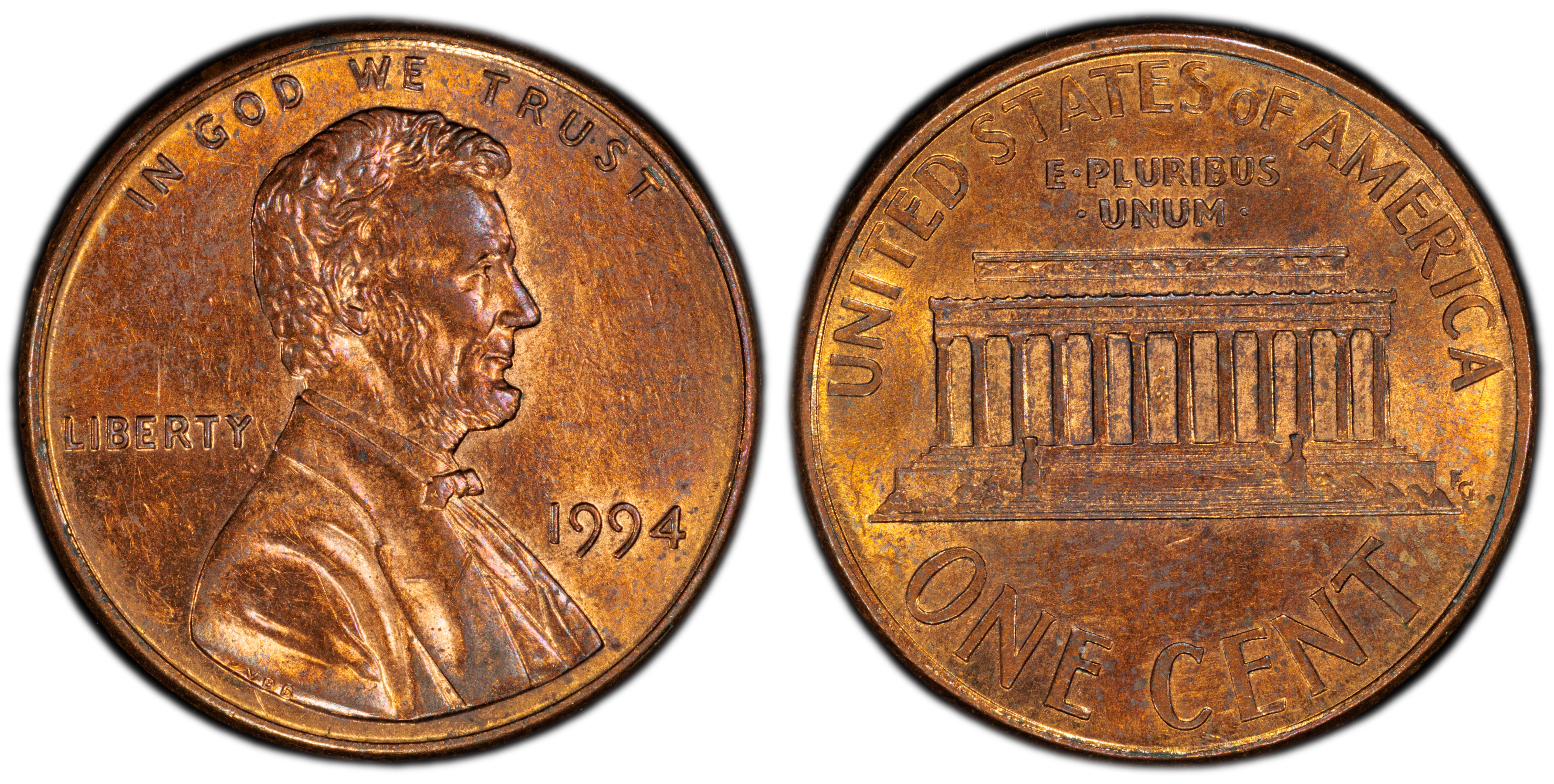
Follow the building, rather than a stray line
The Lincoln Cent Resource description locates the strong doubling between the Memorial's last three columns. Keep the building upright as you compare it. The extra detail should relate to the column design, rather than merely sit somewhere on the same side of the coin.
Use a sharp view of the whole reverse, then a closer view of that area. Leave the Memorial roof, base and nearby FG designer initials in the frame. Those landmarks help another person place the detail. A tiny crop of one line can hide whether it belongs to the building at all.
Change the direction of the light before deciding what you see. A reflection may brighten one edge and hide another. Keep both photographs if they show the surface clearly. Do not scrape the coin or sharpen a soft image until it appears to match.
A doubled die is made before the coin is struck
A die is the steel tool that stamps a coin's design. With a doubled die, the duplicated design is on that tool. The coin receives it during striking. This is different from a finished coin being struck twice. Our double-struck versus doubled-die guide explains that distinction.
DDR means doubled die reverse. FS-801 identifies the listed variety; it is not a grade or a dollar value. Record the date and that full designation together. The number alone is not enough to identify a coin from another year.
Keep the claim narrow: An extra column is a reason to compare references. It is not permission to assign FS-801 from one unclear photograph.
Other 1994 reverses can complicate the comparison
The current Wexler 1994 listings describe several doubled reverses, including more than one with extra columns. They also note that an earlier wavy-steps listing is no longer recognized as a doubled die. That makes exact matching more useful than a general claim that the steps look odd.
Do not transfer a catalog number from an old web page without checking the current reference. Catalog systems have their own identifiers and can revise listings. For an uncertain coin, describe the visible feature first and leave the exact attribution open.
Make a useful record before considering a sale
- Photograph both complete faces, including the date and mintmark area.
- Add a clear Memorial close-up with the roof, base and FG initials visible.
- Save the reference URL and note which shapes appear to match.
- Keep scratches, wear and unclear areas in the record, rather than hiding them.
- Ask for an issue-specific attribution before listing the coin as FS-801.
The CoinHub Variety Attribution Assistant can help organize the date, side and feature you are researching. It does not assign an FS number or authenticate a doubled die. A possible match still needs the recognized diagnostics.
A price from a different date, grade or color category is not a value for your coin. Likewise, the issue-wide mintage shown in a catalog is not the number of FS-801 pieces made. This guide offers a way to document the variety, without assigning your find a grade or price.
For broader background, CoinHub founder Blake Alma's The CoinHub: An Ultimate Guide to Coin Errors is an optional companion. It is CoinHub's own book; the reference photographs and identification steps above remain available without buying it.
Sources checked October 19, 2026: PCGS CoinFacts, Lincoln Cent Resource and Wexler's current 1994 listings. Photograph: PCGS, used with permission. The source coin details are unchanged; the main graphic separates its two faces for display.