
Make the last check while you can still open the box
A coin shipping packing checklist should answer two questions: are the coins protected, and will the recipient know exactly what arrived? A carefully padded parcel can still cause trouble if its paperwork, holder labels or destination instructions do not match the contents.
Before sealing: confirm the recipient's current rules, reconcile the inventory, protect each coin, immobilize the contents and check the dispatch details. Pause when any of those checks fails. This checklist concerns packing and documentation; it does not establish carrier coverage or replace a grading service's submission instructions.
1. Read the recipient's instructions for this shipment
Start with the destination, not a box of supplies. A grading submission, a dealer purchase and a private sale may require different packaging and paperwork. Open the recipient's current instructions and identify which service or transaction you are completing. If a direction is unclear, resolve it before sealing the package.
For example, NGC's packaging instructions describe non-PVC flips for ordinary raw submissions, appropriate larger flips for larger coins and separate exceptions. They also tell submitters not to tape, staple or glue those flips. That specific rule should not be replaced with an internet tip to tape every holder shut.
A coin already in a certified holder is a different situation from a raw coin. Check the rules for reholder, regrade or crossover work before changing its packaging. Do not crack a slab because a general checklist mentions flips. Save the relevant instruction page or reference with your shipment notes so you can explain the choices you made.
2. Reconcile the coins, labels and paperwork
Lay out the protected pieces in a controlled workspace and compare them one by one with your inventory or submission form. Count the physical items. Then check descriptions, quantities, certification numbers when applicable and the requested service. A total count alone will not catch two coins switched between line items.
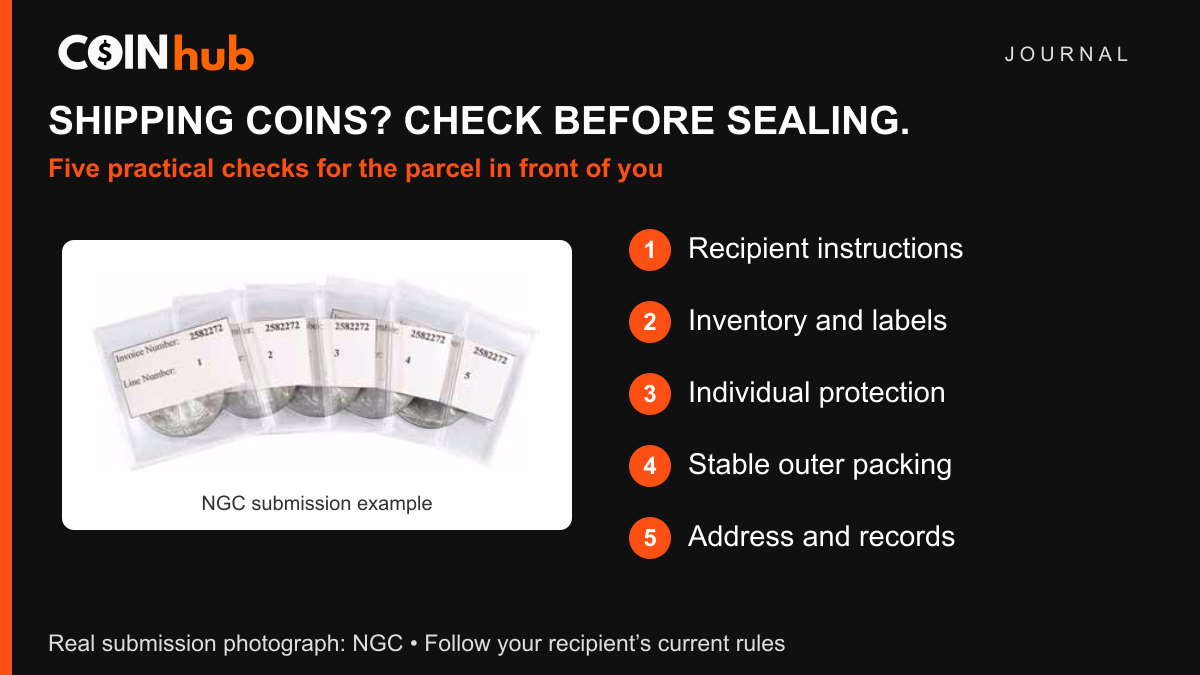
NGC's instructions connect each labeled flip to a submission number and line number. PCGS's packing guide likewise places importance on arranging submitted coins to correspond with the form. Follow the actual destination's system, and put labels on the appropriate holder or packaging, never directly on the coin.
Consider a simple mismatch: the form lists three coins, but four holders are on the table. Do not solve it by assuming the extra coin is a gift or spare. Reconcile the discrepancy first. Keep a copy of the finalized inventory and useful photographs; CoinHub's coin photography guide can help document surfaces without cleaning them.
3. Protect each coin before adding outer padding
Check that every raw coin is in the individual protection required by the recipient and that no loose coin can contact another. Check existing holders for cracks, loose closures and sharp broken edges. A padded outer envelope does not prevent two unprotected coins inside it from striking each other.
Keep adhesives, staples and rough packing material away from coin surfaces. Make sure any identification remains readable after protection is added. The NGC photograph above is a real example of labeled submission flips; it illustrates one service's approach, not a direction to repackage every collectible into the same holder.
Protect the item without altering it. Do not polish away fingerprints, remove toning or try to improve the coin for dispatch. If a holder or surface presents a problem you cannot resolve safely, document it and contact the recipient before proceeding.
4. Check movement inside the finished parcel
Arrange the protected pieces and paperwork so the contents cannot shift freely, then cushion them inside a sound outer package. PCGS's instructions emphasize cushioning and securely sealing the parcel. Match the package to the weight and shape of the contents rather than assuming the smallest available mailer is sufficient.
Before the final seal, gently change the box's orientation while supporting it. You are checking for loose movement, not performing an impact test. If the contents slide, rearrange the packing. Make sure adding cushioning has not bent the paperwork, forced a holder open or pressed a hard edge against another item.
Remove unrelated old shipping labels from a reused outer box and check that its structure and closures are sound. Avoid a packaging arrangement that requires the recipient to cut blindly toward coins. The goal is stable contents that can be identified and unpacked without guesswork.
5. Match the address, service and records
Confirm the current destination for the actual carrier and service you will use. The PCGS mailing page distinguishes delivery instructions by carrier; copying an address from an old form, forum post or previous parcel can send this shipment to the wrong place. Check any required recipient name and reference fields as well.
Review tracking, signature and any coverage terms with the carrier or provider for the specific contents. Buying a service called “insured” does not, by itself, tell you which coins or losses it covers. Resolve that question before dispatch. Keep the receipt, tracking number, final inventory and transaction correspondence together.
| Final gate | Ready | Stop and resolve |
|---|---|---|
| Instructions | Current rules match this transaction | Unclear submission type or holder requirement |
| Inventory | Every item matches its record | Missing, extra or mislabeled coin |
| Protection | Each coin safely contained | Loose coin or damaged protection |
| Outer packing | Contents remain stable | Sliding or pressure on holders |
| Dispatch | Current address and service checked | Unresolved destination or coverage question |
Seal the parcel only after the five checks agree. A short, accurate packing record gives you and the recipient a better starting point if a question arises later.
Recipient instructions checked September 19, 2026. Recheck the linked official pages before each shipment; requirements can change. NGC photograph used as an illustrative submission example.