
Start with the official description, then read the denomination
A round shape, presidential portrait or silver composition can appear on either kind of collectible. So can an attractive case. Those features help describe an object, but they do not settle whether it was issued as a coin or a medal.
The U.S. Mint glossary provides the basic distinction. Its definitions are a useful starting point for U.S. material. When identifying an unfamiliar historical or foreign object, use a reference for that exact issue rather than extending a modern packaging rule to every object ever made.
Two silver pieces make the difference clear
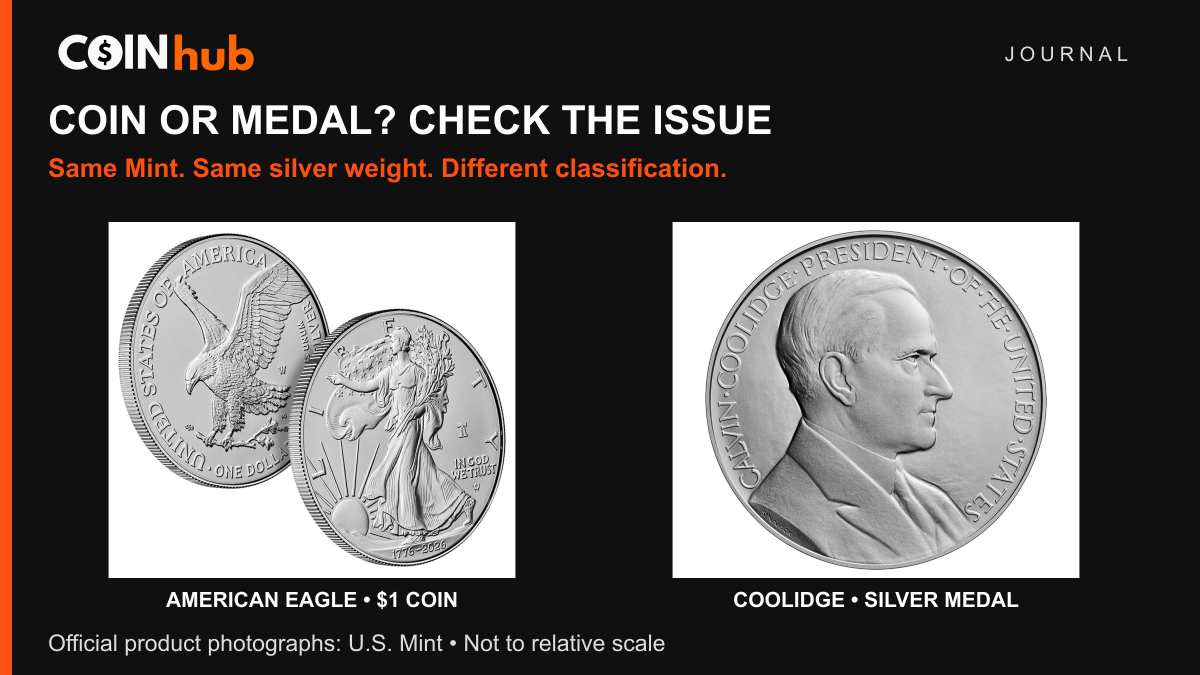
The pictured 2026 enhanced uncirculated American Silver Eagle is officially a coin. Its reverse includes ONE DOLLAR, and the Mint lists its denomination as $1. The photographed Calvin Coolidge Presidential Silver Medal is officially a medal, and its specification table lists denomination as N/A.
Both products contain one troy ounce of silver. That shared metal weight does not make them the same category. The two photographs above are displayed at independent scales, so use the specifications—not their relative size in the graphic—for a physical comparison.
| Check | 2026 enhanced uncirculated Silver Eagle | Coolidge Presidential Silver Medal |
|---|---|---|
| Official product category | Coin | Medal |
| Mint's denomination entry | $1 | N/A |
| Silver weight | 1 troy ounce | 1 troy ounce |
| Finish listed by the Mint | Enhanced Uncirculated | Matte |
| What to record separately | Purchase price and later market evidence | Purchase price and later market evidence |
Face value is a different field from market value
A denomination identifies a monetary amount attached to an issue. It is not an appraisal of the collectible. Likewise, a medal's lack of denomination does not mean it lacks market value. Metal content, collecting interest and the individual object's condition are separate questions.
Keep three fields in your records: denomination, amount paid and any later valuation with its date and source. For the Eagle, the denomination field is $1 even if the receipt records a different purchase price. For the medal, write “no denomination” rather than converting the retail price into a supposed face value.
This separation is particularly helpful when comparing sale listings. First establish that the listing is for the same product and format. A price attached to a gold coin, a silver medal and a base-metal version of a related design cannot be compared meaningfully just because their artwork looks familiar.
Use a three-part classification record
- Issuer and exact issue: Save the issuing authority, product name, date or series, and item number when available.
- Monetary classification: Record the official coin or medal description and denomination, citing the source that establishes them.
- Physical description: Record metal, weight, dimensions and finish independently.
For an inherited piece without its paperwork, begin with clear photographs of both faces and all readable inscriptions. Leave uncertain fields blank. The absence of an obvious denomination in one photograph is a reason to investigate the other face and the exact issue, not an automatic verdict that the object must be a medal.
Where the original packaging remains available, preserve its label and certificate with the item. Then compare those details with the official record. A loose certificate should not be assumed to belong to whichever similar-looking object happens to be nearby.
Three shortcuts that can mislead
“It came from a government mint.” The U.S. Mint's Presidential Medal program is a direct counterexample to the idea that every Mint-made object is a coin.
“It is professionally graded.” NGC grades coins, tokens and medals. Read the issue description on the label; a numerical grade by itself does not establish monetary status.
“The two sides line up like a medal.” Coin alignment and medal alignment describe orientation. They do not decide the object's classification. Our alignment guide explains that separate question.
Does commemorative mean medal?
No. The U.S. Mint glossary distinguishes commemorative coins, which are legal tender, from medals. Identify the specific issue instead of treating “commemorative” as a category that settles everything.
Can a medal be worth collecting?
Yes. A collection can focus on designs, people, events or medallic art without requiring a face value. Classification tells you what the object is; it does not dictate your collecting interests. For the illustrated example's background, see our Coolidge medal article.
Official descriptions and specifications checked September 19, 2026. Examples illustrate classification, not current pricing, availability or a purchase recommendation.