
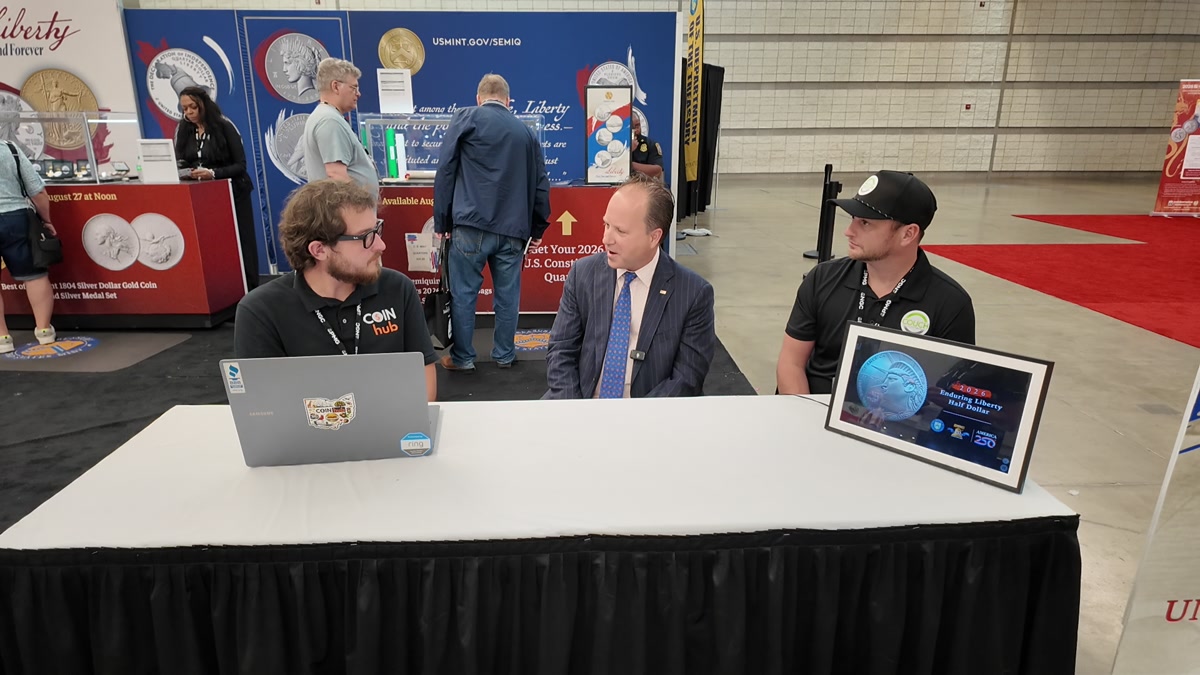
U.S. Mint Director Paul Hollis wants more people to find their way into coin collecting. His answers also reveal the difficult choices that arise when collectors want more coins than the Mint has available.
In our full CoinHub interview, Justin Couch of Couch Collectibles and I asked Hollis about the hobby’s future, special circulating coins and the frustrations surrounding popular releases. Across those subjects, two different meanings of access emerge: an affordable way to begin collecting, and a fair opportunity to buy a particular limited product.
That distinction matters. A coin discovered in change can welcome someone into the hobby without a large purchase. A desirable release that sells out can leave an established collector disappointed even when the ordering system works as designed. Success on one front does not settle the other.
A manageable starting cost, coins to examine and reliable information to help a newcomer learn.
A clear purchase process, understandable limits and realistic expectations when demand exceeds supply.
A low-cost beginning still matters
Discussing special circulating coins, Hollis described an effort to engage collectors at the lower end of the price spectrum. His explanation centered on giving people the opportunity to encounter a collectible coin at face value instead of offering it only through the Mint’s retail website. Watch that discussion at 7:05.
The Mint’s official account of the 2026 “July 4” quarter hunt supplies the distribution context: 250,000 marked quarters were randomly mixed into bulk bags for nationwide circulation through the banking system. Searching ordinary change is therefore part of the program’s design. It is an opportunity to look, rather than a promise that a specific bank or collector will receive one.
For a newcomer, the lasting benefit can begin before a special coin turns up. Looking closely means learning dates, designs and the difference between a mint mark and a privy mark. CoinHub’s guide to the circulating July 4 quarters explains what to look for. A collector can enjoy that process without treating a hoped-for resale premium as the reason to participate.
The harder question: who gets a scarce product?
When I asked about quick sellouts, website traffic and ordering limits, Hollis supported an equitable distribution and household limits when necessary. He also made his preference on inventory explicit.
“I do think that sellouts are good for the industry.”Paul Hollis, U.S. Mint director · Ordering and sellout discussion, beginning at 15:16
His explanation was practical: ideally, production would match collector demand exactly. Faced with excess inventory or a sellout, he said he would prefer the sellout. In the same answer, he acknowledged the frustration of people left on the sidelines.
Those comments describe a tradeoff. Selling every available coin can be a desirable inventory outcome for the Mint while still being a disappointing experience for someone who tried to buy one. A sellout alone cannot tell us whether the process felt fair to buyers, whether newcomers participated or whether a coin will command a lasting premium.
What the ordering safeguards actually do
The Mint’s current waiting-room guidance says the system is intended to maintain website stability during heavy traffic. People waiting when a release begins are assigned a random order; later arrivals join after that group. Entry into the waiting room does not guarantee that inventory will remain when a customer reaches the store.
Household limits serve another purpose. The Mint’s order-processing guidance says they are intended to broaden purchase opportunities and may be changed or removed. A limit on one household’s purchase does not increase the total quantity available. Our guide to mintage, product and household limits explains those separate measures.
Hollis praised improvements to the waiting room and discussed concerns about bots and resale premiums. His answer should be read as an assessment of progress and continuing problems; it does not establish that automated buying has been eliminated. For collectors, the useful questions remain concrete: what is available, what limit applies, how does the queue work and what happens if stock runs out?
Trust grows through clear expectations
Later in the interview, Hollis welcomed the role of digital platforms in helping people discover coins, learn and connect with other collectors. That is another form of access: the ability to find an explanation when an unfamiliar coin catches someone’s attention.
Our reading of the conversation is that education and clear expectations connect Hollis’s two ambitions. An inexpensive entry point invites people in. Understandable release rules help them decide how to participate as their interests grow. Neither requires every collector to pursue every limited issue.
The question for the hobby is therefore broader than how quickly a product sells out. It is also whether someone who discovers a coin today can learn about it, collect within a comfortable budget and understand the next purchase they choose to make.
Hear Hollis explain the tradeoff
The video opens at the ordering question. Watch the complete interview with chapter links. This analysis draws on the recorded conversation and the Mint’s published guidance checked September 29, 2026; it does not announce a new Mint policy.