
A standard modern gold sovereign weighs about 7.98 g and measures 22.05 mm across. A half-sovereign weighs about 3.99 g and measures 19.30 mm. The half-sovereign has half the weight, but it is not half as wide.
That small difference in width can be hard to judge in a photograph. Check the weight and diameter together, then match the date and exact issue. A portrait or a familiar reverse design by itself does not tell you which size you have.
Compare the standard sizes
| Specification | Sovereign | Half-sovereign |
|---|---|---|
| Gross weight | About 7.98 g | About 3.99 g |
| Diameter | 22.05 mm | 19.30 mm |
| Gold fineness | 916.7 parts per thousand | 916.7 parts per thousand |
| Approximate pure gold weight | 7.32 g | 3.66 g |
The first three rows follow The Royal Mint's sovereign size guide. The last row is calculated from those rounded figures. Gross weight means the whole coin; pure gold weight excludes the other metals in the alloy. Both standard coins are 22-carat gold.
This comparison covers the familiar modern sovereign family revived in 1817. Do not apply it to every earlier coin called a sovereign. Also check the specific product record for special issues. For example, the Mint lists its 2023 Coronation sovereign at 7.99 g, rather than the family guide's rounded 7.98 g.
Half the weight is not half the diameter
The listed diameters differ by only 2.75 mm. Dividing 19.30 by 22.05 shows that the half-sovereign is about 88% as wide as the sovereign. That is why two coins photographed separately can seem to be the same size.
Imagine a seller shows each coin in a tightly cropped square photo. Both may fill your phone screen. Nothing about that crop preserves their real size. A ruler in the same plane as the coin, or a clear written measurement, is more useful than the size of the image.
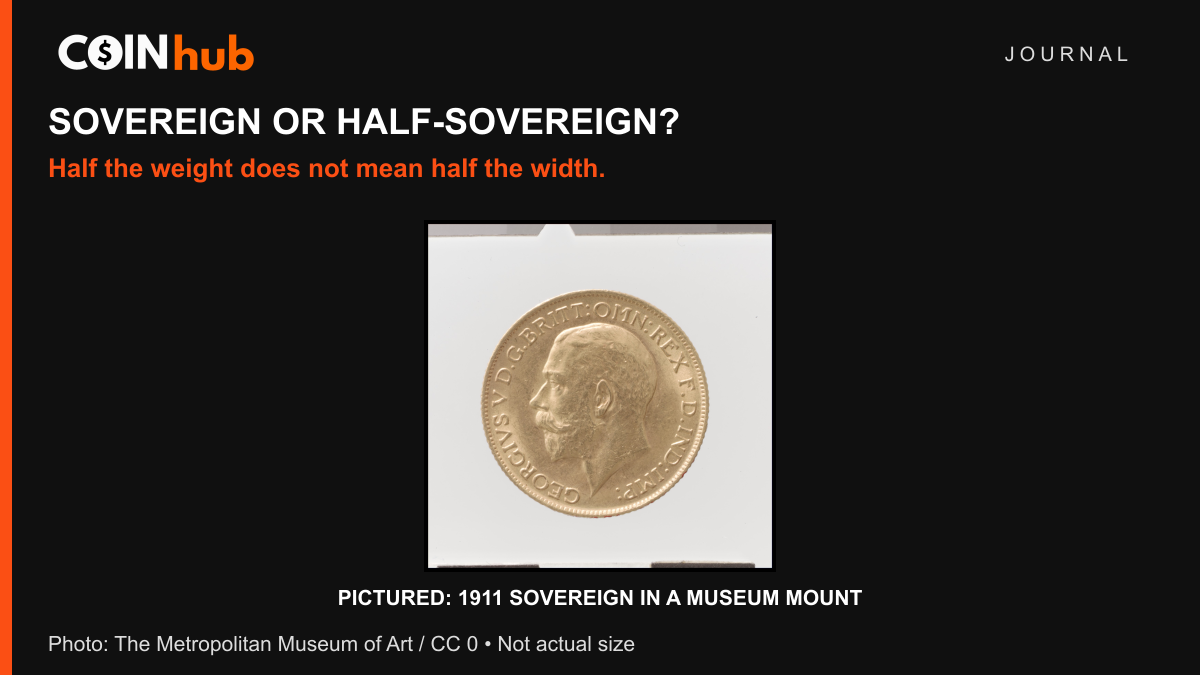
The museum photograph is a sovereign. It shows the portrait side of a 1911 George V example in a mount. It is an illustration, not a size comparison. Never include a mount or holder in a loose-coin weight reading.
Use the issue details to settle the comparison
Record the date, any mint mark, the design on each side and both measurements. For a certified coin, read the holder's full description and check the certification record. Do not open a sealed holder just to weigh the coin.
Keep unusual results separate from a firm identification. A coin that fits one measurement but not the other needs further checking. Even a match to both figures cannot establish authenticity or gold content on its own. The coin-weighing guide explains the limits of the scale test.
Gold content and collector value are different questions
The standard half-sovereign contains roughly half as much gold. That does not mean every half-sovereign sells for half the price of every sovereign. Date, issue, condition and the actual sale being compared still matter.
When recording an inherited coin, a cautious note is more useful than a guess: “Gold-colored sovereign-family coin; date photographed; denomination to confirm.” Add the confirmed denomination once the measurements and issue record agree. Keep any value estimate as a separate entry with its source and date.