
A hammered coin is made by striking a metal blank with a hammer and a die that carries a design. In the familiar two-die method, the blank sits between the tools and takes an image on each face. The word describes how the coin was made. It does not mean that someone later hit an ordinary coin with a hammer.
Many medieval coins have uneven outlines, shallow details or designs that sit away from the center. Those features can help explain their manufacture. None, on its own, proves that a coin is old, genuine or rare.
Read the type before judging the shape. Compare a coin with documented examples of the same issue. A modern coin's neat rim is a poor standard for a hand-struck medieval penny.
How the hammer made the design
The Royal Mint Museum's hand-striking account describes a lower die fixed into a wooden block. A worker placed the blank on it, held the second die above it and struck that upper tool. Pressure pushed the metal into the engraved designs.
A die is the design-bearing tool. A flan is the metal blank. These terms help separate the equipment from the object you collect. The hammer supplies the force; it does not need to carry the portrait or letters itself.
The museum notes that hand-cut blanks could have uneven edges and were often thin. That helps explain why a medieval silver penny may look less regular than a modern machine-struck coin. It does not mean every hammered piece must look badly made.
Look at this Henry III penny
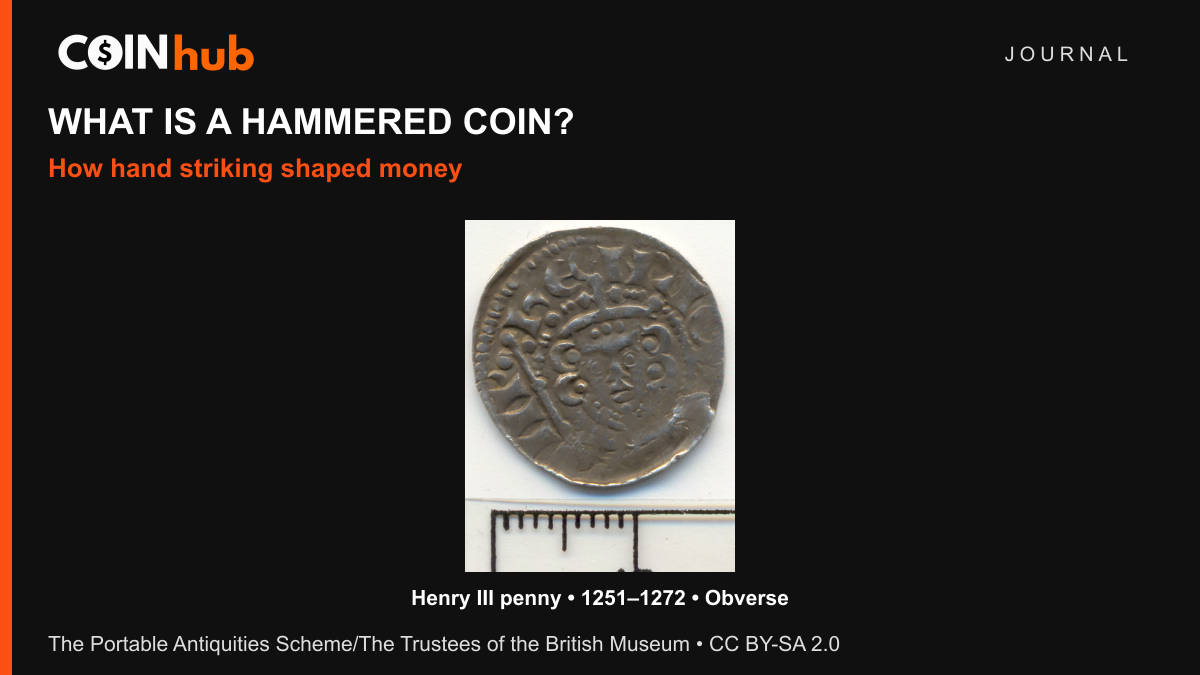
The photograph shows the front, or obverse, of a silver penny of Henry III. The Portable Antiquities Scheme image record identifies it as a long-cross penny, Class Vb, dated 1251–1272. It attributes the coin to the moneyer Nicole at Canterbury. A moneyer was a person responsible for producing coins.

Look first at the crowned face and the surrounding letters. Then follow the whole edge. The photograph preserves the worn surfaces and uneven outline. The catalog identification uses more than that outline: the published record also describes the reverse, which is not shown in this photograph.
This is one recorded object, not a model for every hammered penny. Its date range belongs to the identified issue. You cannot assign the same date or mint to another silver coin simply because the portrait seems similar.
Hammered and milled refer to different production methods
In British collecting, milled coinage commonly describes coins made using machinery. The Royal Mint's account of mechanisation places England's lasting transition in the early 1660s, after earlier trials. Rolled metal, punched blanks and a screw press helped produce more regular coins.
That is an English timeline. It should not become a claim that every mint in the world stopped using hammers in one year. Nor should a grooved edge be treated as the definition of machine-made coinage. Start with the documented production history of the issue.
| What you notice | What it does and does not tell you |
|---|---|
| An uneven outline | May fit hand production; does not identify the ruler or date |
| Part of the design near the edge | Record what remains visible; missing detail alone does not establish its cause |
| Metal missing at the edge | Needs closer study; do not automatically call it clipping |
| A smooth, regular appearance | Does not by itself rule out a well-made hammered coin |
Keep clipping separate from the original strike
Clipping means removing metal from a coin's edge after it was made. Warwick & Warwick's explanation describes the historic practice of saving precious-metal shavings. That is different from an irregular blank entering the minting process.
A photograph may not settle which cause explains a particular edge. Write down the visible evidence instead: where the lettering ends, how the border survives and whether the outline changes sharply. Do not fill gaps in the record with a dramatic story.
A useful first record for a collector
- Photograph both faces. Keep the entire edge in view and save the original files.
- Copy readable letters. Mark unclear letters as uncertain instead of silently completing a ruler's name.
- Record your own measurements. Note weight in grams and diameter in millimeters, including the widest and narrowest points of an irregular piece.
- Save the attribution source. Keep the catalog reference, old ticket and seller's description together, with uncertain claims clearly marked.
Use that record to compare the exact type or to ask a specialist a focused question. Avoid bending, flattening or polishing a thin coin to improve a photograph. A more regular-looking object is not a better historical record.
A bracteate's hollow reverse raises a different question about a particular one-die method. The broader term hammered coin covers the use of a hammer; the individual coin type tells you what its faces were intended to look like.
Sources and photograph credit
Research sources are linked beside the claims above. Photograph: Derby Museums Trust, Rachel Atherton; required attribution, The Portable Antiquities Scheme/The Trustees of the British Museum, via Wikimedia Commons, CC BY-SA 2.0. The complete photograph is resized in a new layout, with no coin details changed. The adapted graphic uses the same license; CoinHub trademark rights remain separate. Image enlarged, not actual size.