Sort by Composition First
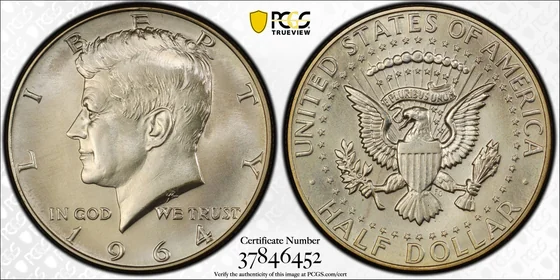
The regular 1964 issue used 90% silver. From 1965 through 1970 the standard alloy was silver-clad, containing 40% silver overall. Regular circulation-type coins switched to copper-nickel clad in 1971. These three groups need different metal calculations and different comparable sales.
The 1970-D came from collector Mint Sets rather than general circulation release. Silver collector halves also exist outside the 1964-1970 date band, including Bicentennial products and later silver proofs. Check exact product specifications instead of treating every later date as automatically clad.
Recognize Normal Dates and Marks
Mintmarks on the first 1964 issues were on the reverse; 1965-1967 issues omitted them. With the 1968 return of marks, their position moved to the front. Gilroy Roberts' monogram on Kennedy's neck is a designer signature, not an unusual mintmark or damage.
The 1776-1976 dual date identifies the Bicentennial design, not a coin made in the eighteenth century. Its Independence Hall reverse is intentional. Preserve packaging for a collector version, because the date and design alone cannot settle its composition.
Do Not Confuse Finish with Grade
The Mint offered Special Mint Sets instead of regular proof sets in 1965-1967. Those pieces should not be labeled proofs just because they look sharper than change. Later clad proofs and silver proofs likewise require separate comparison groups.
Examine the cheek, hair, fields and rims for wear or marks. A silver-content estimate is theoretical, not a promise of dealer proceeds. A high-grade auction result belongs to its certified specimen; it cannot establish the worth of an ordinary saved half or a mixed bank roll.
Confirm what you have
- Silver BranchRecord the date and collector provenance before assigning 90%, 40% or no standard circulation silver content. Keep exceptions separate.
- Finish GroupRetain proof or Special Mint Set evidence. Do not replace a missing product history with a guess based on reflectivity.
- Surface DetailPhotograph the cheek and open fields under diffuse light. A sharp portrait does not cancel scratches or establish a numeric grade.
Before you put a price on it
- Using a 90%-silver calculation on a 40%-silver half.
- Calling every half dollar scarce because it is seldom received in change.
- Treating all 1965-1967 collector strikes as proofs.
Collector questions
Is a regular 1971 half dollar silver?
No. The standard issue is copper-nickel clad. A claimed off-metal exception requires independent authentication before a silver or rarity valuation.
Does a Bicentennial half contain silver?
Some collector versions contain 40% silver, while ordinary circulation versions are clad. Identify the issue and original product instead of using the date alone.
Is the mark on Kennedy's neck an error?
The normal intertwined GR is Gilroy Roberts' monogram. Compare a suspected abnormality with the normal signature before treating it as a mint error.
Sources & further research
- PCGS: Kennedy Silver-Clad and Special Mint Set Facts
- U.S. Mint: 1971 Half-Dollar Composition Change
- U.S. Mint: Bicentennial Silver Collector Coins
- PCGS: Kennedy's Neck Monogram
- U.S. Mint: Mintmark Changes
- PCGS: 1964 Kennedy Silver Composition

Reviewed 2026-10-12. Coin identification, grade and value are separate questions. No guide or checkmark is professional authentication or an appraisal.