
Divide the Series at 1965
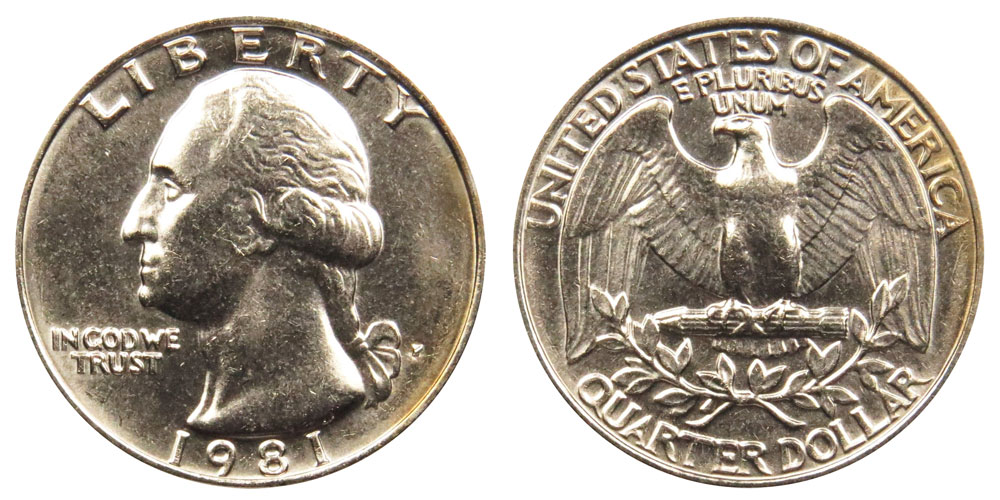
Washington's portrait arrived in 1932. Regular quarters dated through 1964 use 90% silver; regular 1965-and-later issues use copper-nickel clad construction. Silver collector products are exceptions to the later circulation specification, so keep their documented identity with the coin.
For silver examples, a current metal calculation can be one reference point, not a binding offer. For a possible 1932-D or 1932-S, date-and-mint authentication comes first. Added mintmarks are known, and an apparently scarce date should not be reduced to a generic silver pile.
Locate the Letter and Read the Dual Date
Look below the reverse eagle on coins dated 1964 and earlier. Mintmarks were omitted in 1965-1967; when they returned in 1968, the location moved to the front near Washington's hair ribbon. Philadelphia began marking quarters P in 1980.
Bicentennial quarters made during 1975 and 1976 carry the same 1776-1976 date. The drummer is their authorized reverse, not an error. The dual date cannot tell you which of those two production years supplied your individual coin.
Compare the Correct Product
Special collector versions of the Bicentennial quarter included silver-clad issues. Later silver proof sets also require composition verification. Do not price a routine worn Philadelphia or Denver drummer quarter by a sale involving a certified silver collector specimen.
Check Washington's cheek, hair and the open fields for wear, scratches and cleaning. Proofs, Special Mint Set pieces and circulation strikes belong in different comparison groups. This guide ends with 1998; State Quarters and later programs have their own issue-specific identification needs.
Confirm what you have
- Date BranchKeep pre-1965 silver candidates separate from later circulation clad coins, while retaining collector-set evidence for exceptions.
- Reverse MintmarkOn earlier coins, include the area below the eagle in a full reverse photograph. An unreadable mark should remain uncertain.
- Bicentennial ProductRecord mintmark, finish and original packaging. The drummer design and dual date do not by themselves identify silver content.
Before you put a price on it
- Assuming every Bicentennial quarter is scarce or silver.
- Calling an expected 1965-1967 missing mintmark an error.
- Comparing a cleaned coin with an undamaged certified example.
Collector questions
Is a 1964 quarter normally silver?
Yes, an authentic standard 1964 Washington quarter is 90% silver. Its exact mint, surfaces and collector interest still affect a transaction.
Why is there no quarter dated 1975 in this type?
The Mint used 1776-1976 on Bicentennial quarters produced in both 1975 and 1976. That was intentional, not a missing-date error.
Does age alone justify certification?
No. Confirm the issue and likely significance first, then compare submission costs with the potential benefit. Ordinary worn coins may not warrant it.
Sources & further research
- U.S. Mint: Quarter and Bicentennial History
- PCGS: Washington Quarter Mintmarks and Identification
- NGC: Washington Quarter Facts
- NGC: Added Mintmarks on Key-Date Quarters
- U.S. Mint: Bicentennial Collector Compositions

Reviewed 2026-10-12. Coin identification, grade and value are separate questions. No guide or checkmark is professional authentication or an appraisal.
