
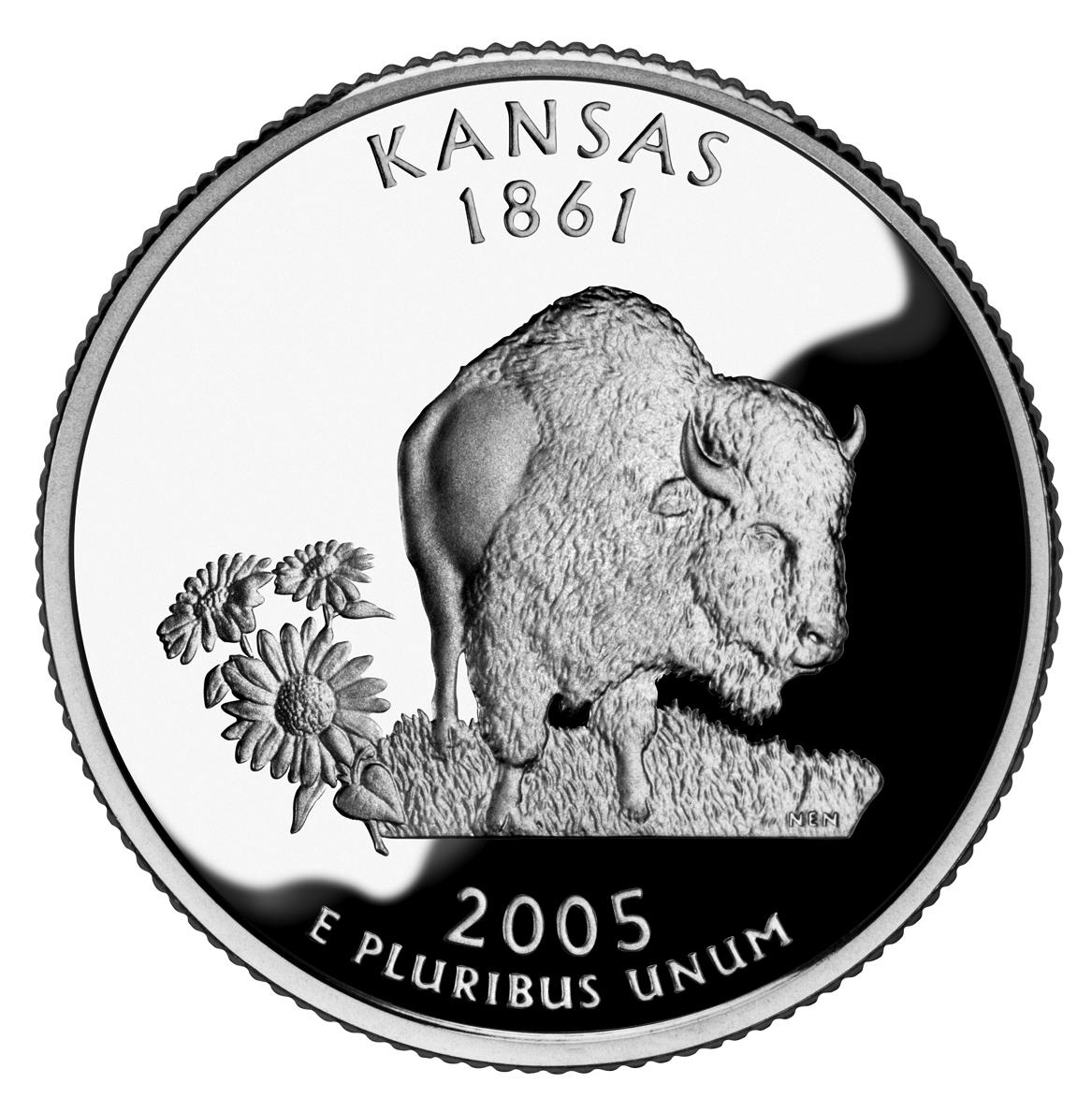
Read Both Dates Correctly
The program released five state designs per year from 1999 through 2008. Record the issue year along with the state name and obverse mintmark. The earlier date shown on many reverses marks statehood and should not be entered as the coin's production year.
The six 2009 District of Columbia and U.S. Territories designs belong to a separate program. Later park and American Women quarters are also different families. Similar Washington portraits do not make those coins State Quarters for comparison purposes.
Separate Change, Proofs and Silver Proofs
Regular circulation issues use copper-nickel clad construction. The Mint also sold clad proofs and 90% silver proofs bearing S mintmarks. The S alone does not identify the alloy. Preserve the original set certificate and check the exact product rather than guessing from shine.
A folder assembled from change should be assessed as circulated coins unless individual pieces show stronger evidence. A proof set has different handling, packaging and preservation considerations. Scratches on mirrored fields can be important even when the design remains sharply defined.
Verify a Variety Before Comparing Sales
The 2004-D Wisconsin Extra Leaf High and Extra Leaf Low are recognized varieties. They have specific extra features beside the corn, not simply any line near a leaf. Match the coin to the correct attribution and exclude scratches or other damage.
Use sold examples of the same state, mint, finish and comparable surfaces. Require a matching attribution for a claimed variety. A top-grade record cannot value every coin from that state or every untouched-looking roll.
Confirm what you have
- Issue YearRecord both reverse dates with their meanings. Pair the actual issue year with the state name and the front-side mintmark.
- Product EvidenceKeep any silver-proof certificate and original holder. Reflective surfaces and an S are insufficient to choose a composition alone.
- Corn DetailFor a Wisconsin candidate, photograph the corn and surrounding field together. A raised design feature and a scratch are not interchangeable evidence.
Before you put a price on it
- Using a statehood date as the coin's issue date.
- Counting 2009 territories as part of the 50-state program.
- Assuming an expensive listing proves an ordinary quarter's value.
Collector questions
Are gold-colored State Quarters official gold coins?
A gold-colored appearance does not establish a Mint gold issue. Identify any later plating or alteration before using precious-metal comparisons.
Is every Wisconsin quarter an Extra Leaf?
No. Ordinary examples lack the attributed extra feature. The mint, feature shape and location must match a recognized variety.
Does a complete album guarantee a premium?
No. Completeness, wear, damaged surfaces and buyer demand all matter. Ask whether an offer is for the set or for selected individual coins.
Sources & further research
- U.S. Mint: 50 State Quarters and 2009 Program Boundary
- U.S. Mint: 2008 State Quarters Silver Proof Specification
- U.S. Mint: Quarter Composition History
- PCGS: Recognition of Wisconsin Extra Leaf Varieties
- U.S. Mint: Clad and Silver State-Quarter Proof Products

Reviewed 2026-10-12. Coin identification, grade and value are separate questions. No guide or checkmark is professional authentication or an appraisal.
