
Look for the fraction, the U and the missing stem
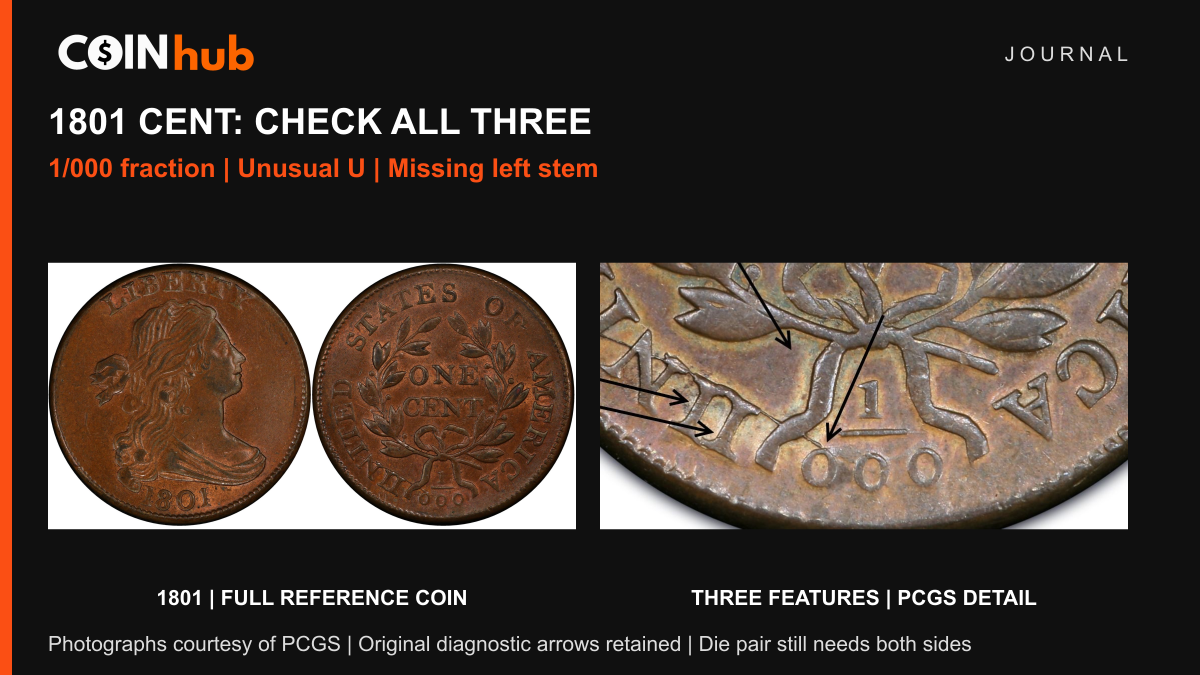
The 1801 Three Errors large cent has three features on its reverse, or back: a fraction reading 1/000, an unusual U in UNITED and a missing left wreath-stem end. Check all three. A worn letter or a damaged fraction on another 1801 cent does not establish this named variety.
The full reference photo keeps the 1801 date connected to the reverse. Beside it is PCGS’s existing diagnostic photo, with its original arrows. Those arrows point to features on a real coin; they are not reconstructed details.
Where the three features appear
PCGS catalogs the Three Errors reverse within the Draped Bust cent series. “Large cent” refers to the older, larger copper denomination. “Three Errors” names flaws in the back design. It does not mean three blows from the coin press.
| Feature | Where to look | What needs care |
|---|---|---|
| 1/000 fraction | Below the wreath bow, near the bottom rim. | Keep the fraction bar and all denominator digits visible. |
| Unusual U | The first letter of UNITED, beside the wreath. | Wear can blur its unusual shape. |
| Missing left stem end | The left side below the bow. | Do not confuse a missing design feature with surface loss. |
The normal fraction means one hundredth of a dollar. The wrong lower number does not change the one-cent face value. It is a clue to the die that made the design.
Why the letter is sometimes called IINITED
The odd U can resemble two upright strokes, producing the familiar description “IINITED.” The more detailed account in Breen’s early-cent reference describes a U first punched upside down and then corrected. The nickname alone does not prove that two I punches were used.
The same reference identifies the missing left stem end and the 000 denominator. Check the three areas as a group. If a weak photo hides one of them, keep that point unresolved rather than treating the other two as a complete match.
The reverse name is not a full die-pair number
A die pair means the front and back dies used together. Early-copper collectors use Sheldon numbers to name those pairs. Breen’s S-218 entry and S-219 entry use the same reverse designation, E, with different front dies. So the Three Errors name alone does not tell you which pair you have.
That distinction also helps when browsing sales. A seller’s title may supply a broad variety name, a more specific number, a grade, or several of those at once. Record each claim separately. Check the number against both sides. Do not copy it just because the back looks close.
Do not let wear create the answer
Corrosion, scratches and worn relief can make a normal letter look strange. A missing-looking stem may be hidden by wear, while a damaged digit can resemble a different numeral. Compare the shapes and the design around them, not just a dark line in a closeup.
Take one clear whole-coin image of each side and a second photo of the lower reverse. Keep the wreath bow, fraction and UNITED area together when possible. Try a second light angle before deciding a feature is absent. Our photography guide explains how to improve visibility without cleaning.
Use the CoinHub Variety Attribution Assistant to keep your date, side and feature notes together. It offers clues for further study. It does not confirm S-218, S-219 or prove a coin is real. For the meaning of the pairing itself, see our die-marriage guide.
Identify first, then compare condition and price
A catalog’s record sale is the result for one coin at one time. It is not a price for every cent with this reverse. Before comparing sold examples, match the variety, grade and surface problems, then check the sale date and whether fees are included. A coin can match the named variety and still have damage.
Photos courtesy of PCGS CoinFacts, used with permission. The complete reference photo and original arrowed detail are resized in the CoinHub layout without changing coin details. Old counts and record sale prices are not current totals or values.