
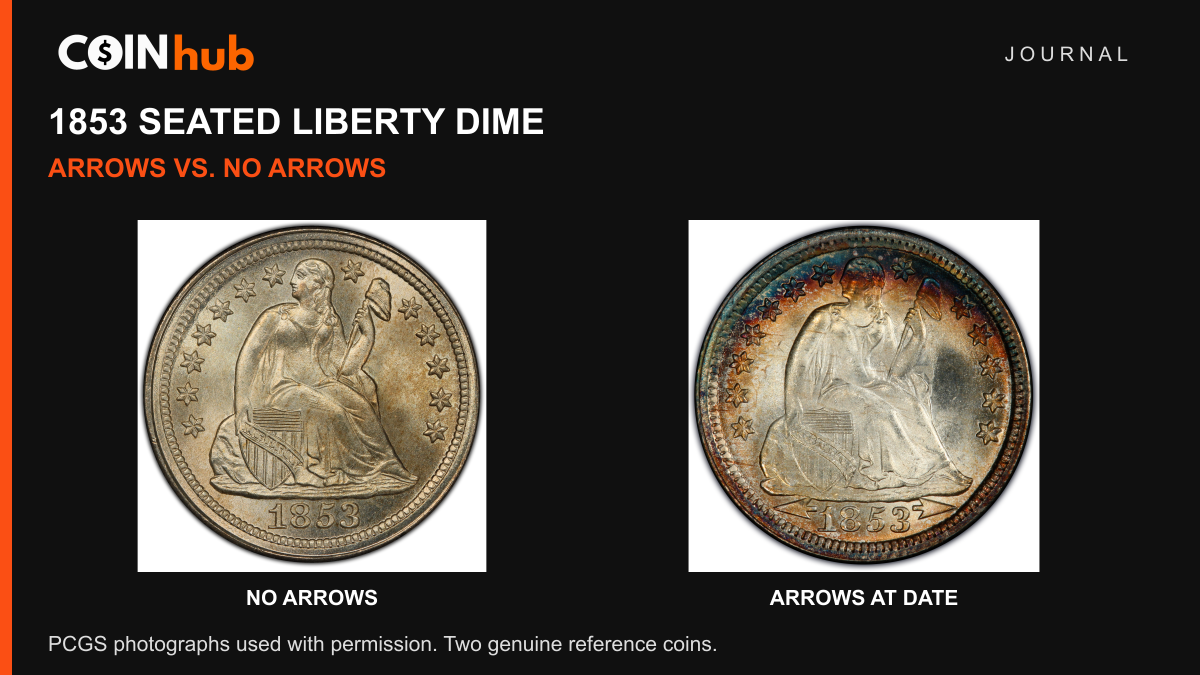
An 1853 dime with arrows has a small arrowhead on each side of the date. An 1853 No Arrows dime lacks those symbols and belongs to the earlier, heavier standard. The arrows signaled a reduction in weight, from 41.25 to 38.4 grains—about 2.67 to 2.49 grams. Both designs were made that year, so reading 1853 alone does not identify the type.
Read ONE DIME, then check beside the date
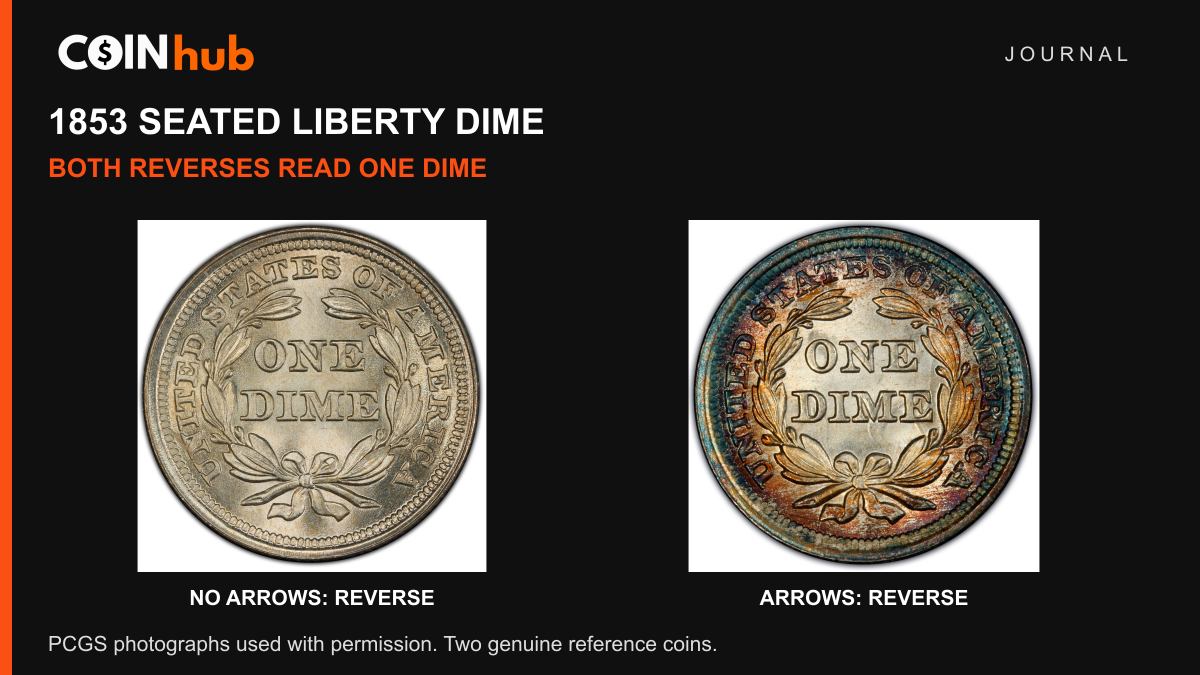
Start on the back. Both genuine reference coins shown here say ONE DIME within a wreath. That separates them from a half dime, a five-cent silver coin, and from the larger Seated Liberty quarter and half dollar. Search results and sale titles can mix these denominations.
Now turn the coin over and hold Liberty upright. Find 1853 below her seated figure. On the Arrows example, an arrow points outward on either side of the date. The No Arrows example has open spaces there. The stars around the upper border are separate design elements.
The photos are of two different Philadelphia coins from PCGS's No Arrows entry and its Arrows entry. Compare the date area rather than their color or apparent size on screen. Different lighting and toning do not define the two types.
What the arrows changed—and what they did not
| 1853 dime type | Date area | Nominal weight |
|---|---|---|
| No Arrows | No arrowheads beside 1853 | 41.25 grains, about 2.67 g |
| Arrows | Arrowhead on each side | 38.4 grains, about 2.49 g |
A grain is a unit of weight, not a count of particles in the coin. These figures describe the original standards. They are not promised readings for every circulated example. Both issues remained 90% silver and 10% copper; less total weight meant less silver per dime.
PCGS's type history by Q. David Bowers, edited by Mike Sherman explains the change. Silver coins were being hoarded when their metal value exceeded their face value. The lighter standard and visible arrowheads helped distinguish the new issue. Stack's Bowers' type reference gives the same weight reduction.
Catalog gram figures may be rounded differently. For this comparison, keep the grain standard with the type name rather than copying an isolated specification field. A scale reading by itself cannot establish the design, authenticity or original mint.
The dime has a wreath, not reverse rays
The Arrows dime still has ONE DIME within a wreath on the reverse, or back. It does not have the eagle and surrounding rays seen on 1853 Arrows and Rays quarters and half dollars. Those are different denominations with their own design checks.
If a listing says only 1853 Arrows and Rays, ask to see the denomination. Our 1853 quarter comparison shows why both faces matter for that coin. Do not expect every silver issue from the year to carry the same reverse.
Keep 1853 separate from the later arrows
The dime's first arrows period ran from 1853 through 1855. The symbols were a temporary notice of the change. Their removal afterward did not mean that the dime returned to its earlier, heavier standard.
Arrows appeared again in 1873 for a different adjustment: a small weight increase. The 1873 dime guide covers that date's designs and mint checks. An arrow is therefore a clue to interpret with the year, not a universal sign that a coin became lighter.
When a missing feature stays uncertain
On a worn or damaged coin, an unclear date area is an unresolved observation. It is not enough to assign No Arrows. Take a sharp photograph under soft light and preserve the surrounding surface. Do not scrape away dirt or polish the spaces beside the date.
For your records, note the denomination, full date, arrows present or absent on each side, mint mark and surface condition. Save complete front and back photos before adding detail views. Keep a seller's description separate from what your photographs can actually show.
A lower original mintage and an individual coin's value are different questions. Before comparing prices, establish the exact issue, whether it is genuine and its condition. A sale of a rare half dime or a specially made proof is not a match for an ordinary circulation-strike dime just because both say 1853.
Sources and photograph credit
References checked October 23, 2026. PCGS photographs used with permission: No Arrows CoinFacts 4599, source specimen MS68; Arrows CoinFacts 4603, source specimen MS68+. Complete faces are proportionally framed in the comparison, with original details and colors retained. These source grades describe the photographed coins only.