
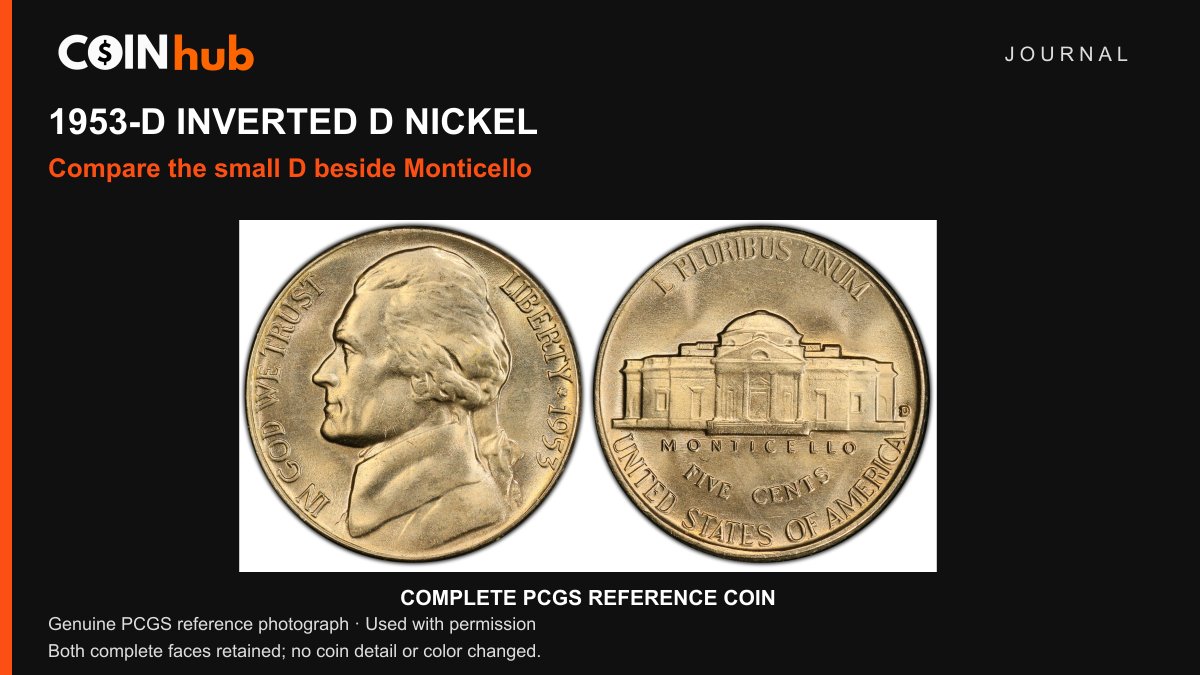
The 1953-D Jefferson nickel FS-501 is a D over inverted D repunched mint mark. Find the small D to the right of Monticello, the building on the back. Compare it with an attributed reference before calling a thick or oddly shaped letter a match.
PCGS lists this exact nickel as 1953-D/D, D/Inverted D, FS-501. The full label matters. The year, coin type and mint mark keep it separate from cents and quarters that can carry the same FS number.
Find the D beside Monticello
Keep Monticello upright and look just to its right. That small D is the Denver mint mark. The date, 1953, is on the other face beside Jefferson's portrait. Photograph both sides so the date and mint mark stay tied to the same coin.
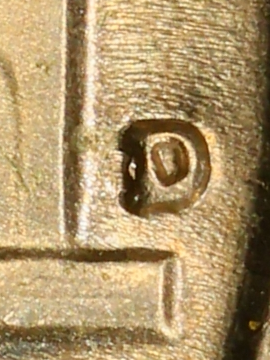
Inverted means upside down. Here it describes the earlier D impression in the die, the steel tool that struck the design into the coin. Turning a whole coin upside down does not create this variety. Use the building to keep both your picture and the reference in the same position.
Study the extra raised shape around the D, rather than one bright edge. Glare, wear and marks can hide or imitate small details. Try a second light angle and retain the first, uncropped files. If the feature remains unclear, record it as a possible match.
How one D was punched over another
Mint marks were once punched by hand into working dies. Wexler's explanation of repunched mint marks shows how a moved or turned punch could leave more than one impression. An inverted impression is one possible arrangement.
RPM is short for repunched mint mark. D/D means a D punched over another D. A D/S label describes two different letters and is called an over mint mark. These labels describe the tool's design; they do not mean someone struck a second letter into your finished nickel.
A repunched mint mark is also different from a doubled die affecting other design elements. For a comparison, the 1939 Doubled Monticello nickel is identified through the reverse lettering. Do not transfer that test to the small D on a 1953 coin.
Keep FS-501 and Full Steps separate
FS-501 is the variety reference used here. In a grading label, a separate FS can mean Full Steps, a designation involving the steps on Monticello. PCGS provides separate listings for this variety with and without that designation. The number 501 is not a grade or a price.
The 1942-D/D horizontal-D nickel is another reason to retain the entire label. Its date and the direction of the earlier punch differ. A match to that reference does not establish the 1953 inverted-D variety.
Heritage's June 2, 2026 lot 21118 independently records an NGC-attributed 1953-D D over inverted D FS-501 nickel. That is evidence for the named variety, not an appraisal of an unattributed coin. Its census and wholesale references are dated figures and are not quoted here as current values.
Make a useful identification record
Save the date, denomination, mint mark, reference link and clear views of the feature. CoinHub's Variety Attribution Assistant can help organize the next checks. It does not assign an FS number or confirm authenticity from a photograph.
Keep the surfaces as found. Scraping around the D or polishing the coin can remove evidence and damage it. If a purchase or grading decision depends on the attribution, get a qualified review of the actual coin and compare similar, attributed examples in completed sales.
For broader beginner reading, CoinHub founder Blake Alma's The CoinHub: An Ultimate Guide to Coin Errors is an optional resource. It is CoinHub's own book; the reference photographs and checks above remain the starting point for this specific variety.
Primary references and the genuine PCGS photograph checked November 5, 2026. PCGS photograph used with permission; both complete faces are retained in the header, with a separate unaltered crop above. No grade, present price or confirmed attribution is assigned to a reader's coin.