
Start with the ear, then check the whole coin
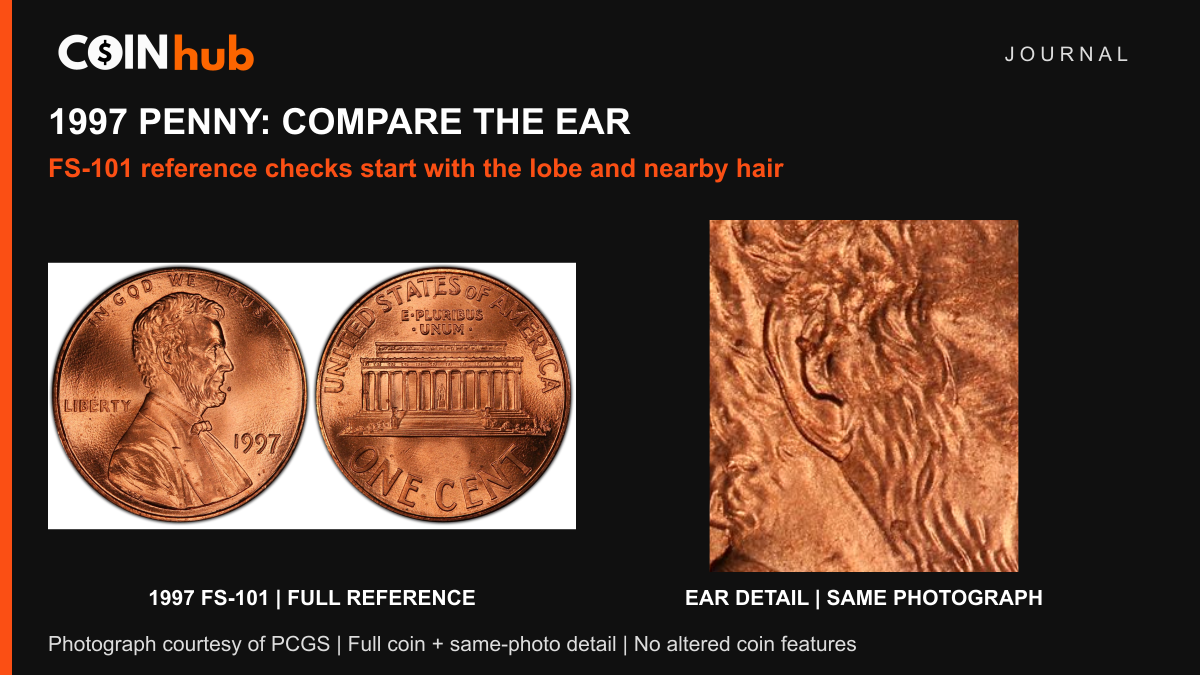
The 1997 Doubled Ear penny is a Philadelphia Lincoln cent cataloged by PCGS as FS-101. Look below Lincoln’s main earlobe for the extra rounded outline, then compare the nearby hair with a known example. A bump near the ear alone does not prove a match.
The photo above shows a PCGS example beside a closer view from that photo. The full view keeps the date and design attached to the detail. The closeup is not a second coin or a normal ear.
What FS-101 identifies
PCGS CoinFacts lists the 1997 FS-101 Doubled Ear among Lincoln cents with the Memorial reverse. The listing gives Philadelphia as the mint. It lists copper-plated zinc, a weight of 2.50 grams and a width of 19 millimeters. These size and weight figures do not prove the coin is real or that it has this feature.
The FS number points to an entry in the Fivaz–Stanton system. It needs the date and coin type beside it: FS-101 is not one universal feature shared by every coin carrying that number. Keep the date, coin type and full FS name together in your notes.
Compare the lobe and the nearby hair
The Lincoln Cent Resource reference notes the extra ear shape and slight doubling in the hair and beard. Use its photos with the PCGS coin. Start with the location and shape of the lower lobe, then compare the curl above the ear. A thick or blurry image of Lincoln is not enough.
| Observation | Useful check | Limit |
|---|---|---|
| Extra outline below the lobe | Compare its shape and position with a named reference. | A nearby lump alone is insufficient. |
| Hair above the ear | Take a clear photo of the same area. | Glare can hide or exaggerate small relief. |
| 1997 date and mint area | Keep a full front photo with the closeup. | An isolated ear crop does not establish the date. |
| Color and surface marks | Record them separately from the variety candidate. | A variety name does not determine condition. |
A catalog name and a cause are separate claims
Some coin guides call this a doubled-die variety. A die is the tool that impresses a coin’s design; doubling in a die is different from striking a coin twice. The older Lincoln Cent Resource page gives a proposed cause from the die-making process. That does not mean every odd ear on a 1997 cent has the same cause.
For a coin you have found, the first question is narrower: does the shape match the named example? NGC’s explanation of varieties also keeps die varieties apart from color and strike-quality labels. Check a grader’s current rules before you pay for a named variety match, or attribution. An old list of graders is not a promise of what each will accept today.
Make a useful record without changing the surface
- Take photos of the whole front and back, including the date and mint area.
- Take a steady ear closeup with the lobe and nearby hair in focus.
- Change the light angle and compare the raised shapes again.
- Save the reference URL and describe both matches and differences.
Do not scrape, polish or press the area to make it clearer. Use our coin photography guide to improve the photo instead. Our separate 1984 Doubled Ear guide concerns another date; its reference image cannot identify a 1997 coin.
The CoinHub Variety Attribution Assistant can keep the date, side and feature in one place for further study. A possible match from that tool does not prove an FS number, grade or value.
For a broader introduction to error collecting, consider CoinHub founder Blake Alma’s own book, The CoinHub: An Ultimate Guide to Coin Errors. The reference photos and checks above remain the starting point for this particular coin.
Photo courtesy of PCGS CoinFacts, used with permission. The full photo and an enlarged ear crop are shown without altered coin details. This guide does not set a price, state how many were made or promise a grader will accept your coin.