
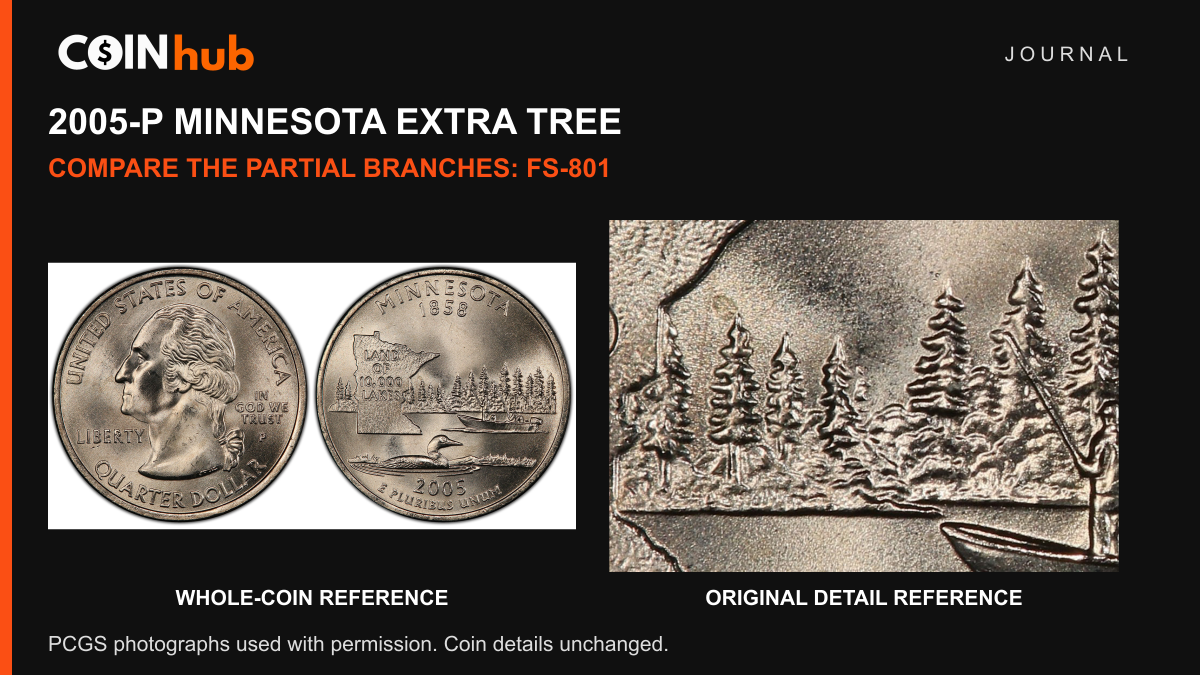
The 2005-P Minnesota FS-801 quarter shows extra, partial spruce branches on its reverse. Look in the trees just to the right of the Minnesota state outline. Compare the branches with the exact reference photograph; a vague extra line is not enough to name this doubled die.
This guide concerns the major Philadelphia regular-strike variety called FS-801 or DDR-001 in the linked PCGS reference. It does not cover every Minnesota Extra Tree variety, every mint mark or the separate satin-finish issues.
Find the right patch of trees
Start with the whole coin. Confirm 2005 and the P mint mark on the front, then turn to the Minnesota design on the back. The state outline is on the left of that design. The useful area is the nearby stand of spruce trees, rather than the loon, boat or open water.
In its illustrated Minnesota variety article, PCGS locates the extra boughs just to the right of the fourth spruce tree from the state outline. Use the supplied closeup as well as that count. Small or partly hidden trees can make a verbal count less clear than a photograph.
Open the original PCGS diagnostic closeup for a larger view. The state outline and normal branches help locate the feature shown in the main graphic.
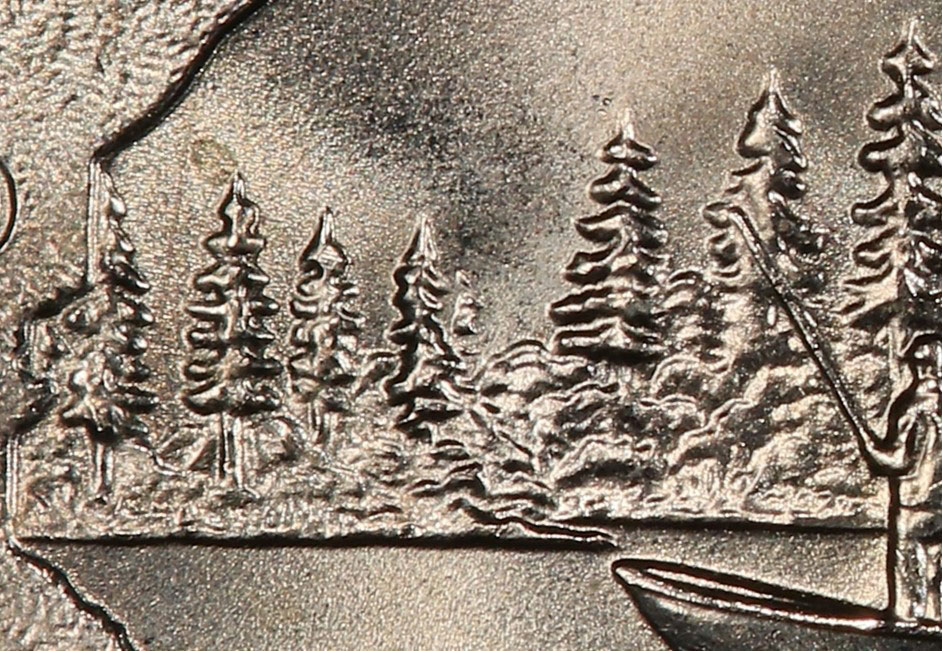
Do not expect a complete second tree with its own trunk. The nickname describes duplicated parts of the existing tree design. A candidate should match their shape and position in the reference, not merely have something tree-like somewhere in the forest.
Keep the exact variety attached to the photo
A die is a steel tool that stamps a coin's design. On a doubled die, duplicated design detail is present in the die itself. DDR means doubled die reverse: the affected design is on the back. It does not mean the finished coin was struck twice. CoinHub's double strike and doubled die comparison explains that difference.
The specific PCGS CoinFacts entry identifies the Philadelphia regular-strike DDR-001 reference. An Extra Tree label alone is broader. Other Minnesota doubled reverses exist, so matching the date and the nickname does not establish FS-801.
A GreatCollections archive record illustrates why the complete description matters: its title names 2005-P, FS-801, DDR-001 and a particular certified grade. It is an individual 2021 auction record. Its sale amount is behind a login and is not a price quote for a coin in your change.
Make a useful comparison record
- Photograph both complete faces before taking a closeup.
- Keep the state outline and neighboring normal trees in the detail image.
- Try a second lighting angle to separate a physical branch from glare.
- Record which branches match the reference and which remain unclear.
- Keep the description qualified until the full diagnostic pattern is confirmed.
A scratch, a reflection or a swollen edge can confuse an enlarged view. Raised detail alone is not a reliable test. The die deterioration guide shows why unusual-looking edges can have another cause. Leave a blurred area unresolved rather than sharpening the image until it appears to match.
Attribution comes before a value comparison
Do not apply a dramatic auction price to an unconfirmed coin. First establish the exact variety, then compare the same strike type and condition using documented sales. The prices in PCGS's December 2020 article are historical observations, not today's offers. Neither a normal issue's mintage nor a grading-service population is the number of FS-801 coins made.
The CoinHub Variety Attribution Assistant can organize the date, mint mark, side and unusual feature for further research. It cannot assign an FS number or confirm a doubled die. For broader error-learning context, CoinHub founder Blake Alma's own book, The CoinHub: An Ultimate Guide to Coin Errors, is an optional companion; the photographic check above stands on its own.
References checked October 20, 2026. Genuine whole-coin and detail photographs: PCGS, used with permission; the source article credits PCGS TrueView. Coin details are unchanged. This guide does not authenticate, grade or appraise a reader's coin.