
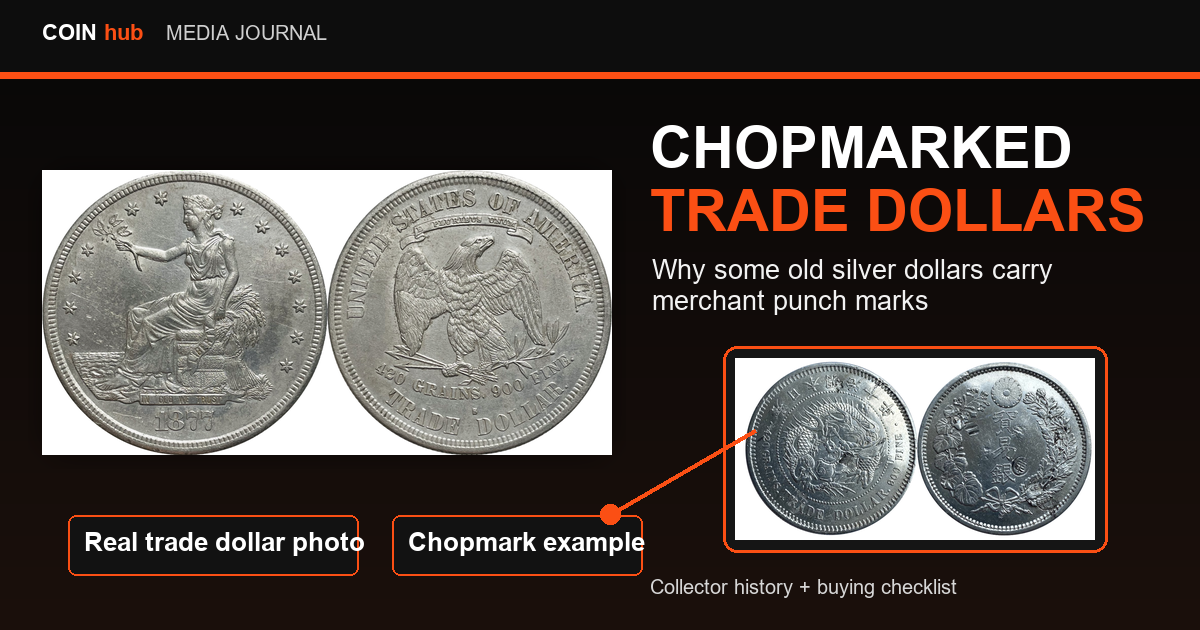
Why Some Trade Dollars Have Chopmarks
Chopmarks are one of the strangest details a collector can find on an old silver dollar. At first glance, they look like damage. On many coins, that is exactly how they affect the value conversation. But on Trade dollars, chopmarks can also be evidence that the coin did what it was made to do: move through international silver trade.
The U.S. Trade dollar was created for overseas commerce, especially trade with East Asia. PCGS and NGC both describe chopmarks as marks placed by merchants or bankers to help verify silver coins in trade. The marks are usually punched characters or symbols, often associated with Asian merchants.
Are Chopmarks Errors?
No. A chopmark is not a mint error, doubled die, die crack, or struck-through mistake. It happened after the coin left the Mint. That matters because a chopmark is technically a surface alteration, even when collectors value the history behind it.
| Feature | What it means | Collector caution |
|---|---|---|
| Chopmark | A merchant or banker punch added after the coin was struck. | Historical on Trade dollars, but still a post-mint mark. |
| Counterfeit mark | A fake or modern punch meant to make a coin look more interesting. | Authentication matters, especially on expensive Trade dollars. |
| Graffiti or damage | Random scratches, initials, gouges, or tool marks. | Usually less collectible than recognized chopmark history. |
| Mint error | A problem from the striking process at the Mint. | Do not describe chopmarks as mint errors in a listing. |
Do Chopmarks Make a Trade Dollar More Valuable?
Sometimes they can make a coin more interesting, but they do not automatically make it more valuable. A rare-date Trade dollar with attractive, old chopmarks may draw collector attention. A common coin with heavy punching, cleaning, scratches, or questionable authenticity may trade at a discount compared with a problem-free example.
The best way to think about chopmarks is collector demand, not guaranteed premium. Some collectors actively build chopmarked Trade dollar sets. Others prefer original, unchopmarked coins. The date, mint mark, grade, number of marks, placement, and certification all matter.
What To Check First
Why Trade Dollars Attract Counterfeits
Trade dollars are popular, silver, old, and historically unusual. That combination attracts counterfeits. Chopmarks can make the problem harder because a fake coin can be punched to look more believable, and a genuine coin can be altered after the fact.
If a Trade dollar is expensive, raw, unusually bright, heavily marked, or being sold with a dramatic story, slow down. Compare it with certified examples and consider professional authentication before paying a strong price.
How To Describe One When Selling
Use plain language. A better listing says "1876-S Trade dollar, chopmarked" rather than "rare mint error dollar." Mention whether it is certified, whether it has cleaning or other damage, and whether the chopmarks are part of the collector appeal. Good photos matter because buyers need to see both the coin and the marks.
If you are unsure whether the marks are real chopmarks or later damage, say that. Overclaiming can hurt trust, especially with a series where authenticity is already a major concern.
Related CoinHub Guides
If you are sorting old silver dollars, compare this topic with CoinHub's Peace dollars worth money guide and the broader old U.S. dollar coins article. If the coin has odd surfaces, also review how to tell if a coin has been cleaned.
FAQ
Are chopmarked Trade dollars damaged?
They are post-mint punched marks, so they are surface alterations. In the Trade dollar series, though, many collectors treat genuine chopmarks as historical evidence rather than ordinary random damage.
Should I clean a chopmarked Trade dollar?
No. Cleaning can remove original surface and make authentication or resale harder. Leave the coin alone and get expert help if the coin may be valuable.
Can a chopmarked Trade dollar be graded?
It can be authenticated and encapsulated by major services, but the label and grading treatment can vary. Check current grading-service rules and compare certified examples before assuming a numeric grade or a details outcome.