
A guinea was a British gold coin, first struck in 1663. From 1717, its fixed value was 21 shillings: one pound and one shilling. The word also survived as a pricing unit after the coin was replaced. Neither that old face amount nor its decimal equivalent is the collector value of a surviving guinea.
If an old bill says “ten guineas,” it may describe an amount owed. If a coin catalog says “1795 guinea,” it describes a particular gold denomination and date. Start by deciding which meaning you are looking at.
That small distinction prevents a big mistake: converting an old unit into modern notation and treating the result as the price of an antique coin.
How a guinea became 21 shillings
The Royal Mint's history of the guinea dates its introduction to Charles II's reign in 1663. It began at about 20 shillings. Its value shifted with the relationship between gold and silver before being fixed at 21 shillings in 1717.
In the old British system, 20 shillings made one pound. At the fixed rate, a guinea was therefore five percent more than a pound. For example, 20 guineas meant 420 shillings, or 21 pounds. This is a calculation of the stated amount, not an estimate of what it could buy.
You may see one guinea expressed as £1.05. That is the same nominal amount written in decimal pounds. It is not an inflation adjustment, a current gold price or an offer for a real guinea coin.
The name has a wider history
The name came from the Guinea Coast of West Africa, a source of gold used in the coinage. Some issues have an elephant or elephant-and-castle mark associated with the Royal African Company. Do not expect that mark on every guinea.
The Smithsonian's National Museum of African American History and Culture places its 1678 two-guinea coin in the context of the trade in gold and enslaved people. That history matters when explaining the name and company symbol. A decorative-looking mark can carry a significant historical connection.
A guinea is not the same coin as a sovereign
The Royal Mint Museum dates the modern sovereign to 1817. It was a 20-shilling gold coin, equal to one pound. That separates it from the 21-shilling guinea it succeeded.
Both can show a British monarch and both are gold, but they are different denominations. Do not apply a sovereign's weight or diameter to an unidentified guinea. Our sovereign and half-sovereign guide covers those later coins.
The guinea family also included fractions and multiples. A half guinea or two-guinea piece needs its own catalog entry. A photograph can make coins of different sizes appear equal, so a seller's picture alone is a poor denomination test.
What the 1795 photograph shows
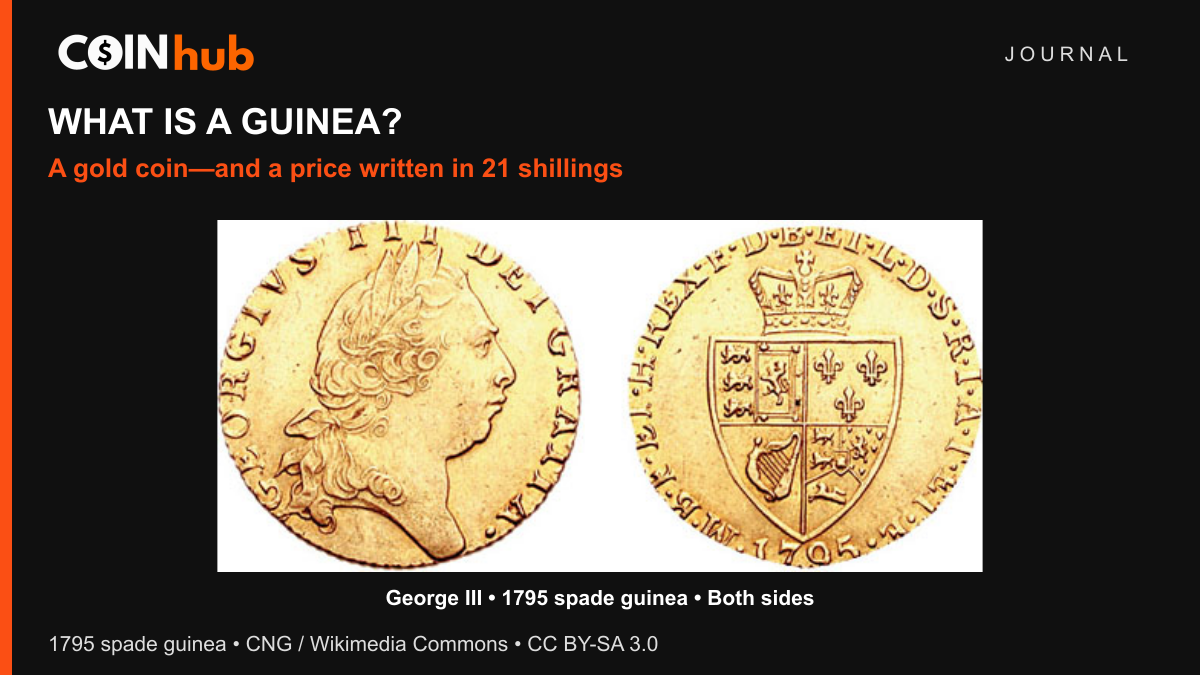
The real coin pictured above is a George III guinea dated 1795. Its reverse shows a crowned shield with a pointed lower end. This shield shape explains the familiar name spade guinea. The photograph comes from Classical Numismatic Group and is licensed for reuse.
Read the whole design rather than searching for the word GUINEA on the coin. Record the ruler, date, portrait and reverse. Compare both sides with the same issue in a reliable catalog. A different shield arrangement or portrait may point to another type, even when the coins share a denomination.
Keep the photographed specimen separate from your own coin. Its appearance does not establish your coin's weight, authenticity, grade or sale price. Do not polish a surface to make the comparison easier; preserve it and use better lighting.
Separate three questions about value
What amount did the denomination represent? For the fixed 21-shilling guinea, that is the historical face-value question answered above. Earlier dates need their own monetary context.
What gold does this exact issue contain? Identify the denomination and type before using a metal specification. A fraction or multiple is not a full guinea, and a worn coin is not a laboratory weight standard.
What might this coin sell for? That calls for a separate review of authenticity, date, variety, condition and comparable sales. Record the currency, sale date and fees when comparing results. An advertised asking price is not proof of a completed sale.
For an old invoice, record the amount and its date. For a physical coin, save clear photographs, measurements and the catalog match. Our coin records checklist helps keep evidence and unanswered questions together.
Sources checked October 8, 2026: Royal Mint, Royal Mint Museum and Smithsonian references linked above; the licensed CNG photograph documents the illustrated 1795 specimen. Arithmetic examples are explanatory, not purchasing-power estimates or appraisals.